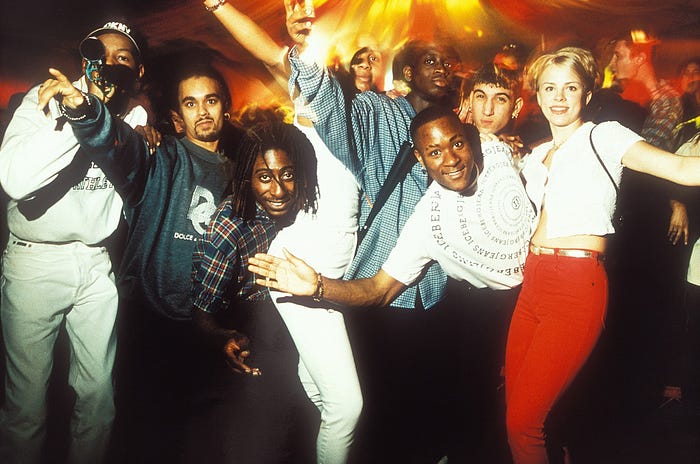

There's a certain electricity people talk about when they remember raves from the 90s and early 2000s. Not just the music (though that was revolutionary in its own right), but the feeling — something raw, real, and impossible to fully recreate.
Today's festivals are bigger, slicker, and in many ways more impressive. But for a lot of people who lived through the earlier days of electronic music culture, it can feel like something vital has been lost along the way.
The Dancefloor Before the Digital Age
Before smartphones took over our pockets and our attention, people stepped into raves with no distractions. You didn't have a feed to update, a story to curate, or a camera always ready. You had the moment. The music. The people around you. There was a sacred kind of presence in that.
The absence of digital documentation meant freedom. Freedom to dance without self-consciousness, to meet strangers without pretense, to truly get lost in the music. Today, that unspoken agreement — we're all here, and we're all in — is harder to come by when half the crowd is watching the show through a screen.
The Price of Entry and What It Says
Another shift is economic. In the past, raves were often cheap or even free. You didn't need deep pockets or a weekend pass that cost as much as a flight to Ibiza. The barrier to entry was low, and that made the scene feel more inclusive.
Now, with ticket prices soaring and add-ons multiplying, access to the culture can feel more like a luxury than a right. This isn't about blaming organizers. Costs have risen across the board. But it does change the makeup of the crowd. When events are priced for exclusivity, the community starts to feel curated, not organic.
The Underground Spirit
In the 90s, being part of the scene meant being in the know. Raves were passed around through whispers, flyers, or late-night radio. That underground energy wasn't about gatekeeping — it was about discovery. You showed up not because of who was on the lineup, but because you trusted the vibe. There was mystery, spontaneity, and a little bit of chaos. That unpredictability bred connection.
Today's mega-festivals have brought electronic music to the masses, and that's not a bad thing. But the tradeoff has been a shift away from the intimate and unpolished. The underground gave us room to take risks, to explore, and to grow the scene from the inside out. Without that layer, some of the culture's authenticity can feel flattened.
It's Not All Gone, But It Is Different
This isn't a eulogy for rave culture. The spirit still exists. It's just hiding in different corners now. You'll find it at sunrise afterparties in off-the-map locations, or in the middle of a set when a DJ pulls something deep out of the crate and the whole room moves together. It's in the moments that aren't Instagrammable — the ones that don't make it online but stay with you for years.
As the scene continues to evolve, maybe it's worth asking: how do we hold on to what made those early days so special? How do we bring back the community, the presence, the love of the music for its own sake?
The rave never really died. It's still here. We just have to show up for it the way we used to — fully, honestly, and with our phones down.
Looking to license electronic music? Let us help! Email office@edmpublishing.com to get started.