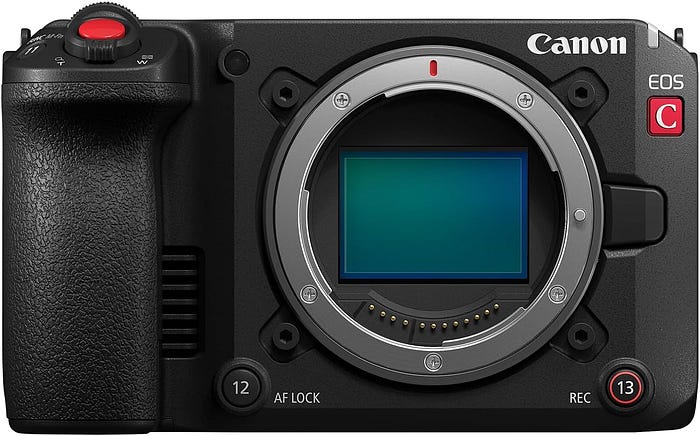

I've been shooting professionally for many years, chasing stories from bustling city streets to remote wilderness gigs. The Canon EOS C50 has become my go-to cinema camera for everything from corporate docs to indie films, blending full-frame power with a compact body that fits my fast-paced workflow.
Why I Chose the Canon EOS C50 for Professional Video Work
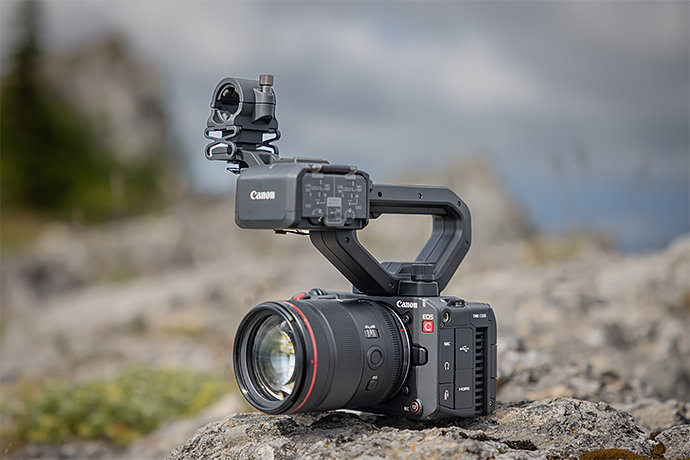
This camera caught my eye right away because of its RF mount and full-frame 34-megapixel CMOS sensor. It delivers raw 12-bit internal recording up to 7K at 60p, which means incredible detail for post-production grading without needing external recorders on most jobs. Dual base ISO settings, one at 800 and another tailored for low light around 3200, give me flexibility in mixed lighting conditions that crop up daily on location shoots.
What sets it apart from bulkier cinema rigs is the lightweight design with a detachable handle featuring XLR inputs for pro audio. I pair it with my trusty RF lenses, like the Canon RF 24–70mm f/2.8, and it handles 4K 120p slow-motion effortlessly, perfect for dynamic action sequences. No built-in stabilization, but with such sharp Dual Pixel CMOS AF II autofocus, I rarely notice the lack when handheld.
Affiliate Disclaimer: This guide is reader-supported. If you buy through the links on this page, I may earn a small commission at no extra cost to you.
Real-World Performance: Image Quality That Delivers
In the field, the Canon EOS C50's 15+ stops of dynamic range shine brightest. During a recent dawn shoot for a travel brand, shadows in the foreground lifted beautifully in post while highlights on the misty mountains held detail — no clipping or muddiness. The electronic rolling shutter is manageable for most pans, though I slow down whip pans in Super 35 crop mode to avoid jello effects.
Color science feels Canon-true, with XF-HEVC S codecs preserving 10-bit 4:2:2 quality internally on CFexpress Type B cards. I love the in-camera LUT support and Frame.io integration for quick cloud uploads, saving hours on client previews. Stills mode at 32MP is a bonus for hybrid jobs, capturing sharp behind-the-scenes shots without swapping gear.
Gerald Undone, a tech reviewer I respect, praised its high ISO noise handling up to 25,600, calling it a "fantastic compact cinema camera" after testing dynamic range and autofocus in controlled setups. Other pros on forums echo this, noting cleaner shadows than the C70 in low-light interviews.
My Short Stories from the Field with the C50
Last summer, I documented a music festival under pouring rain. The C50's sealed body and quick ND filter swaps via the handle kept me rolling through downpours, nailing 4K 60p crowd shots that the client loved for their vibrant energy.
On a tight corporate deadline in Chicago, the Dual Pixel AF tracked talent walking through a busy lobby flawlessly. No focus pulls needed, which let my assistant handle audio while I framed the perfect b-roll.
Filming a wildlife doc in the Rockies, 7K raw let me crop into distant elk without losing feather detail. Base ISO 800 handled golden hour contrasts, turning raw footage into Netflix-approved deliverables overnight.
A wedding gig pushed it to 120p for slow-mo toasts. The crop was minimal, and overheating never hit during four hours of run-and-gun.
Build Quality and Ergonomics for Long Shoots
The body feels solid at just over two pounds without lens, with a fully articulating touchscreen that's visible even in direct sun. Dual slots — one CFexpress for video, SD for backups — give peace of mind on all-day jobs. Battery life with LP-E6NH lasts a full event, and the mobile app lets me remote control from my phone for creative angles.
Users on Canon forums rave about the modular handle, with one DP saying it "transforms it into a full doc kit without the bulk." A few note the fan noise in quiet scenes, but I mask it easily in post or use an external recorder.
Audio and Workflow Wins for Pros
Built-in XLR inputs with phantom power mean pro mics plug right in, no adapters. I run Sennheiser wireless and get clean tracks synced via timecode. HDMI out supports external monitors like my Atomos Ninja for client grading on set.
Post-wise, Canon RAW files edit smoothly in Premiere or DaVinci Resolve. One editor buddy switched from Sony FX6 and said C50 footage grades "more intuitively" with less noise at ISO 3200.
Frequently Asked Questions
Is the Canon EOS C50 good for beginners? Not ideal — its cinema features demand editing know-how. But hybrid shooters transitioning from EOS R5 will adapt fast thanks to familiar menus.
How does autofocus perform in low light? Excellent down to EV -6, tracking faces and eyes reliably. I trust it for run-and-gun events where manual focus fails.
Does it overheat in 4K? Rarely, even in 100°F heat. Active cooling and efficient codecs keep it going for hours, unlike some mirrorless rivals.
Netflix approved? Yes, meets specs for 4K HDR delivery straight out of camera.
Battery life for all-day shoots? Two LP-E6NH cells cover 4–5 hours of 4K rec. I carry spares in my Think Tank bag.
Switching to the Canon EOS C50 streamlined my kit without sacrificing pro results. If you're a working photographer eyeing cinema upgrades, this one's a smart investment for stunning footage that stands out.