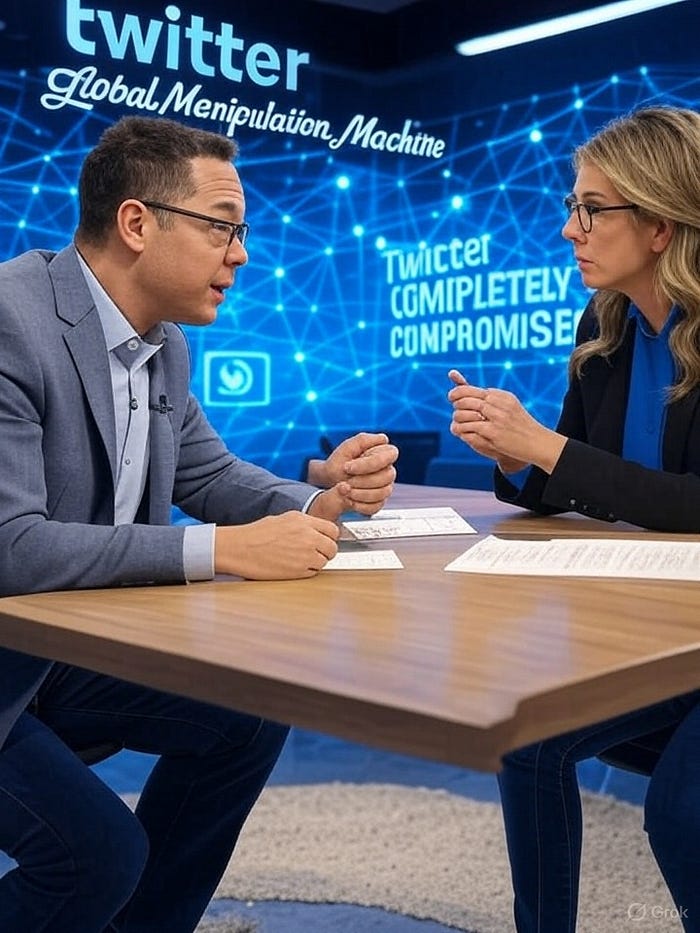

The YouTube video "Twitter IS COMPLETELY COMPROMISED" features a conversation with Alberto Daniel Hill and his friends, where Alberto asserts that Twitter (now known as X) is "completely compromised". This conversation, and related sources, paint a detailed picture of the platform's security vulnerabilities, data breaches, and the pervasive issue of bots.
Here's a story developed from the sources about the various problems discussed, focusing on the content from the YouTube videos and related information:
The core of Alberto's concern stems from an alleged GitHub hack that specifically targeted the Twitter repository, impacting entries for the Chirp contest. He explains that an AI system called Co-pilot, owned by Microsoft and Open AI, was trained on open-source data and is somehow involved. This situation led to the leak of API keys from over 3,200 apps. While API keys are generally meant to allow applications to interact with Twitter's content, Alberto suggests that this leak could enable malicious actors to hijack accounts, even those with two-factor authentication. Such a compromise could allow them to create or take over verified accounts belonging to major news stations or public figures, subsequently promoting fake news, manipulating markets, or running cryptocurrency scams.
This alleged vulnerability is particularly alarming due to Twitter's significant role as a news source. Alberto highlights that 90% of people trust Twitter most for news, especially breaking news. This trust makes the platform a powerful tool for manipulation, as forcing specific news into users' feeds could effectively change who people vote for in elections. He calls this "major" and capable of "literally changing the news in countries".
The security concerns on X extend beyond just leaked API keys. Forbes reports that 200 million X user records were released by a "data enthusiast" named ThinkingOne, building upon a January 2022 vulnerability that allowed access to user data via email or phone number. ThinkingOne claims that 2.8 billion records were exfiltrated, potentially making it the "largest social media breach ever". This extensive dataset includes sensitive profile metadata such as:
- X screen names and user IDs
- Full names and locations
- Email addresses (primarily from an earlier 2023 breach)
- Follower counts, profile data, and images
- Time zones and account creation dates
Despite these claims, X (formerly Twitter) has stated it found no evidence that the data was obtained by exploiting a vulnerability in their systems, though they acknowledged a coding error from a June 2020 update that allowed email addresses or phone numbers to be associated with X accounts. X maintains that no passwords or information leading to password compromise were leaked. However, security experts warn that such extensive data collections are highly valuable for social engineering, identity theft, or targeted phishing efforts.
The platform is also grappling with a significant bot problem. Estimates vary widely, with some posts from early 2025 suggesting that 60% to 85% of accounts could be bots, while others peg it around 15% or 64%. These bots, particularly the malicious ones, are implicated in:
- Spreading fake news and misinformation
- Manipulating public opinion and political propaganda
- Engaging in scams and spamming
- Causing ad sales volatility and diminishing advertisers' return on investment
Twitter, under Elon Musk's leadership, has undergone numerous changes, with rules and policies shifting frequently. While Twitter has implemented measures like detecting and suspending malicious bot accounts and introducing bot labels for transparency, a former security chief, Peiter Zatko, alleged "extreme, egregious" cybersecurity vulnerabilities, claiming that nearly half of Twitter's employees had access to critical software, making it highly susceptible to hacks. He also alleged that Twitter misled the public about the number of fake accounts and bots on its platform. The Political Studies Association asserts that despite Twitter's efforts, these measures are "not enough" because sophisticated bots can bypass safeguards, and even simple bots can survive for thousands of tweets. Furthermore, the sheer volume of automated content makes it nearly impossible for humans to correct all false information, and corrections may not be seen due to the platform's structure.
The constant issues, including data breaches, bot proliferation, and the potential for information warfare, contribute to a sense of frustration and skepticism among users and even insiders, as conveyed by Alberto. Despite Twitter's claims of taking privacy seriously and implementing new policies, critics argue that the actual fixes are either too slow or indicative of a deeper issue, possibly even incompetence or a desire for manipulation. This situation leaves the platform's integrity and its role as a reliable source of information in question.
1. What are the primary security and privacy concerns surrounding Twitter (now X)?
Twitter (now X) faces significant security and privacy concerns, as highlighted by multiple sources. A former security chief, Peiter Zatko, alleged "extreme, egregious" cybersecurity vulnerabilities, including nearly half of Twitter's employees having access to critical software, insufficient protection of user data, and false statements to the FTC regarding security plans. These flaws make the platform susceptible to hacks, potentially posing threats to national security and democracy.
Furthermore, there have been multiple large-scale data breaches. In July 2022, a vulnerability allowed attackers to access user data simply by knowing an email address or phone number, leading to the sale of user information. This issue resurfaced, with a "data enthusiast" named ThinkingOne claiming to have released 200 million X user records in March 2025, combined with data from a January 2023 breach. ThinkingOne also claimed that 2.8 billion records were exfiltrated in total, making it potentially the largest social media breach. While X stated these datasets did not contain passwords, the exposed information includes screen names, user IDs, full names, locations, email addresses, follower counts, profile data, and time zones, increasing the risk of targeted phishing attacks, identity impersonation, and increased spam.
In addition to past breaches, X's updated privacy policy effective September 2023, indicates plans to collect biometric data (e.g., facial scanning) for "safety, security, and identification purposes," and personal information such as employment history for job recommendations and sharing with potential employers. While presented as consent-based, this raises further privacy questions, especially following a class-action lawsuit alleging violation of biometric privacy laws.
2. How prevalent is the "bot problem" on Twitter/X, and what are its implications?
The "bot problem" on Twitter/X is highly prevalent, with estimates varying but consistently indicating a significant portion of accounts are automated. Grok, an AI, estimated in February 2025 that human users could range from 154 million to 538 million, depending on bot percentage estimates between 12% and 64% of monthly active users. Another analysis in March 2025 estimated that around 15% of all Twitter accounts are automated. Some users on Reddit believe the number of bots is much higher, with one estimating 300–400 million bots on X as of 2025.
The implications of this bot prevalence are significant and largely negative. While some bots offer beneficial services like weather updates or educational material, many engage in malicious activities. These include spreading fake news, manipulating public opinion, engaging in scams, spamming, distributing malware, and spreading political propaganda to influence elections. Bots can artificially inflate engagement metrics (likes, retweets, followers), misleading advertisers and causing ad sales volatility. This wastes marketing budgets and distorts user data, making it difficult for businesses to assess campaign effectiveness.
The sheer volume of automated content makes it nearly impossible for human journalists or experts to correct false information, and even if they do, the platform's structure (where retweets are more visible than replies) limits the reach of corrections. Twitter has attempted to address this by suspending malicious accounts and introducing "bot labels" for transparency, but sophisticated bots can often bypass these safeguards.
3. How has Elon Musk's takeover impacted Twitter's policies and operations, particularly regarding content moderation and user verification?
Elon Musk's takeover of Twitter in October 2022, and its subsequent rebranding to X, initiated a period of significant and often chaotic policy changes. Immediately, Musk fired key executives, including the CEO, CFO, and top attorney, and became the sole board member, leading to a centralized decision-making process.
In terms of content moderation, Musk's leadership has been marked by a relaxation of previous policies. Twitter ceased enforcement of its COVID-19 misinformation policy in November 2022 and announced it would start accepting all political advertisements again in the US in August 2023, reversing a global ban from 2019. This was framed as a "commitment to free expression," but also aimed to boost plummeting ad revenues, which had fallen by about 50% due to advertiser concerns about problematic content. Critics noted an increase in racial slurs on the platform after Musk's acquisition. He also reduced the teams dedicated to battling misinformation, leading to layoffs of outsourced moderators.
User verification also underwent a controversial overhaul. The traditional blue checkmark, previously a symbol of verified authenticity, was integrated into a paid subscription service called "Twitter Blue" ($8/month for web, $11 for iPhone/iPad) starting November 2022. This led to a "wave of imposter accounts" posting harmful misinformation, including a fake Eli Lilly & Co. account tweeting about free insulin. Although Musk later introduced different colored checkmarks (gold for companies, gray for government), the initial chaotic rollout caused "more chaos and confusion for brands" and prompted many to pause advertising.
Overall, Musk's changes created a "dizzying, whiplash-inducing timeline," marked by rapid shifts, often announced via his own tweets, and leading to widespread confusion and concerns about the platform's integrity and safety.
4. What is the "Chirp" contest, and what concerns have been raised about it?
The "Chirp" contest is a hackathon or developer challenge hosted by Twitter (now X), where participants submit apps that interact with the Twitter API. Concerns have been raised that the contest, specifically the requirement for participants to disclose all their code on GitHub, may have led to significant security vulnerabilities and data leaks.
According to discussions, an AI system called "co-pilot," owned by Microsoft and trained by Microsoft and OpenAI, allegedly scrapes open-source code from GitHub. This raised fears that code submitted for the Chirp contest could be taken by co-pilot without proper attribution, and potentially used for profit or manipulation by third parties. It was suggested that this could allow manipulation of news feeds and accounts, impacting critical events like midterm elections.
Further concerns include the selection process for winners and judges, with allegations of nepotism. Judges can be appointed up to one hour before decisions, and there's a "three-month rule" where former Twitter employees can't be judges for three months after leaving, which is seen as a "joke" and not a serious safeguard against conflicts of interest. The goals of the apps in the contest, such as "conversation safety tools," were interpreted by some as euphemisms for censorship, raising questions about who defines "public good" and the potential for manipulation of information.
5. How might Twitter's security vulnerabilities and compromised state influence public opinion and elections?
Twitter's security vulnerabilities and compromised state pose a significant threat to public opinion and election integrity. With 90% of people reportedly trusting Twitter for news, especially breaking news, the ability to manipulate the platform can have a profound impact.
The leakage of API keys and the potential for account hijacking mean that malicious actors could take over verified accounts (e.g., a major news station or a celebrity's account) to disseminate fake news, manipulate markets (e.g., cryptocurrency prices), or spread political propaganda. Even if users have two-factor authentication, a compromised API key can bypass this, allowing remote control over accounts and their content.
This level of access enables "force-feeding" specific news to users' timelines, regardless of who they follow. As a result, powerful entities could influence voters in close elections, even down to local levels, by controlling the narrative and spreading disinformation. The lack of transparency and clear accountability from Twitter's leadership further exacerbates these fears, as it suggests either incompetence or complicity in allowing such manipulation to occur. The speaker mentions that these issues have already contributed to disinformation in American elections "several times now."
6. What is the individual's role and power in addressing the issues on Twitter/X, and what counter-measures are suggested?
The sources present a mixed view of the individual's role and power in addressing Twitter/X's issues. On one hand, there's a sense of helplessness, with users complaining about the overwhelming bot presence, the inability to control spam messages, and the platform's lack of responsiveness. The sheer scale of data breaches and algorithmic manipulation makes individual action seem futile.
However, there's also an assertion of individual power and agency. One speaker claims their work enables anyone to "shut Twitter down anytime" by posting an infinitely long URL, such as the entire text of Moby Dick. This drastic measure is proposed as a means to "retain the ability to simply pose the entire text of Moby Dick in a fucking URI" if the platform is used for "evil" by governments like Russia, effectively acting as a last-resort kill switch if Twitter cannot act fast enough.
More broadly, counter-measures suggested for individuals include:
- Vigilance: Monitoring accounts for suspicious activity, enabling two-factor authentication, and being cautious with links and unsolicited communications.
- Privacy Adjustments: Reviewing X privacy settings and considering making profiles private.
- Strong Passwords: Using unique and strong passwords, possibly with a password manager.
- Reporting: Reporting suspicious activity to the platform and, if identity theft is suspected, to local authorities.
- Community Building: Creating alternative platforms or focusing on community-driven initiatives that prioritize authenticity over profit, as exemplified by "The Weed Tasting" project, which aims to revert cannabis culture towards community rather than money-making.
- Seeking Knowledge: Actively trying to understand the underlying technical issues, even without a coding background, and engaging in discussions among "white people or those who pass as white" about societal issues like racism, rather than burdening marginalized communities.
The ultimate sentiment is that while the problems are vast and systemic, individuals can take steps to protect themselves, and in extreme cases, possess disruptive power.
7. What is the broader philosophical and societal commentary embedded in these discussions about Twitter/X?
Beyond the immediate technical and operational issues of Twitter/X, the discussions delve into broader philosophical and societal commentaries, reflecting a deep concern about the nature of reality, truth, and community in the digital age.
One prominent theme is the struggle with hyperreality and recursion. The idea that users are "getting punched in the face by Elon Musk and saying dope cool" suggests a passive acceptance of a manipulated reality, where people "love being in a loop" rather than striving for genuine experiences or escaping cyclical problems. This ties into the notion that "your whole perception of the world is made from what you are seeing, reading and consuming online," making the integrity of the platform crucial for understanding "what's real, what's not."
The conversation also touches on individual agency versus systemic control. The "psychopath" speaker's ability to technically exploit Twitter to "shut it down anytime" represents an extreme form of individual power to disrupt a system perceived as being used for "evil." This contrasts with the pervasive feeling among many users of being helpless against the platform's issues, data manipulation, and corporate interests. The idea that "people worship fucking what now now it's our time we're old enough now it's our turn to be in charge" reflects a desire to shift power dynamics and influence the digital landscape towards more ethical outcomes.
Furthermore, there's a deep cynicism regarding profit motives and authenticity. The rejection of NFTs and the criticism of chasing "more money" are juxtaposed with the pursuit of "community" and "doing something good," even if it means not making a profit. This reflects a critique of platforms prioritizing financial gain at the expense of user experience, data integrity, and genuine connection. The discussion about racist expressions also highlights the societal challenge of confronting uncomfortable truths, acknowledging privilege, and evolving personal perspectives on complex issues like racism and systemic inequality, rather than relying on "copout bullshit."
8. How does the concept of "passing as white" and discussions about race and privilege relate to the broader themes of truth and identity on social media?
The discussion about "passing as white" and the broader conversation on race and privilege in the Twitter Spaces deeply intertwines with the themes of truth and identity on social media. The speaker who identifies as Jewish but "passes as white" uses this personal experience to highlight the complex and often unacknowledged layers of identity and privilege within society.
This concept directly challenges simplistic notions of racial identity and emphasizes how appearance can afford unearned benefits, such as safer interactions with law enforcement. The speaker's statement, "I like being white when I get pulled over," is a provocative acknowledgment of systemic racism and the benefits of white privilege, even for someone who internally doesn't fully identify as white due to their cultural heritage.
In the context of social media, this relates to truth and identity in several ways:
- Perception vs. Reality: Just as "passing" blurs lines in real-world interactions, social media platforms, especially with issues like bots and manipulated information, distort users' perception of truth and the authenticity of others' identities. The platform can present a "hyperreality" where what seems real might be fabricated or influenced by hidden agendas.
- Authenticity and Vulnerability: The open discussion of personal struggles with identity (being Jewish but passing as white) and health (MS) on a public platform contrasts with the general artifice and curated personas often seen online. It highlights the tension between performing an identity for social acceptance and expressing one's authentic self, even with "sick content" or controversial opinions.
- Whose Truth is Heard: The emphasis on white people having conversations about racism among themselves, rather than continuously burdening Black communities, underscores the idea that certain voices and truths are privileged or silenced on platforms. This connects to the concerns about algorithmic manipulation and censorship, where dominant narratives (or those supported by powerful interests) may be amplified, while alternative perspectives are suppressed.
- The "Systemic" Nature of Bias: The assertion that "racism is racism… it's about intent… our society is racist" reframes the problem as systemic rather than purely individual. This parallels the understanding that Twitter's issues are not just about individual bad actors (hackers, scammers) but about fundamental flaws in the platform's design, policies, and the motivations of its leadership, making it susceptible to manipulation and the propagation of biased or false information.
Detailed Timeline
Pre-2016 (Undetermined Date):
- The speaker in "I CAN SHUT DOWN TWITTER ANYTIME" states they have been mathematically measuring and exploiting Twitter's memory allocation for a long time, allowing them to manipulate their profile length and, implicitly, Twitter's systems.
- The speaker in "PSICOPATH ON TWITTER SPACES — SICK CONTENT, SICK USER ON TWITTER, PART 1 OR 10" develops their project "The Weed Tasting" after being diagnosed with MS in 2013 and having a "massive incident" in 2017 where they couldn't walk, leading them to cannabis gummies.
2016:
- January 6, 2021 (Referenced): Donald Trump's account is banned from Twitter following a pro-Trump mob attack on the U.S. Capitol. (Source: "Musk's Twitter rules: A dizzying, whiplash-inducing timeline")
- Undetermined Date 2016: Twitter forms its Trust and Safety Council, an advisory group of around 100 independent civil, human rights, and other organizations to address issues like hate speech, child exploitation, and self-harm. (Source: "Musk's Twitter rules: A dizzying, whiplash-inducing timeline")
- 2016 US Presidential Election: Twitter bots are used to spread misinformation and influence public opinion during the election. (Source: "Twitter Bot Problem: A Deep Dive Analysis!")
- 2016 US Presidential Election: The Internet Research Agency (IRA), a Russian entity, conducts a disinformation campaign on various social media platforms, including Twitter, to sow discord in the American public and affect election results. (Source: "Twitter: a tool for information warfare?")
2019:
- October 2019: Twitter bans all political advertisements globally due to concerns about misinformation. (Source: "The latest changes at X — including a new privacy policy")
Late 2020:
- Twitter hires Peiter Zatko as its security chief, a few months after a group of young hackers tricked employees into gaining access to internal tools and tweeting from notable accounts. (Source: "Ex-Twitter executive alleges 'egregious' security flaws on platform")
January 2022:
- Twitter discovers a vulnerability through its bug bounty program that allows attackers to access user data using only an email address or phone number. (Source: "200 Million X User Records Released — 2.8 Billion Twitter IDs Leaked")
July 2022:
- Twitter confirms that someone exploited the January 2022 vulnerability before it could be fixed and was selling a large amount of user data. (Source: "200 Million X User Records Released — 2.8 Billion Twitter IDs Leaked")
- August 23, 2022: Peiter Zatko, Twitter's former security chief, files a whistleblower complaint alleging "extreme, egregious" cybersecurity vulnerabilities on the platform, posing a threat to national security and democracy. He claims nearly half of Twitter's employees have access to critical software, the company failed to protect sensitive user data, and lied to the FTC. He also alleges the Indian government forced Twitter to put an agent on payroll. (Source: "Ex-Twitter executive alleges 'egregious' security flaws on platform")
- August 23, 2022: Twitter responds to Zatko's allegations, stating he was fired in January 2022 for ineffective leadership and poor performance, and that his claims are a "false narrative." (Source: "Ex-Twitter executive alleges 'egregious' security flaws on platform")
- August 23, 2022: Attorney John Tye, representing Zatko, denies Zatko is motivated by revenge. (Source: "Ex-Twitter executive alleges 'egregious' security flaws on platform")
- August 23, 2022: Sen. Dick Durbin, chairman of the Senate Judiciary Committee, announces an investigation into Zatko's claims. (Source: "Ex-Twitter executive alleges 'egregious' security flaws on platform")
- August 23, 2022: Senators Richard Blumenthal and Ed Markey send letters to FTC Chair Lina Khan and Attorney General Merrick Garland regarding Zatko's allegations. (Source: "Ex-Twitter executive alleges 'egregious' security flaws on platform")
- August 23, 2022: Alex Spiro, an attorney for Elon Musk, states his firm has subpoenaed Zatko due to what they have been finding. (Source: "Ex-Twitter executive alleges 'egregious' security flaws on platform")
November 2022:
- Press reports publish allegations of X user data being leaked online. Twitter (X) confirms the data is the same as that reported in July 2022. (Source: "200 Million X User Records Released — 2.8 Billion Twitter IDs Leaked")
- Twitter begins releasing bot labels, which help users identify and trust beneficial bots by displaying a robot icon and information about the bot's purpose. (Source: "Twitter Bot Problem: A Deep Dive Analysis!")
- October 27, 2022: Elon Musk takes control of Twitter and immediately fires the CEO, chief financial officer, and top attorney. (Source: "Musk's Twitter rules: A dizzying, whiplash-inducing timeline")
- October 28, 2022: Some accounts test Twitter's misinformation policies by recirculating debunked conspiracy theories. (Source: "Musk's Twitter rules: A dizzying, whiplash-inducing timeline")
- October 30, 2022: Elon Musk tweets and later deletes a link to an unfounded rumor about the attack on Nancy Pelosi's husband. (Source: "Musk's Twitter rules: A dizzying, whiplash-inducing timeline")
- October 31, 2022: Elon Musk fires Twitter's board of directors and becomes the sole board member. (Source: "Musk's Twitter rules: A dizzying, whiplash-inducing timeline")
- November 3, 2022: General Mills and Audi pause ads on Twitter due to concerns about content moderation under Musk's leadership. (Source: "Musk's Twitter rules: A dizzying, whiplash-inducing timeline")
- November 5, 2022: Twitter announces an $8/month subscription service that includes a blue checkmark, previously reserved for verified accounts, just before US midterm elections. (Source: "Musk's Twitter rules: A dizzying, whiplash-inducing timeline")
- November 6, 2022: After a wave of bogus "verified" accounts emerge, Musk states Twitter will suspend impersonation accounts that don't clearly state they are parodies. (Source: "Musk's Twitter rules: A dizzying, whiplash-inducing timeline")
- November 7, 2022: Musk urges "independent-minded voters" to vote Republican in the upcoming US midterm elections. (Source: "Musk's Twitter rules: A dizzying, whiplash-inducing timeline")
- November 9, 2022: Musk attempts to reassure advertisers that his takeover won't harm their brands, acknowledging short-term "dumb things." He creates an "official" label for high-profile accounts, then abolishes it hours later. (Source: "Musk's Twitter rules: A dizzying, whiplash-inducing timeline")
- November 10, 2022: The Center for Countering Digital Hate reports a soar in tweets containing racial slurs after Musk's acquisition. (Source: "Musk's Twitter rules: A dizzying, whiplash-inducing timeline")
- November 11, 2022: Twitter's relaunched $8/month blue-check service is flooded with imposter accounts, leading to issues like a bogus Eli Lilly & Co. account tweeting that insulin was free. (Source: "Musk's Twitter rules: A dizzying, whiplash-inducing timeline")
- November 13, 2022: Musk further reduces teams battling misinformation on Twitter, leading to the layoff of outsourced moderators. (Source: "Musk's Twitter rules: A dizzying, whiplash-inducing timeline")
- November 17, 2022: Democratic senators request federal regulators to investigate Twitter for potential violations of consumer-protection laws and data-security commitments. (Source: "Musk's Twitter rules: A dizzying, whiplash-inducing timeline")
- November 19, 2022: Donald Trump's account is reinstated based on a poll Musk tweeted. (Source: "Musk's Twitter rules: A dizzying, whiplash-inducing timeline")
- November 21, 2022: Rep. Marjorie Taylor Greene's personal account, previously banned for COVID-19 misinformation, is reinstated. (Source: "Musk's Twitter rules: A dizzying, whiplash-inducing timeline")
- November 25, 2022: Twitter announces plans to revamp its premium service with different colored check marks (gold for companies, gray for government, blue for paid users). (Source: "Musk's Twitter rules: A dizzying, whiplash-inducing timeline")
- November 28, 2022: Twitter ceases enforcement of its COVID-19 misinformation policy. (Source: "Musk's Twitter rules: A dizzying, whiplash-inducing timeline")
- November 30, 2022: A top EU official warns Musk that Twitter needs to improve measures against hate speech and misinformation to avoid fines or bans. (Source: "Musk's Twitter rules: A dizzying, whiplash-inducing timeline")
- December 2022: Reports emerge of someone claiming access to over 400 million X-associated user emails and phone numbers, obtained via the same vulnerability as the July 2022 leak. (Source: "200 Million X User Records Released — 2.8 Billion Twitter IDs Leaked")
- December 10, 2022: Twitter attempts to relaunch its premium service at $8/month for web users, and $11/month for iPhone/iPad users. (Source: "Musk's Twitter rules: A dizzying, whiplash-inducing timeline")
- December 12, 2022: Twitter dissolves its Trust and Safety Council. (Source: "Musk's Twitter rules: A dizzying, whiplash-inducing timeline")
- December 14, 2022: Twitter suspends an account tracking Elon Musk's private jet using public flight data, then restores it with new rules, then suspends it again. (Source: "Musk's Twitter rules: A dizzying, whiplash-inducing timeline")
- December 15, 2022: Accounts of journalists covering Musk are suspended, then restored a day later after a Twitter poll. (Source: "Musk's Twitter rules: A dizzying, whiplash-inducing timeline")
- December 19, 2022: Over half of 17.5 million users in a Musk-created Twitter poll vote for him to step down as head of the company. (Source: "Musk's Twitter rules: A dizzying, whiplash-inducing timeline")
January 2023:
- Another attempt is made to sell data from 200 million X-associated accounts. X claims this dataset could not be correlated with previously reported incidents or exploitation of X systems. (Source: "200 Million X User Records Released — 2.8 Billion Twitter IDs Leaked")
- X publishes a lengthy post responding to allegations of user data being sold, stating they found no evidence the data was obtained by exploiting X systems. They do confirm a coding error from a June 2021 update allowed linking email/phone numbers to accounts. (Source: "200 Million X User Records Released — 2.8 Billion Twitter IDs Leaked")
- Twitter relaxes its political ad ban to allow "cause-based ads" in the US. (Source: "The latest changes at X — including a new privacy policy")
April 2023:
- Twitter Blue, a paid subscription service, is introduced, charging users $8 a month for verified status. This leads to a wave of imposter accounts and a drop in ad revenue. (Source: "The latest changes at X — including a new privacy policy")
May 2023:
- X Corp, Twitter's parent company, acquires tech recruiting service Laskie, sparking speculation about future recruitment services. (Source: "The latest changes at X — including a new privacy policy")
August 2023:
- August 29, 2023: X announces it will start accepting all political advertisements again in the US. (Source: "The latest changes at X — including a new privacy policy")
September 2023:
- September 19, 2023: X updates its privacy policy to collect biometric data for "safety, security, and identification purposes," effective September 29. It also states it may collect personal information for job recommendations and sharing with employers. (Source: "The latest changes at X — including a new privacy policy")
November 2023:
- Elon Musk and X CEO Linda Yaccarino report 225 million daily active users (DAU). (Source: "Bots vs humans according to Grok")
2024:
- A 2024 analysis cited on X suggests around 64% of accounts could be bots. (Source: "Bots vs humans according to Grok")
- A projection from late 2024 suggests X has 429 million monthly active users (MAU). (Source: "Bots vs humans according to Grok")
- Elon Musk and X CEO Linda Yaccarino report 600 million monthly active users (MAU) in May. (Source: "Bots vs humans according to Grok")
- The speaker in "Twitter IS COMPLETELY COMPROMISED" states that Twitter has spread disinformation in American elections several times.
January 2025:
- Reports suggest X (formerly Twitter) has approximately 335.7 million active users worldwide. (Source: "X (Twitter) User Data Breach Alert: Understanding the Risks & Protecting Your Account")
- ThinkingOne claims a further data breach occurred in January 2025, which they combined with the 2022 data. (Source: "200 Million X User Records Released — 2.8 Billion Twitter IDs Leaked")
- A Reddit user reports receiving crypto scam emails and notes no progress on the bot problem since late 2024. (Source: "Twitter still hasn't fixed their bot problem?")
- A reddit user "hispanicvotesmatter" estimates 300–400 million bots on X as of 2025. (Source: "Twitter still hasn't fixed their bot problem?")
February 2025:
- February 24, 2025: Grok (AI) estimates human users on X could range from 154 million to 538 million, depending on bot percentage estimates (12%-64%) and MAU figures (429 million in 2024, 611 million in 2025). (Source: "Bots vs humans according to Grok")
March 2025:
- March 17, 2025: Spider AF publishes a "Deep Dive Analysis" on the Twitter bot problem, estimating around 15% of Twitter accounts are automated. (Source: "Twitter Bot Problem: A Deep Dive Analysis!")
- March 28, 2025: A user named ThinkingOne releases a dataset on hacker forums claiming it contains details of 200 million X user records. ThinkingOne claims the data was exfiltrated by a disgruntled X employee during mass layoffs and includes data from a prior hack in January 2023. (Source: "X (Twitter) Insider Data Breach Exposes Billions Of Profiles", "X (Twitter) User Data Breach Alert: Understanding the Risks & Protecting Your Account")
- March 30, 2025: X has not formally recognized the March 28 data breach. (Source: "X (Twitter) Insider Data Breach Exposes Billions Of Profiles")
- April 1, 2025: Davey Winder updates his Forbes article with information from a conversation with ThinkingOne, who claims 2.8 billion records were exfiltrated from Twitter/X, making it the largest social media breach in terms of users. (Source: "200 Million X User Records Released — 2.8 Billion Twitter IDs Leaked")
April 2025:
- April 6, 2025: Christopher Glikpo posts an alert about the X (Twitter) user data breach, noting that 2.87 billion X IDs were impacted, and for at least 200 million users, sensitive personal details were exposed. (Source: "X (Twitter) User Data Breach Alert: Understanding the Risks & Protecting Your Account")
- April 7, 2025: Phishing Tackle reports on the X (Twitter) insider data breach, stating 2.8 billion user records were exposed, allegedly due to a disgruntled X employee. (Source: "X (Twitter) Insider Data Breach Exposes Billions Of Profiles")
July 2025:
- July 8, 2025: Forbes publishes an article by Davey Winder about Gmail getting end-to-end encryption from Google. (Source: "200 Million X User Records Released — 2.8 Billion Twitter IDs Leaked")
Undetermined Dates (Contextualized by overall timeline):
- The speaker in "I CAN SHUT DOWN TWITTER ANYTIME" claims their work enables anyone to shut down Twitter at any time by posting a URL that goes on forever (e.g., the entire text of Moby Dick). They believe this is a good thing for retaining the ability to shut down Twitter if it's used for evil by a government like Russia.
- The speaker in "PSICOPATH ON TWITTER SPACES — SICK CONTENT, SICK USER ON TWITTER, PART 1 OR 10" discusses their project "The Weed Tasting," which aims to revert cannabis culture towards community rather than money-making. They also discuss their personal experience with MS and how cannabis helped them.
- Discussion on Twitter Spaces reveals concerns about the platform's compromised state, the manipulation of news feeds, and the existence of a "chirp" contest where code is submitted, potentially leading to leaks and manipulation.
- Twitter/X is described as being plagued by bots, with estimates varying wildly but indicating a significant automated presence.
- There are ongoing concerns about censorship, free speech, and the role of Twitter in influencing public opinion and elections.
- The conversation around racism and privilege on Twitter Spaces highlights the complexities of societal issues and the difficulty of open dialogue.
Cast of Characters
Individuals Directly Mentioned:
- Peiter Zatko ("Mudge"): Twitter's former security chief, renowned hacker. Fired in January 2022. He filed a whistleblower complaint in August 2022, alleging "extreme, egregious" cybersecurity flaws at Twitter, including inadequate data protection, false statements to the FTC, and a high number of employees with access to critical software. He also claimed the Indian government forced Twitter to hire an agent.
- Elon Musk: CEO of Tesla and SpaceX, who acquired Twitter in October 2022 and rebranded it as X. His takeover was characterized by chaotic policy changes, mass layoffs, and controversies surrounding content moderation, verification, and bot accounts. He sought to back out of the $44 billion Twitter purchase due to concerns about fake accounts and bots.
- Linda Yaccarino: CEO of X (formerly Twitter), appointed by Elon Musk.
- Jack Dorsey: Former CEO of Twitter.
- Parag Agrawal: Former CEO of Twitter, who was fired by Elon Musk upon his takeover. Zatko alleged Agrawal lied in a May 2022 tweet about Twitter's efforts to detect and remove spam. He is mentioned as being fully aware of issues and potentially working to fix them from a Web3 perspective.
- Davey Winder: Senior Contributor for Forbes, veteran cybersecurity writer, hacker, and analyst. Author of the Forbes article "200 Million X User Records Released — 2.8 Billion Twitter IDs Leaked."
- ThinkingOne: A self-proclaimed "data enthusiast" who released a dataset of 200 million X user records in March 2025, claiming it was from a disgruntled X employee and combined with a previous breach. They stated they attempted to contact X without success before releasing the data.
- Donald Trump: Former U.S. President whose Twitter account was reinstated by Elon Musk in November 2022 after being banned following the January 6, 2021 Capitol attack.
- Rep. Marjorie Taylor Greene: Far-right U.S. Representative whose personal Twitter account was reinstated by Elon Musk in November 2022 after being banned for COVID-19 misinformation.
- Joe Biden: Mentioned as a notable figure whose account was compromised in a past Twitter hack (late 2020) that led to Peiter Zatko's hiring.
- Bill Gates: Mentioned as a notable figure whose account was compromised in a past Twitter hack (late 2020).
- Nancy Pelosi: House Speaker whose husband was the subject of an unfounded rumor tweeted by Elon Musk.
- John Tye: Attorney whose group, Whistleblower Aid, represents Peiter Zatko.
- Sen. Dick Durbin (D-Ill.): Chairman of the Senate Judiciary Committee, who announced an investigation into Zatko's claims.
- Sen. Richard Blumenthal (D-Conn.): Chairman of the Senate Subcommittee on Consumer Protection, Product Safety and Data Security, who sent a letter to the FTC regarding Zatko's allegations.
- Sen. Ed Markey (D-Mass.): Member of the Senate Commerce Committee, who sent letters to the FTC and Attorney General Merrick Garland regarding Zatko's allegations.
- Jane Wong: Mentioned as someone who "reverse engineered" the "whole thing" related to Twitter's compromised state, suggesting her technical expertise in uncovering vulnerabilities.
- Alberto: A participant in the "Twitter IS COMPLETELY COMPROMISED" Twitter Space, often muted, who discusses the compromised state of Twitter, data breaches, and the influence of corporations. He is identified as being located in Uruguay.
- Samantha: A participant in the "Twitter IS COMPLETELY COMPROMISED" Twitter Space, who discusses personal "dramas" and the ongoing issues with Twitter. She is identified as British and has family in New Jersey.
- Adam: A participant in the "Twitter IS COMPLETELY COMPROMISED" Twitter Space, who asks questions and engages in the discussion about Twitter's compromised state.
- Zoe: A participant in the "PSICOPATH ON TWITTER SPACES" and "RACIST EXPRESSIONS ON TWITTER SPACES" discussions, who hosts parts of the conversation. She shares her personal experience with MS and cannabis, and discusses her "The Weed Tasting" project. She also engages in a controversial discussion about racism and privilege, identifying as someone who "passes as white" but is Jewish.
- Jason: A participant in the "PSICOPATH ON TWITTER SPACES" conversation, who the host notes had them "fucking laughing so hard."
- Dave Chappelle: Famous comedian discussed in "PSICOPATH ON TWITTER SPACES," with anecdotes about seeing him at an airport and his career choices.
- Charlie Murphy: Eddie Murphy's brother, also a comedian, remembered for his reactions and facial expressions on "Chappelle Show."
- Marty: Character from Rick and Morty and Back to the Future referenced in a fanfiction reading.
- Rick: Character from Rick and Morty referenced in a fanfiction reading.
- Dr. Emt Brown: A character from the Rick and Morty fanfiction, apparently an amalgam of Doc Brown from Back to the Future and a potentially "stupider version" from another dimension.
- Doc Brown (Christopher Lloyd): Character from Back to the Future, referenced for his invention of time travel and later in the context of the Rick and Morty fanfiction.
- Michael J. Fox: Actor who played Marty McFly in Back to the Future, mentioned as also having MS.
- Christopher Walken: Actor, whose voice and appearance are compared to by one of the participants.
- Mooney: Name mentioned in connection with the head of a country with a billion people (India), and Twitter users there. This is later clarified to be "Modi," likely referring to Indian Prime Minister Narendra Modi.
- Rocco: A figure in the cyber security community, described as well-respected, active in Ukrainian defense, and whose recent write-up received endorsement from "occupy the web."
- Sam Brown: A computer science teacher in California, mentioned as trying to find the truth and being well-respected.
- Kao: A participant in the "RACIST EXPRESSIONS ON TWITTER SPACES" who joins and leaves the space due to personal appointments and connectivity issues. She is British and discusses her experience with infusions for her health.
- Andrew Lions: Mentioned for creating "space's dashboard" and providing answers to a key question about API access that others would not.
- Ben: Samantha's ex-partner and father of her children, with whom she has ongoing "baby daddy drama."
- Henry: Samantha's son, a teenager struggling to get out of bed for school.
Organizations/Entities Directly Mentioned:
- Twitter (now X): The social media platform at the center of the discussions, undergoing significant changes, security issues, and concerns about manipulation and bots.
- Forbes: Business magazine and website that published articles on the Twitter data breaches.
- Safety Detectives: Cybersecurity team credited with breaking the story about the 200 million X user records release.
- xAI: Elon Musk's AI company, reported to have purchased X for $33 billion.
- Federal Trade Commission (FTC): U.S. government agency that Twitter allegedly made false statements to regarding its security plan.
- Securities and Exchange Commission (SEC): U.S. government agency with which Peiter Zatko filed his whistleblower complaint.
- Department of Justice (DOJ): U.S. government agency with which Peiter Zatko filed his whistleblower complaint.
- The Washington Post: Newspaper that obtained redacted copies of Zatko's whistleblower disclosure.
- CNN: News network that obtained redacted copies of Zatko's whistleblower disclosure and interviewed him.
- Whistleblower Aid: Attorney John Tye's group, representing Peiter Zatko.
- Center for Countering Digital Hate: Organization that found a soar in racial slurs on Twitter after Musk's acquisition.
- Eli Lilly & Co.: Pharmaceutical company whose imposter account tweeted that insulin was free due to Twitter's flawed verification system.
- Nintendo, Lockheed Martin, Tesla, SpaceX: Companies whose accounts were impersonated under Twitter's new verification system.
- European Union (EU): Bloc that warned Elon Musk about strengthening measures against hate speech and misinformation on Twitter.
- Grok: An AI model used to estimate bot percentages on Twitter/X.
- Spider AF: An ad fraud prevention company that published a "Deep Dive Analysis" on the Twitter bot problem.
- Internet Research Agency (IRA): A Russian entity that conducted a disinformation campaign on social media, including Twitter, during the 2016 US Presidential Election.
- Phishing Tackle: Cybersecurity firm reporting on the X (Twitter) insider data breach.
- Microsoft: Owns GitHub and co-pilot, implicated in the scraping of open-source code for profit without attribution.
- GitHub: A code repository platform, owned by Microsoft, where an AI (co-pilot) allegedly scrapes open-source code without proper attribution, potentially linking to the "chirp" contest.
- OpenAI: Partnered with Microsoft to train the co-pilot AI system.
- Twitter API: The application programming interface that developers use to interact with Twitter's content. Its keys were allegedly leaked, allowing for account hijacking.
- Twitter API team: Department within Twitter responsible for the API, criticized for lack of transparency and answers.
- Chirp: A Twitter contest/hackathon where developers submit apps, with concerns raised about open-source code requirements, selection of judges, and potential for manipulation.
- Satoshi Street: A Reddit community (mentioned by Zoe) where money was paid to users to make posts promoting crypto projects, with karma requirements.
- Reddit: Social media platform hosting discussions about Twitter's bot problem and other tech-related issues.
- BlueStacks: An Android app player mentioned by a participant in the Twitter Spaces discussion as a way they are accessing Twitter.
- Odyssey (formerly Library): A platform where content creators can upload videos; mentioned by Zoe.
- Timcast.net: Tim Pool's podcast website, its infrastructure raised concerns for one of the speakers.
- Occupy the Web: A person or entity in the cyber security community who endorsed Rocco's write-up.
- SafeMoon: A crypto company that a group (including some speakers) went up against, proving they stole $87 million, facing threats as a result.
- WikiLeaks: Platform for releasing confidential information, mentioned as a potential avenue for releasing sensitive data anonymously.
- Google: Mentioned in the context of data that could "take down" Google.
- Goldman Sachs: Investment bank, mentioned in the context of a "revolving door" with the U.S. Treasury Department, highlighting potential ethical issues.
- The New York Times, Washington Post, CNN, Voice of America: News organizations whose journalists had their Twitter accounts suspended.
- Liquid IV, Mio: Brands of rehydration drinks mentioned by Zoe.
- Rick and Morty: Animated TV show, subject of fanfiction read during a Twitter Space.
- DuckTales: Animated TV show, subject of a crypto-themed parody song.
- Mooney (Indian baby diapers): A misheard name for the Indian Prime Minister.