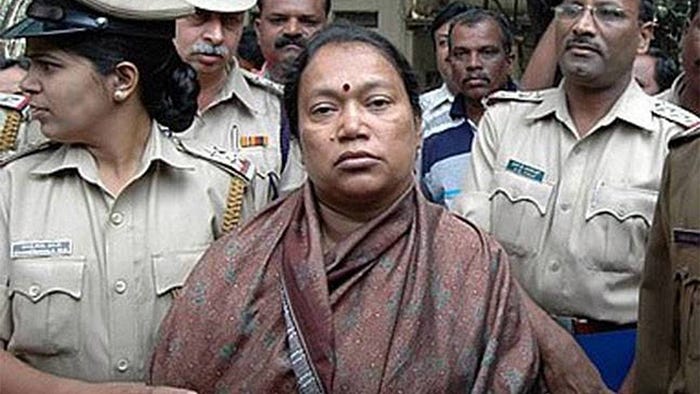

At first glance, she appeared like a regular, deeply pious 45-year-old woman who would visit the Hindu temple in Kaggalipur frequently. She would mingle with younger women and share her wisdom to help them with their distress.
Kempamma was a motherly figure to several.
However, little did the innocent women visiting the temple know that their motherly figure was hiding her true intentions behind a mask, waiting to prey on them.
Before the Murders
K D Kempamma was a resident of Kaggalipura, a small village located near the capital city of Bangalore in Karnataka.
Little is known about her past, except that she was married to a man who worked as a tailor.
Things did not work in her financial business and as a result, her husband abandoned her in 1998.
According to sources, Kempamma worked as a domestic helper afterward where she was caught stealing several times.
The First Spree of Murders
In 1999, Kempamma started frequently visiting the nearby temple. In the guise of a concerned, older woman, she would seek out younger women who would appear to be distressed.
The women would see her as a maternal figure and would quickly confide in her about their troubles. After all, they came to the temple looking for help.
The women trusted her with their secrets and worries due to her age and wisdom.
By providing them with an ear, Kempamma would collect all the information about their worries. The usual tension ranged from illness to conceiving a male child.
To every issue, she would guarantee a holy solution — a special 'puja' (worship ritual to the gods) that she was an expert at.
Kempamma would ask the victims to come to a vacant plot near the temple, wearing her expensive jewelry and clothes as a part of the ceremony.
Towards the end of the ritual, she would present them a glass of water laced with cyanide as a pious token.
After the victim's death, she would rob all the gold and diamond from the bodies and sell them in the market. Her first victim was a 30-year-old Mamatha Rajan.
The murders continued till 2000 when she tried to rob a house where she went for the holy ritual ceremony. The victim found out the truth and ran away to her family, screaming.
Unfortunately, Kempamma was only given a short sentence of six months and released soon after.
The Murders Continued
Kempamma again started killing using her usual modus operandi in 2007.
Using the cyanide water, she killed about 5 women in a period of 3 months. According to reports, there are several missing person reports that were filled at that time and could have been victims of Kempamma as well.
After several murders and robbing dead bodies of gold and riches, she was arrested for the second time in 2008, after the police got a tip about her whereabouts. At the time of arrest, she had the victim's jewelry in her possession.
She confessed to all the murders. Kempamma bought the poison from jewelry shops, where it was used to clean gold jewelry. Her inspiration to use cyanide as a murder tool came from popular movies.
The media gave her the nickname "Cyanide Mallika."
Sentencing
Kempamma became the first woman to be given the death penalty in the state of Karnataka. However, later on, it was converted into life imprisonment because of circumstantial evidence.
She is still serving her sentence in jail.
Conclusion
Cyanide Mallika wanted quick riches and to get out of the state of poverty that she lived in. She even started a small business where people would deposit their savings and get the amount and the interest after a specified period of time.
However, it did not work out and Kempamma had to face huge losses. While her husband's involvement in the failed business is not known, however, it was devastating enough for him to leave her to fend for herself.
Left with no financial and emotional support, Kempamma decided to work as domestic help. However low pay and quality of living made her steal from her employee. She knew that such a way of living would not take her near any of her goals. So she decided to choose murder and robbery as her way of getting them.
Kempamma was very well aware of the fact that her age would make it easier for her to befriend young women. Promising a holy solution to the women who were already suffering and had no one to approach for their worries, made it easier for Kempamma to commit the murders. During Kempamma's trial, the police stated her main motive for the murders was money and that she had no psychopathic tendencies.
Kempamma's gender, age, and the lack of psychopathy make the case unique by all means.