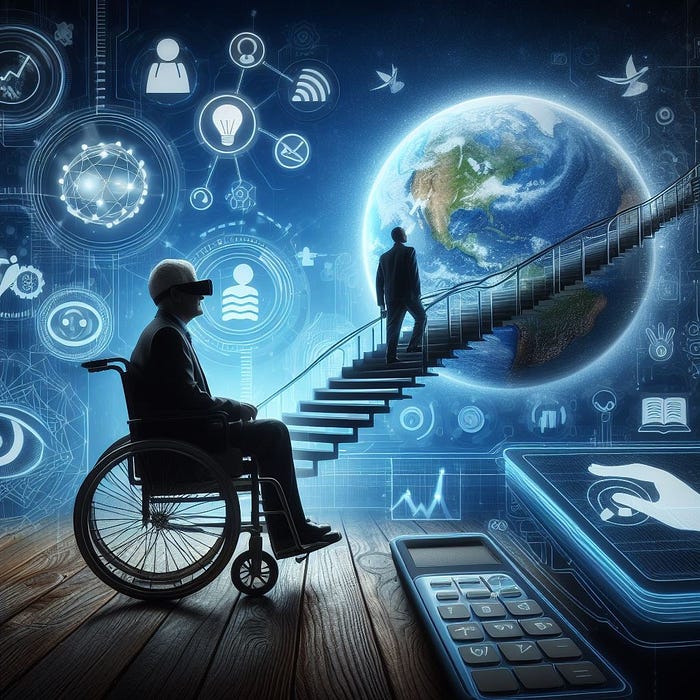

Charity work and support for social services play a vital role in addressing the needs of marginalized communities, including the visually impaired. However, the allocation of resources and government support for such initiatives often depends on various factors, including the size of the affected population and the perceived impact of the services provided. In Singapore, the Singapore Association of the Visually Handicapped (SAVH) is a key organization dedicated to supporting the visually impaired community. Despite the significant impact of visual impairment on individuals and society, the resources allocated to support this community may be comparatively lower than those for other groups with larger numbers.
In addressing the needs of the visually impaired, technology has emerged as a powerful tool for enhancing accessibility and improving quality of life. With advancements in artificial intelligence (AI) and assistive technologies, there is immense potential to customize courses in Singapore's SkillsFuture program to cater to the specific needs of the blind and visually impaired.
Customizing Courses with AI Technology:
One of the key challenges faced by the visually impaired in accessing education and training programs is the lack of accessibility features tailored to their needs. However, with text-to-speech and speech-to-text technologies, it is possible to make educational content more accessible and inclusive for individuals with visual impairments.
By integrating AI-driven tools into the SkillsFuture program, courses can be customized to provide audio descriptions of text-based content, enabling visually impaired learners to access course materials through speech synthesis technology. Similarly, speech recognition technology can facilitate interactive learning experiences by enabling users to dictate responses or engage in conversations with instructors and fellow learners.
Real-Life Examples of Technology Supporting the Blind:
Several real-life examples demonstrate how technology has evolved to support the blind and visually impaired community. For instance, screen readers such as VoiceOver on Apple devices and TalkBack on Android devices provide audio feedback to users, enabling them to navigate digital interfaces, read text, and interact with applications independently.
Similarly, optical character recognition (OCR) technology allows individuals to convert printed text into digital format, making it accessible through speech synthesis or braille displays. Additionally, navigation apps like BlindSquare and Be My Eyes utilize GPS and crowd-sourced assistance to help users navigate their surroundings and perform daily tasks more effectively.
The Role of Startups in Developing Accessibility Solutions:
Startups play a crucial role in driving innovation and creating solutions to address the needs of underserved communities, including the visually impaired. With the growing demand for accessibility technologies, there is ample opportunity for startups to develop innovative applications and platforms that cater to the specific needs of blind and visually impaired individuals.
By leveraging AI technology and human creativity, startups can create intuitive and user-friendly solutions that enhance accessibility and empower individuals with visual impairments to participate more fully in education, employment, and social activities. Moreover, with the support of government initiatives and funding programs, startups have the potential to scale their solutions and make a meaningful impact on the lives of millions of people worldwide.
Conclusion: Towards a More Inclusive Future
In conclusion, the integration of AI technology into education and training programs holds immense promise for enhancing accessibility and inclusivity for individuals with visual impairments. By customizing courses in Singapore's SkillsFuture program with text-to-speech and speech-to-text technology, it is possible to provide a more equitable learning experience for all learners, regardless of their abilities.
Furthermore, the evolution of technology has demonstrated the potential to transform the lives of the blind and visually impaired, enabling greater independence, mobility, and participation in society. With the collective efforts of government agencies, nonprofit organizations, and startups, we can create a more inclusive future where everyone has equal opportunities to learn, work, and thrive.