

If you've ever built a Retrieval-Augmented Generation (RAG) setup, you understand the frustration. The model struggles to find accurate information, your PDFs appear mangled, and OCR results are filled with errors.
That's usually where we begin to lose faith in retrieval.
Then I tried ColiVara, and it honestly felt like someone finally "got it."
ColiVara doesn't just scan your documents — it perceives them. Whether it's a dense financial report, a table with scattered numbers, or a slide deck with cluttered diagrams, it examines everything visually. It understands the layout as a human would.
No broken context. No messed-up text boxes. No OCR horror stories.

What Makes ColiVara Different
Most retrieval systems only focus on text. They strip away everything, break it into chunks, embed it, and hope for the best.
ColiVara offers something more innovative. It is built on ColPali, a vision-language model that treats each document as an image. Instead of converting pages into plain text, it reads them visually — just as we do.
That means it preserves the layout, understands charts and tables, and recognizes when a paragraph is actually part of a figure or caption.
Here's the short version:
- No chunking
- No OCR
- No layout loss
- Just pure context retrieval
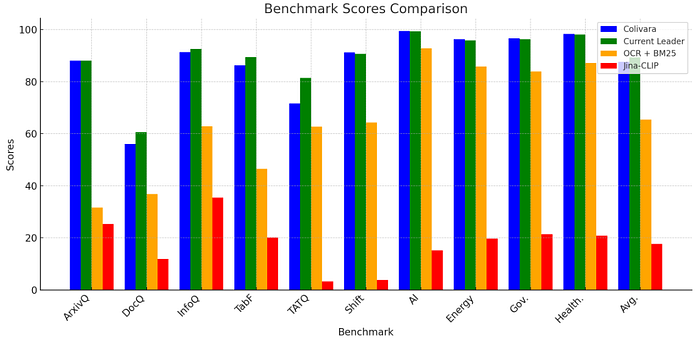
Even if your files are text-based, ColiVara still performs better. It uses something called Late-Interaction embeddings, which are more accurate than the typical pooled embeddings that most systems rely on. Translation: it understands meaning better, not just keywords.
You Don't Need a Fancy Vector Database
One of the best parts? You don't have to deal with Pinecone or other vector databases.
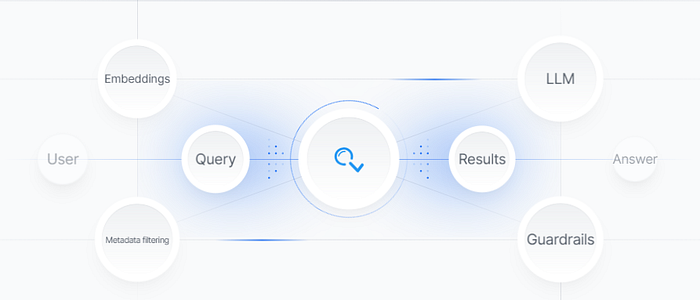
ColiVara operates on PostgreSQL + pgVector and manages all embedding generation and storage for you. No setup, no maintenance — it's all integrated.
And if you want to use your own vector DB, you can. ColiVara has an endpoint that provides embeddings only. You can store them wherever you like.
Just note — ColiVara uses multi-vectors and late-interaction embeddings, so not all vector databases support this yet.
Works with Pretty Much Any File
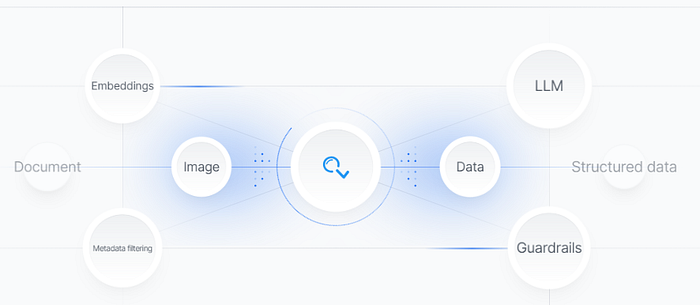
PDFs? Sure. Word docs? Yep. PowerPoints? Of course. Supports over a hundred formats.
Even web pages are automatically transformed into images before retrieval. You don't need to worry about it — it all occurs behind the scenes.
Getting Started
The setup feels refreshingly simple — no 50-step "quickstart" guides.
Step 1: Get an API key Visit ColiVara.com and claim your free key.
Step 2: Install the SDK You can use either Python or TypeScript.
pip install colivara-pyor
npm install colivara-tsStep 3: Upload your document
Python version:
from colivara_py import ColiVara

client = ColiVara(api_key="your-api-key")
document = client.upsert_document(
    name="sample_doc",
    document_url="https://example.com/sample.pdf",
    metadata={"author": "John Doe"},
    collection_name="user_collection",
    wait=True
)
TypeScript version:
import { ColiVara } from 'colivara-ts';

const client = new ColiVara('your-api-key');
await client.upsertDocument({
  name: 'sample_doc',
  document_url: 'https://example.com/sample.pdf',
  metadata: { author: 'John Doe' },
  collection_name: 'user_collection',
  wait: true
});
That's it — your document is indexed and prepared for search.
Searching
Once your data is in, searching becomes intuitive. You can also filter by author, year, or collection metadata.
Python:
results = client.search("What is 1 + 1?")Want to get fancy?
results = client.search(
  "What is 1 + 1?",
  query_filter={
      "on": "document",
      "key": "author",
      "value": "John Doe",
      "lookup": "key_lookup"
  }
)
print(results)
TypeScript:
const results = await client.search({
  query: "What is 1 + 1?",
  collection_name: "user_collection"
});
console.log(results);
You get back the most important pages — not random pieces of text that hardly make sense.
What You'll Probably Like
- It's fast. Latency is low, even for big docs.
- It's smart. Vision-based retrieval captures aspects that text models overlook.
- It's flexible. Supports all standard formats.
- It's simple. The API is clean and predictable.
- It's modern. Uses pgVector with half-sized vectors for better performance.
A Bit of Perspective
After experimenting with RAG systems for some time, I've realized that most "retrieval" tools don't truly understand documents — they merely index them.
ColiVara feels different because it doesn't attempt to slice your data into pieces. It focuses on understanding the layout, visuals, and everything else.
Whether you're creating a chatbot that responds from PDFs or a document search tool for internal reports, ColiVara provides you with context that truly makes sense.
In Short
ColiVara feels like what retrieval should have been from the start — simple, accurate, and truly innovative.
If your RAG model misses obvious answers due to broken text extraction, this might be the simplest fix available right now.