

In today's fast-paced digital landscape, data is the lifeblood of innovation. As our world becomes increasingly connected, the ability to process and analyze information quickly and efficiently has never been more crucial. Enter edge computing, a revolutionary paradigm that's transforming how we handle data across industries. But what exactly is edge computing, and how does it enhance data processing? Let's dive in and explore this game-changing technology.
Article Key Takeaways
- Edge computing dramatically reduces latency by processing data closer to its source
- Bandwidth usage is optimized through local filtering and analysis
- Enhanced security and privacy are achieved by keeping sensitive data on-site
- Improved scalability and reliability for IoT applications
- Cost-effective solution for real-time data processing needs
What is Edge Computing? 🤔
Edge computing is a distributed computing model that brings data processing and storage closer to the devices or data sources where it's generated. Instead of relying solely on centralized cloud servers, this approach leverages a network of smaller, localized data centers or edge devices to handle computational tasks.
The concept of edge computing has gained significant traction in recent years, driven by the explosive growth of Internet of Things (IoT) devices and the increasing demand for real-time data processing. Accenture reports that edge computing has become a pivotal component of modern digital infrastructures, enabling organizations to process data more efficiently and responsively than ever before.
The Edge Computing Revolution
Imagine you're driving an autonomous vehicle through a busy city. Every millisecond counts as your car makes split-second decisions based on its surroundings. In this scenario, waiting for data to travel to a distant cloud server and back could mean the difference between a safe journey and a potential accident. This is where edge computing shines, processing critical data right where it's needed most.
But the applications of edge computing extend far beyond autonomous vehicles. From smart cities to healthcare, manufacturing to retail, edge computing is revolutionizing how we interact with and leverage data in our daily lives.

How Edge Computing Enhances Data Processing 💡
1. Dramatically Reduced Latency
One of the most significant enhancements edge computing brings to data processing is the dramatic reduction in latency. By processing data closer to its source, edge computing minimizes the time required for information to travel to centralized servers and back. This reduction in latency proves crucial for applications demanding real-time responses.
CloudPanel highlights that in 5G networks, mobile edge computing (MEC) can achieve average delays as low as 15 milliseconds for completed jobs. This represents a 37.5% improvement compared to other MEC execution techniques. Such low latency enables lightning-fast decision-making and responsiveness in critical applications.
Case Study: Autonomous Vehicles
Consider the autonomous vehicle scenario mentioned earlier. In this case, edge computing allows the vehicle to process sensor data locally, making instant decisions about steering, braking, and acceleration. This real-time processing is essential for navigating complex urban environments safely and efficiently.
2. Optimized Bandwidth Usage
Edge computing significantly improves bandwidth efficiency by filtering and processing data locally before transmitting it to the cloud. Rather than sending vast amounts of raw data over the network, edge devices can perform initial analysis and send only relevant information to centralized servers.
SUSE explains that this approach proves particularly beneficial in environments with limited connectivity or high data generation rates. By reducing data transmission volume, edge computing alleviates network congestion and optimizes overall system performance.
Real-World Example: Smart Manufacturing
In a smart manufacturing facility, hundreds of IoT sensors monitor various aspects of the production line. Instead of sending all this raw data to a central server, edge devices can process it locally, identifying anomalies or performance issues in real-time. Only relevant insights or alerts are then transmitted to the cloud, significantly reducing bandwidth usage and enabling faster response times to potential problems.
3. Enhanced Security and Privacy
Edge computing bolsters data security and privacy by processing sensitive information locally on devices. This localized approach minimizes the risk of cyber attacks and data breaches during transmission. SEEBURGER notes that edge computing helps protect customers' personal data by keeping it under users' control.
Moreover, edge computing enables the implementation of dedicated data processing units (DPUs) for security-critical tasks like data encryption and decryption. This additional layer of security further safeguards sensitive information from potential threats.
Case Study: Healthcare IoT
In healthcare, patient data privacy is paramount. Edge computing allows wearable health monitors to process sensitive patient information locally, sending only aggregated or anonymized data to central servers when necessary. This approach ensures that personal health data remains secure and compliant with regulations like HIPAA.
4. Improved Scalability and Reliability
Edge computing facilitates improved scalability by distributing processing power across multiple edge devices. This decentralized approach can handle growing volumes of data more effectively than centralized systems. Acumera points out that edge computing is particularly well-suited for IoT applications, where numerous devices generate vast amounts of data that need rapid and efficient processing.
Furthermore, edge computing enhances overall system reliability. By reducing dependence on central servers or cloud infrastructure, edge computing allows for continued operation even during network outages or cloud failures. This increased reliability proves crucial for mission-critical applications in industries like healthcare, manufacturing, and finance.
Real-World Example: Smart Grid Management
In a smart electricity grid, edge computing devices can monitor and manage power distribution at a local level. If a central server goes down, these edge devices can continue to operate independently, ensuring uninterrupted power supply and efficient energy management.
5. Cost-Effective Data Processing
Edge computing can lead to significant cost savings for organizations. By reducing the amount of data sent to the cloud, businesses can lower their bandwidth costs and minimize the need for extensive cloud storage solutions. CloudPanel notes that this approach can result in substantial operational cost reductions over time.
Additionally, edge computing enables more efficient resource allocation. Computing tasks can be offloaded from resource-constrained mobile devices to edge servers, reducing energy consumption and processing time for mobile devices. Advanced techniques like multi-agent deep reinforcement learning (MADRL) can optimize offloading decisions, considering factors such as computation delay, energy consumption, communication latency, and waiting time.
Case Study: Retail Analytics
A large retail chain implements edge computing for its in-store analytics. Instead of sending all customer behavior data to a central server for processing, each store has its own edge devices that analyze foot traffic, purchasing patterns, and inventory levels in real-time. This approach not only reduces cloud computing costs but also enables more responsive and personalized customer experiences at each location.
Real-World Applications of Edge Computing 🌐
Edge computing finds applications across various industries, revolutionizing data processing and enabling new possibilities. Let's explore some key use cases:

1. Autonomous Vehicles 🚗
Edge computing plays a crucial role in enabling autonomous vehicles to make split-second decisions. By processing data from various sensors locally, autonomous vehicles can respond to their environment in real-time without relying on constant communication with distant servers. This low-latency processing proves essential for ensuring the safety and performance of self-driving cars.
2. Industrial Automation 🏭
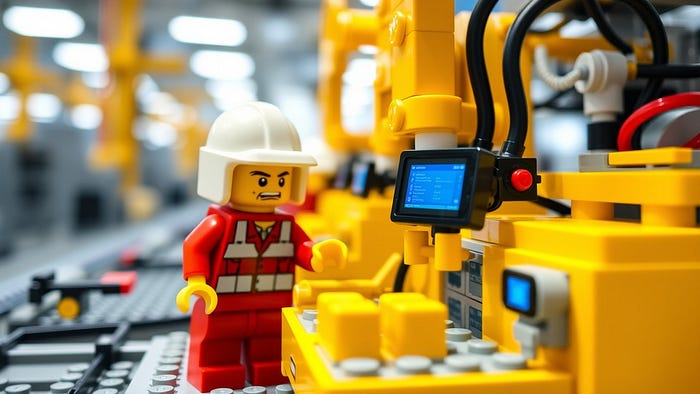
In manufacturing and industrial settings, edge computing enables real-time monitoring and control of machinery. Silicon Valley Center explains that edge devices can analyze data from sensors to predict maintenance needs, optimize production processes, and enhance overall operational efficiency. This immediate data processing allows for quick adjustments and improved productivity.
Case Study: Predictive Maintenance
A large automotive manufacturer implements edge computing in its production line. Edge devices collect and analyze data from various sensors on the assembly robots in real-time. By processing this data locally, the system can predict when a robot is likely to fail, scheduling maintenance before a breakdown occurs. This predictive maintenance approach has reduced unplanned downtime by 35% and increased overall production efficiency by 15%.

3. Healthcare and Telemedicine 🏥
Edge computing enhances healthcare services by enabling real-time patient monitoring and telemedicine applications. Wearable devices can process health data locally, alerting healthcare providers to potential issues immediately. This rapid response capability can prove life-saving in emergency situations.
Real-World Example: Remote Patient Monitoring
A hospital implements an edge computing-based remote patient monitoring system for patients with chronic conditions. Wearable devices collect vital signs and other health data, processing it locally to identify any concerning trends or anomalies. Only relevant alerts or summaries are sent to healthcare providers, enabling timely interventions while reducing the burden on hospital networks and staff.
4. Smart Cities 🏙️
Edge computing powers various smart city initiatives, such as intelligent traffic management systems. These systems can optimize traffic flow and improve emergency response times by processing data from sensors and cameras in real-time. 5G Hub highlights that edge computing enables dynamic adjustments to traffic signals and rapid relay of critical information to connected vehicles.
Case Study: Intelligent Traffic Management
A large metropolitan area implements an edge computing-based traffic management system. Edge devices process data from traffic cameras and sensors in real-time, adjusting traffic light timings to optimize flow and reduce congestion. The system also prioritizes emergency vehicles, automatically clearing their path through traffic. Since implementation, average commute times have decreased by 20%, and emergency response times have improved by 30%.
5. Retail and Consumer Goods 🛒
In retail, edge computing enables real-time inventory management and personalized customer experiences. Edge devices can analyze customer behavior at the point of sale, offering tailored promotions and optimizing stock levels. This localized processing capability allows retailers to adapt quickly to changing consumer demands.
Real-World Example: Smart Shelves
A grocery chain implements smart shelves powered by edge computing. These shelves use weight sensors and computer vision to monitor inventory levels in real-time. Edge devices process this data locally, automatically alerting staff when restocking is needed and updating digital price tags based on supply and demand. This system has reduced out-of-stock incidents by 40% and improved overall inventory accuracy by 25%.
Challenges and Limitations of Edge Computing 🚧
While edge computing offers numerous benefits, it also faces several challenges:
Security Risks
The decentralized nature of edge computing can introduce new security vulnerabilities. Each edge device serves as a potential entry point for attackers, making security management more complex and resource-intensive. Organizations must prioritize robust security measures, including hardware hardening, data encryption, and regular software updates to protect sensitive information.
Physical Constraints
Edge devices often face significant physical limitations, such as space, cooling requirements, and networking capabilities. For instance, retail environments may require compact edge devices that fit under counters, while manufacturing settings need passive cooling solutions to cope with dust and environmental conditions.
Management Complexity
Managing a distributed network of edge devices can prove more complex than traditional centralized systems. Organizations must invest in robust management solutions to monitor and maintain these devices effectively. This increased complexity can pose challenges for IT teams, especially in large-scale deployments.

Future Trends in Edge Computing 🔮
As edge computing continues to evolve, several trends are shaping its future:
AI and Machine Learning Integration
The integration of artificial intelligence (AI) and machine learning (ML) with edge computing promises to unlock new capabilities. Edge AI applications can benefit from persistent improvement through ongoing data training, enhancing accuracy and performance over time. This combination of edge computing and AI enables more sophisticated on-site data processing and analysis.
Enhanced Security Protocols
Future developments in edge computing will likely focus on implementing more robust security measures. This may include automated intelligent monitoring systems, multi-factor authentication, and advanced encryption techniques to protect edge devices and data from potential threats.
Demand for Vendor-Neutral Platforms
As edge computing environments become more complex, there's a growing need for vendor-neutral platforms. These platforms will allow organizations to manage a diverse array of devices and solutions effectively, facilitating interoperability and flexibility in edge computing deployments.
Further References & Infography
The Impact of Edge Computing on Data Processing and Securit
How Edge Computing is Transforming Network Infrastructure in 2024
As AI technology races forward, the demands on computing power and energy are skyrocketing
Infography
Conclusion: The Edge of Innovation 🌟
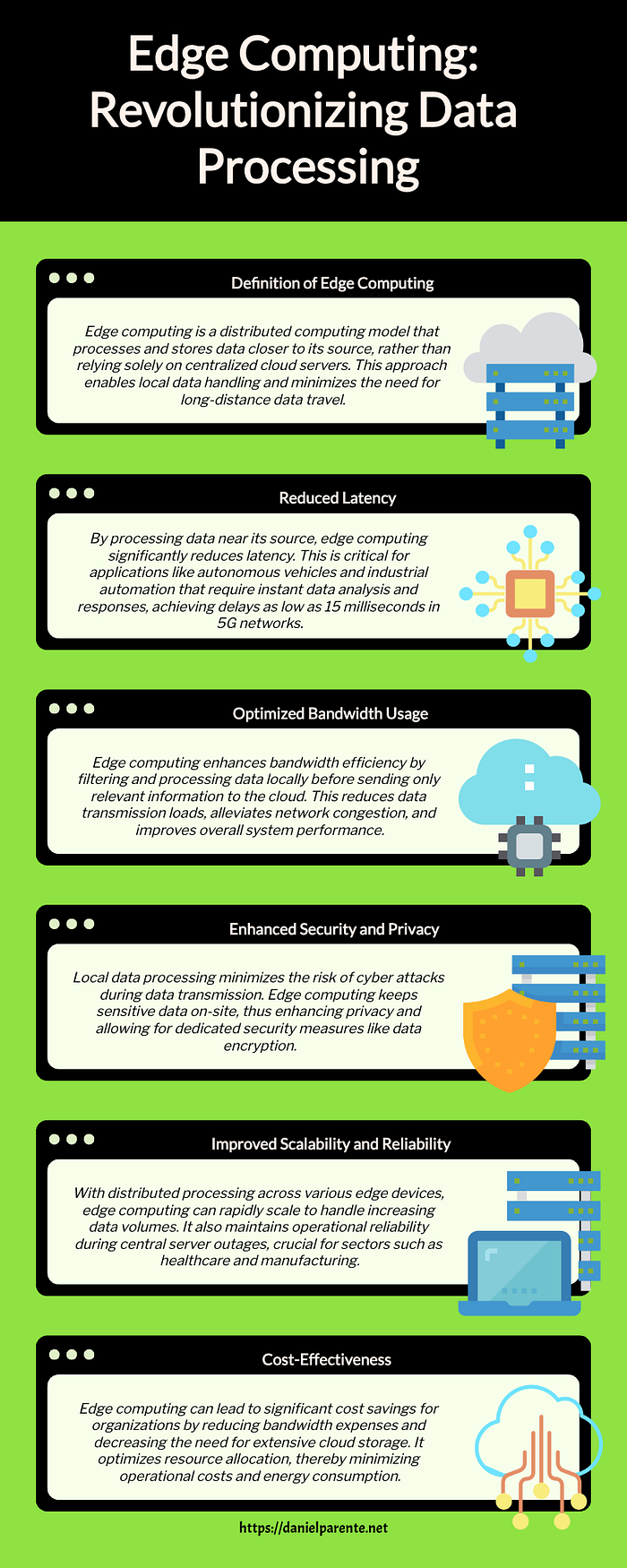
Edge computing represents a paradigm shift in data processing, bringing computation closer to data sources and enabling real-time analysis and decision-making. By reducing latency, optimizing bandwidth usage, and enhancing security, edge computing addresses critical challenges associated with traditional centralized architectures.
As IoT devices proliferate and the demand for real-time data processing grows, edge computing will play an increasingly vital role in shaping the future of digital infrastructure. From autonomous vehicles to smart cities, edge computing unlocks new possibilities for innovation and efficiency across various industries.
While challenges remain, particularly in the areas of security and management complexity, ongoing advancements in edge computing technology promise to address these issues. As we move forward, the integration of AI and ML, enhanced security protocols, and the development of vendor-neutral platforms will further expand the capabilities of edge computing.
In essence, edge computing stands at the forefront of a new era in data processing, empowering organizations to harness the full potential of their data and drive innovation in an increasingly connected world. As we continue to push the boundaries of what's possible with edge computing, we're not just optimizing data processing — we're reimagining the very fabric of our digital future. 🚀🌐
So stay tuned for updates on these futures. And if you found this glimpse beyond the bleeding edge compelling, hit those clap buttons to help spread the word!
If you want to read more interesting content don't forget to check on my blog.