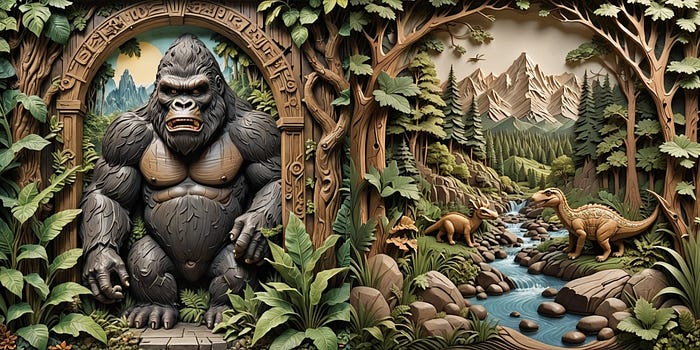

While experimenting with various methods to enhance depth in digital drawings, I had an intriguing realization. Traditional drawings on paper or canvas are inherently flat, relying on perspective techniques to create the illusion of distance. On the other hand, real three-dimensional art, like sculptures or carvings, possesses actual physical dimensions.
Instead of relying solely on conventional perspective techniques to achieve 3D effects, I decided to take a different approach. Why not base AI-generated 3D art on authentic analog styles that naturally possess physical depth? By starting with classic art forms like High Relief Carvings, which inherently have dimension, we can push the boundaries of what's possible in 3D art.
Classic Carvings With Real Depth
Relief refers to a sculptural technique where the carved elements remain attached to a solid background. The figures or patterns are elevated above the background plane, offering a noticeable depth that gives the artwork a dynamic, lifelike quality. Artists typically create these carvings from materials like wood or stone.
Classic relief carvings possess genuine 3D depth, with actual physical distance between the layers, making them impressive and captivating in person. However, many online photos of relief carvings tend to appear flat, offering a weak illusion of dimension. To achieve a moderate sense of depth, photographers need to find the optimal angle and effectively highlight the shadows that emphasize their dimensionality.


AI-Generated High Relief Carvings
Photography, with its reliance on physical materials, often struggles to convey distance as effectively as AI-generated images. Artificial intelligence has the unique ability to optimize every aspect of an image to enhance depth perception, resulting in visuals that are more striking and dynamic when viewed in 2D.
Relief carving by hand is a meticulous and time-consuming process, but with text-to-image generators, the same effect can be achieved in seconds. Without the constraints of cutting into stone or wood, AI can create scenes that are deeper, more intricate, and richly colorful, offering a level of complexity that traditional methods find challenging to replicate.
The art of high relief carving has become less common today due to the significant skill, time, and effort required. As modern technologies have advanced, many traditional art forms have seen a decline in practice. However, AI-generated images offer a way to revive and reimagine this intricate art style, breathing new life into relief carving by making it more accessible and adaptable in the digital realm.
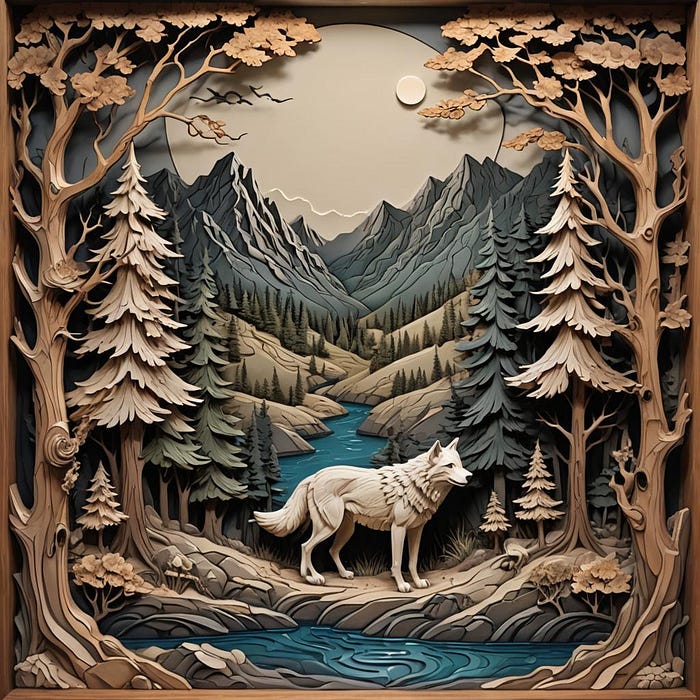
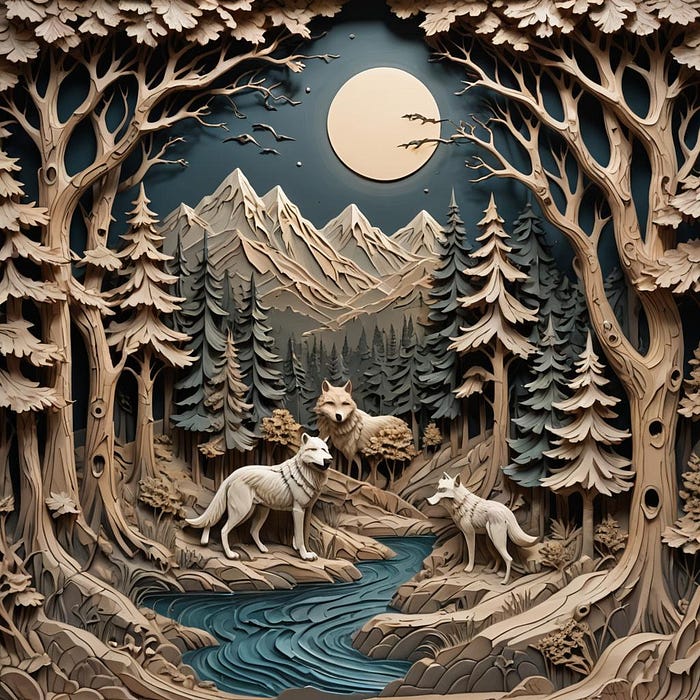
In the world of digital 3D art, relief carvings present a unique and complex alternative to more common three-dimensional drawing and painting techniques. Unlike digital paintings and drawings, which are widespread, relief carvings demand a higher level of skill and time to replicate digitally. This complexity makes them less prevalent in digital art, but AI offers a solution to overcome these challenges, enhancing depth and offering a distinctive method for creating 3D effects.
By simulating the dimensionality and texture of physical layers, AI can bring the rich details of relief carvings into the digital space, providing a fresh perspective on this classic technique. The depth effect achieved through AI is remarkably lifelike — arguably the most realistic without the need for anaglyph glasses — making it an invaluable tool for creating immersive and visually striking digital art.
Hyper-realistic 3D Effects
To create digital pictures with a true sense of depth, you need to manipulate how light reaches the viewer's eyes. For instance, converting two 2D photos into red-cyan 3D images can achieve this effect. If the image appears to pop out of the screen without requiring special equipment, the depth effect is often considered to be hyper-realistic or highly realistic, rather than actual depth.
The AI-generated art showcased on this page, along with any images created using the prompts provided would be considered to have a realistic or hyper-realistic illusion of depth. You could also use the term pop-out 3D when the image appears to come out of the screen.

Prompts for Immersive Realistic 3D Images
Common subjects for high relief carvings include landscapes, wildlife, urban scenes, historical scenes and portraits. Achieving a strong illusion of three-dimensionality was often easier with landscapes and cityscapes, where multiple layers and distant horizons naturally enhance the sense of depth. In contrast, portraits and animal close-ups can be more challenging, as the main subject tends to obstruct the background.
Creating pop-out effects, where elements seem to extend beyond the screen, was the easiest to duplicate with trees and other plants. The intricate details of leaves, in particular, often appear to emerge from the display screen, enhancing the three-dimensional impact.
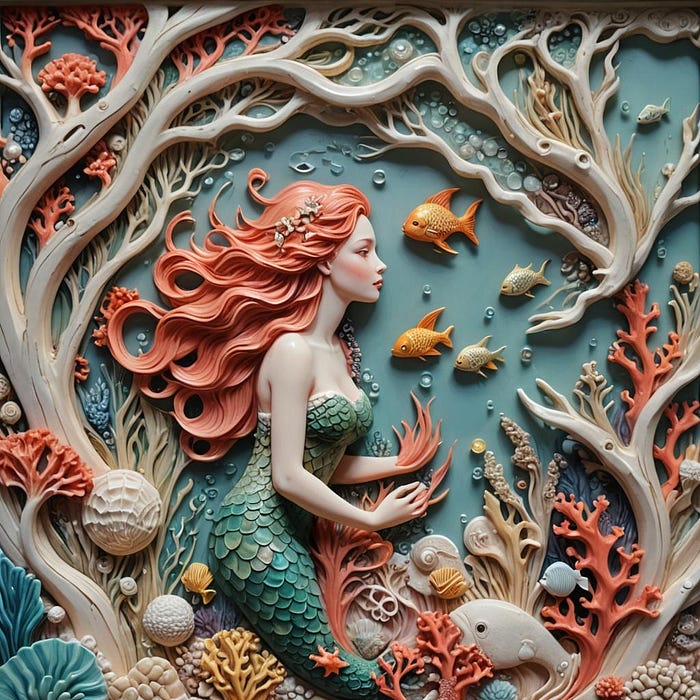
- Hyper-realistic, real 3D art with extreme profound 3D depth effect, (painted multi-layered high relief carving:1.6), seems to pop out and recede into the background, forced perspective. Each layer is detailed, with accurate shadows and light enhancing the illusion of depth, mermaid in a underwater cave with background, near coral, fish in distance.
- Real 3D art, extreme pop out effect, (painted multi-layered high relief carving:1.6) spooky landscape with profound depth, seems to pop out and recede into the background forever. Each layer is detailed, with accurate shadows and light enhancing the illusion of depth, trees, stream, mountains, moon, (wolf:1.5).
- Painted multi layered (high relief carving:1.8) with profound depth, foreground elements are closer, and background elements are set an inch or two behind. Each layer is detailed, with accurate shadows and light enhancing the illusion of depth. Scene includes lush woods, mountain in the distance, shallow stream with rocks.
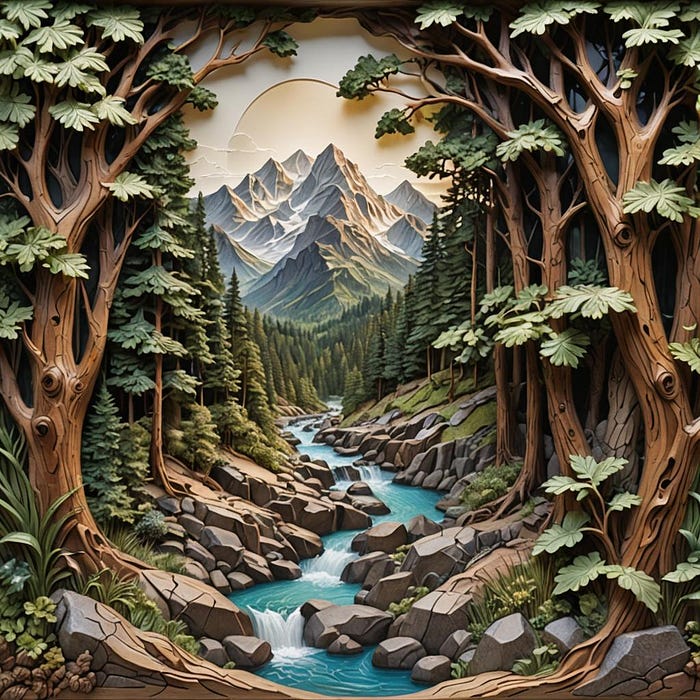
- (Painted:1.4) (multi-layered high relief carving with profound depth:1.6), foreground elements closer, background elements set inch or two behind, projecting significantly, dramatic effect, deep shadows and a strong sense of depth. Accurate shadows and light enhancing the 3D effect. Lion bursting out pop out effect, jungle scene. Multi-layered background, vibrant colors.
- Real 3D art, (painted multi-layered high relief carving:1.6) with profound depth, seems to pop out and recede into the background forever. Each layer is detailed, with accurate shadows and light enhancing the illusion of depth, background spooky woods, Little Red Riding Hood projecting in foreground, creating a dynamic 3D effect.
- Real 3D art, (painted multi-layered high relief carving:1.6) with profound depth, seems to pop out and recede into the distant background. Each layer is detailed, with accurate shadows and light enhancing the illusion of depth, background spooky woods, dramatic 3D effect, owl, perspective techniques, use forced perspective to enhance depth.
- Multi-layered painted high Relief carving with intense profound depth, The foreground elements are closer, and the background elements are set far away. Each layer is detailed, with accurate shadows and light enhancing the illusion of depth. 3D scene includes a Viking ship at sea, storm. Carved elements have significant depth, shadows, and intricate details, making the scene appear more lifelike.
- Real 3D art, (multi-layered very deep high relief carving painted,1.6), stone, deep set portrait with extreme profound depth, seems to pop out and recede into the background, Each layer is detailed, with accurate shadows and light enhancing the illusion of depth, vibrant colors, deep shadows, projecting outward past the carving towards the viewer.
- (Painted:1.4) (multi-layered high relief carving of gorilla with profound depth:1.8), foreground elements closer, background elements set farther back, projecting significantly, (behind a gate:1.5), (reaching out:1.5), dramatic effect with deep shadows and a strong sense of depth, accurate shadows and light enhancing the illusion of depth. Plants bursting out from the carving, jungle scene. Multi-layered background, vibrant colors, and a mountain far away in the distance, forced perspective, perspective techniques.
- Perspective techniques, (multi layered extreme high relief carving with real depth:1.8), forced perspective, profound depth, by famous artist, impressive 3D effect, three-dimensional, 3D art, each layer is 3 inches apart, projecting outward.


Reasons for Reviving High Relief Carvings
- Decline in Traditional Carving: The art of sculpting high reliefs has become less common, leading to reduced visibility and appreciation.
- Challenges with Photography: Photos of relief carvings often fail to capture the true depth and dimensionality, making them appear flat compared to the original art.
- AI Revolution in Relief Art: AI image generators can now create pictures of high relief carvings in seconds, offering a new way to explore this art form.
- Enhanced Depth in AI Creations: AI-generated images of relief artworks can achieve a profound hyper-realistic 3D effect with detailed shading and intricate textures that surpass the dimensionality seen in traditional photographs.
- Uniqueness in 3D Art: Three-dimensional art based on traditional carving techniques remains relatively rare, making AI-generated pieces inspired by these methods unique and visually striking.
Real 3D Art for Hyper-Realistic 3D Depth
When considering 3D art, you might think of drawings or paintings using perspective to simulate depth on a flat surface. Typically, text-to-image generators produce flat images with simulated 3D effects. However, using real 3D art, specifically high relief carvings, introduces actual depth, enhancing realism and dimensionality in digital art.
The digital art on this page was created using the NightCafe text-to-image generator with the Dreamshaper XL Lightning model. After testing various AI image generators, this combination yielded the best results for achieving a realistic 3D effect. If you're struggling to replicate this effect with your current tool, I recommend trying NightCafe.


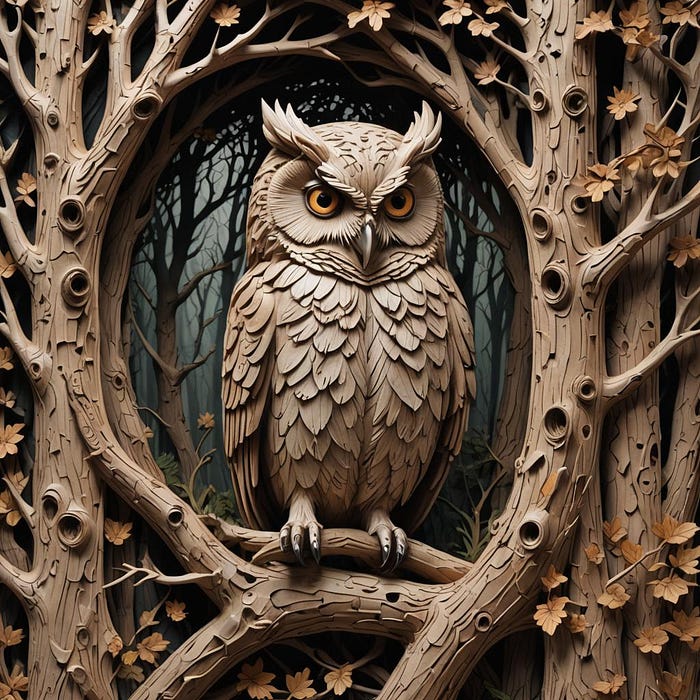
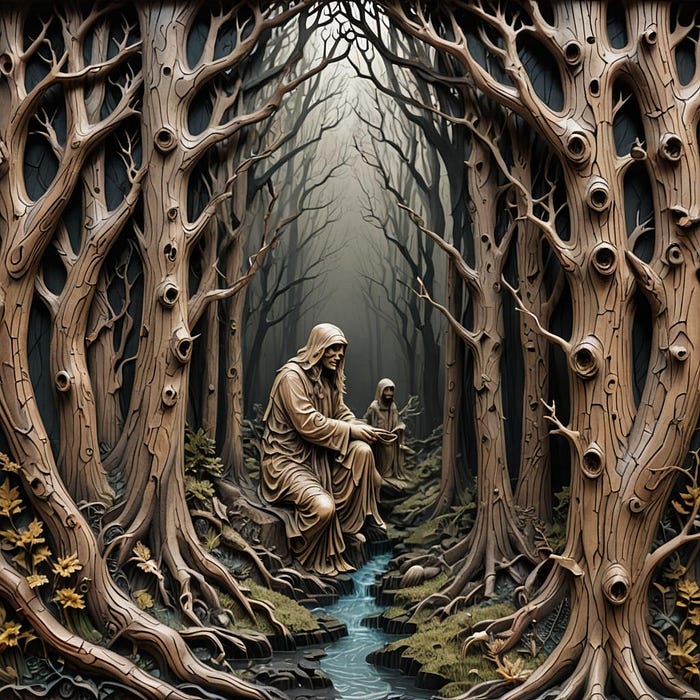
Building on the concept of real 3D art, using high relief carvings as a foundation for AI-generated images has proven highly effective in creating immersive three-dimensional art with striking pop-out effects. This technique not only enhances the sense of depth but also makes the artwork feel more tangible and lifelike.
While reliefs have proven highly effective for creating immersive 3D art with striking pop-out effects, I've also begun experimenting with other traditional layered art techniques that show even greater potential for enhancing depth. The early results are promising, and I'm eager to see how they compare in achieving new levels of realism.
If you're interested in exploring more styles of real 3D art and their potential for creating powerful three-dimensional illusions in AI-generated art, check out my first article in the series. It features various examples of AI art inspired by classic layered art with real depth, and that is where I will add links to other articles in the series as I finish them.

This story is published on Generative AI. Connect with us on LinkedIn and follow Zeniteq to stay in the loop with the latest AI stories.
Subscribe to our newsletter and YouTube channel to stay updated with the latest news and updates on generative AI. Let's shape the future of AI together!
