According to research conducted by the CEB Marketing Leadership Council partnered with Google, consumers do not engage with any sales representative until more than 55% of the purchasing decisions are made.
Nowadays, most buyers are aware of precisely what they want and expect an uncomplicated and straightforward purchase process. This has led to the increasing importance and value of Demand Generation.
Demand Generation in marketing is a strategy focused on activities that boost brand awareness among the target audience and guide them towards the sales process. It involves understanding consumer behavior, nurturing leads, and delivering high-quality leads to the sales team. This encompasses all marketing and sales efforts from initial contact to final purchase. Demand Generation includes creating campaigns, content, and advertisements to engage the audience and drive sales.

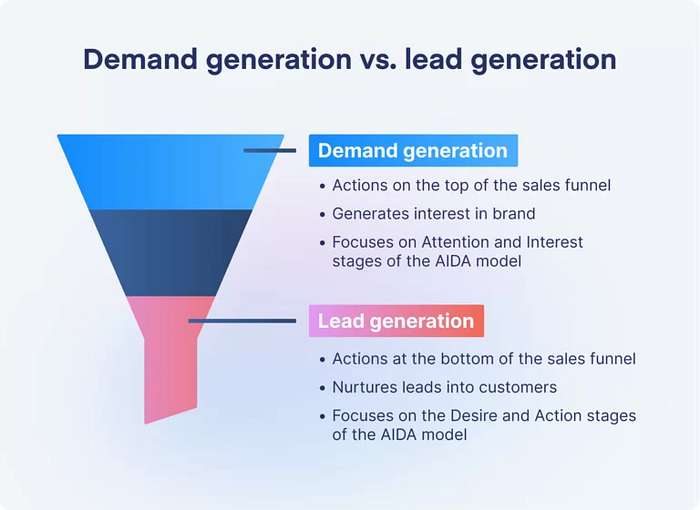
Demand Generation operates through a funnel with three main phases:
- Top of the Funnel: This phase concentrates on building brand awareness.
- Middle of the Funnel: Here, companies research and engage with their client base effectively.
- Bottom of the Funnel: This phase centers on converting prospects into high-quality leads and motivating them to make a purchase.
It's important to note that while Demand Generation creates a broad audience, Lead Generation focuses on converting this audience into potential buyers. Demand Generation sets the stage for Lead Generation by generating awareness and interest, which then leads to potential conversions.
The three pillars of a successful Demand Generation process are:
- Content: Creating unique, high-quality content tailored to different segments of the target audience. Content should align with where prospects are in the sales funnel and aim to create demand and generate leads.
- Demand Capture: This involves targeting individuals or prospects actively seeking a product or service similar to what you offer. It's about focusing efforts on those who are already in the market for what you provide.
- Pipeline Acceleration: This accelerates the purchasing decision process. Once demand is created and captured, activities like personalized conversations and focused content help speed up the sales conversion process.
Demand Generation progresses through three key stages:
- Building Awareness: Establishing brand recognition and credibility is crucial for generating consistent high-quality leads. A strong brand awareness campaign creates a positive perception of the business and builds trust with potential clients.
- Generating Interest and Decision Making: This stage involves converting prospects into Marketing-Qualified Leads (MQLs). It requires engaging the audience with informative content and using strategies like SEO, social media, and email marketing. Once interested, prospects become Sales-Qualified Leads (SQLs), and customized content guides them towards a decision.
- Nurturing Leads: A comprehensive lead nurturing approach is vital for a healthy Demand Generation process. It involves maintaining a connection with high-qualified leads, addressing their pain points, and delivering the right content at the right time to guide them through the purchasing journey.
This article was taken from The Salesbridge
For more info visit — https://thesalesbridge.com/blog/what-is-b2b-demand-generation-marketing/
Also visit — https://thesalesbridge.com/demand-generation-service/