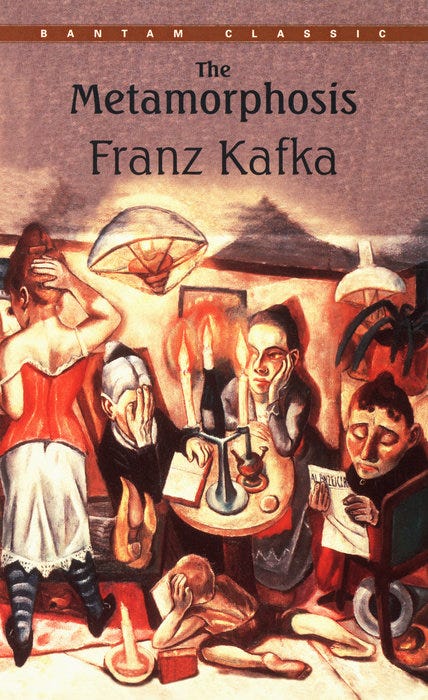

BOOK REVIEW
Franz Kafka, author of "Metamorphosis" (1883–1924), was a German-speaking Jewish writer who was born in Prague (Czech Republic). Kafka is one of the most influential world writers of the 20th century. He belonged to a middle-class Jewish family. He was a graduate of the University of Prague, from where he studied law. He remained associated with the insurance sector throughout his life, where he was financially stable but also spent his life in anxiety. His work covers topics such as alienation, existential restlessness, and the meaninglessness of modern life. Despite his literary achievements, he remained isolated and was critical of himself.
Before going into the details of the novel, we learn about its title, 'Metamorphosis'. It is a German word translated into English as 'transformation'.
The short novel was first published in German in 1915. Like the translation of "The Trial", the first English translation of the novel was done by Villa Moyer and her husband Edwin Moyer in 1933.
"Metamorphosis" presents a disturbing overview of indifference, boredom, the search for identity, and the inner nature of human beings. The plot of the novel revolves around a sale man named Gregor Samsa. One morning when he wakes up from sleep, he finds himself transformed into a giant insect. This strange and unrealistic event leads to emotional situations and social breakdowns.
The theme of alienation is central to this novel, where Gregor's change into an insect is a sign of psychological and emotional distance. Despite working hard to support his family, he does not hear words like love or kindness. His terrifying transformation adds to his alienation and the family that used to depend on him now looks at him with hatred and alienation. Gregor's inability to communicate with other people and their behavior change reflects the indifferent and alienating nature of modern life, where man, despite his entire struggle, is cut off from his loved ones.
The story of the novel also highlights Gregor's complex relationship with his family. Initially, the family relies on his financial support, but as Gregor's condition worsens, so does their attitude. His sister Grete, who first takes care of him and is sympathetic, over time begins to see him as a burden rather than a brother and eventually proposes that Gregor be thrown out of the house. Kafka appears to criticize the selfish and exploitative attitudes in family relationships through this story, where family love often depends on financial benefits. When Gregor is no longer beneficial to them, the family starts showing neglect and resentment instead of sympathy. This impression shows the conditional nature of family love.
In this novel, Kafka tries to convey important topics such as existentialism and the search for meaning to the readers through fiction. Gregor's transformation is a sign that life is often tied to the chains of social, family, and personal expectations of man, with the help of which man's freedom and identity are suppressed. Prior to his transformation, Gregor's life was merely going through responsibilities and routines with no real happiness or personal ambition. After turning into a worm, although Samsa is freed from spottiness, yet he suffers from severe discomfort and loss of objectivity. Kafka also attempts to highlight the sensitivity of identity and the impact of social expectations on it through this novel.
"Metamorphosis" is Kafka's timeless literary masterpiece that deals with topics such as alienation, identity, family relations, and existential hopelessness. Through Gregor's strange and tragic story, the author highlights the tangled nature of human existence. The novel's unreal and surprising theme is a powerful metaphor for the absurdity and meaning of modern life, where individuals are identified by external attitudes rather than by their personal value.
Franz Kafka's style is a combination of simplicity and psychological depth, often highlighting the alienation and existential struggles of the characters through unrealistic and funny situations. Its prose is simple and unpretentious, but in the background of apparent simplicity, serious, emotional and philosophical layers are hidden.