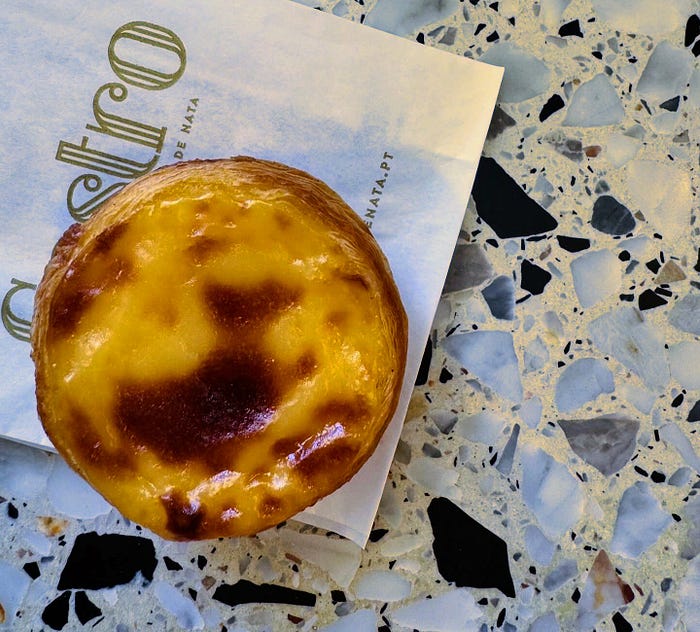


I know, it looks like a normal custard tart. You might be confident in predicting its taste and texture. It looks like something you've had before. You might even be fairly certain whether or not you will be a fan. As a former pastry chef, I can tell you that it's not just a custard tart.
Do you see those layers??
The magic of pastel de nata began in a monastery in the 18th century. The monks at the Jerónimos Monastery used to starch their clothing with egg whites, so naturally, they wanted to find a use for all of the leftover yolks.
Many of pastry's famous dishes were created with leftover ingredients: bread pudding, pavlova, clafoutis, zeppole, and rice pudding. Pastry chefs are resourceful and so were the monks.
The pastel de nata is surprising in so many ways — one of these being the variety of shops that sell exactly the same simple thing, with the result anything but uniform.
Unlike crème brulée, a pastel de nata contains a starch, either corn starch or flour. This makes the filling thicker and more pudding-like. Because of the starch, they can be baked at high heat for that caramelized top in contrast to crème brulée which can overcook and need to be baked in a water bath.
In contrast to a traditional custard tart which has a shortbread crust, pastel de nata crust is more like a puff pastry or even phyllo. Much of the magic comes from the contrasting textures. The dough for the crust is rolled in alternating layers with butter and is cut and molded into a metal tart shell. You can see the individual layers of pastry and butter — just golden. And I mean golden 🙌.
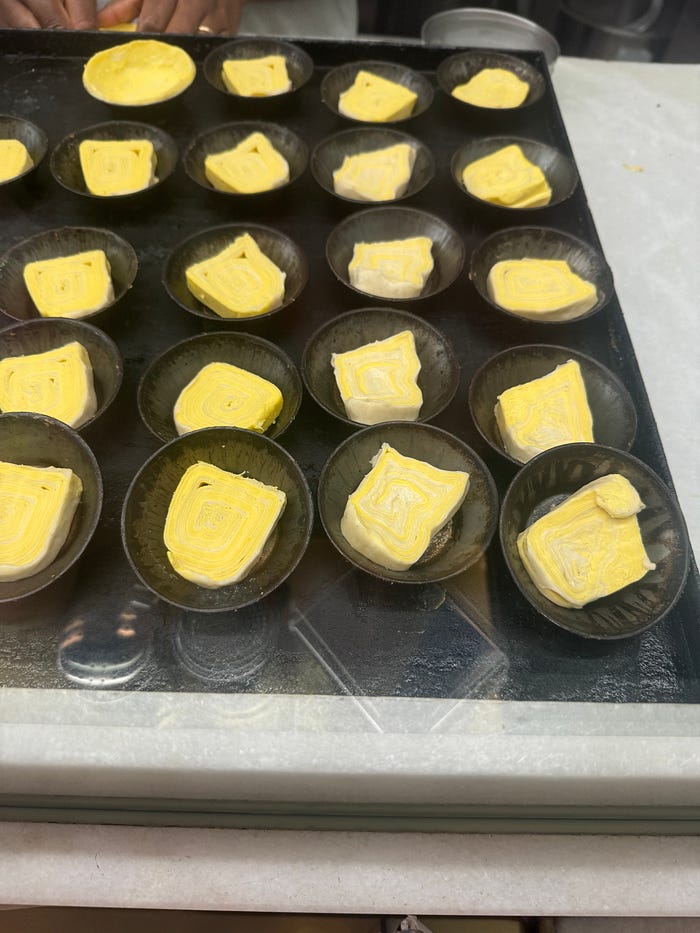
Many of the pastry shops (pastelaria) that sell pastéis de nata in Portugal are one-product shops — this is all they do. I have deep admiration for these types of shops, with their eggs all in one basket, so to speak. They are confident in their ability to do one thing well. Their message to the world is that if you stop by, you don't need anything but a pastel de nata and maybe an espresso. It's the truth!
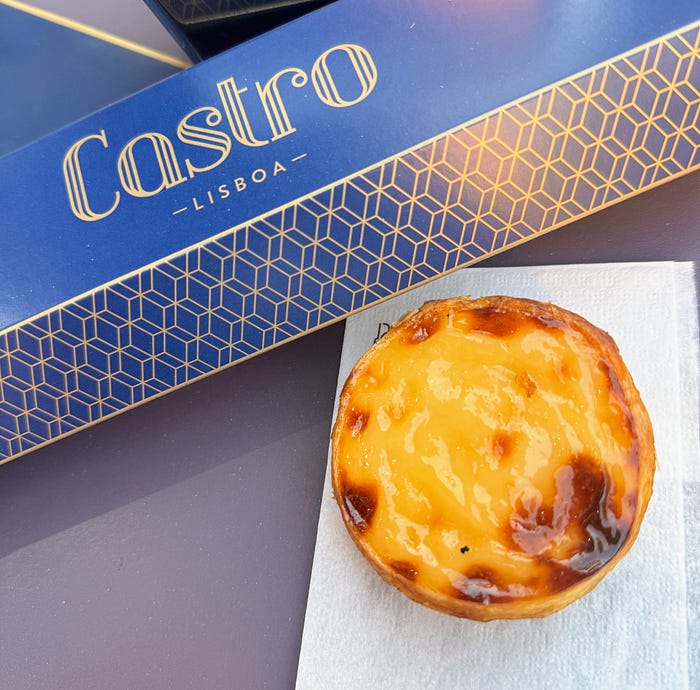
Let's talk about a few of my favorite pastel de nata shops in Lisbon starting with Castro. Castro is a beautiful shop with a gorgeous production kitchen with the opulence of a jewlery or perfume store. Having worked in Michelin starred kitchens, I appreciate a pastry display that is so evenly spaced and organized — it makes you feel like they care.

When I got there, the pastry I ordered was still warm, making the custard extra luscious and silky. You can see the hot ovens where the pastries are baked at high heat, resulting in the caramelized top. This adds a caramelized flavor similar to the top of a crème brulée. (But don't tell the Portuguese that.) My favorites are the super-caramelized tarts.
Along with your tarts, you get packets of sugar and cinnamon to add as you like.
Most of the shops have glass kitchens where you can see the pastries being made, which adds to the joy and appreciation of the work that goes into the production.

Then there is Manteigaria. The word butter in Portuguese is manteiga. That gives you an idea of what they are all about.
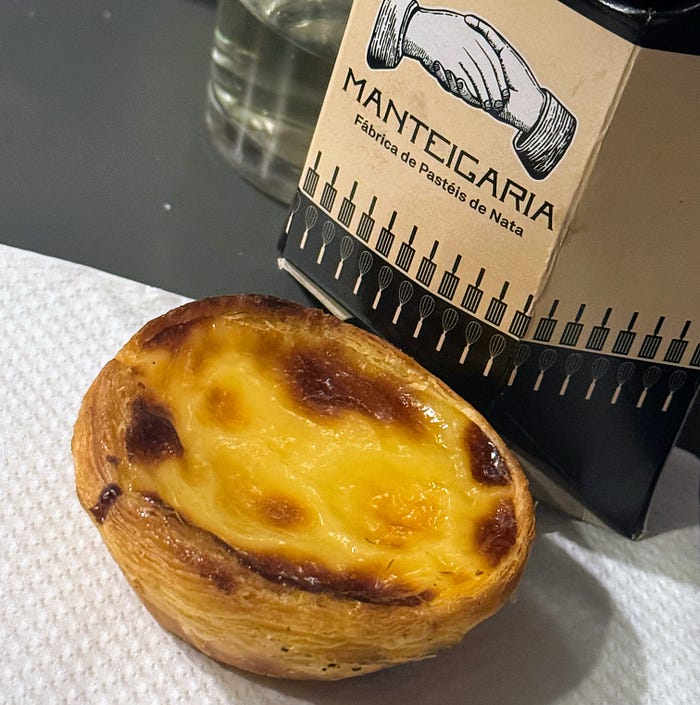
Each layer of their crust was distinguishable, contrasting with the creamy filling with a hint of cinnamon. They have several locations throughout Lisbon, one of those in the Time Out market, a large food hall and market. If you order several tarts, similar to Castro, they give you a cardboard sleeve packed with them so you can take them to-go without worrying that they will be crushed.
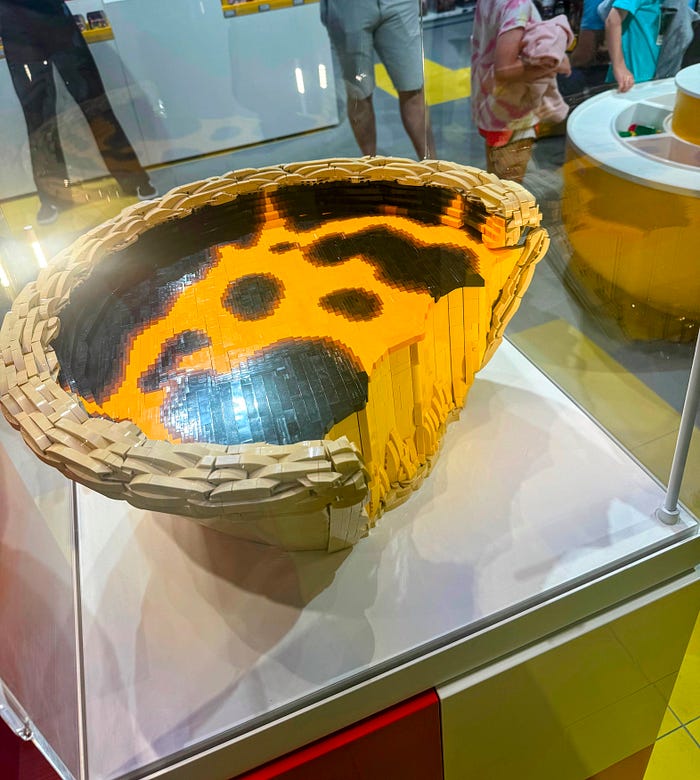
It seems everyone is crazy about these tarts. It is so popular, the Lisbon Lego store decided to make a giant pastel de nata made out of Legos!
The best place to eat a pastel de nata is obviously the beach.

I did not make it to Pastéis de Belém, supposedly the shop with the original recipe from the monks who sold it to them. It's on the list for my next visit!
Sources:
Cooking Lisbon: https://www.cookinglisbon.com/post/the-history-of-pastel-de-nata-and-where-to-eat-the-best-portuguese-custard-tarts-in-lisbon