
This isn't another recap of those 72 hours.
Here's what nobody's saying clearly: Everyone expected JARVIS. What we got was a Linux terminal that talks back.
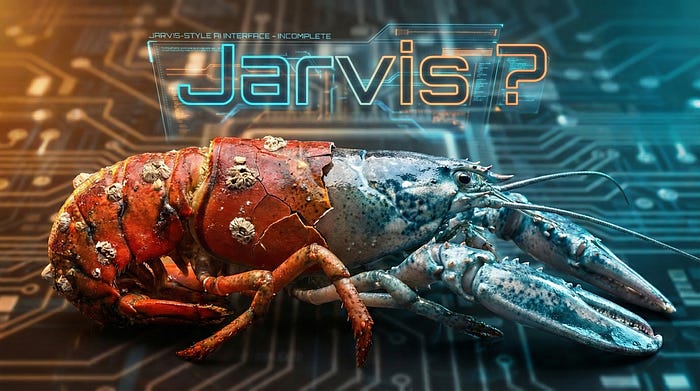
I watched thousands of developers — and non-technical users who got swept up in the hype — rush to install Clawdbot expecting Tony Stark's AI assistant. They imagined: "Book my dinner reservation. Schedule my team meeting. Remind me about Mom's birthday."
The reality? Clawdbot (now Moltbot) is brilliant engineering. 60,000 GitHub stars in weeks doesn't happen by accident. But it's not JARVIS yet. It's a self-hosted AI agent that requires terminal comfort and Docker knowledge, API key management across multiple services, understanding OAuth security implications, troubleshooting when integrations break, and accepting that you're running production infrastructure on your laptop.
The JARVIS fantasy isn't wrong. The timing was.
Why I Can't Resist Writing This
I've documented technology shifts for 40 years. When the Apple II brought programming to homes in the 1980s, I was there with AppleSoft BASIC. When cloud APIs transformed software integration in the 2000s, I built systems at Google and Meta. When large language models emerged, I watched the progression: first came the models themselves, then came agents, then came agentic workflows.
Now we're watching the next inflection point emerge: autonomous orchestration frameworks.
This is the moment when AI stops being a tool you use and becomes infrastructure you conduct. When your role shifts from "prompt writer" to "Intelligence Orchestrator." When the economics of AI access collide with the reality of AI deployment.
I couldn't resist documenting this transition. Not because the Clawdbot drama is unique, but because it's the pattern repeating itself with new characters. Every major shift in computing has this awkward adolescence where vision meets infrastructure reality. We're watching it happen in real-time with AI agents.
The last time I saw a shift this significant was when we moved from "using AI models" to "building with AI agents." That took 18 months. This shift — from managed AI services to self-hosted orchestration — is happening in weeks.
So while your timeline moves on to the next controversy, I'm documenting the pattern. Because the tool names change, but the pattern doesn't.
This is exactly what happened when I started programming on the Apple II in 1980. Or when cloud APIs emerged in the 2000s. The vision arrives before the infrastructure matures. Early adopters pay the "pioneer tax" in complexity and broken workflows.
Where Clawdbot Actually Sits in Your Tech Stack (And Why This Matters)
Part of the confusion comes from category ambiguity. Let me map the AI landscape so you understand what Clawdbot/Moltbot actually is — and isn't.
The AI Tech Stack in 2026 looks like this: At Layer 1, you have the AI models themselves — Claude Opus and Sonnet, GPT-4, Gemini, Llama. These are the intelligence engines. Clawdbot doesn't live here. It's not a model.
Layer 2 is AI interfaces like ChatGPT, Claude.ai, and Gemini chat. These let you have direct conversations with one model. Clawdbot isn't this either. It's not just chat.
Layer 3 covers coding assistants — GitHub Copilot, Cursor, Claude Code CLI. These are specialized for development workflows. Clawdbot can do this, but it does much more.
Layer 4 is workflow automation tools like Zapier, n8n, and Make.com. "If this, then that" logic chains. Clawdbot overlaps here but operates with more autonomy.
Layer 5 is where Clawdbot actually lives: AI Agent Frameworks. These are autonomous systems that orchestrate multiple AI models and tools, maintain persistent memory across conversations, run on self-hosted infrastructure you control, and take proactive actions rather than just reactive responses.
Think of it this way: ChatGPT means you ask questions and it answers. Zapier means you build workflow recipes and it executes them. GitHub Copilot means you write code and it assists. Clawdbot/Moltbot means you set goals and it figures out how to achieve them using whatever tools it needs.
The closest analogy? Clawdbot is like hiring a junior developer who lives on your computer. They can access your Gmail, Calendar, Slack, and GitHub. They can read files, write code, and send messages. They remember context from previous conversations, use multiple AI models as needed, and work across 50+ integrations.
The Legend of the Lobster (And Why It Actually Matters)
Before we go further, you need to understand why a crustacean became the mascot for one of GitHub's fastest-growing projects. The 🦞 emoji isn't just cute branding — it represents a fundamental architectural philosophy.
The original name "Clawdbot" was a playful nod to Claude Code — claws, Claude, get it? Austrian developer Peter Steinberger chose the lobster as the mascot. When Anthropic issued a trademark request forcing the rebrand, Steinberger leaned into the metaphor rather than abandoning it.
Clawdbot became Moltbot. The lobster mascot "Clawd" became "Molty." The name comes from the biological process of molting — when lobsters shed their old shell to grow larger. It's the perfect metaphor for a project that was forced to shed its old identity to evolve.
But the lobster symbolism goes deeper than clever naming.
The architecture uses what the team calls the "Lobster" component as its execution runtime. This is the hard shell — the secure, deterministic layer that actually performs actions on your computer. File operations, web automation, system commands. The "soft" part is the LLM brain — probabilistic, creative, conversational. The "hard" part is the Lobster runtime — precise, controlled, sandboxed.
This hard-shell versus soft-brain architecture represents a critical insight about AI agents that most people miss. Large language models are inherently probabilistic. They're creative and flexible, but they're not deterministic. You can't trust them to execute system commands reliably without a protective shell.
The Lobster runtime is that shell. It's the execution layer that bridges the gap between "AI decides what to do" and "system safely does it." When Molty (the AI) wants to send an email or create a calendar event, it goes through Lobster (the runtime) which validates, sandboxes, and executes the action.
This is the architectural innovation that made Clawdbot/Moltbot different from earlier AI agents. It's not just an LLM with API access. It's a complete orchestration framework with security boundaries, persistent memory, and controlled execution.
The lobster isn't just a mascot. It's the architecture. Hard shell protecting soft internals. Deterministic runtime containing probabilistic intelligence. The ability to molt and grow when circumstances demand evolution.
And molt it did. When Anthropic forced the rebrand, the project didn't just change its name — it evolved its identity. Same engineering, new shell. The 60,000 GitHub stars followed the molt. The community understood the metaphor was the message.
This matters because it reveals something important about this category of AI infrastructure: You need both the soft intelligence and the hard execution layer. The LLM alone can't safely operate your computer. The execution runtime alone can't make intelligent decisions. The lobster architecture — soft brain, hard shell — is the pattern that makes autonomous agents possible.
Now you understand why the rebrand drama isn't just about trademark law. It's about a project that built its entire identity around the metaphor of protective shells and necessary evolution. When circumstances forced a molt, the project practiced what it preached.
But here's the critical part most people missed: Clawdbot sits in the gap between AI models and automation tools. It's an orchestration layer that connects everything — which means it needs access to AI models like Claude or GPT, credentials to your services like Google and Slack, permission to execute actions like sending emails and creating files, and persistent infrastructure running 24/7 on your machine or server.
This is why the Anthropic crackdown happened. Clawdbot users were treating their $20-per-month Claude subscription like API access. They were getting enterprise-level orchestration at consumer pricing. The economics didn't work.
And this is why you can't compare Clawdbot to ChatGPT or Copilot — it's fundamentally different infrastructure with different risk profiles, different cost models, and different skill requirements.
So is it a good time for Clawdbot/Moltbot? It depends on who you are. If you're a developer or builder, absolutely. This is the experimental phase where you learn agent orchestration patterns before they become commoditized. You understand the stack, you can troubleshoot, you know what "self-hosted infrastructure" means.
If you're a professional looking for reliability, not yet. The account bans, security exposures, and platform policy changes show this is still early-days infrastructure. Wait for managed services like Anthropic's official integrations or enterprise agent platforms.
If you expected plug-and-play JARVIS, you'll be frustrated. This requires what I call "Intelligence Orchestration" — you're not getting an assistant, you're becoming a conductor of AI systems. You're managing infrastructure, not using an app.
The Pattern I've Watched Since 1980
Here's the deeper lesson your timeline isn't discussing: The Clawdbot implosion isn't about one tool. It's about the moment you realize you're not a 'user' anymore.
I've been in technology for 40 years. I started with an Electone organ in Chiang Mai in 1980, moved to AppleSoft BASIC on the Apple II, built systems at Big Techs, and now I'm creating hundreds of AI-generated songs weekly while my teenage son learns full-stack development. I've watched this exact movie play out across every major platform transition.
The pattern is always the same. First comes the vision — the promise of what's possible. Then comes the early implementation — powerful but rough around the edges. Enthusiasts rush in. The economics don't quite work yet. The infrastructure isn't mature. Then reality hits: account bans, security issues, platform policy changes, forced migrations.
In 1980, we imagined computers would make music creation effortless. They didn't. The Apple II Music Construction Kit required programming knowledge and patience. But we learned. And 45 years later, I'm using Suno and Udio to generate professional-quality music at scale.
In the 2000s, we imagined cloud APIs would make software integration seamless. They didn't — not at first. Early API changes broke production systems. Rate limits appeared overnight. Pricing models shifted. We learned to build resilience into our dependencies.
In 2025, we imagined AI agents would give everyone a personal assistant. They won't — not yet. Clawdbot showed us the gap between vision and reality. But we're learning.
The tool names change. The pattern doesn't.
The Economics Nobody's Discussing
Here's what your timeline missed while focusing on drama: The arbitrage was too obvious, and the arbitrage always closes.
Claude Opus 4.5 costs $5 per million input tokens and $25 per million output tokens through the API. Claude Sonnet 4.5 runs $3 per million input tokens and $15 per million output tokens. For agentic coding sessions that run long and tool-heavy, API billing scales with every token you send and receive.
A Claude Max subscription costs $20 per month, flat rate. Unlimited usage within fair-use limits.
The loophole was beautiful in its simplicity. Sign up for Max at a flat monthly fee, authenticate with Claude Code to get an OAuth token, then use that token in whatever third-party tool you preferred. OpenCode, Clawdbot, custom scripts — whatever worked for your workflow. For teams doing high-volume daily work, the gap between flat subscription fees and usage-based pricing became substantial.
Anthropic saw thousands of developers discovering this arbitrage simultaneously. The economic model couldn't sustain it. When one developer on Hacker News calculated that their typical agentic workflow would cost $1,000+ per month on API pricing but only $20 on Max subscription, the crackdown became inevitable.
Platform economics always win. The favorable pricing was designed to drive adoption of Claude Code, Anthropic's managed environment where they control rate limits and execution sandboxes. It wasn't designed to subsidize third-party orchestration frameworks at scale.
When Anthropic blocked Claude Code OAuth tokens from working in external tools, the error message was clinical: "This credential is only authorized for use with Claude Code and cannot be used for other API requests." Clean, devastating, and entirely predictable if you've watched platform transitions before.
What 60,000 Developers Just Learned About Dependencies
There's a moment in every infrastructure transition when your "cool tool" becomes mission-critical infrastructure. Then the rules change.
I learned this lesson with Google Reader. With Twitter's API changes. With Facebook's platform restrictions. The pattern repeats: open access attracts developers, ecosystems bloom, economics shift, access tightens, communities fracture.
Clawdbot users just discovered the difference between tools and dependencies. A tool is something you use occasionally. A dependency is something your workflow can't function without. When Clawdbot became a dependency — when people built their entire orchestration strategy around it — they inherited platform risk they hadn't evaluated.
This is the hidden cost of the "Intelligence Orchestrator" role. When AI promoted you from manual executor to system conductor, you didn't just gain capabilities. You gained infrastructure responsibilities. You became responsible for evaluating platform risk, understanding pricing models, building resilience into your dependencies, and maintaining contingency plans.
The mistake wasn't using Clawdbot. The mistake was building mission-critical workflows on top of a consumer subscription you didn't control.
The Intelligence Orchestrator's Playbook
So what comes after the drama? Here's the strategic framework I've built across four decades of watching platforms change their rules.
First principle: Never depend on arbitrage. If the pricing seems too good to be true — if you're getting enterprise value at consumer pricing — the arbitrage will close. Build your strategy assuming you'll eventually pay market rates for the value you're extracting.
Second principle: Evaluate the whole stack. When you adopt an orchestration tool, you're not just adopting that tool. You're adopting dependencies on every API it connects to, every model it calls, and every service it integrates with. Map the entire dependency tree. Understand where the bottlenecks and control points live.
Third principle: Strategic model rotation. This is what I do now. GitHub Copilot Pro for primary coding assistance. Claude Sonnet 4 for complex reasoning tasks. ChatGPT and Grok for specialized needs. I treat AI models like team members with different specialties rather than interchangeable commodities. When one gets restricted or changes pricing, my workflow adapts rather than breaks.
Fourth principle: Own your infrastructure where it matters. For experimentation, use managed services and third-party tools. For mission-critical workflows, understand what you control versus what you're renting. Self-hosting isn't always the answer, but you should know how to self-host if you need to.
Fifth principle: Document and backup. When I create AI-generated music or write content with AI assistance, I maintain local copies of prompts, configurations, and outputs. When platforms change their terms or shut down services, I don't lose my work product or my methodology.
What Actually Comes Next
The Clawdbot drama will fade. The crypto scams will settle. The rebrand to Moltbot will normalize. Peter Steinberger will recover his hijacked accounts or build new ones. The 60,000 GitHub stars represent real engineering value that won't disappear.
But the category Clawdbot pioneered — self-hosted AI agent orchestration — is just beginning. This isn't the end of a story. It's the awkward middle chapter where vision meets infrastructure reality.
JARVIS is coming. Just not today. The path forward requires managed agent services with proper enterprise pricing, standardized protocols like Model Context Protocol (MCP) for connecting LLMs to tools and data, mature self-hosting options with proper security frameworks, and economic models that align platform incentives with user value.
What you should do right now depends on what you need. If you're exploring and learning, use the chaos as education. Deploy Moltbot in a sandbox environment, understand how agent orchestration works, learn the patterns, but don't make it mission-critical yet.
If you're building production workflows, stick with official APIs and managed services. Pay market rates for the value you're getting. Build resilience into your dependencies. Accept that you're paying the premium for reliability, not just features.
If you're waiting for JARVIS, give it another 12 to 18 months. The infrastructure will mature. The economics will stabilize. The security models will improve. The plug-and-play experience you're imagining will arrive — but it needs this awkward adolescence first.
The Real Lesson
Every major technology transition has this moment. The moment when early adopters realize the smooth demo doesn't reflect production reality. The moment when platform economics assert themselves. The moment when infrastructure requirements become visible.
Your role changed when AI entered your workflow. You're not a user anymore. You're an Intelligence Orchestrator. That promotion came with new responsibilities: evaluating platform dependencies, understanding economic models, building resilient systems, and accepting that the cutting edge sometimes cuts back.
The Clawdbot drama taught 60,000 developers this lesson simultaneously. Some will retreat to safer ground. Some will push forward with better understanding. Some will build the next generation of agent frameworks with the lessons learned.
I've lived through enough technology transitions to know which group builds the future. It's not the ones who avoid the bleeding edge. It's the ones who learn from the cuts.
The lobster molts to grow. The infrastructure evolves through chaos. The orchestrators learn by conducting.
The tool names change. The pattern doesn't. And the pattern says: This messy middle chapter is exactly where intelligence orchestration needs to be right now.
JARVIS is coming. In the meantime, you're learning to conduct the orchestra. The chaos is the lesson. The molt is the growth.