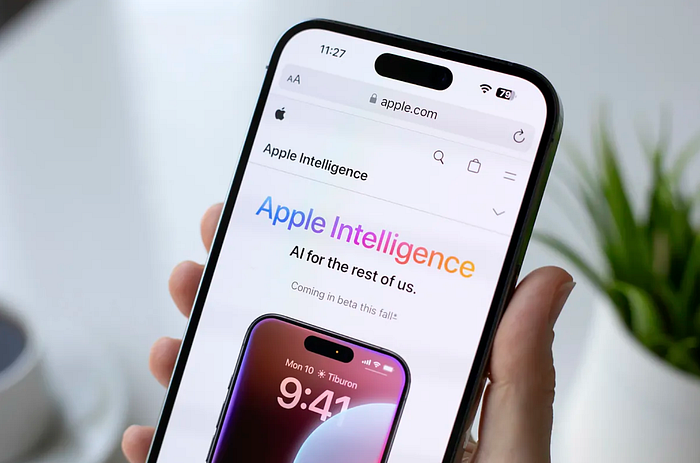


Apple has always been a game-changer in the tech world, known for creating user-friendly devices.
But behind the design, a wave of AI-driven technology powers the Apple ecosystem, changing how we interact with our devices.
Let's get into the topic of how Apple's intelligence reshapes our digital lives, with real-world applications in privacy, health, and convenience.
1. Privacy-Centric AI: Balancing Intelligence and Security
One of Apple's defining features is its dedication to customer privacy, which makes its AI technology stand out. Unlike other tech firms that rely primarily on cloud processing, Apple uses on-device intelligence to protect personal data.
Face ID: Apple's Face ID relies on machine learning models that run immediately on your device, guaranteeing that your face data never leaves your iPhone or iPad.
Siri Improvements: Apple has updated Siri to conduct several operations natively on the iPhone, resulting in less data being transferred to other servers. This also improves Siri's speed and responsiveness.
Real-World Impact: Users may get tailored experiences while maintaining their privacy. For example, iOS learns your typing style and optimizes auto-correct suggestions based on your usage, but it saves this information locally.
"Apple shows that innovation and privacy don't have to be at odds. The future of AI can respect our data."
2. Health & Wellness: Using Intelligence to Improve Lives
Apple's AI-powered technology is particularly effective in the health and wellness sector. The Apple Watch is a prime illustration of this, with its powerful sensors and machine learning algorithms.
Heart Health Monitoring: Apple Watch continually measures heart rate and can identify unusual beats, alerting users to seek medical assistance right away.
Sleep Tracking: Apple's Health app and WatchOS allow users to analyze their sleep habits and gain insights into sleep quality through statistics and tailored suggestions.
Real-World Impact: Apple Watch has warned many users to potentially significant health conditions such as atrial fibrillation, promoting a safer and more health-conscious lifestyle. For example, a guy in Texas said that his Apple Watch alerted him to aberrant cardiac beats, prompting him to seek quick medical attention, maybe saving his life.
3. The Smart Home Ecosystem: Integrating AI for Convenience
Apple has integrated AI into the smart home arena with HomeKit and HomePod, enabling seamless device control via Siri and the Apple ecosystem. From lighting control to security camera management, Apple's intelligence contributes to a more intuitive and automated home experience.
Adaptive Audio on AirPods: Apple just released adaptive audio for AirPods, which utilizes machine learning to alter sound levels and noise reduction based on the surroundings.
Home Automation: Siri can automate tasks based on their location or time. For example, when you get home, your lights and thermostat may be adjusted.
Real-World Impact: Apple's seamless integration allows consumers to control and automate components of their homes without requiring extensive setup or technical knowledge.
4. Computer Vision and Photography: Capturing Moments with AI
Apple's AI-powered camera technology enables even amateur photographers to generate breathtaking images. The computational photography capabilities on iPhones, such as Night Mode and Deep Fusion, demonstrate the potential of Apple's AI.
Night Mode: This function employs AI to merge numerous frames, resulting in brilliant, clear photographs even in low light.
Portrait Mode and Lighting: Apple's depth sensors employ machine learning to generate professional-looking portrait shots with enhancements such as studio lighting.
Real-World Impact: The ability to shoot high-quality images with an iPhone makes photography more accessible, allowing consumers to generate professional-looking shots without the need for pricey equipment.
5. Augmented Reality (AR) with ARKit: Blurring the Line Between Digital and Real
Apple's ARKit has transformed augmented reality, making it available to millions of consumers via their iOS smartphones. Apple has used AI to improve AR experiences ranging from gaming to virtual home design.
Live Measurements: iPhones and iPads employ artificial intelligence to measure items with astonishing accuracy in real-time, making them invaluable tools for designers, architects, and even daily consumers.
Realistic Effects in Apps: Apple's AR and AI technologies enhance educational tools and games, making them more immersive and participatory.
Real-World Impact: From developers developing engaging apps to daily consumers experiencing immersive games, ARKit demonstrates how Apple uses AI to improve reality, delivering a preview of future applications.
Conclusion: Pioneering a Smarter, Privacy-Focused Future
Apple's usage of AI is more than simply features; it's about building an intelligent and privacy-conscious experience. Apple is setting the standard for creating powerful, AI-driven devices that improve our lives while protecting personal data by concentrating on on-device intelligence and user privacy.
"Apple is redefining what intelligence means in technology — making it more personalized, private, and impactful."
Apple's approach proves that innovation does not have to mean sacrificing privacy. Instead, it has the potential to create a future in which technology seems natural, helpful, and effortlessly interwoven into our daily lives.