"I'm really doing this. Off to Izumo — alone."
My steps toward the boarding gate felt light, yet uncertain. Hope and anxiety still swirled together in my chest.
Izumo — a land where the gods are said to gather. And so began a quiet, three-day solo journey.
To Izumo, the Land of the Gods
Just hearing the name "Izumo" makes my chest stir quietly, like a ripple in still water. It's a place I had always wanted to visit.
"I want to face myself for a little while." That feeling nudged me gently, and I chose Izumo for my very first solo trip.
In a land where eight million gods are said to gather, I hoped to gently realign my heart.
Flying to Izumo Enmusubi Airport
From Haneda to Izumo, it's only about an hour and a half. It feels far, yet surprisingly close.
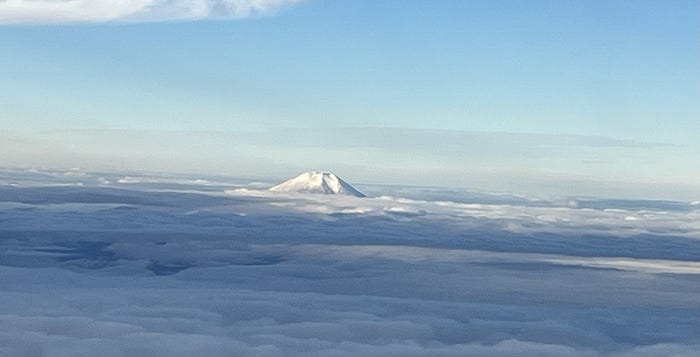
When Mount Fuji peeked out through a break in the clouds, it felt like a quiet sign — like it was wishing me well for the days ahead. "Let's make this journey count." I left my worries back in Haneda. My heart was now set — "To Izumo."
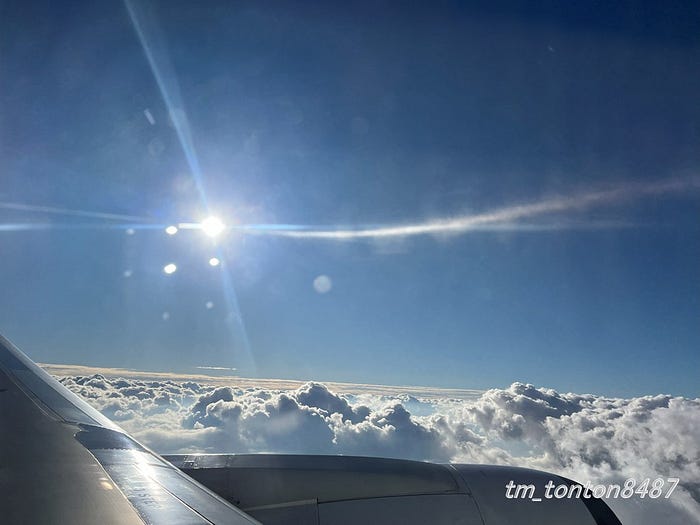
The moment I stepped off the plane, I took a deep breath. The air in Izumo felt crystal clear. The woman next to me on the flight seemed about my age, and was also traveling alone. (Though, really, that's neither here nor there.)
Looking around the bus headed toward Izumo Taisha, I noticed I wasn't alone — quite a few women were also on solo trips. That made me feel a little more at ease.
From the Airport to My First Destination
Turn left after exiting the airport, and you'll find the bus stop for Izumo Taisha. You can buy tickets from a vending machine inside, or pay by cash or card on board. (As of November 2025, IC cards like Suica are not accepted.)
Since I was traveling solo, I kept my luggage as compact as possible. Just a carry-on in hand, and off I went.
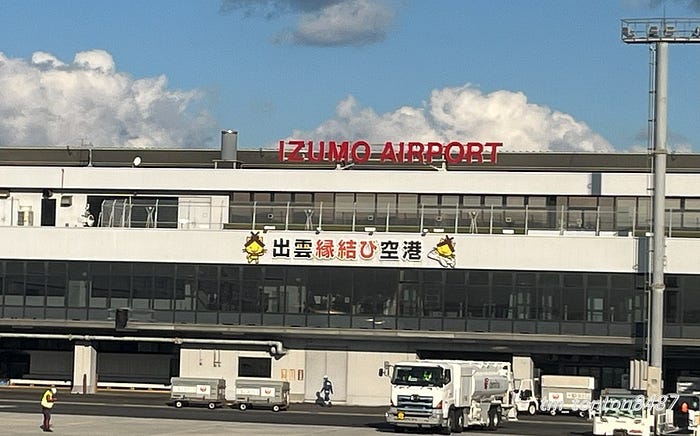
My first destination? Of course — Izumo Taisha. But before that, there was one place I had to visit.
Inasa Beach — the sacred shore where all the gods are welcomed. That's where my true journey would begin.
Inasa Beach|Where the Gods Arrive
After getting off the bus at the terminal, it's about a ten-minute walk down the "Path of the Gods." As I climbed a gentle slope, the sea came into view ahead.
"This is it." Just thinking that brought a quiet sense of calm.
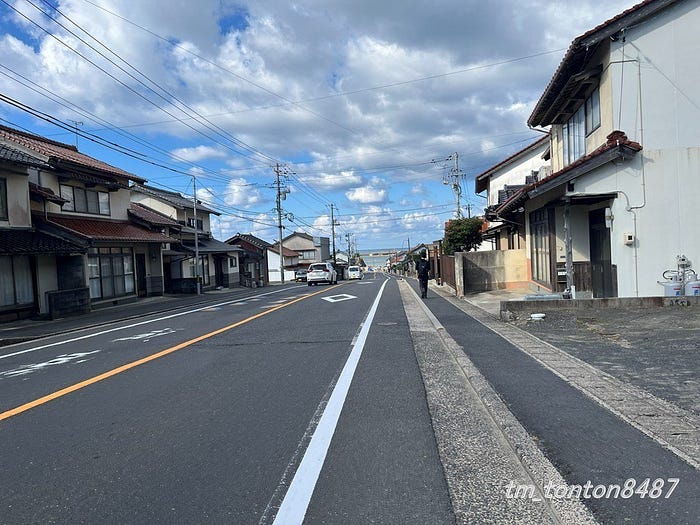
The sea opened up before me, and I stopped in my tracks. Waves rolled in gently, as if whispering ancient stories. Legend has it that on the 10th day of the 10th lunar month, gods from all over Japan descend upon this beach. And yes, the air felt sacred somehow — clear and still.
Benten Island's Quiet Presence
To the right of the beach floats a small, round island — Benten Island. Locals affectionately call it Benten-san.
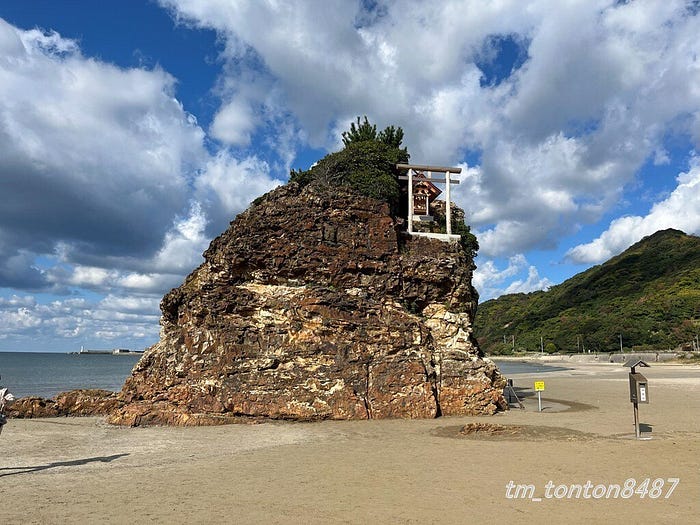
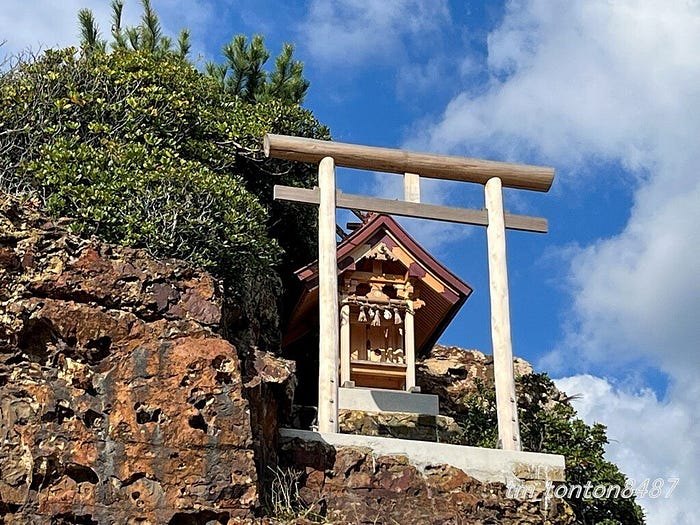
Atop it sits Okinogami Shrine, dedicated to Toyotama-hime, the daughter of the sea god. In person, it felt much simpler and humbler than I had imagined from photos.
A Small Ritual: Gathering Sacred Sand
There's a tradition at Inasa Beach: take a bit of sand and later exchange it at Soga-no-Yashiro in Izumo Taisha for purified sand. You can bring it home as a protective charm.
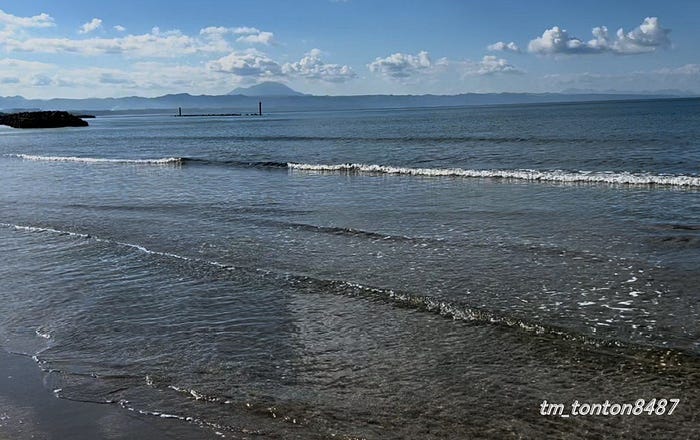
Carefully watching the tide so my sneakers wouldn't get wet, I scooped up a bit of sand just as the wave rolled in. It felt like a quiet, sacred ritual — and honestly, it was fun.
(They say taking sand as the wave recedes brings bad luck. And yes, I totally believed it.)
With the sand in hand, I left the beach and retraced my steps. Next stop — the grand Second Torii gate, Seidamari.
The Second Torii, Harai Shrine, and Beyond
Walking slowly from Inasa Beach, the streets gradually became livelier.
Soon, a towering torii came into view. This is Seidamari — the official main entrance to Izumo Taisha. As a university ekiden (relay race) fan, I couldn't help but feel a little excited seeing this spot in person. It was bustling, yet somehow peaceful.
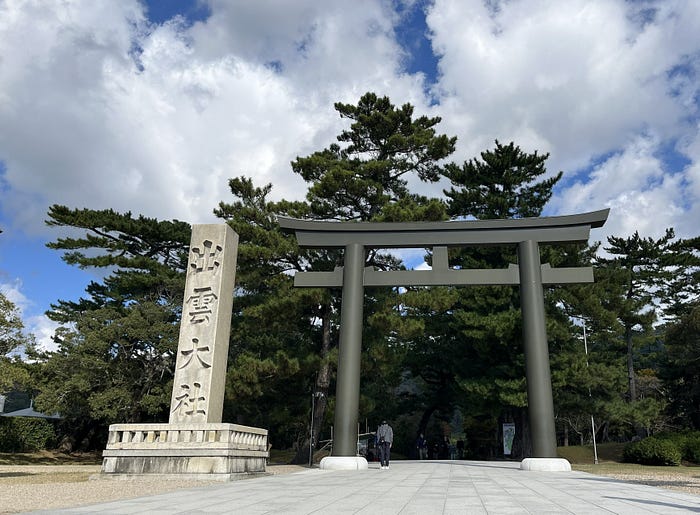
From here, a rare descending pine-lined path stretches 900 meters toward the sacred heart of Izumo. Sunlight flickered through the trees — it was a beautiful walk.
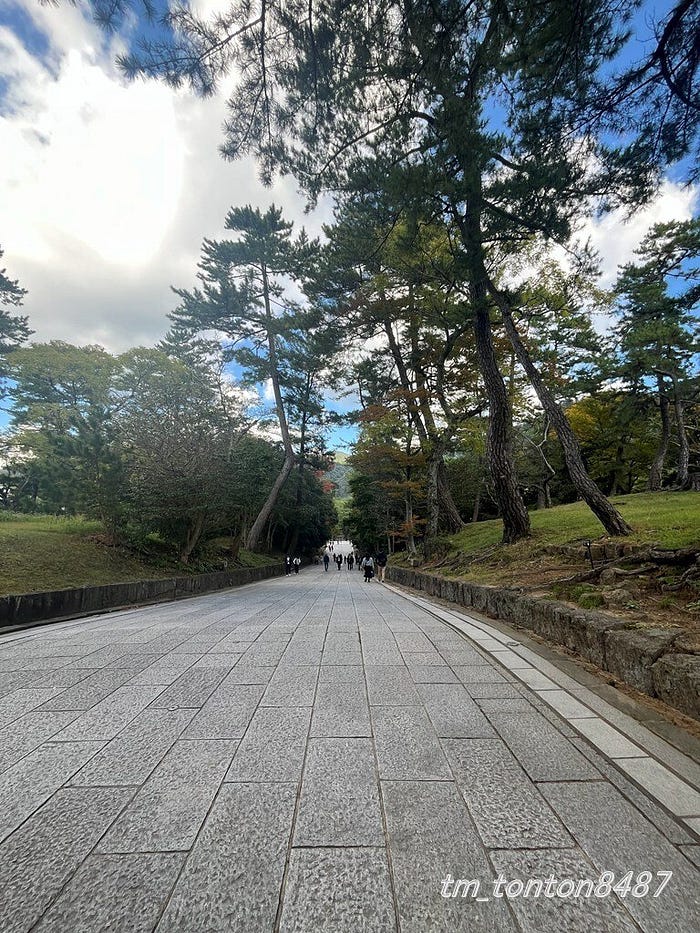
These pines were donated 400 years ago by the wife of Lord Horio Tadauji of Matsue, as a thank-you for answered prayers. Knowing that made me stand a little taller as I walked beneath them.
With each step, it felt like the unnecessary weight I carried was gently falling away.
Harai Shrine|Purify Before You Pray
Halfway down the path, a small shrine appears on the right. This is Harai-no-Yashiro, where visitors purify themselves before praying at the main shrine.
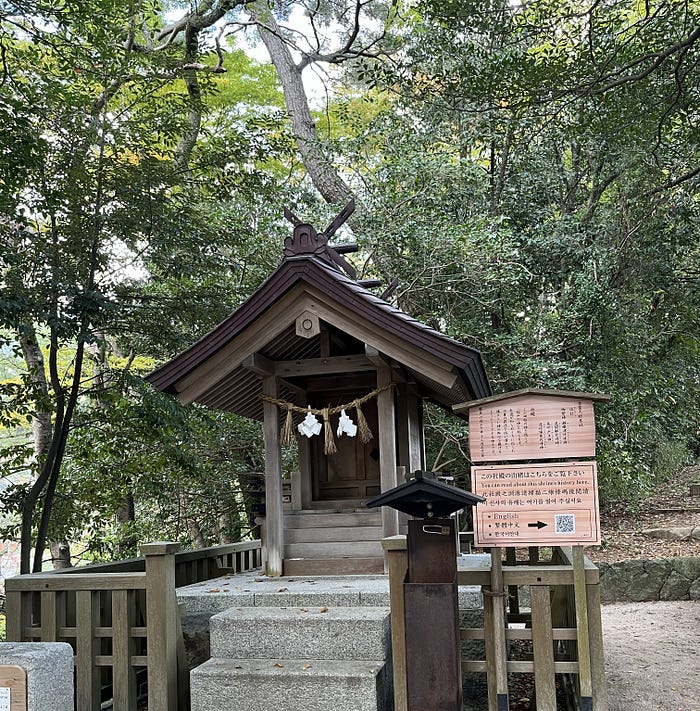
Four deities of purification are enshrined here:
Seoritsuhime-no-Kami — washes away impurities into rivers and the sea.
Hayakitsuhime-no-Kami — swallows them at the ocean's bottom.
Ibukidonushi-no-Kami — blows them into the underworld.
Hayasasurahime-no-Kami — eradicates them in the realm of roots.
Rather than making wishes, this is a place to give thanks simply for being able to visit.
Two bows, four claps, one bow. Every gesture gently centered my heart.
Through the Bronze Gate, Toward the Main Shrine
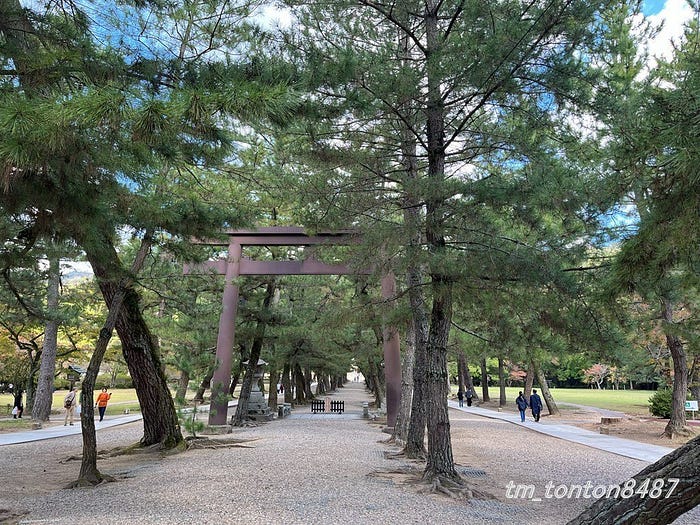
Passing through the third torii and continuing on, the bronze Fourth Torii finally appears.
Its aged green hue exudes quiet dignity. It is said to be the oldest bronze torii in all of Japan.
Stand at the center of the torii, and the roof of the main hall aligns perfectly — not by coincidence, but because it was designed that way. Such attention to spiritual detail took my breath away.
The Main Hall|Facing West, Toward the Gods
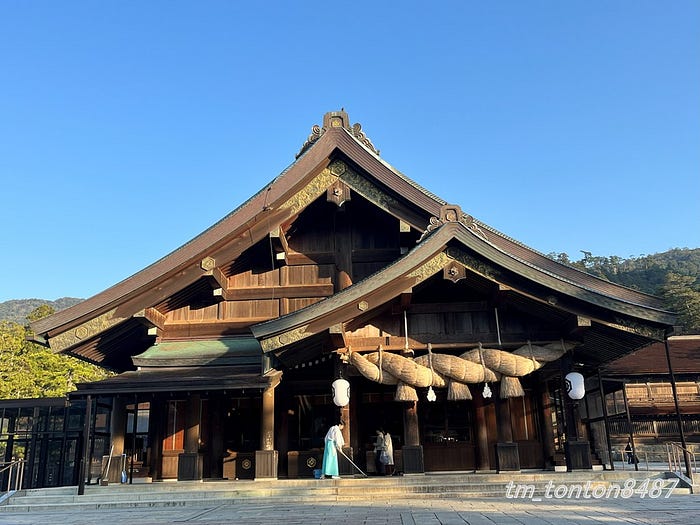
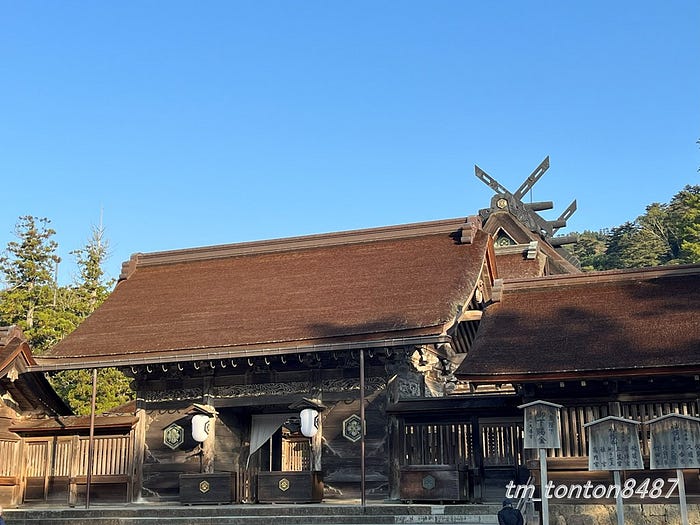
The main hall — closest to the gods — is built in the oldest Shinto architectural style: Taisha-zukuri. Reconstructed in 1744, its cypress bark roof and sweeping curves felt ancient and sacred.
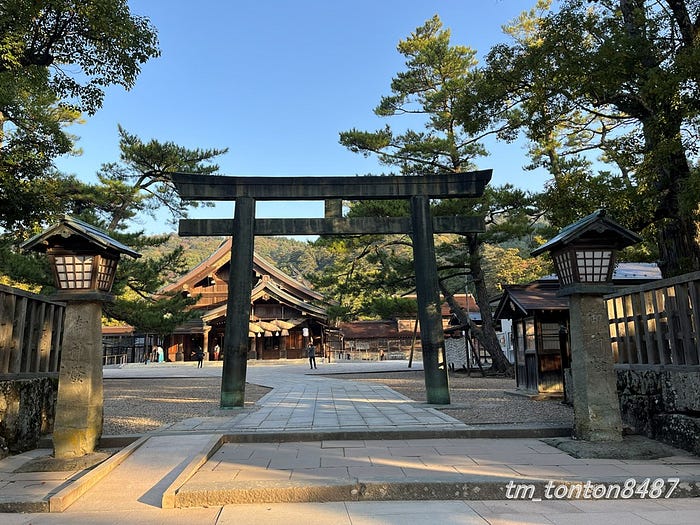
Interestingly, Izumo Taisha's main deity faces west. Most shrines face south or east — so this is rare.
Why west?
Because it faces Inasa Beach — the place where the gods descend. A silent connection that ties the shrine to the sea.
Soga-no-Yashiro|A Powerful Spot Behind the Main Hall
Tucked deeper into the shrine grounds is Soga-no-Yashiro, surrounded by trees and revered as a major power spot.
It enshrines Susanoo-no-Mikoto, father of the main deity Ōkuninushi. Yes, that Susanoo — the one who slew the Yamata-no-Orochi in myth.
Here, I exchanged the sand I had taken from Inasa Beach for purified sand in equal amount. (There's a small shovel provided.)
Scattering this sacred sand around one's home is said to protect against misfortune.
Kaguraden and the Great Shimenawa
A short walk from Soga-no-Yashiro brings you to the Kaguraden Hall, home to the legendary Great Shimenawa.
At 13.6 meters long and weighing 5.2 tons, this sacred rope dwarfs everything around it.
Even the impressive shimenawa at the main hall (5.4m, 1t) feels small in comparison.
Standing beneath it, I found myself speechless.
Rabbits and the Kind God of Love
All around the grounds, you'll spot stone statues of rabbits — a tribute to the myth of the White Hare of Inaba.
Each one wears a soft, peaceful expression. Finding them made my heart warm.
Near the fourth torii stands a statue of the compassionate Ōkuninushi, cradling the white rabbit he saved. It's a quiet yet powerful moment frozen in time.
Tips for Getting to Izumo Taisha from the Airport
There are three main bus stops you can choose from:
- Daitensha Station — closest to the first torii. Great for photography.
- Main Gate — right by the second torii. Easiest to understand.
- Izumo Taisha Bus Terminal — near the Kaguraden and Inasa Beach. Has coin lockers.
No matter where you get off, be sure to stroll along Shinmon Street. Lined with souvenir shops and cafés, it's a perfect spot to unwind after your visit.
Soba Mission Failed — but That's Travel
I had planned to eat Izumo soba after my visit. But that day, I was out of luck — closed shops, long lines…
Ah well. That's travel for you.
A few takeaways:
- Always check shop closures (especially on weekdays)
- Be ready for wait times during peak hours
- Prioritize bus schedules above all
I ended up just getting a drink and taking a break. Next time, I'll definitely try the soba. Having something to look forward to — that too, is part of the joy of travel.
The Journey Had Already Begun in the Skies
7:05 a.m., departing Haneda. Outside the window, a sea of clouds stretched endlessly. Through a gap, Mount Fuji appeared — as if handing me a divine invitation to Izumo.
Looking back, perhaps my journey had already begun at that moment. Even before landing, I was already being called by the gods.
To Those Who Are Hesitant to Travel Alone
If you're around my age and wondering, "I'd love to try traveling alone, but I'm not sure I can…"
I hope this little travel journal gently nudges you forward. My adventure has only just begun.
If you enjoyed this post, please hit the ❤️ and leave me a comment. And if you'd like to follow along on the rest of my solo journey — please follow me for more stories.