
Zomato is an Indian restaurant search and discovery service founded in 2008 by Deepinder Goyal and Pankaj Chaddah. It currently operates in 24 countries. The app provides information and food reviews of restaurants, including images of menus; this is particularly helpful in instances where the restaurant does not have its own website.
However, Zomato's current avatar has been achieved after undergoing several iterations by incorporating customer feedback, inclusion of new features and adapting to the changes in the business environment and technological advances. This evolution of the Zomato App can be understood through the lens of the Agile Development methodology.
What is Agile?
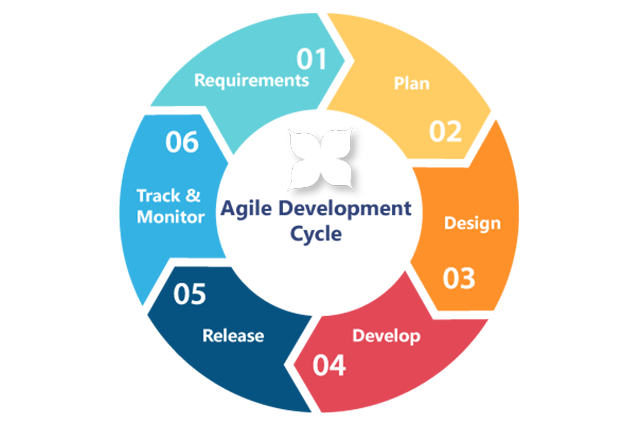
Agile software development refers to a group of software development methodologies based on iterative development, where requirements and solutions evolve through collaboration between self-organizing cross-functional teams.
Agile development method promotes a disciplined product development process that encourages frequent analysis and evolution, a leadership philosophy that encourages teamwork, self-organization and accountability, a set of engineering best practices intended to allow for rapid delivery of high-quality software, and a business approach that aligns development with customer needs and company goals.
The Agile Manifesto
The Agile Manifesto was developed by a group fourteen leading professionals in the software industry, and reflects their experience of what approaches do and do not work for software development. The core principles of the manifesto are:
Individuals and interactions over processes and tools. Working software over comprehensive documentation. Customer collaboration over contract negotiation. Responding to change over following a plan.
Zomato's implementation of Agile Methodology
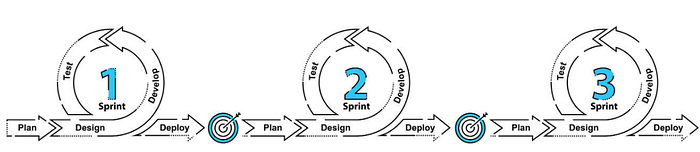
Now that we have a brief overview of the Agile methodology and values of the Agile Manifesto, let us try to analyse the app's evolution through the lens of Agile development cycle.
- Rate and Review Restaurants
During its initial days, Zomato was largely a website which listed restaurants with basic details, where users were able to rate the restaurants listed on their website. This feature was a big hit among foodies as they could now rely on peer ratings and not ratings given by food critics (the independence and fairness of which are shrouded in doubt and skepticism) before heading to a restaurant they haven't been to before. The absence of click farms made the average rating trustworthy.
After the ratings feature, the Zomato team interacted with users as well as other stakeholders and came up with a feature where users could add their reviews on the website. This feature created a medium for peer to peer discussion as well as empowered restaurant management teams to interact directly with their customers.
After the successful adoption of this feature, Zomato enabled users to share pictures of food and restaurant ambiance. Other users could like and comment on the pictures posted. This feature too became a big hit with its users, it helped that Zomato had gamified the feature usage by assigning points and prizes that could be redeemed at partner restaurants.
2. Filters for search
The first iteration of this feature consisted of users entering the city and locality in the search bar where they wished to find restaurants and decide a restaurant they would eventually prefer to visit.
As the users started finding it cumbersome to find restaurants due to the ever-growing list of restaurants getting listed on the platform, Zomato introduced segmentation based on cuisine.
Successive iterations of the feature led to the inclusion of segments such as Rooftop Restaurants, Restaurants with Events, Drinks and Nightlife, Newly Opened, Fine Dining, Casual Dining etc.
The current iteration empowers the users to choose the type of establishment in the location of the city they would like to visit based on the average rating the establishment has garnered from Zomato users.
3. Online Ordering
Zomato has evolved from a ratings website to a foodtech giant. This has been possible due to adopting an agile framework and an excellent leadership with a vision. After creating a large user base of users and restaurants, they ventured into the food delivery business. This helps restaurants convert passive users checking out the restaurant listed on the platform to a customer by enabling delivery options. Zomato, through its continuous user feedback and research, found out that a sizable amount of their users would like the option of food being delivered by their favorite restaurants, rather than relying on local restaurants.
In order to achieve this, Zomato opted to acquire logistics companies to serve their customers. It's possible that Zomato decision to acquire logistics companies was impacted by UberEATS, Swiggy and Foodpanda. Companies which do their own delivery have greater control over the customer experience, while companies which rely on restaurants, are dependent on the restaurants.
4. Zomato's Future Plans
In a blog post, Zomato discussed about setting up the Zomato Infrastructure Services (ZIS). Through this, the company plans to work with current restaurant owners to expand their business to more locations without incurring any fixed cost.
Highlighting some key points, the blog says that these infrastructure services could be seen as delivery-only food courts without any take-out or dine-in facilities.
Each ZIS facility will have four or more co-located restaurant brands, leading to shared (and thus lower) costs. Each restaurant brand will have its own space of roughly 300 sqft and can have owned/shared/outsourced delivery personnel, thus increasing delivery efficiencies.
Zomato will provide the real estate, build the kitchen, and supply all the equipment for these brands to just 'walk in' and start their business in a matter of hours. Moreover, the build-out cost for these kitchens will be low owing to the company's frugal and durable engineering to ensure limited expenses.
Benefits of ZIS to their users
- The "front of the house" in these kitchens will be common. Users would be able to select dishes from multiple brands to build a single food order. So if a user wants to eat shawarma, and their friends want to eat pizza, that can be done in a single order. They can also include a frappuccino, and an ice cream in the same order.
- This is something that's very new, and is probably the first time in the world that this is being introduced at scale. Zomato expressed its excitement about how their users would use this power feature which would only be available on Zomato.
Summary/ TL;DR
Zomato has come a long way from being a food rating website to a footech giant in a span of 10 years. This has been possible due to following a continuous iteration, gathering frequent user feedback and adapting to the changing marketplace environment. Since its inception, Zomato features and app UX/UI have been evolving by adopting an Agile methodology.