

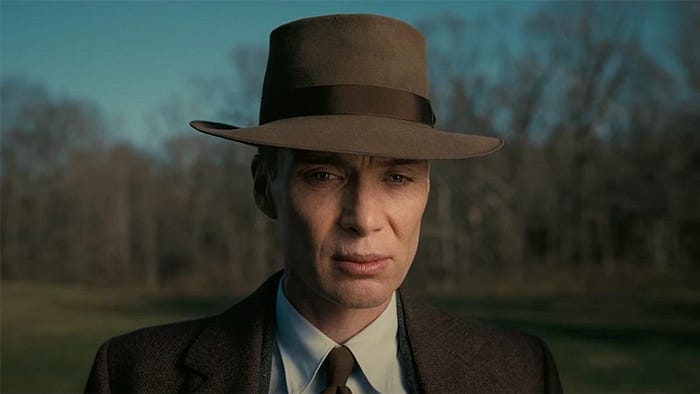
When Barbieheimer took over the globe a few months ago, I jumped on the cinematic bandwagon alongside the rest of the world. A story about a Barbie doll learning about the reality of humanity, followed by a harrowing historical tale about the creation of the atomic bomb? The wildly contrasting double feature got public attention for good reason. While Barbie did pretty much exactly what I'd expected it to do, Oppenheimer left me disappointed for many reasons. As we approach the Oscars, I figured I would take a moment to reflect on these reasons before the film inevitably takes home a handful of awards.
From a technical standpoint, Oppenheimer had a few glaring weaknesses that made my watching experience far more challenging than it had to be. We're all aware of Christopher Nolan's enigmatic style, but I'd like to be quite brave here and just admit that there were times in which Oppenheimer's nonlinear storytelling made it profoundly difficult to stay immersed. Nolan scrambled up the scenes, bouncing from two ongoing court cases to several different streams of events in Oppenheimer's life prior to them. Thankfully, he inserted a visual cue with the coloration to give us a sense of grounding in each shift, but more often than not, it wasn't enough. In the theatre, I could not pause the film to recalibrate and catch up, but when I watched at home, I had to do so too many times.
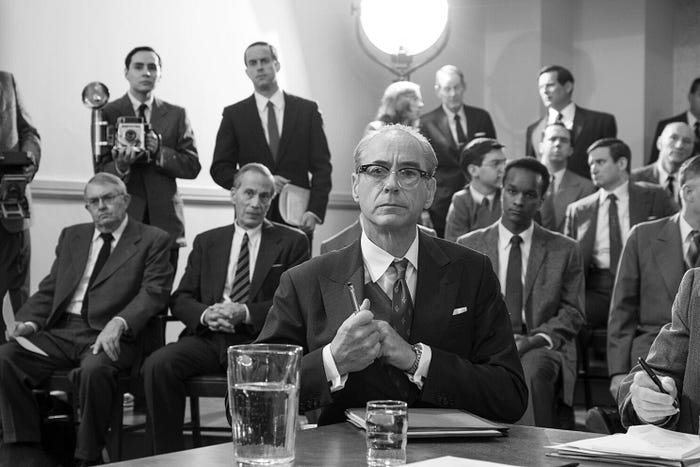
I feel that the nonlinear storytelling was meant to add an element of suspense to a story that simply didn't need it. Audience members with a baseline awareness of world history know exactly what happens at the end. Personally, I think a grueling, immersive, linear trudge toward the inevitable tragedy Oppenheimer took part in would have been more effective. Watching a character unknowingly move toward a damned destiny, more or less unaware until the damage is done, is painful in the most wonderful of ways.
Consistently taking us out of the central story, reminding us that it's over and a court case is already underway, diminishes the effectiveness of the horrific events that took place prior to it. Every time I became invested in Oppenheimer's journey toward destruction, I was catapulted into a black-and-white landscape full of mumbled conversations I needed subtitles to understand. It happened so often that I ended up wondering more about when the next jarring leap would be more than anything else the film had to offer.
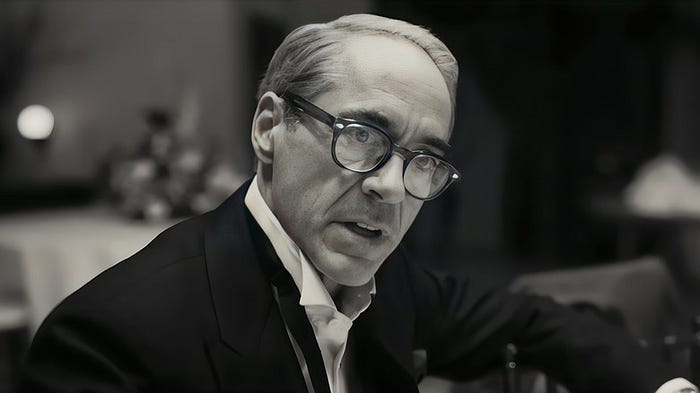
My next technical gripe is very much about the dialogue. This film relied entirely on words. Visual storytelling was so rarely effective in communicating the plot, except when there was a literal bomb going off. Other than that, it was all dialogue-based. This would not have been a problem for me had I been able to understand the words being spoken.
Every character spoke at breakneck speed, and unless they were literally screaming, most of them tended to mumble. When information essential to understanding the conflict, stakes, and direction of the story is delivered this way, it leaves audiences buffering from scene to scene instead of enjoying the natural flow of the story.
On top of that, the scoring was oppressive to the point at which I could barely hear certain conversations. When it was done purposefully to reflect a character blocking out surrounding noise and falling into their own mind, it worked. However, whenever it was used to suggest the mood of a scene, it ended up surging over said scene like an orchestral tidal wave. I should have tallied up the number of times I squinted with frustration, struggling to understand the basic details of an interaction because of unnecessarily scoring. Not every scene needed it. These people were building an atomic bomb, struggling with the moral ambiguity of it all. I didn't need another round of harrowing music to tell me how troubling that was or how worried I should feel.
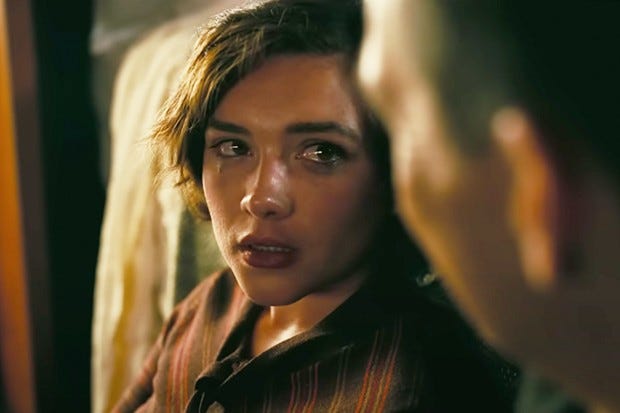
The characters were satisfactory, given the circumstances and nature of the film. I felt that all but Oppenheimer were a little underdeveloped, but I should have expected as much for a piece sharing his name. The story was centered around him, and to him, all of the side characters were menial. If they were disposable to him, they were disposable to us.
Christopher Nolan and the Oppenheimer team get a pass on this one. Oppenheimer was well-crafted and well-acted. I enjoyed following him through every stage of the story, watching as a man fueled by discovery and hubris fell to darkness, guilt, and shame at his own hand. I enjoyed the way in which he was a genuinely flawed individual and how he seldom stepped into a classic protagonist role. Even in the court case, he struggled to stand up for himself, frustrating us in a positive manner.
Watching Oppenheimer deal with deeply embedded character flaws made him feel genuinely human. Watching him behave in unbecoming, deceitful, and condescending ways during the first half of the film made it all the more satisfying when his actions came back to bite later on. He was not outwardly portrayed as a redeemable human. He was just a human. He made mistakes. He put his intellect ahead of his morals. He did immoral things on a grand and small scale. It is left for the audience to decide whether to hate him or not. I appreciated this.

While on the topic of the film's positive attributes, I'd like to compliment the way in which Nolan handled the profound moral dilemma that gave it shape. Watching the world grapple with whether or not to experiment with nuclear weaponry, and watching human beings cast aside their humanity out of fear and survival, was absolutely chilling. Seeing several characters try to rationalize evil, despicable acts of mass murder was gut-wrenching. Knowing it all actually happened was devastating.
I suppose I can only give the film half a point for this one, though, because the moral dilemma already existed outside of it. Nolan simply highlighted it. Although, the stylistic choices he made were some of the best moments throughout. I particularly enjoyed the scene when Oppenheimer was struggling to give a patriotic speech, only to be bombarded with an onslaught of trauma.
Bright lights, harrowing silence, and visions of burned bodies taking over his psyche. Dust and debris. Corpses charred enough to step right through.
It was breathtakingly horrifying. Nolan did a fantastic job at communicating Oppenheimer's state of mind, and he certainly did not hold back. As terrible as it was to witness, I almost longed for more moments exploring Oppenheimer's guilt. I felt he could have taken things a step further, exposing the audience to even more gruesome imagery. In a film that simultaneously warns against nuclear warfare and strives to hold society accountable for the consequences of using it in the past, I feel it would have been incredibly effective.

Of course, I'm not saying we needed ten more scenes of it. One or two additions would have done the trick. From a technical angle, it would have allowed for a few extra moments of visual storytelling to break up the dialogue-heaviness. From an emotional angle, it would have come back just enough to say, "Don't forget that this is what they did. Don't forget the crimes. Don't forget the consequences. Don't forget why it should never be done again."
Before I finish off this brief review, I'd like to address one other aspect of Oppenheimer. The visuals. This is a visually stunning piece that follows every rule in the filmmaking book and breaks them only to add another level of profoundness. While I'm not overly fond of using black-and-white filters without a well-constructed reason, I could tell Nolan needed to implement the technique to lessen some of the confusion around his nonlinear plot. Other than that, his handling of the visual language was absolutely outstanding. It delved into psychological territory that truly allowed audiences to access Oppenheimer's heart and his mind. Nolan pulled out all the stops here… except for one.
There was something I felt was severely lacking in the visual landscape. The scientific element of the story left me hungry for shots of atoms exploding, tests being conducted, bombs going off, and so on and so forth. There were a few stray ones, but save for a few at the beginning, most felt like uncomfortably injected stock clips. Forgive me for being a bit harsh, but I expected a lot more, especially from the test of the bomb. It was so underwhelming for me, I had expected there to be a second test in which we'd see the hydrogen bomb go off.
For a film with a conflict so reliant on an understanding of the scientific concepts being laid out, I would have expected more visuals to communicate said science. Instead, most of it was delivered through the aforementioned quick, densely-worded dialogue overshadowed by oppressive music. A few more engaging visuals could have aided watchers going in without functioning knowledge of physics. Notes taken on chalkboards just weren't enough.
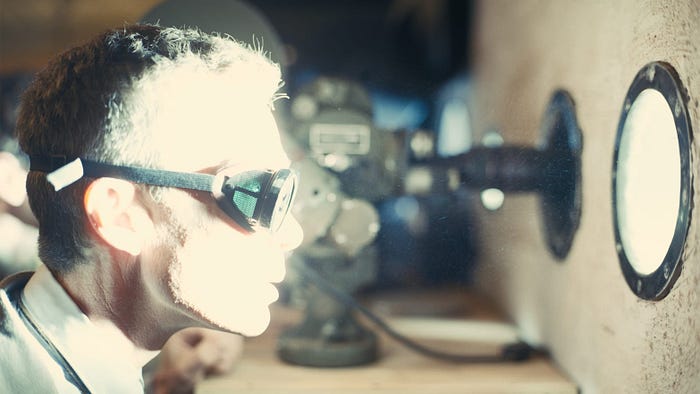
Oppenheimer was a cautionary tale through and through. The final conversation and ending shot make that very clear. It made me wonder if, perhaps, my lack of enjoyment was ignited by the creative team on purpose. I wasn't meant to be having oodles of fun watching civilization devolve into mass-murdering maniacs. I wasn't meant to be smiling in my seat, witnessing some of the best minds in history direct their knowledge to evil born of survivalism and pride. Intelligence is not wisdom, as said by one of the characters whose name I cannot remember and whose line was one of the few I could understand clearly.
It was a masterpiece, but many of the technical details weakened it and left me feeling unsatisfied as the credits rolled. The entire film was building to a bang, but I couldn't feel the reverberations in full.
Obviously, we know that the use of the atomic bomb was an immoral, unethical, sinister tragedy. It was the unholy offspring of human hubris, fear, competition, and greed. This weapon shouldn't have been made. Audiences already knew that. I was expecting the film to add an extra layer to it. While it successfully humanized Oppenheimer himself, the nonlinear approach made it difficult for me to fully immerse and, thus, to fully empathize. Every time I was falling into a delightful cinematic trance, pulled into the movie as though transported through space and time, I'd be thrown out by a time skip to a court case that took me 3/4ths of the film to understand the importance of. Every time I needed to figure out what was going on at a given moment, I needed to pause and read subtitles.
Oppenheimer was a triumph in terms of portraying the horrors created by the atomic bomb. Scratch that. The horrors created by the humans who created the atomic bomb. It forced humanity to take accountability for what happened and why it happened. There would be no more hiding behind the avoidant statement, "The bomb killed so many people." No. The astute scientists killed so many people. The militant generals killed so many people.
It wasn't bombs killing humans; it was humans killing humans.
The film asked us to take a deep, introspective look at why such violence is never necessary. It is a reminder and a warning. A vision of poor choices once made, so we can avoid making them in the future. However, it was taken down a notch by a slew of technical issues played as creative choices that made the watch a lot more challenging than it needed to be. Borderline pretentious techniques do not make something more impressive. If anything, they lessen the impact of an otherwise powerful story.