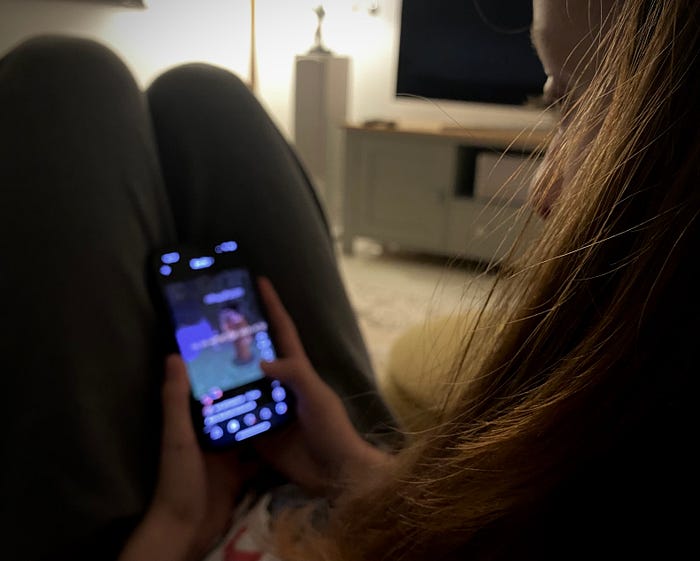

Realising we are hooked on our little dopamine-spiking screens is easy. What's harder is figuring out how to break away from them. Is it a detox? A ban? Or a slower route of education and revaluation?
There's some pressure to start this feature in a shocking way, for fear if you don't get a quick dopamine hit, you'll be tempted to click off and find something else. That dive into an abyss of stimulation is but a tap away on devices that the modern individual is seldom without. But what goes up, must come down, and our brains pay a price for the constant quick-fire chemical jolts technology gives us — a dependency that has crept into our lives imperceptibly.
Dopamine, often labelled the 'happy hormone', is actually more about the anticipation of something rewarding, which is why the "possibility of a notification triggers more dopamine than actually reading it", according to Dr. Benjamin Sharpe, a Senior Lecturer in Cognitive Psychology at the University of Chichester. It's a reward system that shapes our habits, and certain platforms exploit this by serving content calibrated to your neural triggers, while infinite scrolling removes rational stopping points where your brain might say 'enough'.
New research from the University of Portsmouth has examined the links between problematic smartphone use, anxiety and loneliness in university students. Lead researcher Dr. Anna-Stiina Wallinheimo calls the relationship a "vicious circle", one that sees technology addiction exacerbate pre-existing anxieties. "It is an addiction," she adds.
"People don't know how to stop it and people don't know when it's good and when it's bad."
According to both Sharpe and Wallinheimo, cashing in on these easy dopamine hits regularly over time can affect critical thinking skills, with heavy multitaskers showing reduced grey matter in areas needed for focus. This is a particular worry for those at a more impressionable age. "People like my daughter don't even recognise that it might be an addiction," explains Wallinheimo.
A 2021 UK study found that around 40% of 18–30 year-olds were addicted to their smartphones, with this figure being higher for those under 21.
Ofcom reported last year that 18–24 year olds spent a daily average of approximately 6 hours on the internet, across smartphones, computers and tablets — a 30% increase in screentime from the previous year.
"I think it's getting worse and worse. I don't see any end on it, unless we start educating people," says Wallinheimo.
For Ian Hurst, founder of mental health organisation We Are Hummingbird, our brains are a bank balance — good things bring in money and the bad thoughts are our outgoings. He believes that we are all in some level of mental debt, and when we're low on funds, scrolling provides an easy way out from having "to overcome or to think about challenges".

Social media, while the obvious culprit, is far from the only modern dopamine-spiking vice. Ian touches on his addiction to online Scrabble last year, having around 30 games on the go at its worst. The seemingly harmless started to rapidly vacuum time, moulding his day.
"People go to it for those instant gratifications, giving them that sense of inclusion without inclusion.
"One of the biggest things about mental health is purpose, direction and community… Well, I can just sit at home and look at other people's communities."
It's an overreliance on this easily obtained artificial feeling that can start to displace human connection, a dependency that young people are especially prone to forming.
Nicola Hobson, a wellbeing counsellor at the University of Portsmouth, observes that scrolling is now a default pastime for many of the students she supports. While most don't label their technology use as problematic, she often finds it is an underlying agitator.
"The people who come and seek support from us are often socially isolated and maybe haven't got real world friends that are available to them and they go these platforms.
"[Technology] sort of almost has replaced, like in the olden days, you might go and talk to a friend."
Cutting these distractions out entirely might be the tempting 'fix', as Australia will boldly attempt this week with the world's first social media ban for under-16s, though this approach might actually worsen feelings of anxiety and loneliness.
"We've had feedback from young people that they feel more anxious if [technology] gets taken away because it's almost like being shut off from the world," explains Hayley Young, Head of Crisis Intervention and Prevention at youth support charity No Limits. Young works with many young people suffering with anxiety and depression, for whom these social platforms can be "their safety net".

"Their only connection when they're isolated is their devices, so if that's taken away, that's going to have a massive impact." Young says that parents can often underestimate this, likening it to taking away someone's cigarettes or vape.
So, how do you wean yourself off these tech-induced dopamine boosts? It's likely not the cold turkey approach, or as it's been virally repackaged across the internet: the 'dopamine detox'. The solution, that Hurst, Hobson and Young all circle in on, is moderation and education.
Young says "it's about teaching people and helping them to have a good, fulfilling life away from digital platforms."
With education, "you start to realise that you can find what you get off of technology in other places," explains Hurst. It's the small changes, choosing a book or a real conversation over a scroll, that can realign where we find joy. These substitutes may not be as instantly gratifying, but they're more substantial than hedonistically chasing the highs of disposable online stimulation.
Hobson has found success through using Acceptance and Commitment Therapy (ACT), helping students to identify personal goals and values and then shaping behaviour around what actually matters to them. "You can shift the conversation on to a value led life rather than a life that is just dragged away from you by social media."
Loosening technology's grip isn't solely about reclaiming wasted hours spent doomscrolling, it's a revaluation of what is truly benefitting us. It might feel good now, but where is the next scroll really taking you?