
In May 2009, Pep Guardiola's FC Barcelona faced Real Madrid in El Clasico. Guardiola aimed to exploit Madrid's slow-moving defense and the space between their lines. He sought a quick, agile player to exploit this areas by dropping back and receiving the ball. Although sacrificing a central striker, Barcelona created numerous chances, bewildering Madrid's defense and scoring six goals without a recognized striker.
Today, the False 9 position is firmly integrated into modern football. Yet, 15 years ago, there was widespread curiosity about its definition and player requirements. This curiosity extended beyond the sports realm; even EA Sports introduced the position into their calculations. After examining center forwards, identified as False 9s, and strikers, I now delve into another position influenced by the False 9: the Number 10.
The Playmaker
Football boasts numerous iconic players, with offense stars often taking the spotlight. From Cristiano Ronaldo and Lionel Messi to emerging talents like Erling Haaland and Kylian Mbappe, strikers and forwards typically receive instant acclaim. However, not long ago, playmakers shared the limelight. Names like Zidane, Kaka, Rivaldo, Özil, Pirlo, and the legendary Diego Maradona captured fans' imaginations.
Like quarterbacks in football, playmakers dictate play and deliver the final pass leading to a goal. They read the game, slicing through defensive lines with high passes or well-placed through balls. They set the pace and structure of the game, often relieved of defensive duties due to their creative prowess. Their skill set includes exceptional ball control, dribbling, and passing precision.
The job description of a False 9 bears striking similarities to that of a playmaker, raising questions about their differences.
Analysis
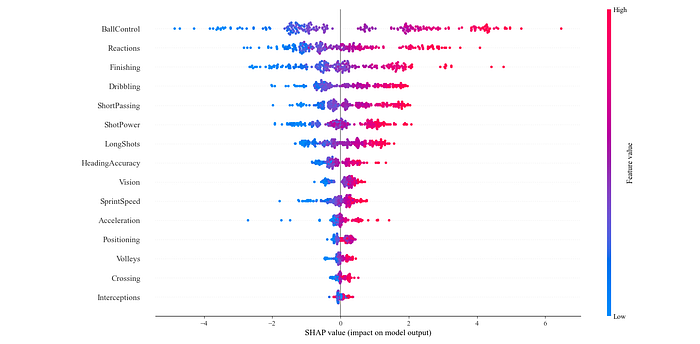
Utilizing data from FIFA 23, I've examined player ratings using a machine learning model. With SHAP Values, I've identified the attributes influencing these ratings, shedding light on EA's criteria for rating positions.
Center forwards, akin to False 9s, demand strong ball-handling skills and agility. Despite their attacking role, they're expected to score goals, making Finishing a crucial attribute. However, they also contribute significantly to goal assists.
The model's high accuracy underscores the validity of SHAP results, revealing Ball Control and Dribbling as paramount attributes, as anticipated. Vision and Positioning, both mental attributes, rank among the top three, intriguingly. Attributes like Finishing and Long Shots are also significant, especially concerning some playmakers renowned for their goal-scoring abilities.
Model Results Model: Gradient Boosting Regressor Mean Squared Error: 0.93 Mean Absolute Error: 0.69 R2 Score: 0.98
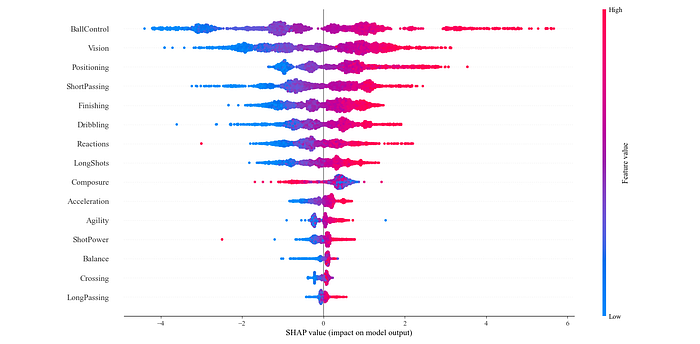
Comparing feature impacts between positions explains the gradual disappearance of the traditional Number 10 role. While False 9s possess nearly identical skill sets, they often excel further, particularly in scoring. Although Vision may slightly diminish in importance for forwards, the core features of both positions remain similar. This shift highlights forwards' increased involvement in playmaking, reflecting a trend seen in modern football.
Conclusion
In conclusion, the classic Number 10 role has undergone significant transformation. As forwards assume greater playmaking responsibilities and defensive midfielders embrace creativity, the Number 10's once-central role has shifted. The emergence of the False 9 exemplifies this evolution, often surpassing the Number 10's attributes, especially in scoring. This shift has resulted in players like Odegaard and Kroos being positioned as central midfielders rather than attacking midfielders, underscoring football's evolving strategies and player roles.