
This article reflects the personal experiences of a graduate student who lived for 3 months in Hanoi, Vietnam, and interned at a garment manufacturing company, known for producing high quality technical garments for leading global brands. The intention of this piece is to show how strong partnerships between brand and factory can benefit all parties involved — the brand, the factory, and the customer.

Introduction
Picture a garment manufacturing facility. What images come to mind? Cramped quarters, dust swirling in the air, oppressive heat? That is certainly what I, as an American consumer, believed to be the norm when considering a location for my 3-month graduate internship. It's also what my friends, acquaintances, and family members warned me about when I told them I was heading to Hanoi for the summer. "The factory works with Nike? Well, have fun with the child laborers!" they joked, and for good (yet outdated) reason. Nike has a reputation for poor conditions in their partner manufacturing facilities. This reputation was garnered in the early 1990's when a report came out about the poor conditions. Their reputation and the cultural backlash was made worse by the famous documentary, "Behind the Swoosh", by Jim Keady, who traveled to Indonesia to reveal the "true cost" of manufacturing athletic apparel (About New York; God and Swoosh at Saint John's, 1998). This documentary, which continues to get airtime around college campuses and incite protests — despite being 18 years old — causes Nike factories to continue to get a bad rep, despite Nike being industry-leading in factory compliance requirements (Jim Keady Speaks Out Against Nike, 2017). There will always be factories that choose not to comply with the code of conduct they agree to. And it is fair for the public to want objective non-profits and auditors to continually check in to mitigate these violations. However, I do not think that continually railing on a brand that is already committed to fair treatment of workers is the best way to make lasting change in the industry.
The hate and anger toward Nike is misplaced. Using 2-decade-old information to prove a point about brand values is poor reporting. And from my experience within a factory that partners with Nike, Jim Keady's continued portrayal of Nike's supply chain is an embarrassing, terrible ghost of their past, not the current reality nor is that portrayal consistent with Nike's lofty goals for the future. I found that when brands create strong partnerships with factories — where they share industry best-practices, innovative ideas, and the same moral philosophy — everyone wins. Consumers get higher quality products, brands get a reliable manufacturing partner that is invested in the success of the products they create, and workers at factories get fair wages and a healthy work environment. This reality is not out of reach, and is not some idealistic dream of a human rights advocate. I saw this successful partnership with Nike, among other brands, in my time interning at Maxport Limited, a manufacturing company based in Hanoi, this summer.

Background
Garment Manufacturing Basics
To understand the garment manufacturing industry outside my own experience at Maxport, I had to start by asking the most fundamental question I could think of: How does money flow from the consumer buying a garment to the person sewing the clothes we wear? What I found through basic research was an industry with a history rife with human rights issues. I'd like to reiterate that everything written here is opinion and observation based on the experiences I had and the articles I read (all sources can be found at the end of the piece). So, these human rights issues were not present at Maxport. But they are present in the industry and are important to understand when considering how brands can take more responsibility for their supply chain and partner with trustworthy manufacturing partners.
The poor treatment of garment industry workers is an outcome closely tied to brand/factory contracting, and the piece rate payment system. According to USLegal.com, "A piece-rate pay system is a system where compensation is based upon the number of units of work produced by an individual or distinct work team." So, employees are paid by piece rather than by hour or by salary. Proponents argue that it motivates people to work quickly and waste minimal time. However, according to the study Pay Matters: The Piece Rate and Health in the Developing World, piece rate workers have higher instances of injury and recorded poorer mental and physical health outcomes. Additionally, as outlined in an explosive LA Times article published in 2017 entitled "Behind a $13 shirt, a $6-an-hour worker", it is easy to take advantage of workers in a piece rate economy. This is because the cut/sew factories themselves are paid so little per garment that they have to reduce worker payment to mere cents for each garment. Who benefits in this process? The brands that use these factories do. And if you read the article, you find out that many of these brands are among those considered "fast fashion". These brands contract outside of their own business enough times that they avoid legal ramifications for poor conditions and unpaid debts to workers. In addition, these brands can (and do) refuse to work with factories that try to increase the cost per garment in order to pay workers more and improve conditions. Basically, to suppose that these brands are not aware of the labor rights violations would be naïve and incorrect. As shown in the article, many of the worst offenders of this are based right here in the US, not overseas. For a garment to be "Made in the USA" may not be such a badge of honor after all.
This relationship between fast-fashion brand and cut/sew factory is a sharp contrast to the relationships that I saw overseas. Where the brands mentioned in the LA Times article intentionally separate themselves from the factories to maintain plausible deniability in their supply chain, ethical brands lean into the relationships with their factory partners. They understand what a day in the life of a sewer in the Thai Binh Province of Vietnam looks like, and they make an effort to not only maintain but improve the quality of life for these sewers.
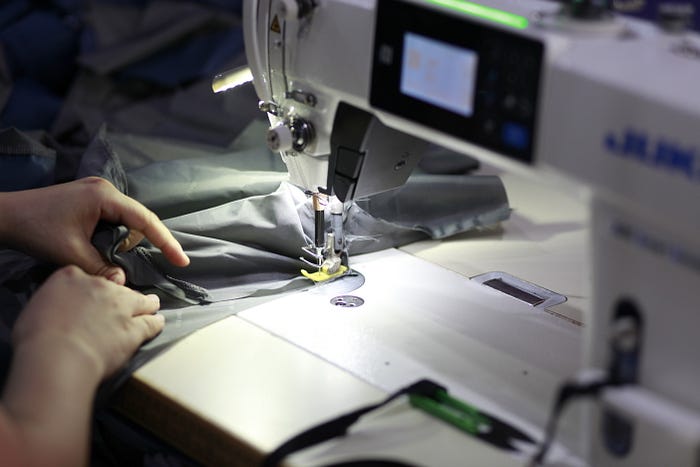
Garment Manufacturing Industry of Vietnam
Garment manufacturing is one of Vietnam's biggest contributors to the global economy. The apparel industry "represents the largest formal business sector in Vietnam, employing over 2.5 million people" It is the fifth largest contributor to global apparel worldwide and is part of the revised TPP (now called the CPTPP, Comprehensive and Progressive Agreement for Trans-Pacific Partnership). Vietnam's government has put into place relatively strict guidelines to ensure the health of workers in the garment manufacturing sector. These protections include mandatory nationalized insurance programs, which include health, social, and unemployment insurance. Additionally, employers are responsible for providing worker compensation for injuries and illnesses suffered by their employees on the job, including medical treatment and paid leave during recovery, and routine medical treatment and care to all employees on an annual basis. The garment industry is clearly incredibly important to Vietnam's economic power in the world, and the government understands this, which is one of the reasons why regulations are in place, and why the CPTPP is so important to this country.
An additional aspect of the manufacturing world that is shown in the Pay Matters study is the demographics of the average garment industry worker in Vietnam. While it is expected and joked about that these factories are hiring child laborers, the reality is that the majority of garment workers in Vietnam are women around age 30. In addition, the majority have an education that extends through lower primary school (58.7%), while 28.9% of workers have upper secondary school or higher-level education, and 58% are married (Davis, 2016).

Manufacturing at Maxport Limited
The garment manufacturing company I worked at for 3 months this summer is Maxport Limited, headquartered in Hanoi. It has 3 factories in the Vietnamese countryside — 2 in Nam Dinh province and 1 in Thai Binh province, both in northeast Vietnam. They employ about 5,000 Vietnamese people across all 4 locations and are growing at a rapid rate — they are looking to increase their work force by 1000 people in the next 12 months. Maxport opened its first factory in 2004, and has partnered with well respected brands such as Nike, Lululemon, Jack Wolfskin, Vaude, Eddie Bauer, and more. They have the capacity to produce more than 3 million garments of varying technicality per month. Maxport is owned by Mr. Jef Stokes, an Australian Ex-Pat who has lived in Vietnam for more than 20 years. The company was founded on the principle of being a true partner for brands to trust with the manufacturing of their highest quality technical garments — this includes Olympics gear, on-the-mountain gear, and high-fashion garments. This high-tech, high-touch partnership strategy is one of the reasons why they are well regarded in the manufacturing world. Maxport treats brands like family rather than clients, and the back-and-forth that can get tedious and annoying between brand and factory becomes less so when you know the face behind the email. Many brands come to Maxport's headquarters to brainstorm and to work with Maxport on product line plans — it's much easier to communicate highly technical or innovative ideas across a table, rather than an ocean. Maxport's varying teams work as well (or better) together as any company I've worked for in the past. I believe this stems from the fact that everyone understands their main goal is to make their brand partners happy, and they will do whatever it takes to make sure that happens.
Due in part to the importance placed on brand relationships, Maxport's Social Compliance Team works incredibly hard to maintain the safety and health of their workers, and to maintain conditions that are compliant to each brand's Code of Conduct. I spent part of my internship here learning from them and understanding how the brands partner with Maxport to confirm the treatment each worker experiences is consistent to international standards.
Safety in Garment Manufacturing Facilities: A Brief Summary
To accurately write about the operations that Maxport goes through with their partner brands, I had to understand the world of brand codes of conduct, factory social compliance, industry-wide organizations that look out for the rights of manufacturing workers, and how all these stakeholders come together. This formulated itself into an attempt to answer the following 3 questions:
- What makes a factory safe?
- Who makes sure a factory is safe?
- Who determines safety standards?
What Makes a Factory Safe?
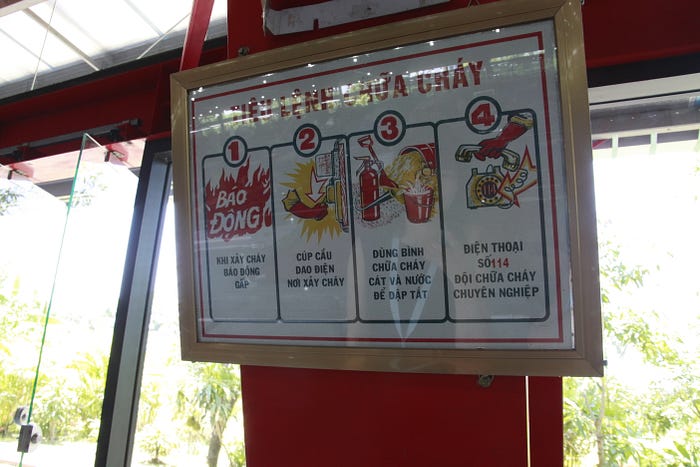
What factors determine a "safe" or "compliant" factory with one that is "unsafe" or "non-compliant". While this might seem straight forward, when you look at the issue closer, you'll find a labyrinth of different organizations that monitor safety, differing brand codes of conduct, and differing levels of care that factory management give to being compliant to these outside bodies. When we simplify the puzzle of safety, it comes down to: factory leadership's prioritization of safety practices, requirements detailed in customer codes of conduct (sometimes maintained and audited by outside non-profit groups), local governmental laws and policies, and how well all these entities come together. One of the ways that these groups are coming together is through the effort to create a standardized audit system for factories that would reduce time that brands spend at each individual factory, and reduce time spent by factories catering to the brand/organization auditors. This effort is being lead by the Social Labor Convergence Project. The elements that make up safety include: consistent use of safety equipment (face mask, gloves, proper footwear, chemical ventilation hoods), consistent checking of reactive safety equipment (fire extinguishers, first aid kits on factory floors), and consistent iteration on safety procedures to ensure education and adherence to the newest standards.
Who Makes A Factory Safe?
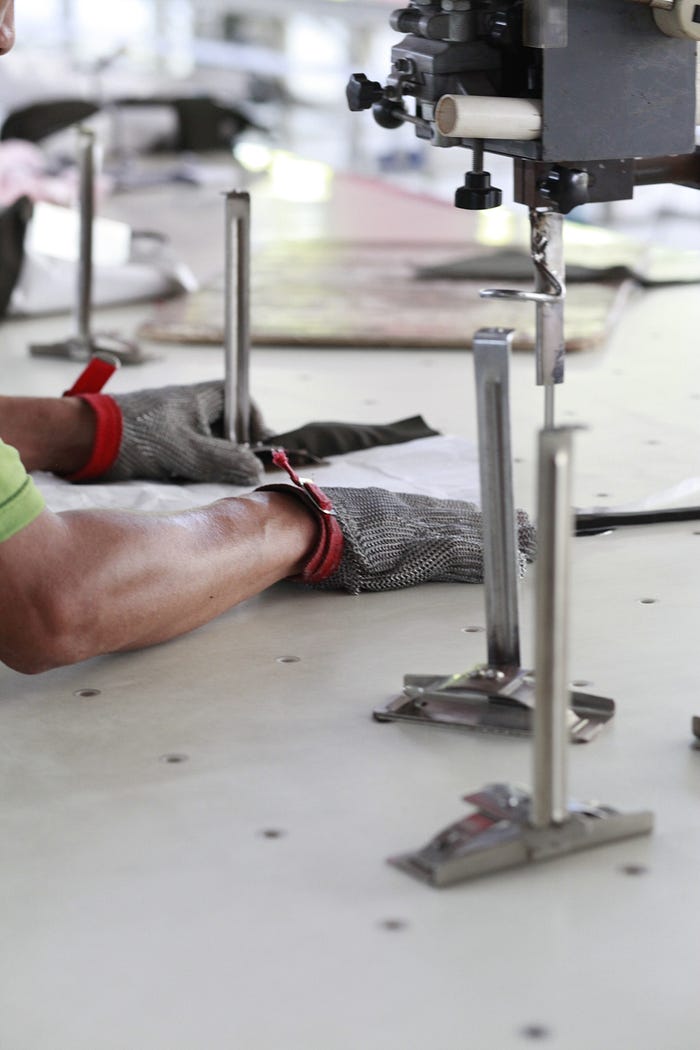
The factory is first and foremost responsible for making sure it has safe conditions for all workers. Maxport ensures this by employing a well-staffed team of employees that are constantly working to ensure the practices mentioned above are being completed. This includes the management that direct operations onsite at each individual factory, and the management that direct overall operations for the larger organization itself. There is also a health, safety, and environment team that operate safety maintenance jobs at the factories, and the internal compliance team who audit and control safety measures being put into place, and liaison with the auditing teams at brand partners. But above all, individual workers are responsible for utilizing the safety equipment at their disposal, including face masks on the sewing lines, chainmail gloves on the cutting tables, and protective eyewear.
Local authorities also partner with factories in the auditing of factories to make sure they are compliant, by self-report audits. Maxport goes through a biannual internal audit and sends the reports of these audits to both local governments, as well as NGO (Non-Governmental Organizations) such as the Fair Labor Association.
Beyond the government and factory leadership/workers, brands also make sure the factories they partner with are safe, either through individuals that work for the brands themselves, or through audit firms contracted by the brand. This method is sharply criticized by organizations such as the WRC (Worker's Rights Consortium) and social advocates such as Jim Keady, as they believe that self-governance inherently leads to lax regulations and standards. From personal experience at Maxport, I can strongly refute that argument in the case of these particular factories. I saw the detail and care put into an audit by one of the brands that Maxport works with, and there were no corners cut. In the age of social media and the importance of social justice and with how quickly information can fly around the earth, there is little reason for any global brand to cut corners.
Many brands are also members of organizations such as the Fair Labor Association, BetterWork (run through the IFC), and the Fair Wear Foundation. These organizations provide oversight on factory safety operations, as well as continued resources for training and knowledge of up-to-date best-practices. So as I said earlier, there is a lot of partnership and strong communication required within these stakeholders to make sure that all is safe in a factory.
Who Determines Safety Standards?
Safety standards are, for the most part, determined by the organizations mentioned above — such as the Fair Labor Association, BetterWork, and the Fair Wear Foundation. They partner very closely with the brands that belong to the organizations to maintain high standards for social welfare. As noted, there is an ongoing effort to reduce the amount of organizations and auditing that goes on in the industry, as it is time consuming and expensive for both brands and factories. Complexity lies in the difference of safety standards between the organization's home countries — for example, those organizations based in the EU generally have stricter safety standards than those based in the US. However, if brands, factories, and these organizations continue to share information and best practices, the industry will continue to be able to raise standards of living in manufacturing countries. This may take investment by brands, as some safety standards are more expensive to implement than others — that is why it is important for brands to understand the factories they partner with and be invested in their success.
Social Responsibility in Factories
The main role of Maxport's Social Compliance team is to work with Human Resources and Factory Leadership to make sure internal policies and external obligations are being met, and programs for employees and workers are set up. Programs range from tracking overtime work to managing holiday celebrations. Working unpaid and/or required overtime is a very real issue in garment manufacturing, and Maxport is adamant about making sure that employees are protected from any issues that surround overtime work. The typical employee of Maxport works 1 to 1.5 overtime hours per day, and are limited to 4 hours, should a worker choose to work the maximum amount. All overtime work is at Maxport is voluntary. The Production Planning team ensures this by adequately planning for customer orders. Many planning factors can lead to the needed use of overtime to complete production runs on time. Some of these factors include late approvals by brands, last minute material changes, and last-minute order quantity changes. If brands are more aware of the impact these decisions make on the quality of life for the workers manufacturing the clothing, then steps can be taken to mitigate these issues.
Piece Rate Payment & Protecting Against Abuse of Systems
Maxport employees who work on the sewing lines are paid as part of a piece-rate system. When I first heard this, I was honestly quite dismayed, as all the research I had done on the garment industry pointed to the fact that piece rate payment was detrimental to the health of the workers in the system. After learning this, I asked what sort of protections were aimed at making sure employees were not taken advantage of (or encouraged to use unsafe practices to meet quotas). Maxport employees, during the hiring process, actually have an agreed upon base rate of salary, which — after that base rate has been met — is then adjusted to piece rate. This is used to incentivize workers (and reward those with the highest level of skill), while also allowing for newer or less skilled employees learn on their own time and use proper safety procedures. To also encourage safety, workers are offered free personal protective equipment when they are hired. This includes a shirt, face mask, shoes, and a water bottle. So, all hope is not lost if you find out a factory you partner with uses piece-rate payment. There are ethical ways to get the best of both the incentives utilized in piece-rate systems, and the safety and security of hourly payment systems.

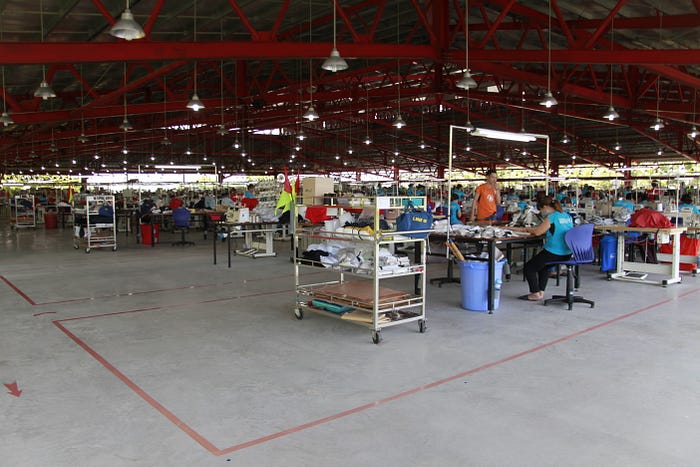
One of the concerns I had was that, due to language barriers, employees might not understand the policies set in place by non-governmental organizations and brand partners' codes of conduct. As it turns out, I did not need to be concerned. As soon as I stepped into the factory, I noticed a large revolving poster that outlined all the codes of conducts that the brands being produced in that factory had in place. These codes of conduct were written in Vietnamese, not English, so as to be clear for the workers. I also learned that all new employees go through 3 mandatory days of training when they are taught about Maxport's regulations, policies, and internal procedures. These include salary policies, insurance policies, trade union and freedom of association policies, the customer's codes of conduct, and all necessary safety and healthcare information. These trainings are implemented to support these workers as they integrate into the Maxport system and a new working environment, and to make sure they know their rights so they can protect themselves against abuse if necessary.
More information on social compliance policy and programs at Maxport can be found in the Appendix.
Brand Policies & The Code of Conduct
The purpose of this article is, first and foremost, to challenge the assumption that many people in the Western world have about where your clothing comes from, as well as to show that stronger brand relationships with factories improves quality of product and life for workers, as well as reduces cost for brands and consumers. To drive this point home, I've included information about the Codes of Conduct and Social Responsibility guidelines for three brands in the sport/technical apparel industry. Two of these brands, Maxport works directly with — Nike and Lululemon. They have great codes of conduct that should be (and are) emulated within the industry to improve conditions globally. The last brand, Everlane, has a transparency model that I believe should be the gold-standard for brands to follow. They call it "Radical Transparency" and their approach is incredibly unique in an industry that has thrived on the intentional diluting of responsibility within the supply chain.
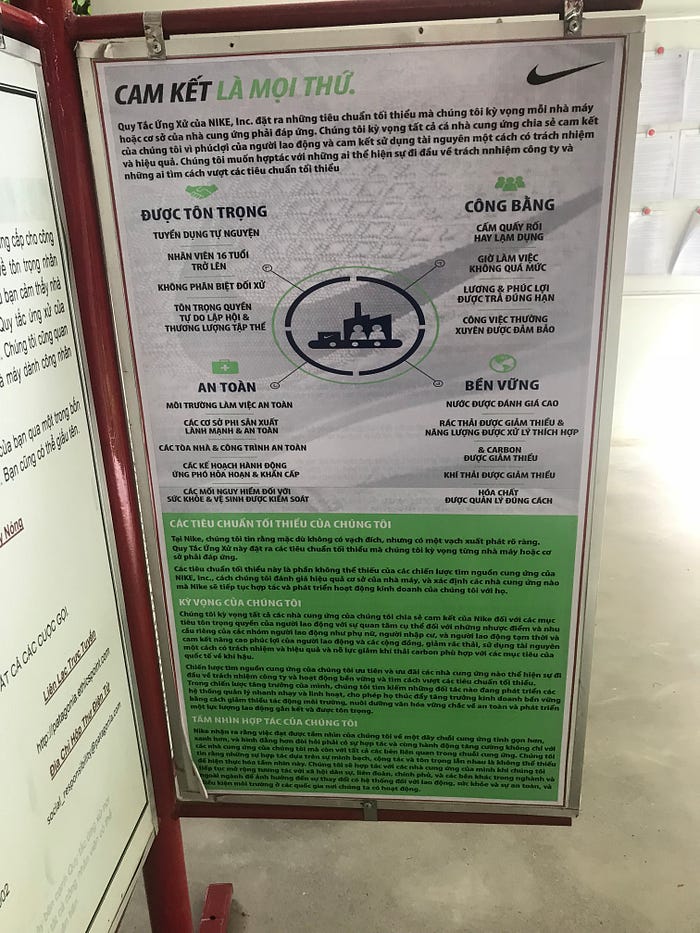
Nike
Nike has been an industry leader in sustainable partnerships since the experience in the 1990s when it was found that factory partners had been negligent in the treatment of their workers.
Nike is a founding member of the Fair Labor Association (FLA), which is a well-known and respected non-profit headquartered in Washington, DC. It was created with the help of Bill Clinton in 1999, to address supply-chain issues in the garment and footwear manufacturing processes. The Code of Conduct that Nike abides by must be compliant with the FLA, and is independently audited by the Association, as they see fit.
One of the best (and easiest) ways brands can introduce transparency in their supply chain is to publish the list of factory partners around the world. Nike was one of the first brands in the apparel/footwear industry to do so. This allows for additional oversight by larger human-welfare organizations that a brand might not directly be associated with. According to the Nike Code of Conduct, published on their website, they expect their code of conduct to not be the eventual achievement of their factory partners. They expect that it is the minimum standard, and welcome and encourage factory partners to go above and beyond in compliance with the code. Nike audits their garment factories every 1 or 2 years, dependent upon the findings of the last audit, as noted in their code, "Our sourcing strategy prioritizes and favors suppliers who show demonstrable leadership in corporate responsibility and sustainability and who seek to move beyond minimum standards." As mentioned in the background, Maxport has gained a strong reputation in the garment manufacturing industry as a small partner, who produces the highest quality technical products on the market. This reputation, and subsequent partnership with Nike, allows for an expansion of innovation in construction technique, as well as higher quality of product for Nike to put onto the market for consumers.
Here are some additional aspects of Nike's Code of Conduct that are important for all garment manufacturers to comply with, to both product high quality garments, as well as retain a happy, healthy employee base.
- Employment is Voluntary
- Employees are Age 16 and Older
- Supplier Does Not Discriminate
- Freedom of Association and Collective Bargaining are Respected
- Harassment and Abuse are not Tolerated
- Working Hours are not Excessive
- Compensation is Timely Paid
- Regular Employment is Provided
- The Workplace is Safe
- All Facilities are Healthy and Safe
- Building is Fit for Purpose
- Fire & Emergency Action Plans are in Place
- Occupational Health and Hygiene Hazards are Controlled
- Water is Valued
- Waste in Minimized and Handled Properly
- Energy and Carbon are Minimized
- Air Emissions Impact is Minimized
- Chemicals are Properly Managed
For more detailed descriptions of these requirements, please consult the Nike Code of Conduct, found via link in the Additional Resources section.
Lululemon
Lululemon is also an industry leader in Code of Ethics expectations for its factory partners. Lululemon does not belong explicitly to an overarching outside body, however according to their Code of Ethics, "Our VCoE is a living document that we update regularly to keep on top of emerging regulation and leading practices. It is based on industry-recognized principles and standards, including the International Labour Organization's conventions, the Universal Declaration of Human Rights, the United National Global Compact Principles, and the California Transparency in Supply Chains Act." Utilizing these standards to create their own Code of Ethics ensures that the highest and most progressive standards are implemented across their supply chain. The elements of their Code of Ethics are, understandably, quite similar to those of Nike, including elements pertaining to Child Labor, Forced Labor, and Transparency. Additional elements of note include: a ban on unapproved factories or subcontractors and no homework for employees, no corruption or bribery within their partner organizations, and a minimum wage guarantee. This isn't to say that Nike does not monitor for these elements, however they are not as explicitly stated as in Lululemon's Code of Ethics.
Lululemon also goes to great depths on their assessment process for their factory partners, which includes a pre-production assessment, tours of facilities, reviews of pertinent documents, and continuous improvement agreements. They have specific elements of their Code of Ethics that are zero-tolerance — factories must meet these requirements, or Lululemon will cease operations with them. However, dependent on local regulations and existing facilities, they also understand that some elements of their Code of Ethics will not be able to be 100% complied upon, especially during the infancy of the brand's relationship with a factory partner. To make sure that there is continuous improvement in these non-compliant elements, Lululemon works with their partners to create "Corrective and Preventative Action Plans (CAPAs)" — which blend training, consulting, and coaching to help meet standards. As with Nike, these elements and procedures reward vendors that are continuously iterating on social/environmental compliance and sets up factories that might need help for success moving forward. And as I mentioned before, the quickest way that brands can improve the conditions within factories to meet standards is by investing in the factory itself.
Additional information on Lululemon's Code of Ethics and the elements that make it up can be found via the Additional Resources section of this post.
Everlane
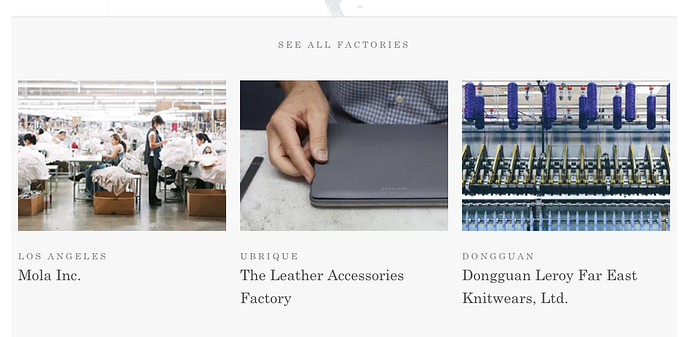
Everlane, a direct-to-consumer brand dedicated to creating sustainable garments at affordable prices, has the boldest strategies for transparency in their supply chain that I have seen during research for this post. Again, to be clear, they do not work with Maxport. But, I chose to include them because of how impressed I was by their policies. They include pricing for each element of each garment, which includes labor costs, material & hardware costs, duties, and transportation costs. This insight into the true cost of a garment or accessory has been sorely missed by consumers, in my opinion. This approach works for them because they exclusively sell their garments through online and owned-door retail locations. If they were to partner with retail organizations, the price of their garments would likely increase aggressively, and the transparency would not work so well — consumers do not like to know that the true cost of the garment they are purchasing can be ~25% of the retail price.
Everlane extends this transparency to a garment-by-garment breakdown of the factories where they were created. Again, because they have used this approach from the get-go and have a relatively small breadth of items being created, this works for them. I'm not sure this approach would work for a Nike or a Lululemon, where one style might be sewn/finished in multiple factories across the world. However, even being able to offer slight insight into the location of production (separate from the required "Made in …" element of a care tag) may encourage consumers to engage with the brand and product at higher rates. Anecdotally, I love going to Everlane's website not just to look at what new products are being released, but to see where those products are being created.
More information on Everlane's Supply Chain and Radical Transparency Pledge can be found in the Additional Resources section of this post.
Conclusions
What did I get from this?
The biggest thing I gained from writing this article — or blog post or whatever you'd like to call it — is that there is a lot more we as American consumers can do to enact change within the supply chain. Understanding where your clothes come from is the first step. Look at the tag on the back of the shirt you're wearing — what country was it made in? What are the standards for garment labor in that country? Recognize that just because something is made in the USA does not mean that fair labor was guaranteed. Be aware of brands that consistently use labor from the least-regulated countries. These include Bangladesh, Myanmar, Indonesia, and places in Central America such as Honduras and Guatemala.
Further, checking our own preconceived notions of certain brands is essential when choosing which brands and morals you want to be loyal to or encourage. Although I talk most about Nike and Lululemon in this article, there are more brands that work with Maxport and many more than even those, that engage in responsible sourcing — the internet is your best friend when trying to trace the source of your clothing. The more you read, the more informed a decision you can make for yourself.
We, as an American society, enact social change with our pocketbooks. If brands like Forever 21 didn't make money with their current process, they wouldn't use it. If we demand better treatment for the workers in our backyard, brands will comply. And, I am hopeful that if we as a society continue to place importance on quality of garment rather than quantity or price, changes should come. But just as it is ultimately the worker's responsibility to wear the mask given to them, it's the consumer's responsibility to tell the marketplace what they will accept and what they won't.
An Additional Consideration — Decreasing Product Creation Time
On top of constantly ongoing improvements in factory conditions, there is another variable that brands care about and are actively seeking to update — timelines. The fast fashion boom has shown that traditional or standard timelines in the fashion (and sport product) industry are, in fact, too long. The standard amount of time it takes for a product to go from an idea to on-the-shelf is 18 months. And while trend-watching firms can do a pretty good job of predicting what will be popular a year and a half or two years out, brands end up betting millions of dollars of product on fashion trends, which are volatile and hard to pin down, especially in this day and age of social media influencers and personalities. One of the ways that brands seek to reduce time to market is by shortening production time for the factory. This is a dangerous tradeoff for factories and their workers. Overtime is already very common in factories, and many workers are more than happy to work it, as it can significantly increase wages for them. However, when you plan production with overtime hours taken into consideration, any issue can derail the process and end up increasing overtime hours worked past the point of acceptability. Factories must keep this in mind as brands push for shorter and shorter lead times, and brands must acknowledge their own role and power over the timeline. The average amount of time it actually takes to produce an standard production run of a garment is between one and three months. Out of 18 months, it is actually one of the shortest elements of the process. There are better ways to increase efficiency and to shorten the amount of time it takes to bring something to market. Increasing communication and decreasing unnecessary approval roadblocks are two ways. Moving some production closer to distribution centers is another way, though again we need to be cognizant of the dangers of piece-rate work in the US, where it is easy to skirt labor laws.
Basically, there are no easy answers to the questions that come from the ethical garment manufacturing process. It is a partnership between many entities who all have different priorities when viewing the supply chain. But if factories, brands, and governments all keep the health and safety of the worker at the top of the priority list, then everyone wins. The consumer just has to be willing to pay for quality — and I believe we are and will continue to be willing to do so.
Appendix & Additional Information
Information on Social Programs at Maxport Limited
Worker Health & Wellness
As is regulated by the Vietnamese Government, Maxport offers biannual health checkups on-site with a local physician for all employees. They also have on-site clinics in all their factory locations for acute health issues and free medicines as necessary. I can confirm that these clinics are clean and comfortable, as I visited the clinic at Maxport HQ twice during my 3 month stay — once for ankle pain, and once for stomach discomfort. The doctor on staff was incredibly nice and thorough in her assessment of my symptoms. Should employees or their families need to visit a doctor outside of these options, Maxport has many insurance policies and options — including social insurance, health insurance, unemployment insurance, and all workers are automatically enrolled in no-cost-to-them 24/7 accident insurance.
Employees are always able to rest to stay hydrated and use the restroom during their shift. Rest time is factored into standard time it takes to complete a garment from start to finish, which is used to determine variable labor costs quoted/charged to brands. The seats that employees use are adjustable and all have backrests, to provide ergonomic support. Factory floors have live plants placed strategically around the space to help naturally provide air filtration, alongside mechanical air purifiers and advanced ventilation throughout the floor.
Maternity Care for Workers
There are also additional protections put in place for those workers who are pregnant or have recently given birth. No overtime work is allowed for such workers after the 7th month of pregnancy, until the child is 1 year old. This eliminates the need for those workers to decide whether to add paid hours to their paycheck or spend essential time with their child. Soon-to-be mothers also have 5 days of paid leave for prenatal checkups, a special, nutrient-rich lunch starting at 16 weeks of pregnancy, and only work 7 hours per day but are paid for 8 hours after the 7th month of pregnancy. They also receive 6 months of maternity leave to properly take care of themselves and their newborn, as well as a childcare stipend for children under 1 year old.
Food & Water Safety
All employees receive lunch, free of cost to them, every day that they work. While there are horror stories of factories offering rotting and inedible meals to their employees, Maxport is quite the opposite. I've eaten in the canteens with employees and can ensure that the food is freshly cooked onsite, is nutritious, and is offered in appropriate portions. Many of the vegetables used in these meals is organically grown right there at the factory's gardens. Each factory location also has a full water filtration & purification system that provides potable water to the factory. There is a team who operates and maintains these systems and they are certified for consumption by local authorities, who retest these systems every month.
Environmental Impact Testing
In terms of environmental impact, Maxport takes a proactive approach to reducing their carbon footprint by creating factory spaces that use natural solutions to solve problems, such as factory walls that open to allow for airflow to reduce air conditioning use, planting trees to offset carbon being released from energy use, and by sourcing food for lunches from their own garden and local markets. They also make sure all systems are working as they should be by testing wastewater quality, air quality, noise levels, and brightness levels of factories every quarter. Maxport operates within the Higg Index, which is a suite of tools to measure companies across the supply chain spectrum in sustainability performance.
Social Activities & Other Benefits
Maxport has a healthy array of additional benefits that employees can take advantage of during working days as well as on some weekends. Yoga class is offered at least twice per week (many weeks it is offered 3x) for employees, taught by a local yoga master. They also offer and are in the process of expanding continuing training programs, such as skill training, English language courses, management training, and leadership training. These offerings show that Maxport cares about the retention of employees and building their skill sets, so they train the next generation of Maxport Leadership. This tactic is nothing new — many of the department heads at Maxport have been with the company for more than 15 years. This reminds me of companies such as Nike, who retain many employees for upwards of 10 years, with many in the manager and VP level having worked there for more. Lastly at Maxport, employees are offered a variety of social and teambuilding activities throughout the year. This includes yearly charity outings, vacation days during the Tet New Year holiday, day-long team building events (I took part in one of these events while I was at Maxport — it was an exhausting but entertaining day!), traditional cake-making contests during Tet, a Woman's Day Celebration, as well as soccer games and championships. All these culminate in industry-leading standards of living and happiness for the employees here.
Articles Worth Reading for Consumers
- You stopped buying fast fashion — now what?
- Nike Signs Factory Access Agreement
- Abuse is daily reality for female garment workers for Gap and H&M, says report
- Brands Are a Lot More Responsible for Terrible Factory Conditions Than They Want You to Think
- Information on Vietnam's Minimum Wage Requirements
- Information about the Worst Countries for Worker's Rights
- Transparency in the Apparel Industry — Report by Human Rights Watch
Works Referenced (these are also worth a read!)
- Behind a $13 shirt, a $6-an-hour worker
- Pay Matters: The Piece Rate and Health in the Developing World
- Jim Keady Speaks out Against Nike
- About New York; God And Swoosh At St. John's
Brand Codes of Conduct & Additional Information
Nike
Code of Conduct 2017 Sustainable Business Report Learning from our Past Industry Partnerships Basics of Sourcing Partnerships
Lululemon
Lululemon's Brand Code of Ethics Factory Assessment Process The International Labor Organization's Conventions & Recommendations The UN's Universal Declaration of Human Rights The UN's Global Compact Principles California's Transparency in Supply Chain Act
Everlane
About Everlane Factory Overview
Organizations Making a Difference
Fair Labor Association
In their own words: "FLA is a collaborative effort of universities, civil society organizations and socially responsible companies dedicated to protecting workers' rights around the world. We are an international organization with a dedicated staff and board, headquartered in Washington, DC, with offices in China, and Switzerland.
FLA places the onus on companies to voluntarily meet internationally recognized labor standards wherever their products are made. We offer:
- A collaborative approach allowing civil society organizations, universities and socially responsible companies to sit at the same table and find effective solutions to labor issues;
- Innovative and sustainable strategies and resources to help companies improve compliance systems;
- Transparent and independent assessments, the results of which are published online; and
- A mechanism to address the most serious labor rights violations through the Third Party Complaint process."
Find out more: Principles of Fair Labor and Responsible Sourcing
BetterWork
In their own words: Better Work — a collaboration between the United Nation's International Labour Organization (ILO) and the International Finance Corporation (IFC), a member of the World Bank Group — is a comprehensive program bringing together all levels of the garment industry to improve working conditions and respect of labour rights for workers, and boost the competitiveness of apparel businesses.
As a result of their participation with Better Work, factories have steadily improved compliance with ILO core labour standards and national legislation covering compensation, contracts, occupational safety and health and working time. This has significantly improved working conditions and, at the same time enhanced factories' productivity and profitability.
Currently, the program is active in 1,450 factories employing more than 1.9 million workers in seven countries. As well as advising factories, Better Work collaborates with governments to improve labour laws, and with brands to ensure progress is sustained. We also advise unions on how to give workers a greater say in their lives, and work with donors to help achieve their broader development goals.
Our vision is a global garment industry that lifts millions of people out of poverty by providing decent work, empowering women, driving business competitiveness and promoting inclusive economic growth.
Programs: Betterwork Vietnam
Fair Wear Foundation
In their own words: Fair Wear Foundation is a non-profit organization that works with brands, factories, trade unions, NGOs and sometimes governments to verify and improve workplace conditions for garment workers in 11 production countries in Asia, Europe and Africa. FWF keeps track of the improvements made by the companies it works with. And through sharing expertise, social dialogue and strengthening industrial relations, FWF increases the effectiveness of the efforts made by companies. FWF's more than 80 member companies represent over 120 brands, and are based in Europe; member products are sold in over 20,000 retail outlets in more than 80 countries around the world. Change requires a major joint effort. We therefore invite companies to join FWF and make a difference.
Learn more at: https://www.fairwear.org/
Social & Labor Convergence Project
In their own words: "We believe that we can improve working conditions by joining forces: 'one single assessment for all, more resources and improvements for everyone'. That is why we want to create a converged assessment framework that supports stakeholder's efforts to improve working conditions in the global apparel and footwear supply chain. A converged assessment will allow resources that were previously designated for compliance audits to be redirected towards the improvement of social and labor conditions."
Learn more at: https://slconvergence.org
Oxfam
In their own words: Oxfam is a world-wide development organisation that mobilizes the strength and voice of people against poverty, inequality and injustice. We are an international confederation of 20 Oxfam organisations working together in more than 90 countries. Oxfam works with partner organisations and alongside vulnerable women and men to end injustices.
Oxfam in Vietnam: Oxfam's first activities in Vietnam took place in 1955, when we provided humanitarian assistance. Since the late 1980s we have implemented a number of development projects across Vietnam aimed at reducing poverty. After Vietnam reached the lower-middle income benchmark in 2010, the needs of the poorest and most marginalised groups in society remain high; Oxfam's country strategy has shifted accordingly to addressing inequality. We seek transformative changes in policies, practices and beliefs in ways that will fundamentally improve the lives of poor and marginalised women and men, and ensure that all citizens have the same opportunity to enjoy their rights.
Oxfam's Vietnam country strategy contributes to shaping the debate on extreme inequality in Vietnam and globally. We seek to change the current narrative that inequality is acceptable and inevitable. We work in partnership with government, civil society, businesses, communities, media, research institutions and think tanks to influence policy and practices aiming at reversing economic, gender and social inequalities.
Program: Worker's rights in Vietnam
Human Rights Watch
In their own words: Human Rights Watch is a nonprofit, nongovernmental human rights organization made up of roughly 400 staff members around the globe. Its staff consists of human rights professionals including country experts, lawyers, journalists, and academics of diverse backgrounds and nationalities. Established in 1978, Human Rights Watch is known for its accurate fact-finding, impartial reporting, effective use of media, and targeted advocacy, often in partnership with local human rights groups. Each year, Human Rights Watch publishes more than 100 reports and briefings on human rights conditions in some 90 countries, generating extensive coverage in local and international media. With the leverage this brings, Human Rights Watch meets with governments, the United Nations, regional groups like the African Union and the European Union, financial institutions, and corporations to press for changes in policy and practice that promote human rights and justice around the world.
Article: Transparency in the Apparel Industry
Ethical Trading Initiative
In their own words: For 20 years, ETI and our members have been a driving force in ethical trade. We influence business to act responsibly and promote decent work. Taking a unique approach to business and human rights, our members are forward-thinking companies, trade unions and NGOs. Together, we tackle the complex challenges of today's global supply chains, improving the lives of workers worldwide.
Find out more: https://www.ethicaltrade.org/
Sustainable Apparel Coalition
In their own words: The Coalition develops the Higg Index, a standardized supply chain measurement suite of tools for all industry participants.
The tools measure environmental and social & labor impacts across the supply chain. With this data, the industry can address inefficiencies, resolve damaging practices, and achieve the environmental and social transparency consumers are demanding. By joining forces in a Coalition, we are addressing the urgent, systemic challenges that are impossible to change alone.
Find out more: https://apparelcoalition.org/
Final Note:
None of the brands mentioned in this article were contacted for information or comment. For re-publication of this article, please contact dlarkinspm@gmail.com.
About the Author Delaney is a graduate student studying Sports Product Management at the University of Oregon, Portland Campus. She previously worked in Project Management and Customer Experience at small tech companies in San Francisco, CA. She graduated from Saint Mary's College of California in 2014 with a BA in Kinesiology, with an emphasis in Health and Human Performance. After graduation from UO, Delaney hopes to take her passion for sport product and creation to a global brand where she can manage product lines that blur the line between fashion and function.