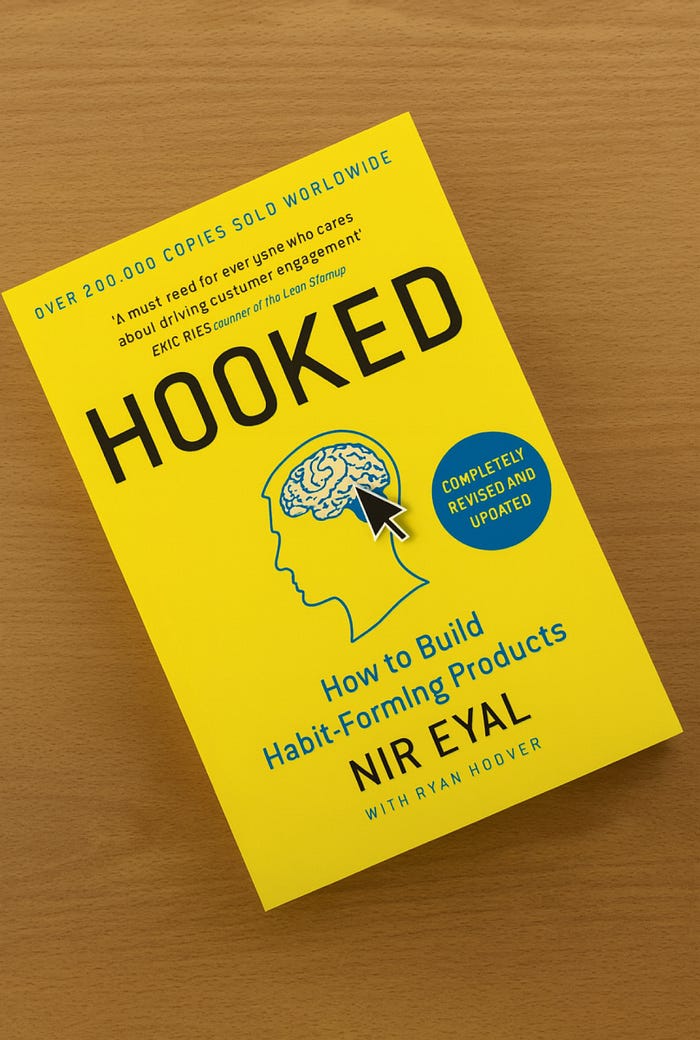
As UX designers, one of our core challenges is not just getting users to try a product but designing experiences that bring the users back to the product naturally. Hooked: How to Build Habit-Forming Products by Nir Eyal is a must-read book that dives deep into exactly that.
Rather than offering surface-level growth hacks, Hooked explains the psychology behind habit-forming behavior and shows how successful products intentionally design for it.
The Hook Model Explained
At the heart of the book is the Hook Model, a five-step framework used by many well-known digital products:
1. Habits – Repeated behaviors that users perform with little or no conscious effort.
2. Trigger – The cue that initiates user behavior, which can be external or internal.
3. Action – The simplest behavior performed by the user in anticipation of a reward, requiring minimal effort or motivation.
4. Variable Reward – The unpredictable outcome that satisfies the user's need and keeps them engaged by creating curiosity and anticipation.
5. Investment – The effort users put into the product that increases the likelihood of future engagement.
Nir Eyal supports this framework with real-world examples from products like Google, Facebook, Pinterest, Quora, and more, demonstrating how these platforms embed the Hook Model into their user experiences.
Learning from Real Products
One of the strongest aspects of the book is how clearly it connects theory with practice.
For example, Pinterest illustrates all four stages effectively:
• An internal trigger like boredom or the desire for inspiration
• A low-effort action such as scrolling
• A variable reward through unpredictable, engaging content
• An investment when users save pins or curate boards, making the product more valuable over time
The book also highlights why certain products failed, helping readers understand where habit loops break and what happens when user psychology is misunderstood or ignored.
Why This Book Stands Out for UX Designers
What makes Hooked especially valuable is how it shifts the designer's mindset:
• It emphasizes habits over features
• It encourages designers to observe user behavior deeply
• It reinforces the importance of ethical responsibility while designing for engagement
Each stage of the Hook Model is explained in the context of real user motivation, making it easier to identify habit-forming opportunities without blindly copying popular apps.
"Do This Now" – Turning Theory into Action
Every chapter ends with a "Do This Now" section – a practical checklist of questions tailored to each stage of the Hook Model. These prompts help designers:
• Think critically about their product
• Articulate design decisions clearly
• Iterate intentionally rather than intuitively
This makes the book not just informative, but highly actionable.
Final Thoughts
Hooked is more than a book about engagement, it's a guide to understanding why users behave the way they do and how thoughtful design can shape those behaviors responsibly.
For UX designers, product managers and anyone building digital products, this book serves as a strong foundation for designing experiences that are meaningful, engaging, and habit-forming without losing sight of user well-being.
If you're designing for long-term user engagement, Hooked deserves a place on your reading list.