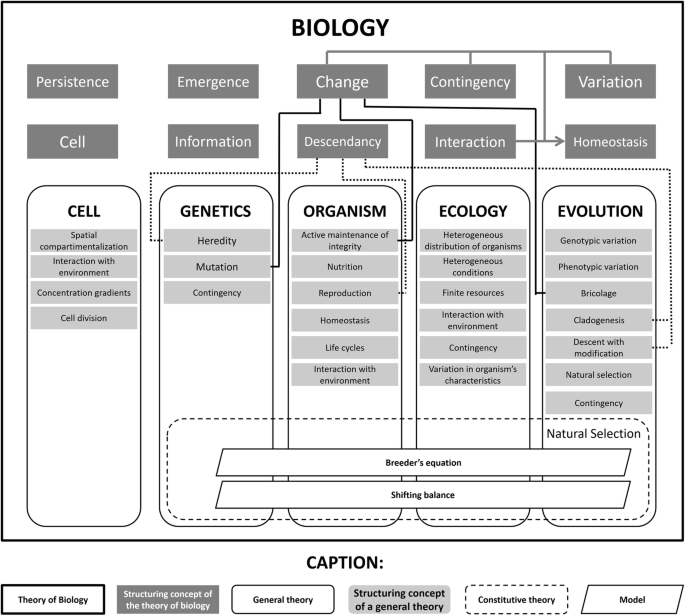

Biology is the branch of science dedicated to studying life and living organisms, seeking to understand the fundamental processes that govern their existence (OFFOR, 2017). It is a multifaceted field, exploring the material unity of the organic world and the universe (Karpinskaya, 1983). Biology encompasses a vast range of topics, from the molecular mechanisms within cells to the complex interactions between organisms and their environments (Greene & GREENE, 2005). This includes the study of the structure, function, growth, evolution, and distribution of living organisms (Yadav et al., 2025). The study of biology is crucial for understanding major biological processes within the environment and is essential for a nation's technological advancement (OFFOR, 2017). A comprehensive biology education facilitates students' enrollment in medicine, pharmacy, nursing, and related fields (OFFOR, 2017). Biology can be broadly divided into analytic and synthetic branches (Davies, 2018). Analytic biology focuses on dissecting biological systems to understand their components and functions, while synthetic biology aims to create new living systems by design (Davies, 2018). Molecular biology and genetics play a significant role, orienting the system of biological sciences towards a search for stable, invariant characteristics of life (Karpinskaya, 1983). Key areas within biology include: * **Cell Biology:** Explores the structure, function, and behavior of cells, the fundamental units of life (Carvalho et al., 2020). Spatial compartmentalization, concentration gradients, and cell division are crucial aspects of cell biology (Carvalho et al., 2020). * **Genetics:** Focuses on heredity, genetic variation, and the mechanisms of inheritance (Carvalho et al., 2020). Mutation and contingency are also important concepts in genetics (Carvalho et al., 2020). * **Organismal Biology:** Studies the anatomy, physiology, and behavior of organisms (Carvalho et al., 2020). Active maintenance of integrity, nutrition, reproduction, homeostasis, and life cycles are key aspects (Carvalho et al., 2020). * **Ecology:** Investigates the interactions between organisms and their environment (Carvalho et al., 2020). This includes the study of the distribution of organisms, environmental conditions, finite resources, and variation in organism characteristics (Carvalho et al., 2020). * **Evolution:** Examines the processes that drive the change in populations of organisms over time (Carvalho et al., 2020). Genotypic and phenotypic variation, natural selection, and descent with modification are central to evolutionary biology (Carvalho et al., 2020). ![Conceptual Relationships].
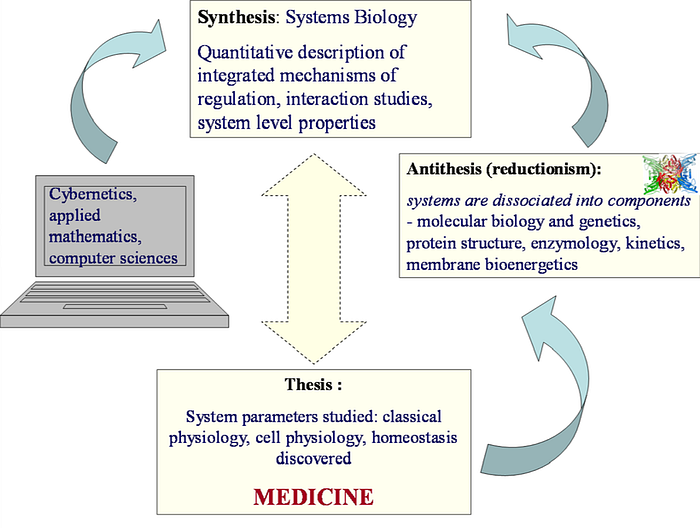
*Source: (Carvalho et al., 2020)* Evolution serves as the foundation of biology, providing ultimate explanations for the characteristics of species (Futuyma, 2013). The theory of evolution, with natural selection as a paramount principle, explains countless features of organisms and their genomes (Futuyma, 2013). Evolution is not limited to population genetics but is a fundamental physical process that gives rise to biological phenomena (Goldenfeld & Woese, 2011). The advent of molecular biology has further propelled biology into the realm of systems biology (Westerhoff & Palsson, 2004). Systems biology emphasizes the study of integrated systems, considering the interactions and relationships between different components (Saks et al., 2009). This approach contrasts with reductionism, which favors dissecting systems into individual components (Saks et al., 2009). Systems biology aims to provide a quantitative description of integrated mechanisms, interaction studies, and system-level properties (Saks et al., 2009). Cybernetics, applied mathematics, and computer sciences support systems biology by providing tools for modeling and analyzing complex biological processes (Saks et al., 2009). ![Thesis, Antithesis, and Synthesis in Systems Biology].
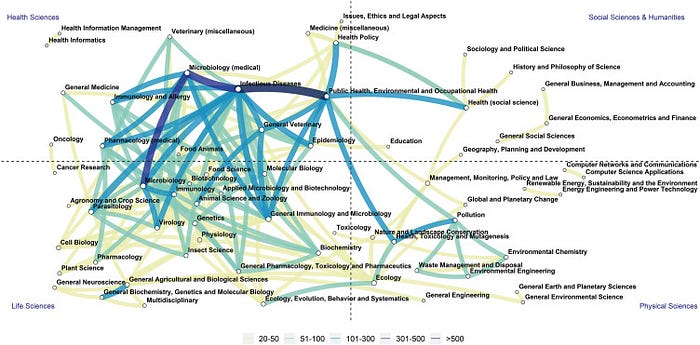
*Source: (Saks et al., 2009)* The definition of life itself is a complex question in biology (Fantini et al., 2024). Defining life is challenging, yet crucial for understanding the characteristics that emerged from an inorganic world (Prosdocimi & Farias, 2021). Defining life often involves considering autonomy and evolutionary capacity as fundamental characteristics observed in all cellular organisms (Prosdocimi & Farias, 2021). Biology also intersects with other disciplines, including medicine, environmental science, and social sciences (Zhou et al., 2024)(Qiang et al., 2022). The relationships between these fields are increasingly important for addressing complex issues such as public health, environmental sustainability, and ethical considerations (Zhou et al., 2024)(Qiang et al., 2022). ![Relationships among Scientific Disciplines].
*Source: (Qiang et al., 2022)* Modern biology education recognizes the importance of incorporating various conceptions of living organisms and the historical context of scientific knowledge (Simard, 2021). Addressing the excess of curriculum content and presenting biology as an integrated science are ongoing challenges in biology education (Carvalho et al., 2020). Integrating popular science texts into biology textbooks can help contextualize the curriculum content and relate it to students' daily lives (Souza, 2015).