


It was one of those still moments in the hospital corridor – the kind where the buzz fades and time slows down just enough for certain thoughts to slip in. A question quietly surfaced in my mind, one I've heard in different shapes and situations over the years: Do you want to know?
At first glance, it seems like a simple question. But it rarely ever is.
The circumstances may differ – a scan result, a blood test, a family history wrapped in probability – yet the essence of the question stays the same. It stays in the air, far heavier than it sounds. Because knowing isn't just about facts. It's about change. And the strange truth is, not knowing can affect you just as much.
We often speak about how uncertainty impacts patients. But the truth is, it affects all of us. We crave clarity, even if it's painful. The human mind doesn't rest well in the grey – it itches for answers, for something it can name, something either black or white, something it can hold onto and prepare for, something it can label. Even if it hurts.
But when the answers come with a weight – a terminal diagnosis, a progressive condition, a future that begins to feel pre-written – the mind falters. Suddenly, knowing becomes its own kind of burden. It gives shape to something shapeless but also defines the boundaries of what life might look like moving forward. It forces us to meet our limits – of time, of control, of our very bodies.
So people pause. They hesitate.
Some take the step. They choose to know. Even if it means grieving what might have been. Even if it changes everything. There is a strange comfort in having a name for the thing that has been lurking in the background. Knowing allows people to adjust, to find new meaning, and to realign what matters. But it also splits life into two chapters – before and after. And that's a hard line to walk.
Then there are others who walk away from the question. Who doesn't want to know? Maybe not out of fear, but from a need to protect what still feels normal. The rhythm of daily life, untouched by diagnosis. But that not-knowing has a cost too. The silence doesn't stay still. It grows, quietly. And the unknown starts to feel heavier than the truth might have been.
In the absence of certainty, the mind becomes a quiet storm – watching, analysing, questioning every symptom. Without a label, anxiety becomes harder to tame. And sometimes, the fear of what if is louder than the fear of what is.
The choice is never easy.
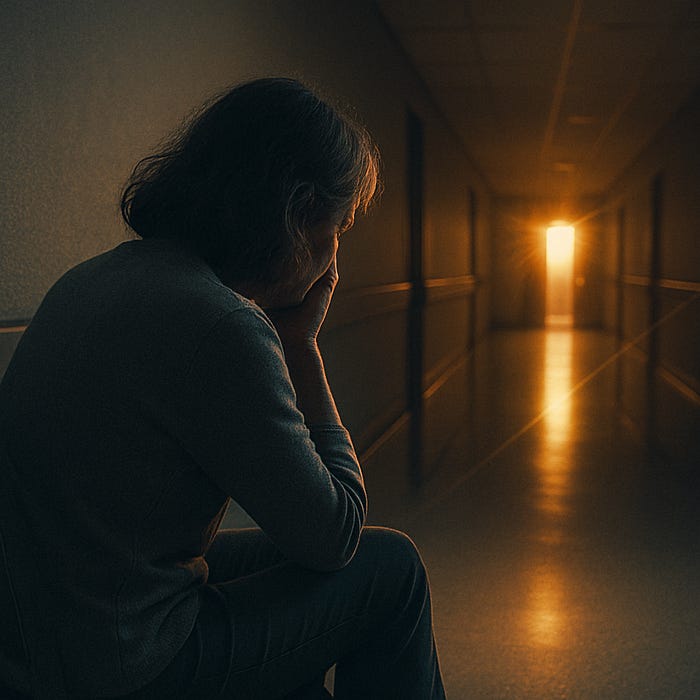
Image generated by ChatGPT
Knowing can bring a strange kind of clarity – but it also brings finality. It changes how you see the future and how you move through the present. It forces acceptance. Or at least the attempt.
Not knowing keeps the door open to hope – but it can also isolate. When nothing is confirmed, there are fewer words to explain what you're feeling. Less space to ask for comfort. Even the people closest to you might not understand the quiet weight you're carrying.
And so we stand in this space – this ancient dilemma that has existed long before we had tests or diagnoses or treatment plans.
Is it better to live in the shadow of what might be or in the harsh light of what is?
There is no universal answer. Just deeply personal ones.
And the quiet, ongoing work of living with whatever choice we make.