

Every day, billions of digital interactions happen seamlessly across the internet. When you check the weather on your phone, order food through an app, or send money to a friend, you're experiencing the invisible magic of REST APIs working behind the scenes. These digital bridges connect our applications, making modern software development possible.
Understanding REST API design isn't just about writing code, it's about creating reliable, scalable systems that can grow from serving a handful of users to supporting millions, just like the platforms that power Amazon, Google, and Twitter today.
Why REST APIs Became Essential?
In the early days of web development, applications were monolithic beasts. Everything lived in one place, and communication between different systems was complex and fragmented. Developers struggled with incompatible protocols, rigid data formats, and systems that couldn't talk to each other without extensive custom integration work.
The turning point came in 2000 when Roy Fielding introduced REST (Representational State Transfer) in his PhD dissertation. He wasn't trying to create another protocol. he was documenting the architectural principles that made the World Wide Web so successful and applying them to API design.
REST APIs solved fundamental problems that developers faced daily. They provided a uniform way for different applications to communicate using the HTTP protocol that everyone already understood. This meant a mobile app could talk to a web server, a web server could communicate with a database service, and third-party applications could integrate with existing systems using the same set of principles.
Core Concepts We'll Explore
Before diving deep into implementation details, let's outline the key concepts that make REST APIs effective:
- Resource-Based Architecture: How to think in terms of resources rather than actions.
- HTTP Methods and CRUD Operations: The fundamental verbs of API communication.
- Stateless Communication: Why each request must be self-contained.
- Uniform Interface: Creating consistent, predictable API interactions.
- Authentication and Security: Protecting your APIs in production environments.
- Error Handling and Status Codes: Communicating effectively with API consumers.
- Performance Optimization: Scaling from prototype to production.
- Documentation and Testing: Making your APIs maintainable and reliable.
- Top 20 Anti patterns and Best Practices
Understanding REST Architecture Principles in detail
- Resource-Based Thinking: - REST APIs organize around resources entities that your application manages. Instead of thinking about actions (like "getUserById" or "createNewOrder"), you think about resources and the operations you can perform on them. - A resource represents any meaningful concept in your application like users, orders, products, or even abstract concepts like authentication sessions. Each resource has a unique identifier (URI) and can be manipulated using standard HTTP methods.
- For example, instead of creating endpoints like:

/api/getUser?id=123

/api/createUser

/api/updateUser?id=123

- You create resource-based endpoints like:

/api/users/123 (the user resource)

/api/users (the collection of users)- HTTP Methods: The Verbs of API Communication
HTTP methods define what action you want to perform on a resource. Each method has specific semantics and expected behaviors that make APIs predictable and intuitive.
- GET requests retrieve information without causing side effects. They're safe operations that don't modify server state. A GET request to
/api/users/123should always return the same user data (unless the user was modified by another request). - POST requests create new resources. When you send a POST request to/api/userswith user data in the request body, the server creates a new user and typically returns the created resource with a unique ID. - PUT requests update or replace entire resources. The key characteristic of PUT is that it's idempotent, sending the same PUT request multiple times should have the same effect as sending it once. - PATCH requests partially update resources. Unlike PUT, which replaces the entire resource, PATCH only modifies the fields you specify in the request body. - DELETE requests remove resources from the server. Like PUT, DELETE operations are idempotent and deleting a resource that doesn't exist should not cause an error. - Implementing CRUD Operations in C#: Let's build a practical example using a user management system. This will demonstrate how REST principles translate into real C# code using ASP.NET Core. - Setting Up the Foundation: Every REST API needs a solid foundation. In C#, this means setting up your data models, database context, and controller structure properly:
public class User
{
    public int Id { get; set; }

    [Required]
    [StringLength(100)]
    public string Name { get; set; }

    [Required]
    [EmailAddress]
    [StringLength(255)]
    public string Email { get; set; }

    public DateTime CreatedAt { get; set; }
    public DateTime? UpdatedAt { get; set; }
}- Creating Resources (POST): When implementing POST endpoints, focus on validation, error handling, and returning appropriate status codes. This implementation demonstrates several REST principles with proper status codes (201 for creation, 409 for conflicts), validation of input data, and returning the created resource with its location.
[HttpPost]
public async Task<ActionResult<UserDto>> CreateUser([FromBody] CreateUserRequest request)
{
    if (!ModelState.IsValid)
    {
        return BadRequest(ModelState);
    }

    // Check for conflicts
    var existingUser = await _context.Users
        .FirstOrDefaultAsync(u => u.Email == request.Email);

    if (existingUser != null)
    {
        return Conflict(new { message = "User with this email already exists" });
    }

    var user = new User
    {
        Name = request.Name,
        Email = request.Email,
        CreatedAt = DateTime.UtcNow
    };

    _context.Users.Add(user);
    await _context.SaveChangesAsync();

    return CreatedAtAction(nameof(GetUser), new { id = user.Id }, userDto);
}
- Reading Resources (GET) GET operations should be fast, safe, and handle edge cases gracefully.
[HttpGet("{id}")]
public async Task<ActionResult<UserDto>> GetUser(int id)
{
    var user = await _context.Users.FindAsync(id);

    if (user == null)
    {
        return NotFound(new { message = $"User with ID {id} not found" });
    }

    var userDto = new UserDto
    {
        Id = user.Id,
        Name = user.Name,
        Email = user.Email,
        CreatedAt = user.CreatedAt
    };

    return Ok(userDto);
}
- Updating Resources (PUT vs PATCH) Understanding the difference between PUT and PATCH is crucial for proper REST implementation:
// PUT- Replace entire resource
[HttpPut("{id}")]
public async Task<ActionResult> UpdateUser(int id, [FromBody] UpdateUserRequest request)
{
    var user = await _context.Users.FindAsync(id);
    if (user == null)
    {
        return NotFound();
    }

    // Replace all fields
    user.Name = request.Name;
    user.Email = request.Email;
    user.UpdatedAt = DateTime.UtcNow;

    await _context.SaveChangesAsync();
    return NoContent();
}

// PATCH- Partial update
[HttpPatch("{id}")]
public async Task<ActionResult> PatchUser(int id, [FromBody] PatchUserRequest request)
{
    var user = await _context.Users.FindAsync(id);
    if (user == null)
    {
        return NotFound();
    }

    // Update only provided fields
    if (!string.IsNullOrEmpty(request.Name))
    {
        user.Name = request.Name;
    }

    if (!string.IsNullOrEmpty(request.Email))
    {
        user.Email = request.Email;
    }

    user.UpdatedAt = DateTime.UtcNow;
    await _context.SaveChangesAsync();
    return NoContent();
}
- Deleting Resources (DELETE) Delete operations should be idempotent and handle missing resources gracefully.
[HttpDelete("{id}")]
public async Task<ActionResult> DeleteUser(int id)
{
    var user = await _context.Users.FindAsync(id);
    if (user == null)
    {
        return NotFound();
    }

    _context.Users.Remove(user);
    await _context.SaveChangesAsync();
    return NoContent();
}- Authentication and Security: Production APIs require robust security measures. Modern REST APIs typically use token-based authentication, with JWT (JSON Web Tokens) being the most popular choice. - JWT Implementation: JWT tokens provide stateless authentication, meaning the server doesn't need to store session information. Each token contains all the information needed to verify the user's identity and permissions.
[HttpPost("login")]
public async Task<ActionResult> Login([FromBody] LoginRequest request)
{
    var user = await ValidateUser(request.Email, request.Password);
    if (user == null)
    {
        return Unauthorized(new { message = "Invalid credentials" });
    }

    var token = GenerateJwtToken(user);
    return Ok(new { token, expiresIn = 3600 });
}

private string GenerateJwtToken(User user)
{
    var claims = new[]
    {
        new Claim(ClaimTypes.NameIdentifier, user.Id.ToString()),
        new Claim(ClaimTypes.Email, user.Email),
        new Claim(ClaimTypes.Name, user.Name)
    };

    var key = new SymmetricSecurityKey(Encoding.UTF8.GetBytes(_jwtSecret));
    var credentials = new SigningCredentials(key, SecurityAlgorithms.HmacSha256);

    var token = new JwtSecurityToken(
        issuer: _jwtIssuer,
        audience: _jwtAudience,
        claims: claims,
        expires: DateTime.UtcNow.AddHours(1),
        signingCredentials: credentials
    );

    return new JwtSecurityTokenHandler().WriteToken(token);
}
- Rate Limiting: Rate limiting prevents abuse and ensures fair resource usage among API consumers. Here's a simple implementation.
public class RateLimitingMiddleware
{
    private readonly RequestDelegate _next;
    private readonly IMemoryCache _cache;
    private readonly int _maxRequests = 100;
    private readonly TimeSpan _timeWindow = TimeSpan.FromMinutes(1);

    public async Task InvokeAsync(HttpContext context)
    {
        var clientId = GetClientIdentifier(context);

        if (!IsRequestAllowed(clientId))
        {
            context.Response.StatusCode = 429;
            await context.Response.WriteAsync("Rate limit exceeded");
            return;
        }

        await _next(context);
    }
}- Error Handling and Status Codes: Proper error handling makes APIs predictable and debuggable. HTTP status codes communicate the outcome of each request clearly. Status Code Categories. - HTTP status codes follow a clear pattern that helps both developers and automated systems understand what happened. - 2xx Success: The request was received, understood, and accepted. - 4xx Client Error: The request contains bad syntax or cannot be fulfilled. - 5xx Server Error: The server failed to fulfill an apparently valid request. - Implementing Consistent Error Responses:
public class ApiResponse<T>
{
    public bool Success { get; set; }
    public string Message { get; set; }
    public T Data { get; set; }
    public List<string> Errors { get; set; } = new List<string>();
}

[HttpGet("{id}")]
public async Task<ActionResult<ApiResponse<UserDto>>> GetUser(int id)
{
    try
    {
        var user = await _context.Users.FindAsync(id);

        if (user == null)
        {
            return NotFound(new ApiResponse<UserDto>
            {
                Success = false,
                Message = $"User with ID {id} not found"
            });
        }

        return Ok(new ApiResponse<UserDto>
        {
            Success = true,
            Message = "User retrieved successfully",
            Data = MapToDto(user)
        });
    }
    catch (Exception ex)
    {
        return StatusCode(500, new ApiResponse<UserDto>
        {
            Success = false,
            Message = "An error occurred while processing your request",
            Errors = new List<string> { ex.Message }
        });
    }
}- Performance Optimization for Scale: As your API grows from serving hundreds to millions of requests, performance becomes critical. Companies like Amazon, Google, and Twitter have refined these techniques through years of scaling challenges.
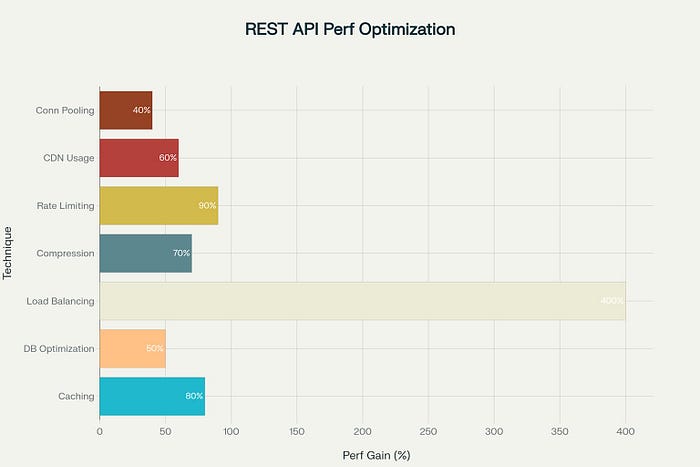
- Caching Strategies: Client-side caching reduces server load by allowing clients to store responses locally. Implement ETags and Cache-Control headers to enable intelligent caching.
[HttpGet("{id}")]
public async Task<ActionResult<UserDto>> GetUser(int id)
{
    var user = await _context.Users.FindAsync(id);
    if (user == null) return NotFound();

    var etag = GenerateETag(user);

    if (Request.Headers.IfNoneMatch == etag)
    {
        return StatusCode(304); // Not Modified
    }

    Response.Headers.ETag = etag;
    Response.Headers.CacheControl = "public, max-age=300"; // 5 minutes

    return Ok(MapToDto(user));
}
- Server-side caching: it dramatically improves response times for frequently accessed data.
[HttpGet]
public async Task<ActionResult<IEnumerable<UserDto>>> GetUsers()
{
    const string cacheKey = "users_list";

    if (_cache.TryGetValue(cacheKey, out List<UserDto> cachedUsers))
    {
        return Ok(cachedUsers);
    }

    var users = await _context.Users
        .Select(u => MapToDto(u))
        .ToListAsync();

    _cache.Set(cacheKey, users, TimeSpan.FromMinutes(5));

    return Ok(users);
}
- Database Optimization: Connection pooling prevents the overhead of creating new database connections for each request. Configure your connection string properly.
services.AddDbContext<ApplicationDbContext>(options =>
    options.UseSqlServer(connectionString, sqlOptions =>
    {
        sqlOptions.CommandTimeout(30);
    }));
- Query optimization prevents the N+1 query problem that can devastate performance.
// Bad: N+1 queries
var users = await _context.Users.ToListAsync();
foreach (var user in users)
{
    user.Orders = await _context.Orders.Where(o => o.UserId == user.Id).ToListAsync();
}

// Good: Single query with Include
var users = await _context.Users
    .Include(u => u.Orders)
    .ToListAsync();
- Load Balancing and Scalability: When a single server can't handle the load, horizontal scaling distributes requests across multiple instances. Implement health check endpoints to support load balancer decisions.
[HttpGet("health")]
public ActionResult HealthCheck()
{
    // Check database connectivity, external services, etc.
    var isHealthy = CheckDatabaseConnection() && CheckExternalServices();

    if (isHealthy)
    {
        return Ok(new { status = "healthy", timestamp = DateTime.UtcNow });
    }

    return StatusCode(503, new { status = "unhealthy", timestamp = DateTime.UtcNow });
}- Documentation and Testing: APIs are only as good as their documentation and test coverage. Modern development practices emphasize API-first design, where you document and test your API before implementing it. - OpenAPI/Swagger Documentation: Use Swagger to create interactive documentation that developers can use immediately.
[HttpPost]
[ProducesResponseType(typeof(UserDto), 201)]
[ProducesResponseType(typeof(ApiResponse<object>), 400)]
[ProducesResponseType(typeof(ApiResponse<object>), 409)]
public async Task<ActionResult<UserDto>> CreateUser(
    [FromBody] CreateUserRequest request)
{
    // Implementation here
}
- Testing Strategies: Implement comprehensive testing at multiple levels.
[Test]
public async Task CreateUser_ValidData_ReturnsCreatedUser()
{
    // Arrange
    var request = new CreateUserRequest
    {
        Name = "John Doe",
        Email = "john@example.com"
    };

    // Act
    var response = await _client.PostAsJsonAsync("/api/users", request);

    // Assert
    Assert.AreEqual(HttpStatusCode.Created, response.StatusCode);
    var user = await response.Content.ReadAsAsync<UserDto>();
    Assert.AreEqual(request.Name, user.Name);
    Assert.AreEqual(request.Email, user.Email);
}
Best Practices for Production APIs: Building APIs that can scale to serve millions of users requires following proven patterns and avoiding common pitfalls. Here are the essential practices that separate hobby projects from production-ready systems:
- Design Principles:
- Use resource-based URLs instead of action-based ones. Your URLs should represent things (nouns), not actions (verbs). This makes your API intuitive and discoverable.
- Implement proper versioning from day one. Whether you use URL versioning (
/api/v1/users) or header versioning, plan for evolution. APIs change over time, and breaking existing clients should be avoided at all costs. - Return consistent response formats across all endpoints. Standardize your success and error response structures so client applications can handle them predictably. - Security Hardening: - Always use HTTPS in production to encrypt data in transit. Modern browsers and mobile apps expect secure connections, and many features won't work over HTTP. - Implement input validation at multiple layers: in your data models using attributes, in your controllers using model validation, and in your business logic. - Follow the principle of least privilege for authentication and authorization. Users should only access resources they explicitly need.
- Performance at Scale: When your API needs to handle traffic like Amazon or Google, performance optimization becomes critical: - Implement pagination for any endpoint that returns lists. Even small datasets can grow unexpectedly, and loading thousands of records in a single request will eventually cause timeouts. - Use compression for response bodies. Gzip compression can reduce payload sizes by 60–80%, significantly improving response times for mobile clients. - Monitor and measure everything. Implement logging, metrics, and alerting so you can identify bottlenecks before they impact users.
Top 20 REST API Anti-Patterns and Best Practices: Here's a comprehensive list of the most critical REST API anti-patterns to avoid in your applications: 1. Improper HTTP Status Code Usage: - Anti-Pattern: Using 200 OK for all responses, even errors. - Best Practice: Use appropriate HTTP status codes (201 for creation, 404 for not found, 400 for bad requests, 500 for server errors)
2. HTTP Method Misuse: - Anti-Pattern: Using GET for data modification or POST for data retrieval. - Best Practice: Follow HTTP semantics like GET for retrieval, POST for creation, PUT for updates, DELETE for removal.
3. RPC-Style Endpoints:
- Anti-Pattern: Creating endpoints like /getUser, /createUser, /deleteUser.
- Best Practice: Use resource-based URLs: /users, /users/{id} with appropriate HTTP methods.
4. Inconsistent Naming Conventions: - Anti-Pattern: Mixing camelCase, kebab-case, and different naming patterns. - Best Practice: Use consistent plural nouns for resources and stick to one naming convention throughout.
5. Lack of API Versioning:
- Anti-Pattern: Not versioning APIs from the start.
- Best Practice: Implement versioning strategy (URL path, headers, or query parameters) like /api/v1/users
6. Overloaded Endpoints - Anti-Pattern: Single endpoint handling multiple operations or too many parameters. - Best Practice: Keep endpoints focused on single responsibilities and use separate endpoints for different operations.
7. Poor Error Handling: - Anti-Pattern: Generic error messages without context or structure. - Best Practice: Return structured error responses with specific error codes, messages and field-level validation details.
8. Exposing Internal Implementation Details: - Anti-Pattern: Returning database IDs, internal structures, or sensitive information. - Best Practice: Use DTOs (Data Transfer Objects) to control response structure and hide internal details.
9. Missing Input Validation: - Anti-Pattern: Not validating request parameters, headers, or body contents. - Best Practice: Implement comprehensive server-side validation for all inputs with proper sanitization.
10. Inadequate Security Measures: - Anti-Pattern: No authentication, authorization, or HTTPS enforcement. - Best Practice: Implement OAuth2/JWT authentication, role-based access control, and enforce HTTPS.
11. Lack of Rate Limiting: - Anti-Pattern: No protection against DoS attacks or excessive API usage. - Best Practice: Implement rate limiting and throttling mechanisms to ensure fair usage
12. Missing Pagination: - Anti-Pattern: Returning all data in single response for large datasets. - Best Practice: Implement pagination with limit/offset or cursor-based pagination for list endpoints.
13. Chatty API Design: - Anti-Pattern: Requiring multiple small requests to accomplish single tasks. - Best Practice: Design APIs to minimize round trips by allowing batch operations or including related data.
14. Ignoring Caching Strategies: - Anti-Pattern: Not implementing any caching mechanisms. - Best Practice: Use HTTP cache headers (Cache-Control, ETag), implement conditional requests, and consider server-side caching
15. Poor Documentation: - Anti-Pattern: Missing, outdated, or incomplete API documentation. - Best Practice: Maintain comprehensive, up-to-date documentation with examples using tools like Swagger/OpenAPI.
16. Hardcoded Configuration Values: - Anti-Pattern: Hardcoding URLs, credentials, or environment-specific values. - Best Practice: Use configuration files, environment variables, and externalized configuration management.
17. Insufficient Logging and Monitoring: - Anti-Pattern: No logging of API activity or error tracking. - Best Practice: Implement comprehensive logging, metrics collection, and monitoring for troubleshooting and capacity planning.
18. Ignoring Content Negotiation: - Anti-Pattern: Supporting only one content type or not handling Accept headers. - Best Practice: Support multiple content types (JSON, XML, CSV) and proper MIME type handling.
19. Stateful API Design: - Anti-Pattern: Maintaining server-side session state between requests. - Best Practice: Design stateless APIs where each request contains all necessary information.
20. Inadequate Testing Coverage: - Anti-Pattern: No automated tests for API endpoints and edge cases. - Best Practice: Implement unit tests, integration tests, and contract testing with comprehensive test coverage.
Quick Implementation Checklist:
✅ Security: Authentication, authorization, input validation, HTTPS ✅ Performance: Caching, pagination, rate limiting, efficient queries ✅ Reliability: Proper error handling, logging, monitoring, testing ✅ Usability: Consistent naming, clear documentation, appropriate status codes ✅ Maintainability: Versioning, configuration management, clean architecture
Following these practices will help you build REST APIs that are secure, scalable, maintainable and developer-friendly essential qualities for APIs that need to serve millions of users reliably.
The Future of API Development
REST APIs have evolved from a simple architectural style to the backbone of modern software development. They enable the microservices architectures that power today's largest applications, support the mobile-first world we live in, and make possible the API economy where businesses expose their functionality for others to build upon.
Understanding REST API design principles isn't just about following best practices, it's about building systems that can grow, adapt and scale. Whether you're creating a simple prototype or architecting the next billion-user platform, these principles provide the foundation for reliable, maintainable software.
The APIs you build today might serve thousands of requests per second tomorrow. By following proper REST design principles, implementing robust error handling, and optimizing for performance from the start, you're not just writing code you're building the digital infrastructure that powers our connected world.
Every great application started with well-designed APIs. The patterns and practices covered in this guide will help you create APIs that are not only functional but elegant, scalable, and built to last. Start applying these principles in your next project and experience the difference that thoughtful API design can make.
I hope you enjoyed reading this blog!
I'd love to hear your thoughts. please share your feedback or questions in the comments below and let me know if you'd like any clarifications on the topics covered. If you enjoyed this blog, don't forget to like it and subscribe for more technology insights.
Stay tuned! In upcoming posts, I'll be diving into advanced .NET topics such Job Scheduling, Caching Strategies, CLR Execution, ASP.NET Core, Entity Framework core, Software architectures and much more.
Thank you for joining me on this learning journey!