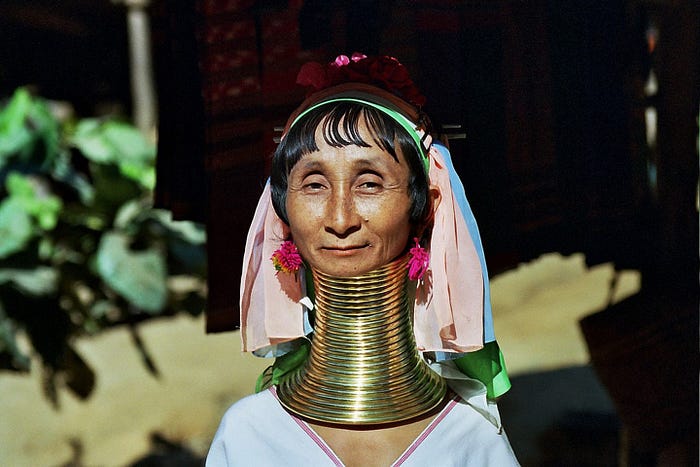


The Kayan tribe of Northern Thailand, also referred to as the "Karen long-neck people", are quite popular for wearing neck rings. Its women are known to wear brass neck rings made by burmese men, which appear to lengthen their necks.
The Kanyans believe that the longer the neck, the more beautiful the woman.
As early as age five, kayan women are acquainted with the use of neck rings. They wear more brass coils as they get older. There are reports that they add a new coil every two years.
Migration of the Kanyans to Thailand
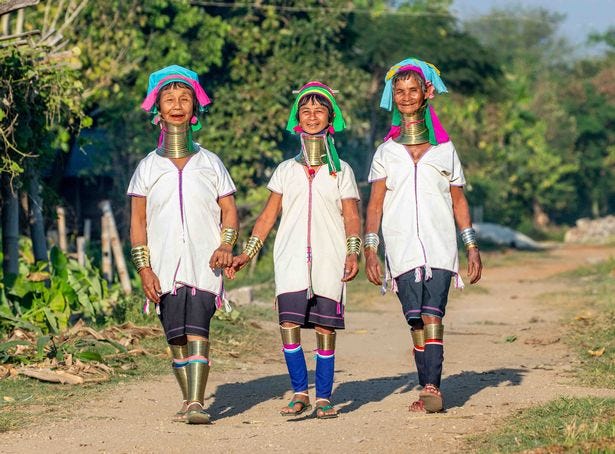
The Kayans are originally from Myanmar. They fled to the Thailand borders in the late 1980s during the conflict between the Myanmar army and the rebel forces. During this time, they were housed in some refugee camps within the Thai border areas, where they sought refuge. There was a "long neck section" and it eventually became a site for tourism.
Within a short time, Kayan women quickly became a huge source of attention. Their stay in Thailand made them noticeable because tourists began to pick interest in how they looked. The neck coils and other aspects of their culture were quite fascinating to the tourists.
Then and now, visitors are quick to request a photo with the exotic-looking Kayan women. In fact, it is estimated that over 40,000 tourists pay about $8 to $16 every year to stop at the hilly border so they can have a glimpse of these women or take photos with them.
The women wear the coils all year round, even while sleeping.
Reasons for using neck coils
Although no Kayan tribeswoman has been able to give a concrete explanation for the adoption of this age-old tradition, certain reasons have been ascribed to its use and continued existence.
While some indigenes have said that the brass coils are a form of protection of women from abduction by rival tribes, others have explained that it is to prevent them from tiger attacks aimed at the neck.
Nowadays, the general explanation is that neck coils are worn for the purpose of preserving culture. Asides protection, it may seem as though the neck coils are of aesthetic use too.
The Kayan women are referred to as "the giraffe women" because of their long necks. Their neck rings are also called "Padaung". These features remain a spectacle to tourists.
The rings are quite pricy and not every family can afford it. With time and use, its price continues to increase.
Downsides of the long neck tradition

Deep concerns have been expressed over the continuous use of the neck coils and how they pose serious health risks by causing the vertebrae in the spine to collapse.
Sometimes, the neck coils can weigh almost 20 kilogrammes. This makes it difficult, heavy and painful to use against anyone's fragile neck.
The weight of the brass coils pushes the collar bone and suppresses the rib cage. The neck may not necessarily increase in length, but the deformation of the clavicle makes it seem that way.
Kayan women are also left with no choice but to sleep with the brass coils on their necks. While sleeping, they pad their necks with leaves to prevent sores and chafing. The effect of this is a gradual displacement of the collar bone.
Apart from discomfort, there are also reports that many women are under pressure to use the neck rings because it is a source of living for them. Despite the pain, they use it because they have to earn money from tourists.
Sadly, the refugee status of these women makes it difficult for them to get good jobs, so they rely on what they get from outsiders who are fascinated by their looks.
Also, the money received from tourists do not go directly to the Kayan tribe. Rather, the Kayan women make more money from the trinkets they sell, their crafts and from their gift shops. Sometimes, the women with the neck rings are given extra salaries.
The women are also not allowed to discuss their problems with foreigners. If they do, their wages will be reduced. They can also be punished for doing anything modern like using computers or cell phones.
Although some people feel that Kayans have been allowed to preserve their culture, there are varying opinions that their statelessness is being used as a basis for exploitation.
Current practice
Recent years have seen Thailand gain more popularity and attention due to the existence of the Kayan tradition. The country has gotten more revenue from tourists and this has been to the advantage of many local businessmen.
Notwithstanding, there are Kayan women who have decided not to use the neck rings because they consider it to be an obnoxious practice that outdates modern reality. These women view it as an age-old custom that shouldn't be practised in contemporary times and are struggling to put an end to it.
On the other end, some women still use the brass rings because they see the tradition as an expression of their cultural values.
Ma Lo, one of the women that removed her neck ring attested to the fact that the owners of the village usually cut down their wages if they do anything modern. In her words, "They say it ruins our traditional image and tourists won't pay."
Many Kayan women live with the hope that they will someday escape the neck ring lifestyle and migrate to a different place where they can experience a new-found level of freedom. For these women, the Kayan tradition makes life hard for them.
References
