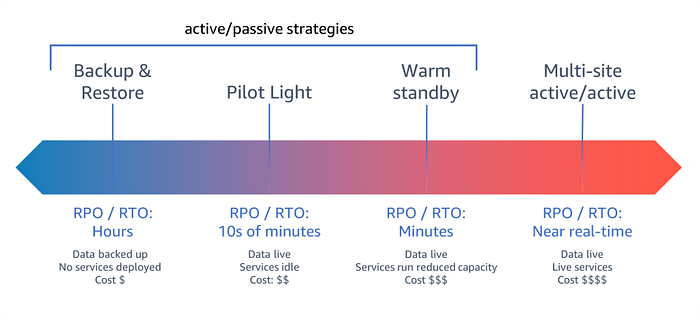

The EKS Disaster Recovery project ensures the continuity of Amazon EKS Kubernetes clusters by implementing a multi-region deployment strategy, backup and restore mechanisms, and automated failover procedures.
Tools and Services Used
AWS Services
IAM: AWS Identity and Access Management (IAM) is a service for managing user permissions and access to AWS resources securely.
VPC: Amazon Virtual Private Cloud (VPC) enables users to create isolated, customizable network environments within the AWS cloud.
EC2: Amazon Elastic Compute Cloud (EC2) provides scalable virtual servers in the cloud, allowing users to run applications with flexibility and control.
EKS: Amazon EKS (Elastic Kubernetes Service) simplifies containerized applications' deployment, management, and scaling using Kubernetes.
ECR: Amazon Elastic Container Registry (ECR) is a fully managed Docker container registry, making storing, managing, and deploying Docker container images easy.
RDS: Amazon Relational Database Service (RDS) offers managed relational databases, supporting various database engines for scalable and secure data storage.
ELB & ASG: Elastic Load Balancing (ELB) distributes incoming application traffic, and Auto Scaling Groups (ASG) automatically adjusts the number of EC2 instances based on demand.
CloudFormation: AWS CloudFormation allows users to define and deploy infrastructure as code, automating the creation and management of AWS resources.
Route53: Amazon Route 53 is a scalable and highly available Domain Name System (DNS) web service, that provides domain registration and routing capabilities.
Tools
Docker: Docker is a platform for developing, shipping, and running container applications, promoting consistency across different environments.
Python (Flask): Flask is a lightweight web framework for Python, commonly used to build and deploy web applications.
Kubernetes: An open-source container orchestration platform, Kubernetes automates the deployment, scaling, and management of containerized applications.
AWS CLI: The AWS Command Line Interface (CLI) is a unified tool for managing AWS services, providing a streamlined interface for command-line interactions.
MySQL: A popular open-source relational database management system, MySQL is widely used for scalable and reliable data storage within AWS.
Git & GitHub: To manage and share source code repositories, track changes, and collaborate on projects with features like pull requests, issues, and actions.
Steps-by-Setup Guide
GitHub Repo: https://github.com/BhuvanesWaran00/AWS/tree/main/EKS_DR_project
Use Cases and Examples:
Containerized Applications: Deploy containerized applications using Docker and Kubernetes for portability and scalability.
Database Resilience: Utilize Amazon RDS with read replicas for enhanced database resilience across multiple regions.
High Availability: Achieve high availability through load balancing, Auto Scaling Groups, and multi-region deployments.
Conclusion:
The EKS Disaster Recovery project integrates best practices, exemplifying the deployment of containerized applications, database resilience, and high availability. Challenges such as data consistency and performance considerations are mitigated through thoughtful architecture. In conclusion, the project offers a robust solution for organizations seeking continuity and disaster recovery for their Amazon EKS workloads.
References:
Setting up to use Amazon EKS: https://docs.aws.amazon.com/eks/latest/userguide/setting-up.html
eksctl: https://eksctl.io/installation/
Appendices:
- Configuration scripts for EC2 instances
- Kubernetes deployment and service YAML files
- Route 53 configurations for failover
- AWS CLI commands for ECR setup
- Code snippets for Docker image creation and push