

Before the numbers were written the way they are today, our ancestors likely used to draw lines to count everyday things like animals and to compare quantities. These lines were called tally marks.

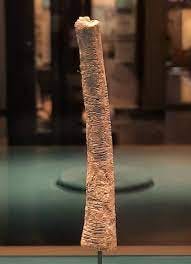
In 1950, Archeologists discovered the Ishango bone, which was a bone tool that dates back to the Upper Plaeothilic Age
The ordered engravings on the bone led many to speculate that it was a tally stick, as it featured a series of what has been interpreted as tally marks, thus providing evidence of human counting and mathematical relevance from 20,000 years ago.
Symbolic representation
As civilizations evolved, they came up with different ways of writing numbers; some of them were just extensions of tally marks.
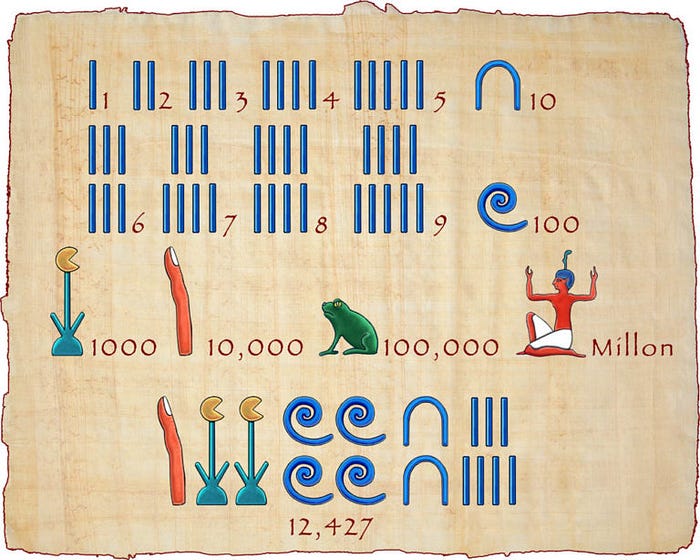
For example, in the Ancient Egyptian System, they used a different range of symbols to represent large quantities, A heel represented 10, a coiled rope represented 100, 10,000 was represented by a finger, and so on.
If you want to write say 12,427, it would be depicted by engraving 1 finger, two lotus flowers, 4 coiled ropes, 2 heels, and 7 marks.
Positional Notations
The early number systems all had one thing in common. They required you to write many symbols for one number and create new symbols for large numbers.
This was fine for representing small quantities but not for large numbers, imagine writing 3045 using tally marks.
These systems had no concept of a place value system and thus would require to invent a new symbol for large-quantity representation.
A Place value or positional system would allow you to reuse these same symbols to represent large quantities, by assigning the same symbols different values based on their position.
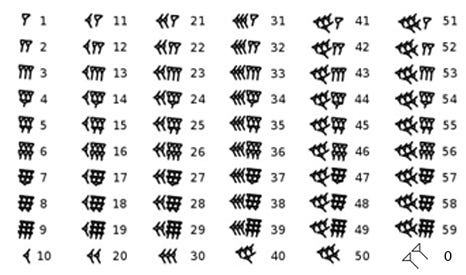
The Babylonians, Aztecs, And ancient Chinese all developed positional numeric systems independently. The Babylonians were the first to introduce it around 2000 BC and used a base 60 system.
The Aztecs used a base 20 system as well as the Mayans. The Chinese used a base 10 System.
What does the base mean here? A base means the number of digits you can use to represent numbers, so base 10 includes ten digits.
Our Modern Numeral system
The numeral system that we use today has been said to have developed between 1 to 4th centuries by Indian mathematicians and was adopted by the Arabs in the 9th century. It is a base 10 (decimal system) that uses ten numbers to represent different quantities. It is called the Hindu-Arabic Numeral System.
Introduction of Zero
Even all the systems developed at the time had a problem, they weren't able to distinguish between two Numbers easily, say 61 and 601 they weren't able to distinguish between them if it is 61 and 601. Space between the two quantities was the only way to differentiate between the two numbers.
Sumerians used spaces between numbers to indicate zero as early as 4000 BC.
However, Babylonians were the first ones to use zero-like symbols to distinguish between different numbers. They used 'two slanted wedges' to represent zero in the same way that the modern decimal system uses zero to distinguish between tens and hundreds etc.
Mayans used shell-like symbols to represent Zero.

However, these early counting systems view zero only as a placeholder and not as a number.
The first documented use of zero as a value dates to 628 AD and appears in the Brāhmasphuṭasiddhānta, the main work of Indian Mathematician Brahmagupta. He treated zero as a number and discussed operations with it. Zero was represented by a dot.
Brahmagupta's work is the first book that mentions zero as a number, hence he is usually considered the first to formulate zero. He gave rules for using zero with positive and negative numbers.
However, it was due to Arab scholars that this concept of zero spread to the world. Arab scholars transcribed the Indian mathematical texts into Arabic. Persian Mathematician Al Khwarzimi, in the 9 century AD further popularized zero and the Decimal system In the Arab World.
While it was Brahmagupta who introduced zero, it was mostly through Muslim scholars that zero became an integral part of the numeral system we use today. That's why it is called the Hindu-Arabic Numeral system.
Glyphs of Hindu-Arabic System.
The symbols that we use to represent numbers are called glyphs. For one, it is 1; for two, it is 2, and so on.
The glyphs of this system are descended from the Indian Brahmi Numerals Which were used until the 4th Century BC. By the 8th century AD, These Numerals start spreading Westward.
In about 820 AD, Alkhwarzimi wrote a book called On the Calculation with Hindu Numerals, which is responsible for spreading the numerals into Persia and the Arab World.
As the numerals began to spread across the Middle East in the 9th and 10th centuries AD, these numerals began to diverge into three different variants.
The Eastern Arabic Numerals; which began to be used in the Arab world, The Sanskrit Devanagari which started to be used in India, and the Western Arabic Numerals which were mostly used in Western Arabic Countries in North Africa.
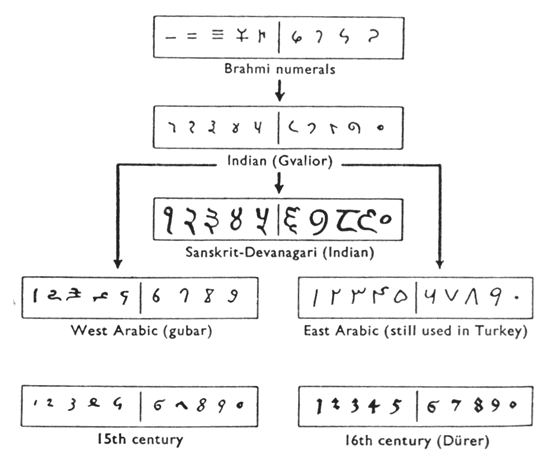
The Western Arabic Numerals came to be known as Ghobar or dust Numerals. The modern Numerals we use today have been derived from these Dust Numerals.
Transmigration to Europe
Toward the end of the 12th Century, Fibonacci, an Italian Mathematician, sailing as a merchant, saw these numerals being used by people living on the Northern African Coast.
He realized the many advantages of the Hindu-Arabic System which, unlike the Roman System, allowed easy calculations using the place value system.
In 1202 AD, he wrote a book called Liber Abaci (The Book Of Calculations) which introduced the Arabic Numerals to Europe. This new Numeral System spread through the Europe between 13 and 15th Centuries.
Europe started using both the Arabic System and the Roman Writing System.
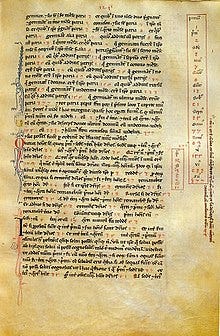
Scientists and Mathematicians started using the Arabic Numerals because they began to realize the simplicity of the Arabic Numerals rather than the tedious Roman Numerals.
For example here is 37 in the Arabic Numeral System and here is in Roman Numerals, XXXVII. The Arabic Numerals took two Symbols while the Romans took seven.
However, merchants and bookkeepers were hesitant for a change and continued to use Roman Numerals.
Gradually, Europeans realized the convenience of the Hindu-Arabic Numerals and by the end of the 15th Century, they had become commonplace in England and Europe.
Sources
Durham, John W. (1992) "Introduction of Arabic numerals in European accounting," Accounting Historians Journal: Vol. 19, Article 2.
Leo Corry (2015). A Brief History of Numbers.
If you like my stories, you can support me here: https://ko-fi.com/ziaullah1