
"Life Is Brutal on Vision"
My father used to say this when a plan he'd made didn't pan out.
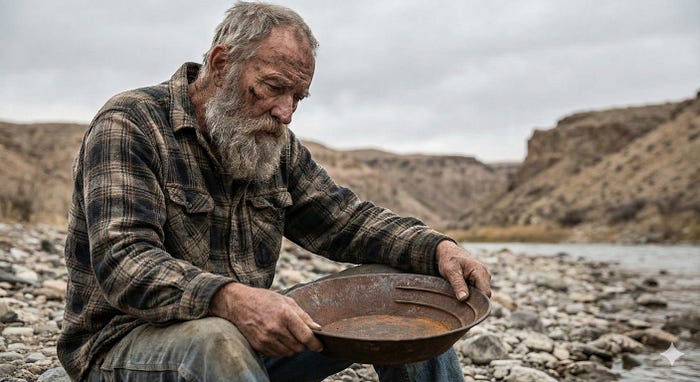
"Panning out" comes from the Gold Rush era. Prospectors used shallow pans to swirl river sediment. If gold appeared, the effort "panned out" — it produced results. If the pan stayed empty, it didn't.
If you've been at life for a while, you know the feeling of an empty pan. I've had a few. One was failing a practical exam in my master's program — an exam I thought I'd prepared well for.
At the time, I was working full-time, studying, and we'd just had our first child. The heat was on. In seasons like that, an empty pan feels truly brutal.
You probably have your own empty-pan war stories. You may even be staring into one right now.
The reality isn't if you'll face an empty pan — but when.
Which is why knowing how to fall off a horse is surprisingly important.
Why?
When you learn to ride, you're taught how to fall early on. The reasons are simple: 1. Beginners fall often. 2. If you know how to fall properly, you can get back in the saddle — because you can't ride injured.
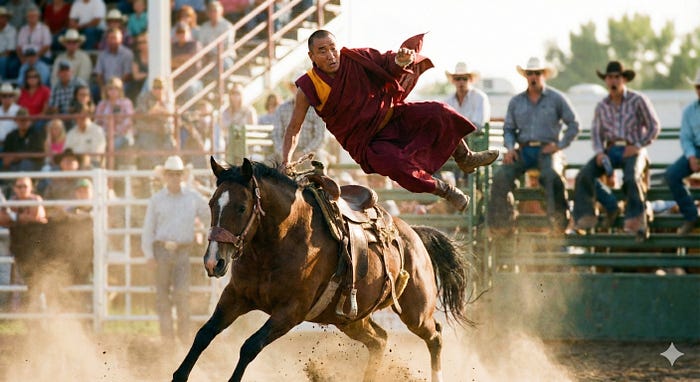
There are several technical steps to falling well, yes, this is not me being poetic, the horse riding community actually has eight steps to fall well!
The first and last steps jumped out me in how they could translate to personal leadership.
⸻
Rule #1: When You're Falling, Don't Fight the Fall
A rider's instinct is to grab the reins and try to regain control. But fighting the fall makes the body rigid and more likely to be injured.
Let go. Let the fall happen. Accept reality, or you'll hurt yourself trying to control what can't be controlled.
⸻
Rule #2: Once You Hit the Ground, Stay Down for a Moment
Don't scramble up too quickly — you may get kicked or trampled by a horse that's still stumbling around.
In life, the same applies: pause before you rush to "fix everything." Sit with the fall. Let the dust settle. Let your emotions land.
These rules assume one thing: You're not trying not to fall — you're trying to be able to remount after the fall.
Plans not panning out is miserable. Plans never panning out again? That's tragic.
Since you'not here for tragedy herenare a few practical steps to fall well.
When a plan doesn't pan out, do this:
1. Don't fight the failure.
Stop grabbing at control. Stop forcing outcomes. Stop panicking. Clarity appears faster when you stop wrestling the moment.
2. Stay down just long enough to learn.
Don't rush into the next plan out of fear.
Ask: • What actually happened? • What part was mine? • What needs to change next time? • Where was the gold I missed?
3. Then — when the dust settles — remount.
Get the pan back in the river. Try again with steadier hands and clearer vision.
⸻
One Last Thought
Life is brutal on vision. But riders who fall well keep riding. And people who learn from empty pans eventually find gold.