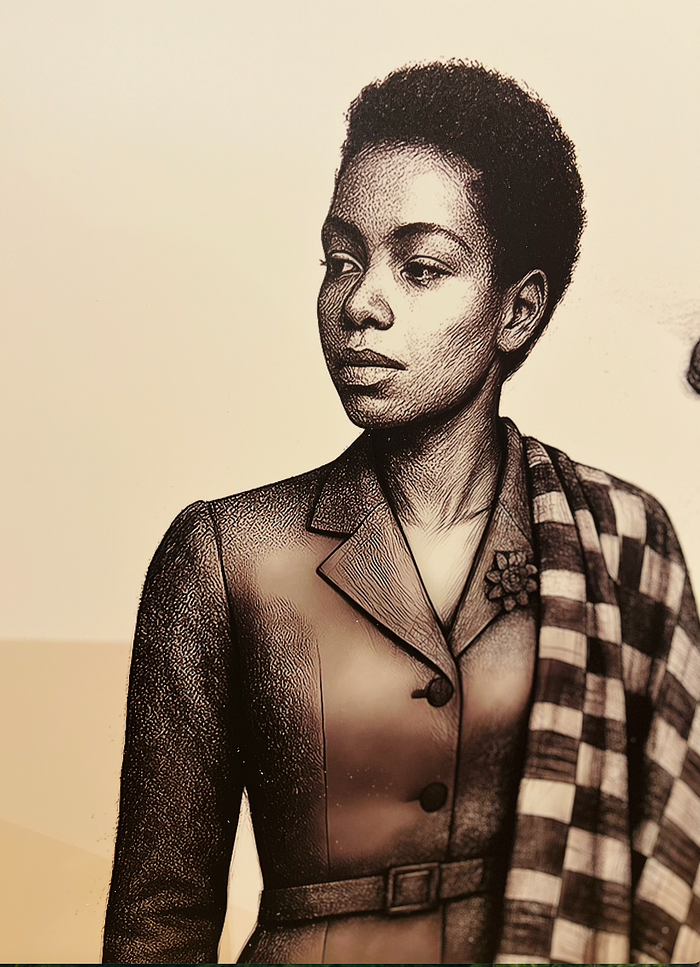


I began the evening, quite frankly, reserved uniquely for myself, by studying the extraordinary costume designs for the play I had come to see at the Royal Exchange Theatre in Manchester, where Ntombizodwa's extraordinary play Liberation was being staged. It was my offering to the year just passed — a private inner festivity (that felt much more exciting than a Prosecco I received today as a celebratory gift).
Set on 15 October 1945, Liberation dramatises the Fifth Pan‑African Congress, held at Chorlton-on-Medlock Town Hall — just a few streets from the theatre itself. This real event brought together African and Caribbean leaders — George Padmore, Amy Ashwood‑Garvey, Kwame Nkrumah, Jomo Kenyatta, and Joe Appiah, among others — to shape a postcolonial vision for the continent. A meeting that declared Africa would no longer ask for freedom — it would take it.
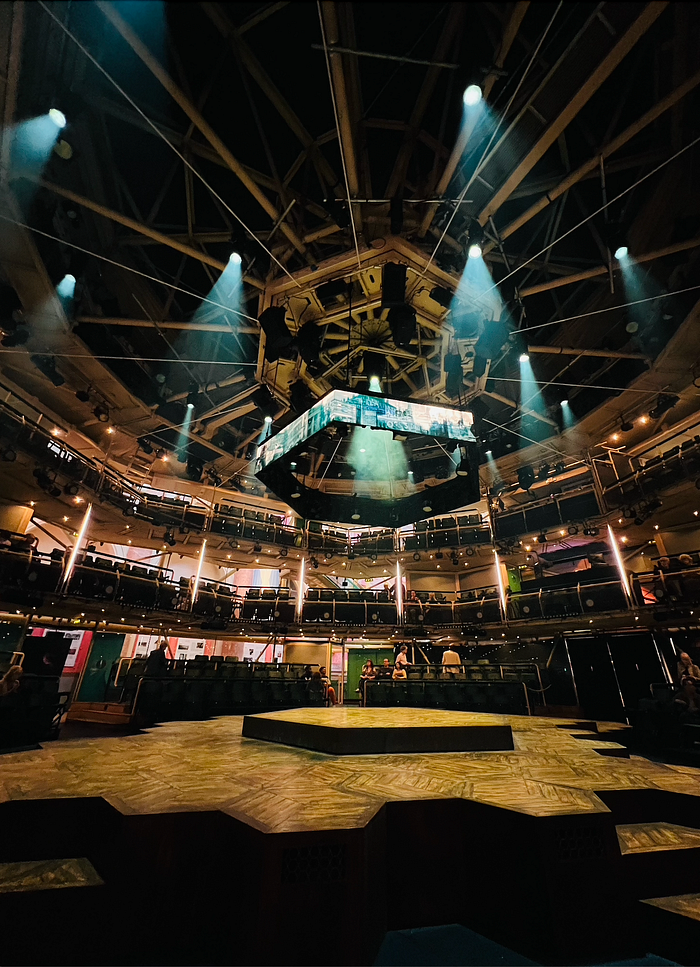
The first act plays almost like Congress itself: delegates arrive, speak, circle one another, clash over priorities. The staging is elegant and spare, with tiered parquet flooring and projections that anchor the action in both space and symbolism.
But in the second act, ideals meet ego and strategies collide with ambition.
Nkrumah, portrayed by the magnetic Eric Kofi Abrefa, pushes against the older, steadier George Padmore (played by Eamonn Walker), questioning the pace of the movement — and who gets to lead it.
Meanwhile, Amy Ashwood-Garvey and Alma La Badie fight to ensure that women's perspectives aren't sidelined in yet another male-led revolution.
And then comes that line.
"Are You Enough for Yourself?"
Nkrumah wants to "become a rider" — a leader who can take the reins of a continent, steer a people. But in that moment, there are expectations, the empire's shadow, and disagreements among allies. And George Padmore, weathered and unflinching, asks: "Are you enough for yourself?"
George, who doesn't wish to become Kwame's friend, nor does he see him as a mentee anymore, holds a spiritual mirror. Kwame became powerful enough to direct the steps, rather than follow his mentor. The question requires an answer: if his inner life can support the weight of his outer voice, whether he built his purpose around movements, mentors, visibility, or truth. Kwame wants not to be merely good, but to lead — to create something enduring, to become the changemaker that history remembers.
Am I speaking in my voice, or trying to echo someone else's approval?
Am I possessed by my work — or do I possess it?
James Baldwin, in his 1962 essay The Creative Process wrote:
"The artist is distinguished from all other responsible actors in society — the politicians, legislators, educators, and scientists — by the fact that he is his own test tube, his own laboratory, working according to very rigorous rules, however unstated these may be, and cannot allow any consideration to supersede his responsibility to reveal all that he can possibly discover concerning the mystery of the human being."
This is why Virginia Woolf insisted on a room of one's own — not as a luxury, but as a necessity. She wrote, "in our idleness, in our dreams, that the submerged truth sometimes comes to the top." When the world stops applauding or accusing, what's left? The murmur of very own, personal thoughts.
Padmore's line doesn't condemn Kwame. It calls him in. It asks if he's willing to meet himself before history does.
Before we ask to be heard. Before we lead, teach, or publish — We must ask: Can I stand alone in my own truth, my creative process? Can I self-possess?
Follow The Hub Publication for practical tips and inspiring stories.