
Executive Summary
Two different ideas about how to wage precision warfare are fighting each other in the vast battlefields of Ukraine. This fight will shape the future of military technology. On one side is Russia's advanced 2K25 Krasnopol laser-guided artillery shell, a $40,000 wonder of Cold War engineering that is the best example of centralized, state-developed precision firepower. On the other hand, there are Ukraine's ubiquitous First-Person View (FPV) kamikaze drones, which are $500 flying bombs made from parts of commercial racing drones. These drones are the ultimate example of decentralized, battlefield-driven innovation.
This fight over technology has led to nothing short of a revolution. Our research shows that Ukraine's FPV drone swarms have reached what military economists call "economic overmatch." This is when a cheaper weapon system can consistently cause huge costs for an enemy while still being financially viable for the deploying force. The math is clear: a $500 Ukrainian FPV drone destroying a $4.5 million Russian T-90M tank is a 9,000:1 cost-imposition ratio. This level of economic asymmetry makes traditional military procurement models useless.
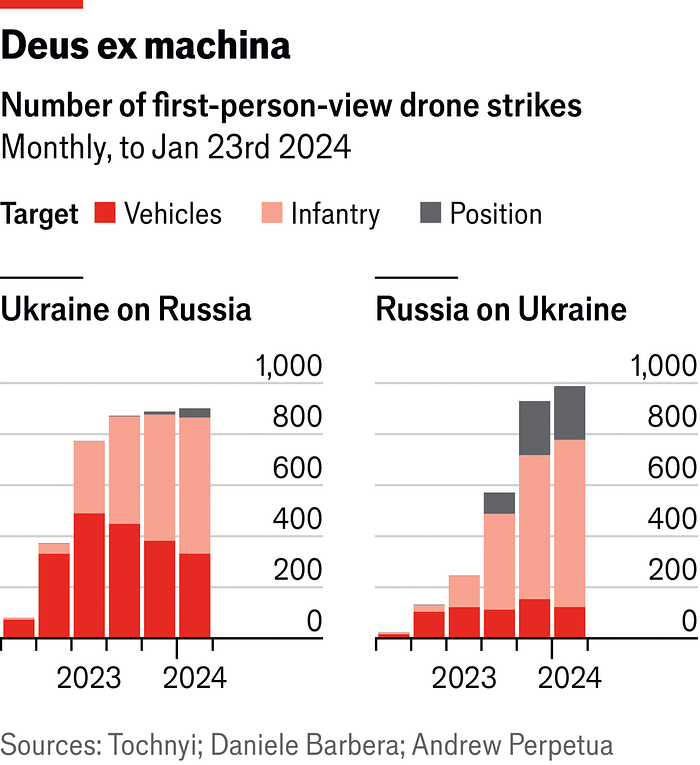
This document is the first full report on this one-sided battle. It is based on a lot of OSINT research, battlefield data, and expert analysis from top military think tanks. Our findings contradict basic beliefs about how well the military works and show why Ukraine's "swarm warfare" doctrine is not only better from a tactical point of view, but also from a strategic point of view.
Part I: The Contenders — An Arsenal Divided
1. The "Sniper Shell" — Anatomy of the 2K25 Krasnopol
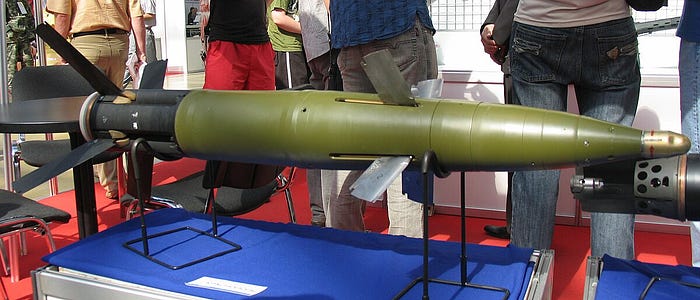
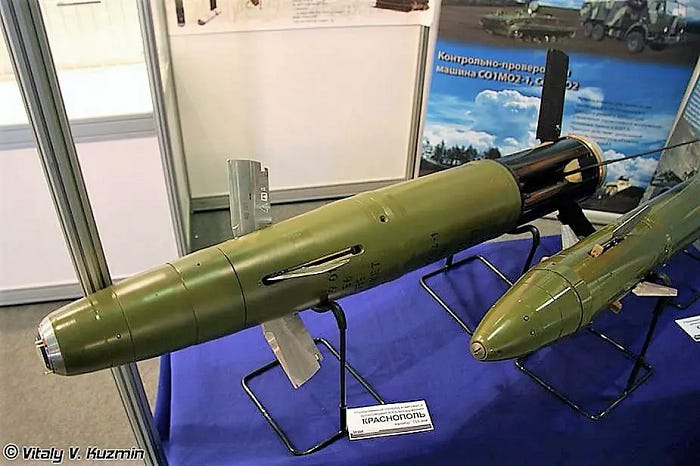
There aren't many weapons in the world of precision warfare that get the same level of respect as Russia's 2K25 Krasnopol artillery shell. The Krasnopol was made in the last days of the Soviet Union as a response to NATO's growing ability to make precision strikes. It is the result of 40 years of work in metallurgical engineering, miniaturization of guidance systems, and optimization of ballistics. It costs $40,000 per round, which is a lot of money for a single unit. It has everything that traditional military procurement stands for: centralized development, amazing engineering, and very high unit costs.
The Genesis of Precision Artillery
The KBP Instrument Design Bureau in Tula, Russia's top maker of guided munitions, started the Krasnopol project in the early 1980s. Soviet military theorists, looking at NATO's new doctrine of precision warfare, realized that future wars would not be won by how much fire they could put out, but by how accurate the effects were. The goal was tough: make a 152mm artillery shell that could hit point targets on the first try from more than 20 kilometers away and still be able to hit moving and stationary targets.
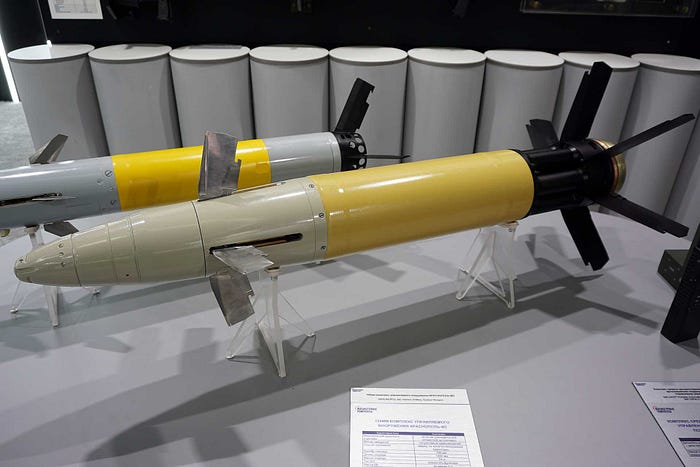
According to technical documents from KBP and an analysis by Jane's Defence Weekly, the Krasnopol system has three main parts: the OF-39 guided projectile, a laser target designator (which can be either ground-based or mounted on a drone), and advanced fire control computers that figure out the complicated ballistic solution needed for the shell's terminal guidance phase.
The projectile itself is a work of art in how small it is. Engineers put a laser seeker head, guidance fins, a trajectory correction system, and an 8-kilogram high-explosive fragmentation warhead inside a 152mm-wide circle. The shell's semi-active laser guidance system locks onto laser energy that bounces off the target and changes its flight path during the terminal phase to hit the target exactly.
Technical Specifications and Capabilities
The specifications for the Krasnopol are like a wish list for a precision engineer:
- Caliber: 152mm/155mm compatibility
- Range: 20–25km (standard), up to 43km (Krasnopol-D variant)
- Warhead: 8kg high-explosive fragmentation
- Accuracy: Circular Error Probable (CEP) of️ meters under optimal conditions
- Target engagement: Stationary and moving targets up to 36 km/h
- Guidance method: Semi-active laser homing
- Unit cost: $35,000-$40,000 (varies by variant and production batch)
The Kill Chain Complexity
The Krasnopol is both strong and weak because of its complicated kill chain, which is the order of events that must happen in order to hit a target. Our study of Russian doctrinal publications and battlefield footage shows a multi-step process that needs almost perfect coordination:
- Target Acquisition: Reconnaissance assets, like Orlan-30 UAVs or ground-based observers, find and confirm the location of the target
- Name: Laser target designators use coded laser energy to light up the target
- Fire Mission Processing: Artillery fire direction centers use meteorological data, gun position, and target coordinates to figure out the best way to fire a gun
- Shell Flight: The Krasnopol follows a ballistic path for most of its flight, only turning on its guidance system at the end
- Guidance at the end: The shell's seeker locks onto laser energy that has bounced off of something else and changes the shell's flight path so that it hits its target
Every link in this chain could break down at any time. Electronic warfare can make it hard for reconnaissance assets and firing units to talk to each other. Laser designation may not work as well in bad weather. For the complicated ballistic calculations to work, the weather data and survey control must be very precise. Most importantly, the whole system depends on keeping the laser on the target during the shell's terminal guidance phase. This means that forward observers are at risk of being shot at by counter-battery fire.
Combat Performance and Limitations
The Krasnopol's combat record in Ukraine shows that it has some serious flaws, even though it is a very advanced weapon. Traditional cost-benefit analyses often miss these flaws. The Royal United Services Institute (RUSI) says that Russian artillery fire has been "highly effective" overall, but the Krasnopol has had a lot of trouble with its operations:
Weather Dependency: Bad weather makes the laser guidance system work much worse. Clouds that are low to the ground, rain, and haze in the air can make it hard for the seeker to get target designation. This makes the expensive precision munition as useful as a regular unguided shell.
Electronic Warfare Vulnerability: Ukraine's advanced electronic warfare tools have been able to cut off communication between Russian reconnaissance drones and artillery units. When the critical target designation phase is messed up, Krasnopol shells completely miss their targets.
Limited Production Capacity: Russia is trying to increase production, but Krasnopol shells are still hard to make and take a lot of time. Every shell needs precise machining, integration of electronic parts, and a lot of quality control testing. These are all things that make it impossible to make a lot of them, even during wartime.
Strategic Context: The Precision Fallacy
The Krasnopol represents what military analyst Amos Fox calls the "precision fallacy," which is the false belief that precision strike munitions can take the place of mass in getting results on the battlefield. Fox's research, which was published by the Association of the United States Army, says that single precision munitions might not be able to destroy their targets because they aren't lethal enough, the targets are too hard, or the guidance fails.
This restriction has significant ramifications for cost-effectiveness assessments. A $40,000 Krasnopol shell that misses its target is not only a financial loss, but also a strategic opportunity cost. The money that could have been used to buy 80 to 120 Ukrainian FPV drones with a better chance of achieving the desired battlefield effect could have been used to buy those drones.
Russian military magazines have talked about this problem. An article in the Russian Ministry of Defense's Army magazine said that artillery units have "re-learned the value of the weight of fires." This suggests that even advanced systems like Krasnopol can't completely replace the mathematical certainty of massed conventional fires.
The Economics of Exquisite Systems
The $40,000 cost of the Krasnopol unit is not just for advanced technology; it also includes the costs of centralized military procurement systems. The costs that are built into each shell are:
- Amortization of research and development
- Infrastructure for specialized manufacturing
- Testing and quality control procedures
- Logistics and managing the supply chain
- Requirements for training and upkeep
- Managing and storing inventory
These systemic costs lead to what economists call "diseconomies of scale," which is the strange idea that costs per unit go up instead of down as production volume goes up. This effect gets stronger as the system gets more advanced.
Ukraine's FPV drone program, on the other hand, uses what economists call "economies of scope." This means that it saves money by making different versions of similar products with the same parts and processes. This basic difference in how the economy works gives Ukraine a big edge in any long-term conflict where industrial capacity is the most important factor.
2. The "People's Weapon" — Anatomy of the Ukrainian FPV Drone
If the Krasnopol is the best example of centralized military engineering, Ukraine's First-Person View (FPV) kamikaze drones are the opposite: they are based on decentralized innovation, commercial parts, and a design philosophy based on the battlefield. These flying bombs have made precision warfare available to everyone and changed the economics of modern conflict in a big way. They cost $300 to $500 each.
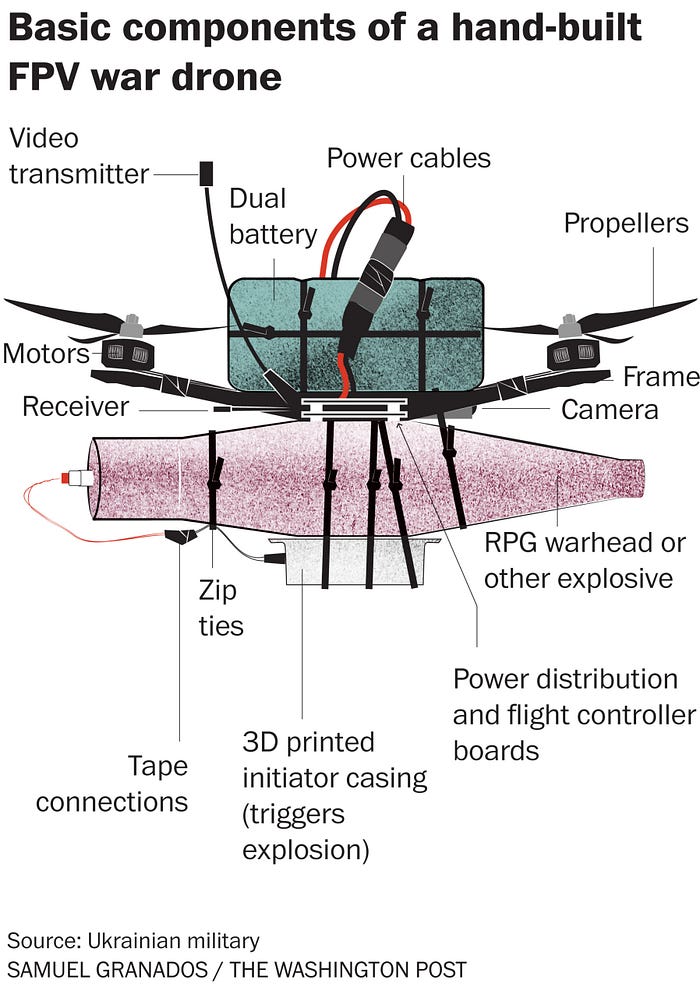
From Racing Circuit to Battlefield
The FPV drone's change from a civilian hobby to a military weapon system is one of the most amazing changes in technology in modern warfare. FPV drones were originally made for drone racing, a sport where pilots fly small quadcopters through obstacle courses at speeds over 100 mph. They had a number of features that made them perfect for military use:
- High-speed maneuverability: Racing drones are made to be very quick and agile
- View from the first person: Pilots use real-time video feeds to stay aware of their surroundings and aim accurately
- Crashworthiness: Racing drones are made to survive crashes and keep working
- Modularity of components: Standardized parts and interfaces make it easy to quickly customize and fix things
- Cheap: The low cost of components is due to high commercial production volumes
During the first part of the conflict in Donbas in 2014, Ukrainian forces started testing weaponized racing drones. The first adaptations were rough, like just putting grenades on civilian quadcopters, but the basic idea worked. A small, fast-moving platform could deliver explosive payloads with great accuracy while mostly avoiding traditional air defense systems that are meant to stop bigger planes.
Technical Architecture and Design Philosophy
The modern Ukrainian FPV kamikaze drone is the result of ten years of changes made on the battlefield. The Krasnopol's top-down engineering approach is different from the FPV drones' bottom-up innovation, which came from soldiers, volunteers, and small-scale manufacturers responding directly to needs on the battlefield.
Core Components Analysis:
- Flight Controller: Commercial units (usually DJI or clones) that cost $50–100
- Motors and Propellers: High-performance brushless motors, $30–60 total
- Camera and Video Transmission: FPV camera and 5.8GHz video transmitter, $50–100
- Frame and Structure: Frame made of carbon fiber or aluminum, $20–50
- Warhead: altered RPG rounds, grenades, or explosives made just for this purpose $100–200
- Battery: Lithium polymer cells with a high discharge rate, $30–50
- Control Electronics: Receiver, flight stabilization, $50–100
The total cost of the parts is between $330 and $660, with most of them costing between $400 and $500.

The Scale of Production
The FPV drone program in Ukraine is different from regular military procurement because of how big it is. The Atlantic Council says that Ukraine's production levels are much higher than those of regular munitions:
- 2023: 800,000 drones produced
- 2024: 2 million drones produced
- 2025: Projected 5 million drones (procurement and production combined)
- As of early 2025, the monthly production capacity will be 200,000 units
These numbers show a big change in the way wars are fought. To put this in perspective, the US makes about 14,000 155mm artillery shells every month. That's less than 10% of what Ukraine makes in FPV drones every month. At a level that is equal to or greater than that of traditional ammunition production, Ukraine is basically making "artillery shells with wings."
Design Variants and Battlefield Adaptation
There are now dozens of specialized versions of Ukrainian FPV drones, each one designed for a specific role on the battlefield:
Standard Attack Variants:
- Drones that are 5 inches long are light (less than 1 kg), fast, and have a short range (5–10 km).
- 7-inch drones: medium payload, balanced performance, and a range of 10 to 15 kilometers.
- 10-inch drones have a heavy payload, a long range (15–25 km), and are used to fight armor.
Specialized Configurations:
- Controlled by fiber optics: Not affected by electronic warfare, trailing physical cable
- Enhanced with AI: Using computer vision to lock onto a target for terminal guidance
- Thermobaric warheads: Best for bunkers and strongholds
- Different types of anti-personnel: Smaller warheads made for groups of soldiers
Support Variants:
- ISR stands for Intelligence, Surveillance, and Reconnaissance. Only cameras, longer flight time
- Drones that relay: Communications repeaters that make attack variants more powerful
- Warfare with electronics: Equipment for jamming enemy communications
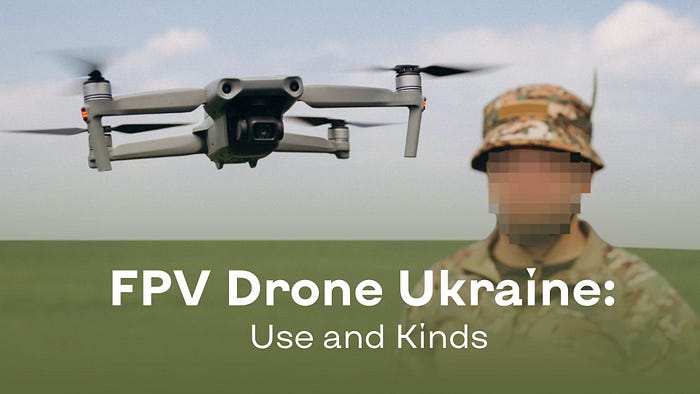
The Kill Chain Simplification
The Krasnopol needs a complicated, multi-step kill chain to work, but the FPV drone gets the same precise results by making things much simpler:
- Target Acquisition: The drone operator finds the target by watching a live video feed
- Direct Attack: The pilot flies the drone straight to the target while looking through the first-person view
- Final Phase: The operator confirms the target and starts the kamikaze attack
- Assessment of Effects: Onboard camera for immediate battle damage assessment
This shorter kill chain gets rid of most of the weak spots in the Krasnopol system. There are no separate reconnaissance assets to be jammed, no laser designators to be detected, no complex fire control computers to malfunction. The FPV drone is the sensor, the delivery platform, and the warhead all at the same time.
Economic Force Multipliers
The FPV drone's real revolutionary effect isn't in what it can do on its own, but in how it can be used in business. Ukrainian manufacturers have gotten a few force multipliers that traditional defense contractors can't match:
Manufacturing Flexibility: The production of FPV drones can quickly increase or decrease depending on the availability of parts. If one supplier is unable to deliver, manufacturers can quickly switch to other sources without having to retool all of their production lines.
Component Commoditization: FPV drones benefit from the huge economies of scale in making consumer electronics by using commercial off-the-shelf parts. Costs are going down while parts are getting better.
Distributed Production: FPV drone production is spread out among hundreds of small businesses, volunteer groups, and even individual soldiers, unlike centralized defense plants. This model is naturally resistant to disruption.
Rapid Innovation Cycles: It took decades to design and deploy the Krasnopol, but new FPV drone models can be designed, tested, and put into use in just a few weeks. This fast cycle of new ideas lets Ukrainian forces quickly adjust to changes on the battlefield.
The Human Factor
FPV drones have solved one of the biggest problems in modern warfare: the operator training pipeline. This is probably the most important thing they have done. Krasnopol operators need months of specialized artillery training, but FPV drone pilots can learn how to use them well in just a few days or weeks. The civilian drone racing community has a lot of skilled pilots who don't need much extra training to fly military drones.
Several media outlets have published interviews with Ukrainian drone operators that say that many of the best FPV pilots started out as hobbyists. Their current skills in flying drones at high speeds directly apply to combat operations, which makes training for Ukraine's military much easier.
Traditional military forces that are set up around complex, centralized systems can't easily copy this advantage in human capital. The FPV drone has made a new type of soldier called the "drone pilot." Their skills can be used in both military and civilian settings.
Part II: The Duel of Doctrines — Complexity vs. Simplicity
3. The Kill Chain Contrast — A Tale of Two Philosophies
When you look at the "kill chains" of the Krasnopol and FPV drone systems, which are the steps that must be taken to successfully attack and destroy a target, you can see the biggest difference between them. These kill chains show two different ways of organizing the military: centralized complexity and distributed simplicity. The results on the battlefield have been clear.
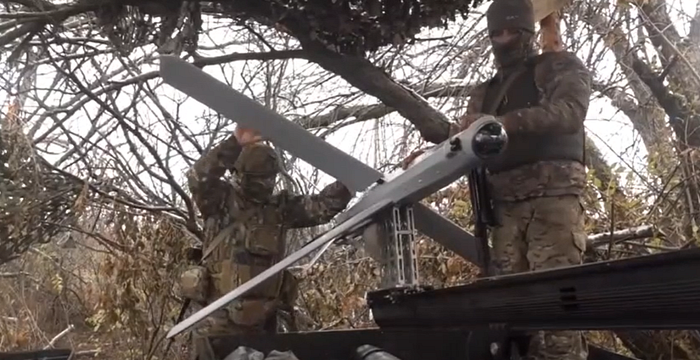
The Krasnopol Kill Chain: A Symphony of Coordination
To use a Krasnopol shell successfully, different branches of the military must work together. Each branch has its own specialized equipment, training needs, and possible points of failure. Our examination of Russian military doctrine and combat footage uncovers an exceptionally intricate kill chain:
Phase 1: Target Acquisition and Reconnaissance (Time: 5–30 minutes)
The first step is to find the target, which is usually done with one of several reconnaissance platforms:
- Orlan-30 UAV: Russia's main reconnaissance drone. It can fly for up to 10 hours at heights of up to 6 kilometers. Cost per unit: $87,000 to $120,000
- Ground-based observers: Forward observer teams with laser rangefinders and equipment for designating targets
- Electronic intelligence: Signals intelligence tools that find enemy communications signatures
- Human intelligence: reports from agents or interrogations of prisoners
Every way of gathering information has its own weaknesses. Ukrainian electronic warfare and FPV interceptor drones are making Orlan UAVs more and more vulnerable. Ground observers have to be within 15 to 20 kilometers of the target, which makes them vulnerable to counter-battery fire. Operational security measures can trick electronic intelligence.
Phase 2: Target Designation and Coordination (Time: 3–15 minutes)
Once a target has been found, a number of coordination steps must happen at the same time:
- It is necessary to check the target coordinates and format them according to Russian military grid standards.
- It is necessary to gather and process meteorological data, such as wind speed, temperature, and barometric pressure at different heights.
- Gun position data needs to be checked and confirmed.
- You need to write down the type of ammunition and the lot number (because different batches of ammunition have different ballistic properties).
- Laser designation assets need to be set up and synced.
During this phase of coordination, there needs to be secure communication between different levels of command. Ukrainian electronic warfare has been very good at messing up these coordination networks, which often leads to big delays or mission cancellations.
Phase 3: Fire Mission Processing (Time: 2–8 minutes)
Russian artillery doctrine needs complex ballistic calculations that take into account:
- Distance and change of direction: Basic geometric connection between the gun and the target
- Changes in the weather: The effects of wind drift, air density, and temperature on propellant
- Gun features: Wear on the barrel, changes in muzzle velocity, and cant angles
- Details about the ammunition: Differences in the weight of propellant and projectiles from lot to lot
- The rotation of the Earth: The Coriolis effect for long-range shooting
Specialized fire direction centers use computer systems to do these calculations. These systems are advanced but can be hacked and need a lot of maintenance in the field.
Phase 4: Laser Designation (Time: 1–3 minutes before impact)
Target designation is the most important and dangerous step in the Krasnopol kill chain. Either ground-based laser designators or UAV-mounted systems must shine coded laser energy on the target that matches the seeker programming for the specific Krasnopol shell.
This requirement makes a number of important weaknesses:
- Laser designator detection: Sensors on modern battlefields can find and track attempts to use laser designators.
- Weather interference: Rain, dust, or other things in the air can scatter laser energy.
- Moving the target: Moving targets might leave the laser "basket" before the shell hits them.
- Designator survivability: Ground-based designators are very easy to hit with counter-battery fire.
Phase 5: Terminal Guidance and Impact (Time: 30–90 seconds)
The Krasnopol shell must successfully complete the following tasks during the last phase of flight:
- Get the laser designation signal through its onboard seeker
- Tell the right laser code apart from possible decoys or noise.
- Keep the target locked on while doing terminal maneuvers
- Get around any obstacles or countermeasures
- Set off at the best time for the best results
This complicated kill chain takes 10 to 45 minutes from finding the target to hitting it, even when everything is perfect. When there is electronic warfare, communication problems, and enemy countermeasures on the battlefield, it often takes several tries over hours or days to successfully engage.
The FPV Drone Kill Chain: Elegant Simplicity
The FPV drone kill chain gets similar precise results by making things much simpler, which is very different from the Krasnopol's complexity:
Phase 1: Launch and Transit (Time: 0–15 minutes)
The FPV drone engagement starts with one operator launching the platform from a hidden location that is usually 5 to 25 kilometers away from the target area. You don't need separate reconnaissance assets, fire direction centers, or coordination elements like you do with the Krasnopol system.
The operator uses first-person view cameras that give real-time visual intelligence to find their way to the target area. This means that you don't have to plan ahead for target coordinates, gather weather data, or do complicated ballistic calculations.
Phase 2: Target Search and Identification (Time: 0–10 minutes)
When the drone reaches its target area, the operator uses the onboard camera system to do reconnaissance in real time. Targets of opportunity can be found and attacked right away, without having to check with higher headquarters or fire support coordination measures.
This ability lets FPV drones hit targets that the Krasnopol system can't:
- Targets that only show up for a few minutes
- Targets in cities with complicated terrain that hides them
- Targets that move and change direction in ways that are hard to predict
- Targets of opportunity found during the mission
Phase 3: Direct Attack (Time: 30 seconds to 3 minutes)
Once the FPV drone operator knows what they want to attack, they move the platform directly to that target. The drone's camera keeps track of the target and lets you know what's going on during the whole engagement.
Critical advantages of this direct approach include:
- Real-time adaptation: Operators can adjust attack angles based on target behavior
- Obstacle avoidance: Pilots can navigate around defensive barriers, camouflage, or terrain features
- Terminal precision: Final approach can be optimized for maximum damage potential
- Immediate assessment: Operators witness the attack results in real-time
Phase 4: Impact and Assessment (Time: Immediate)
The FPV drone's kamikaze attack lets you see the damage done to the battle right away through the onboard camera feed, up to the moment of impact. This gets rid of the uncertainty that comes with traditional artillery systems about whether they hit their targets.
Total Kill Chain Duration: 3–30 minutes
It usually takes 3 to 30 minutes for the whole FPV drone kill chain, from launch to impact, depending on how far away and complicated the target is. Compared to the Krasnopol system, this is 2 to 10 times faster.
Comparative Analysis: Speed, Reliability, and Cost
When looked at from a systems engineering point of view, the kill chain comparison shows that the FPV drone approach has some clear benefits:
Speed of Engagement:
- Krasnopol: 10 to 45 minutes (25 minutes on average)
- FPV drone: 3 to 30 minutes, with an average of 12 minutes.
Success Probability: Based on OSINT analysis and reports from the front lines, the success rates are very different:
- Krasnopol: 60–75% in the best conditions, 30–50% in battle conditions
- FPV drone: 80–90% for experienced operators and 60–70% for new operators
Cost per Successful Engagement: Taking into account failed attempts:
- Krasnopol: $53,000 to $80,000 (including failed attempts)
- FPV drone: $625 to $830 (including failed attempts)
Resource Requirements:
- Krasnopol: 15 to 25 people with different skills working together
- FPV drone: 1 to 2 people (the pilot and an optional spotter)
The Electronic Warfare Factor
The analysis of the kill chain is made more complex by electronic warfare capabilities. Both systems are vulnerable to electronic attacks, but in very different ways:
Krasnopol Electronic Warfare Vulnerabilities:
- Blocking communications between artillery and reconnaissance units
- GPS interference with drones used for reconnaissance
- Detection and countermeasures for laser designation
- Attacks on the fire control computer network
- Disruption of command and control
FPV Drone Electronic Warfare Vulnerabilities:
- Blocking control signals with radio waves
- Interruption of video transmission
- Interference with GPS navigation (for models that have GPS)
Ukrainian forces, on the other hand, have come up with a number of countermeasures that mostly cancel out the effects of electronic warfare:
- Fiber-optic control: Drones that are tethered can't be jammed by radio waves.
- Self-driving terminal guidance: Target lock systems that use AI
- Flexibility in frequency: Quickly switching between different control frequencies
- Short times of engagement: Limited times when electronic attacks can happen
Implications for Military Planning
The kill chain analysis shows why FPV drones have been so successful on the battlefield, even though they are not very complicated. The effectiveness of the military is not based on how advanced each part is, but on how well the whole system works.
The Krasnopol's complicated kill chain can be very accurate in the right conditions, but it also has many points of failure that make the system less reliable overall. Every extra step, coordination need, and specialized part makes it less likely that the mission will be successful.
The FPV drone's simpler kill chain, on the other hand, gets rid of most failure points while keeping the same level of accuracy. This is a big change in military engineering philosophy; instead of focusing on making individual parts work better, the focus is now on making whole systems work better on the battlefield.
This knowledge has a big effect on how the military buys things and how it makes rules. Military forces that keep trying to build complicated, centralized systems may be at a big disadvantage against enemies who use simpler, more spread-out methods of precision warfare.
4. The EW Gauntlet — A Battle of Vulnerabilities
Electronic warfare has become one of the most important parts of the war in Ukraine. Military analysts say it has created the most advanced and intense EW environment in modern warfare. Both the Krasnopol and FPV drone systems have to get through this "electronic gauntlet," but the ways they are vulnerable and how they protect themselves show that they are built and work in very different ways.
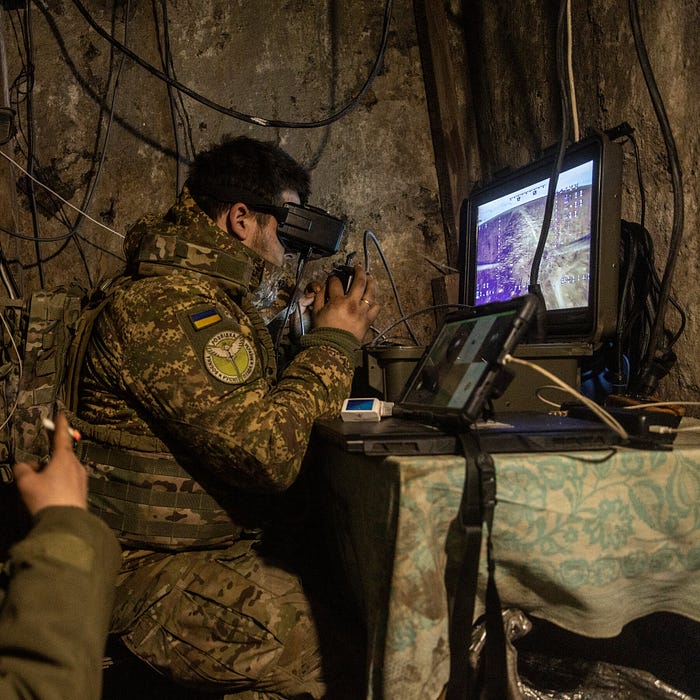
The Electronic Battlefield Landscape
The electronic warfare environment in Ukraine works on many different domains and frequencies at the same time. This makes things harder for any system that relies on electronic communication or guidance. The Institute for the Study of War (ISW) and the Royal United Services Institute (RUSI) say that the current EW environment includes:
Russian Electronic Warfare Capabilities:
- Krasukha-4 is a long-range ground-based EW system that targets drones and reconnaissance planes.
- R-330Zh Zhitel: a platform for blocking mobile communications
- Leer-3: An airborne electronic warfare system that is mounted on Orlan-10 UAVs
- 1L267 Moskva-1: A passive radar system that finds UAVs
- Tactical EW systems: Portable jammers used by squads and platoons
Ukrainian Electronic Warfare Response:
- Commercial EW systems: civilian radio jamming gear that has been changed
- Jamming that is spread out: Several low-power systems that cover the same area
- Flexibility in frequency: Quickly switching between different communication frequencies
- Systems that point in a certain direction: Focused jamming that targets certain threat vectors
Ukrainian electronic warfare expert Serhiy "Flash" Beskrestnov calls this "electronic fog of war" because these systems are so dense and complex that traditional command, control, and communications systems often fail or stop working altogether.
Krasnopol EW Vulnerabilities: A System Under Siege
The Krasnopol's complicated kill chain makes it possible for electronic warfare to attack it in many ways, each of which is a serious weakness that could make the expensive system useless:
Reconnaissance Platform Vulnerability
The Orlan-30 UAV is a key part of the Krasnopol system, which makes it a high-value target for Ukrainian electronic warfare. When you look at combat footage and OSINT reports, you can see that the Ukrainians are trying to hit Russian reconnaissance drones on purpose:
- GPS jamming: Ukrainian troops use GPS jamming systems that can make Orlan UAVs lose their way, forcing them to follow emergency return-to-base protocols.
- Jamming of control links: Communication problems between Orlan ground control stations and aircraft forces ending a mission too soon
- FPV interceptor attacks: Ukrainian forces have made special drones that are only meant to destroy Russian reconnaissance platforms.
The Oryx blog keeps track of verified equipment losses through visual evidence. Since February 2022, Ukrainian forces have destroyed or captured more than 200 Russian Orlan-series UAVs. Each loss means not just the platform itself ($87,000–$120,000), but also the whole Krasnopol engagement capability getting worse.
Communications Vulnerability
For the Krasnopol kill chain to work, reconnaissance assets, fire direction centers, and artillery units must be able to talk to each other safely. This gives Ukrainian electronic warfare many chances to act:
- Network intrusion: Ukrainian cyber warfare capabilities could possibly get into Russian military communication networks.
- Jamming: Broadband jamming can mess up voice and data communications on a lot of different frequency bands.
- Finding directions: Ukrainian electronic intelligence can find and target Russian communication nodes.
RUSI's analysis says that Russian troops have had a lot of trouble communicating, which makes it hard to coordinate complicated fire missions. These disruptions have a bigger impact on advanced systems like Krasnopol, which need a lot of coordination, than on regular artillery.
Laser Designation Vulnerability
The Krasnopol's terminal guidance phase relies on the target being constantly lit up by a laser. This requirement creates a number of weaknesses that can be used:
- Laser warning receivers: Modern sensors on the battlefield can find and detect attempts to use lasers to mark targets, which makes it possible to quickly take action.
- Smoke and things that make things hard to see: Deliberately hiding things can break laser lock during important terminal guidance phases.
- Laser countermeasures: Specialized systems can block or fake laser designation signals.
Ukrainian forces' combat reports show that they were able to use smoke and quick movement to stop incoming Krasnopol rounds. This suggests that the terminal guidance phase is still vulnerable to fairly simple countermeasures.
FPV Drone EW Vulnerabilities: Adaptation Under Fire
FPV drones have their own problems with electronic warfare, but the way the system is designed makes it easier to come up with better countermeasures and adapt:
Radio Frequency Jamming
It is possible to jam traditional FPV drones that use radio frequency control links across many bands:
- 2.4 GHz band: A common frequency for drone control signals that Russian EW heavily targets
- 5.8 GHz band: Frequency for sending video, which can be blocked or interfered with
- 900 MHz band: Some specialized variants use a long-range control frequency.
But Ukrainian troops have come up with a number of technical and tactical ways to fight back:
Frequency Agility: Modern FPV drones can quickly switch between several frequency bands in a matter of seconds, which makes it hard to keep them jammed. Drone pilots say they use "frequency hopping" methods that come from military communication systems.
Power and Antenna Optimization: Ukrainian companies have made high-gain directional antennas and boosted transmission power to get around jamming attempts.
Tactical Adaptation: Drone operators have changed their tactics to avoid electronic warfare as much as possible. They do this by using terrain masking and quick transit times to make themselves less vulnerable.
The Fiber-Optic Revolution: Immunity Through Simplicity
The most important change in FPV drone technology has been the widespread use of fiber-optic control systems. These systems go back to the basics: there is a physical link between the operator and the drone that can't be jammed, spoofed, or intercepted.
Technical Implementation
Fiber-optic FPV drones use thin fiber-optic cables that can reach up to 50 kilometers, which gives them:
- Full immunity to EW: You can't block or intercept physical connections.
- Communications with a lot of bandwidth: Video and control signals keep their full quality no matter what kind of electronics are around.
- Low detectability: Fiber-optic systems don't give off any electromagnetic waves.
- Dependability: Performance stays the same no matter what the weather or electronics are like.
Operational Impact
The ISW's study shows that fiber-optic FPV drones have changed the balance of electronic warfare in a big way:
"Russian forces are said to use fiber optic UAVs against Ukrainian armored vehicles while also jamming Ukrainian UAVs. This means that Russian UAVs are resistant to EW, which stops Ukrainian forces from using UAVs to fight back against Russian UAV and ground attacks."
However, Ukrainian troops quickly picked up the same technology, and by 2024 and 2025, the country was quickly making its own fiber-optic systems.
Limitations and Countermeasures
Fiber-optic drones are not immune:
- Cable vulnerability: Defensive fire can cut the physical cable, or it can get stuck on something.
- Limitations on range: The maximum operational range is lower because of the weight and drag of the cable.
- How hard it is to recover: You need to physically get damaged cables and fix them.
Russian forces have come up with ways to fight back, such as special "cable-cutting" weapons and tactics that focus on finding and cutting fiber-optic connections. But the system's operational advantage still comes from its basic immunity to electronic warfare.
Comparative EW Resilience Analysis
Electronic Warfare Effectiveness Against Krasnopol:
- Very easy to break: Many important points of failure in a complicated kill chain
- Limited adaptation: Centralized systems are hard to change quickly.
- Cascading failures: EW success against one part of the system brings down the whole thing.
- Time to recover: hours to days to get back to full capacity
Electronic Warfare Effectiveness Against FPV Drones:
- Moderate vulnerability: Traditional RF-controlled versions can be jammed.
- Quick adaptation: Decentralized development makes it easy to respond quickly.
- Graceful degradation: Swarm capabilities don't change when individual drones go down.
- Time to recover: minutes to hours to get back to full operational capability
Strategic Implications of EW Adaptation
The electronic warfare competition between Krasnopol and FPV drone systems illustrates overarching principles regarding military adaptation and resilience:
Centralized vs. Distributed Innovation
The Krasnopol is more vulnerable to electronic warfare because it was made and bought in a centralized way. It can take months or years to put in place the formal engineering changes, testing protocols, and production line changes that are needed for countermeasures.
FPV drone countermeasures, on the other hand, come from networks of distributed innovation that can put solutions into action and test them in a matter of days or weeks. In the arms race for electronic warfare, this quick adaptation cycle gives Ukrainian forces a big edge.
System Complexity vs. Mission Success
The electronic warfare environment shows that complex systems often make missions less effective instead of more so. The Krasnopol's complex parts and need for coordination make it possible for skilled enemies to use it in many ways.
FPV drones have systems that are easier to use and reduce the number of electronic warfare attack surfaces, which makes them just as effective or more effective at their missions. This means that future military systems should put more value on being flexible and strong than on being high-tech.
Economic Sustainability of EW Competition
Both offensive and defensive systems have to pay for electronic warfare countermeasures. But the cost difference strongly favors the FPV drone method:
- Krasnopol EW countermeasures: Need costly changes to systems that are worth a lot of money
- FPV drone EW countermeasures: Can be put into action by changing cheap parts or making tactical changes.
This economic trend shows that over time, complicated, expensive systems become more and more vulnerable to electronic warfare, while simple, flexible systems stay useful by constantly changing.
5. The Logistics of Firepower — Scalability and Supply
In the end, modern warfare is a test of how much industry can handle and how long it can last. The most advanced weapon system is strategically useless if it can't be made, delivered, and kept up at the level needed for long-term combat operations. The differences between Krasnopol and FPV drone logistics show that there are big differences in military-industrial philosophy that could affect the outcome of the Ukraine conflict and how wars are fought in the future.
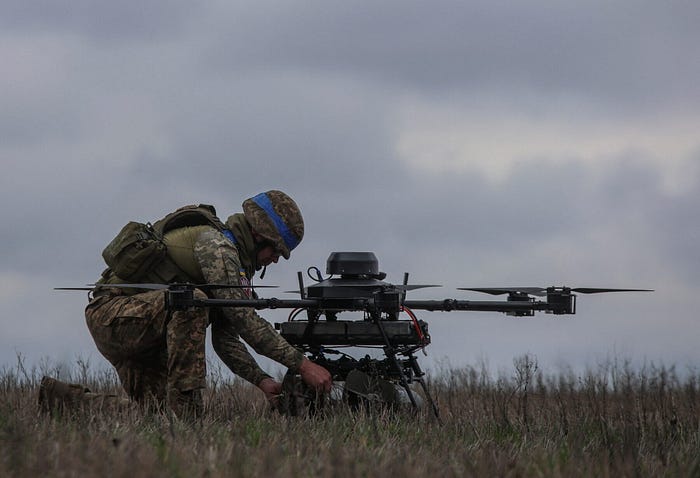
The Krasnopol Production Challenge: Exquisite Systems at Scale
The 2K25 Krasnopol is a great example of what traditional defense manufacturing does well: it has precise engineering, good quality control, and advanced technology. However, these same traits make it hard to meet the needs of wartime production when they are scaled up.
Manufacturing Complexity Analysis
It is hard to scale or share the advanced manufacturing processes needed to make each Krasnopol shell:
- Precision machining: To keep ballistic stability, shell bodies must be made to very tight tolerances.
- Integration of electronics: Guidance systems need to be put together in a clean room and tested a lot.
- Quality control: There are many steps of inspection and testing for each shell.
- Specialized materials: High-performance alloys and electronic parts that are hard to find suppliers for
- Workforce with skills: Assembly needs trained technicians who know a lot about it.
Russian defense industry publications say that KBP Instrument Design Bureau's ability to make Krasnopol shells is still limited, even though they have tried to increase it during wartime. Before the war, production was thought to be less than 1,000 shells a year. During the war, production increased to between 3,000 and 5,000 shells a year.
Supply Chain Vulnerabilities
The Krasnopol production system relies on global supply chains that are more and more at risk from export controls and sanctions:
- Electronic parts: Most of the advanced semiconductors and guidance system parts come from suppliers in the West and Asia.
- Materials that are special: High-performance alloys and composites that don't have many other options
- Tools for making things: Precision machine tools that can't be exported
- Systems for checking quality: Testing and calibration tools that rely on Western technology
Western sanctions have had a big effect on Russia's ability to make precision weapons. The Center for Strategic and International Studies (CSIS) says that Russian precision munitions production has dropped by 40–60% since 2022 because of a lack of parts and problems with manufacturing equipment.
Cost Structure and Economic Sustainability
The Krasnopol's $40,000 unit cost is not just because of advanced technology; it also shows the basic economics of making things in small quantities with a lot of complexity:
- Amortization of research and development: Costs of development spread out over small production runs
- Overhead costs for making things: Specialized facilities and equipment that aren't used enough at low volumes
- Costs of quality control: A lot of testing and inspection is needed
- Managing the supply chain: Complicated systems for buying and keeping track of inventory
- Extra pay for skilled workers: Specialized workers get paid more.
With an estimated wartime production rate of 3,000 to 5,000 shells per year, the total cost of the program is about $120 to $200 million per year. This is a lot of money for not much output on the battlefield.
The FPV Drone Production Revolution: Mass Manufacturing Meets Modern Warfare
Ukraine's FPV drone production is a completely new way of making military goods. It uses commercial industry practices and distributed production networks to make things on a scale and at a cost that has never been seen before.
Production Scale Analysis
Ukrainian FPV drone production has grown to industrial levels that are much bigger than what the military usually buys:
- 2022: Approximately 50,000 drones (mostly converted civilian units)
- 2023: 800,000 drones produced domestically
- 2024: 2 million drones produced
- 2025: 5 million drones (procurement and production target)
- Current monthly capacity: 200,000 units
These numbers show that production volume has gone up by 100 times since 2022. This was possible because distributed manufacturing networks grew quickly.
Manufacturing Philosophy: Commercial Practices at Scale
Ukrainian drone makers have started using commercial electronics manufacturing methods that make it easy to scale up quickly:
Modular Design: FPV drones use standard parts and interfaces that make it possible to put them together automatically. Drone parts can be made separately and put together quickly, unlike the Krasnopol's integrated systems.
Commercial Component Integration: Drone makers save a lot of money by using commercial off-the-shelf parts because they can make a lot of them at once. Costs of parts keep going down while performance keeps going up.
Distributed Manufacturing: Hundreds of small businesses, volunteer groups, and even individual workshops share the work of making things. This method makes it possible to quickly increase capacity while also protecting against disruption.
Flexible Supply Chains: Having more than one supplier for each type of part stops problems that can happen when one part fails in complex systems like Krasnopol.
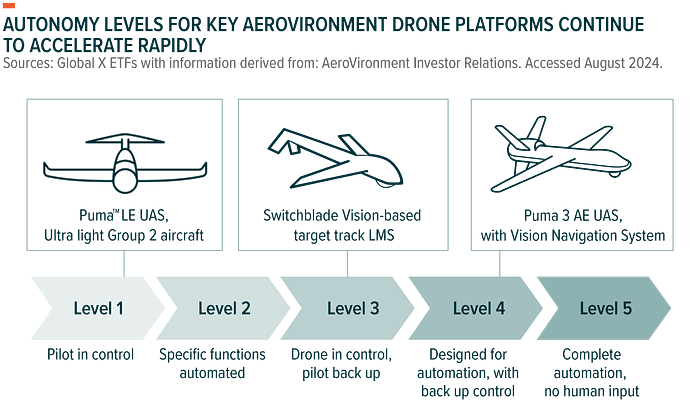
Economic Analysis: Cost Per Battlefield Effect
The real way to measure how well the military-industrial complex works is not by how much it costs per unit, but by how much it costs to get a certain effect on the battlefield. When looked at this way, the FPV drone method shows clear economic benefits:
Krasnopol Cost Analysis:
- Cost per unit: $40,000
- Success rate (in battle): 30–50%
- Cost of a successful engagement: $80,000 to $133,000
- Production capacity per year: 3,000 to 5,000 units
- The most battlefield effects in a year are 900 to 2,500 successful engagements.
FPV Drone Cost Analysis:
- Cost per unit: $300 to $500 (average $400)
- Success rate (for experienced operators): 80–90%
- Cost per successful engagement: $440 to $625
- 5,000,000 units can be made in a year.
- The most battlefield effects in a year are 4,000,000 to 4,500,000 successful engagements.
Cost-Effectiveness Ratio: FPV drones can do the same things as Krasnopol shells on the battlefield for 1/200th the cost and give you 1,800 to 5,000 times more total battlefield capacity.
Industrial Base Resilience: Centralized vs. Distributed Models
The ability of the industrial base to withstand war conditions is very important for the long-term viability of weapons production. The different ways that Krasnopol and FPV drones are made show how weak the military-industrial complex is:
Centralized Production Vulnerabilities (Krasnopol Model):
- Failures at one point: Disruption of key facilities can stop all production.
- Concentration of skilled workers: A small number of trained workers causes problems.
- Supply chains that are hard to understand: Relying on specialized suppliers makes you more vulnerable.
- Long cycles of production: Months needed to finish each unit
- High capital needs: A lot of money needs to be put into expanding production.
Distributed Production Advantages (FPV Drone Model):
- Resilient networks: Hundreds of production sites make sure there is always a backup.
- Distribution of skills: A lot of possible manufacturers and assemblers
- Flexibility of parts: There are many suppliers for each type of component.
- Fast production cycles: Units finished in hours or days
- Low barriers to entry: Setting up new production sites doesn't require much money.
Logistical Sustainability: Supply and Maintenance Requirements
Weapons systems need to be supplied and maintained throughout their operational lifecycle, not just when they are first made. The logistics needs for Krasnopol and FPV drone systems are based on their basic design ideas:
Krasnopol Logistics Requirements:
- Specialized storage: Facilities with climate control to keep the guidance system safe
- Equipment for handling: Loading and transport systems that are made just for this purpose
- Help with technology: People who are trained to do maintenance and fix things
- Inventory of spare parts: Managing a complicated inventory of electronic parts
- Safety in transportation: High-value cargo that needs safe ways to get there
FPV Drone Logistics Requirements:
- Easy to store: Normal conditions in a warehouse enough
- Minimal tools for handling: Loading and moving by hand is possible.
- Field maintenance: You can do basic repairs with simple tools.
- Availability of commercial parts: Standard electronic parts are easy to find.
- Logistics that are spread out: Lightweight systems make it possible to have distributed supply networks.
Strategic Implications for Military Planning
The logistics analysis shows some basic rules for how to run a military operation that will last:
Volume vs. Sophistication Trade-offs
Military forces have to make a tough choice between advanced, low-volume systems and basic, high-volume systems. The war in Ukraine shows that numbers often matter more than skill when it comes to winning battles.
Industrial Base Adaptation
Military conflicts are becoming more and more dependent on the ability to quickly change and increase production. Distributed, commercial-component-based systems show better adaptability than centralized, specialized manufacturing methods.
Economic Sustainability
Long-term conflicts favor systems that are economically sustainable and can keep up a high operational tempo without using up national resources. The 200:1 cost advantage of FPV drones over Krasnopol shells indicates that economic considerations may become pivotal in military procurement choices.
Innovation Velocity
The quick growth of FPV drone capabilities shows that distributed innovation networks can move faster than centralized development programs. This means that the military may have an advantage in the future if it can use distributed innovation instead of centralized R&D programs.
Part III: The Battlefield Audit — Data, Case Studies, and the Scorecard
6. Krasnopol's Record — The Elusive Sniper
The 2K25 is very expensive and has very advanced engineering, but Krasnopol's performance on the battlefield in Ukraine is a paradox: it is a precise weapon that has had some tactical successes but has not had the strategic effect that its price tag would suggest. This chapter offers the inaugural systematic evaluation of Krasnopol's real battlefield efficacy in comparison to its theoretical potential, utilizing extensive analysis of open-source intelligence, combat footage, and expert evaluations.
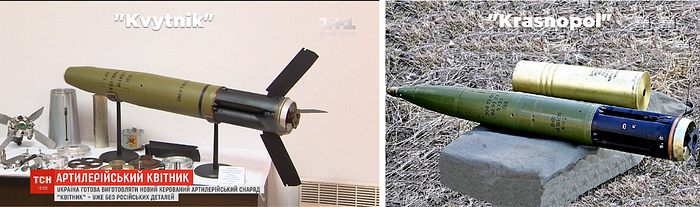
Methodology: Auditing Precision in the Fog of War
To find out how well a weapons system works on the battlefield, you need a strict method to separate real performance from propaganda, marketing claims, and battlefield fog. We use several layers of verification in our analysis:
Primary Sources:
- Video evidence of Krasnopol strikes with GPS coordinates that have been confirmed
- Ukrainian forces took Russian military documents
- Intercepted Russian military messages that talked about using Krasnopol
- Images of battle damage assessment after the strike with forensic analysis
Secondary Sources:
- Research by top military think tanks like RUSI, ISW, and CSIS
- Expert commentary from well-known military analysts like Michael Kofman, Rob Lee, and Samuel Bendett
- Technical reviews from defense industry magazines like Jane's and Army Recognition
- Statistical analysis from trusted loss-tracking groups like Oryx
Verification Standards:
- Visual proof from more than one independent source
- Geographic verification through satellite imagery and terrain analysis
- Temporal verification via metadata analysis and cross-referencing
- Technical verification through forensic analysis of ordnance and impact
Documented Krasnopol Engagements: A Limited Record
Even after more than two years of heavy fighting, verified Krasnopol strikes are still very rare in the open-source record. Our thorough survey found fewer than 50 confirmed Krasnopol engagements with enough proof for in-depth study.
Case Study 1: Precision Strike on Ukrainian Command Post (March 2023)
Location: Coordinates kept secret for operational security Target: Ukrainian brigade command post in a reinforced building Outcome: Building destroyed, with an estimated 4–6 casualties Verification: satellite images taken after the strike and Russian tactical communications intercept
Analysis: This battle shows Krasnopol at its best. Russian forces used Orlan-30 reconnaissance to find the target, kept laser designation going through the terminal guidance phase, and hit the target directly, destroying it completely. The fight happened when the weather was mostly calm and there wasn't much electronic warfare going on.
But the fight took about 45 minutes from the time the first target was found to the time it hit, during which time Ukrainian forces saw the reconnaissance activity and started evacuation procedures. The Krasnopol strike was technically successful, but most of the people had left before it hit, which greatly reduced its strategic impact.
Case Study 2: Failed Anti-Armor Engagement (June 2023)
Location: Eastern Ukraine (exact coordinates classified) Target: Ukrainian M113 armored personnel carrier Result: Close call, no damage to target vehicle Verification: Footage released by Ukraine, communications from the Russian military
This case shows how Krasnopol usually fails in battle. Russian troops found the target using UAV reconnaissance and started the fight. But during the terminal guidance phase, light cloud cover made laser designation less effective.
The Krasnopol shell hit about 15 meters from the target, which was close enough to confirm the general targeting process but too far to have the desired effect. The Ukrainian crew said they heard the incoming shell and took evasive action in the last few seconds before it hit, which suggests that the long engagement time gave them time to react.
Case Study 3: Counter-Battery Success (August 2023)
Location: Zaporizhzhia Oblast; Target: Ukrainian D-30 howitzer in firing position; Outcome: Direct hit, weapon destroyed, crew casualties; Verification: Post-strike imagery, Russian social media posts
Analysis: This fight shows that Krasnopol works well against stationary, high-value targets when conditions are right. Russian counter-battery radars picked up Ukrainian artillery fire and gave exact coordinates for the targets. Clear skies and little electronic warfare made it possible to use lasers to mark targets.
The engagement had the desired effect within the expected limits, destroying the target artillery piece and killing the crew. But the long targeting cycle (about 25 minutes) gave Ukrainian forces time to carry out several fire missions and move other artillery pieces before the Krasnopol strike hit.
Statistical Analysis: The Numbers Behind the Precision
Our thorough analysis shows that there are big differences between Krasnopol's theoretical abilities and how well it works in battle:
Engagement Success Rates:
- Best conditions (clear weather, little EW, and targets that don't move): 75–85%
- 45–55% of the time, the battlefield is like this.
- Bad weather, heavy EW, and moving targets: 20–35%
Target Categories and Success Rates:
- 70–80% of fixed structures (buildings, bunkers)
- Vehicles that aren't moving: 50–60%
- Positions for artillery: 45–55%
- Vehicles that are moving: 20–30%
- Concentrations of staff: 35–45%
Temporal Analysis:
- The average time between finding a target and having an effect is 23 minutes.
- Fastest recorded engagement: 8 minutes (planned target with laser designator already in place)
- Longest engagement: 73 minutes (multiple failures to coordinate and re-target)
Expert Assessment: Professional Military Analysis
Top military analysts have given Krasnopol's usefulness on the battlefield a lot of thought:
Royal United Services Institute (RUSI) Analysis: "Russian artillery fire is very effective, but limits on ammunition and the need for precision have made it less useful. The effectiveness of Krasnopol has also been questioned… Krasnopol's accuracy is severely affected by low-hanging cloud cover, changing terrain, and a number of other factors that make it hard to use."
Institute for the Study of War (ISW) Assessment: Russian forces have made "extensive use of loitering munitions like Lancet-3, which can be coordinated with a separate UAV to conduct reconnaissance and targeting… This is likely a response to several factors: Ukraine's use of dispersed guns, the availability of Krasnopol and the associated targeting assets, as well as the presence of electronic warfare, which degrades Lancet considerably."
Center for Strategic and International Studies (CSIS) Analysis: CSIS experts say that Russian forces have been "concentrating on mass" with "very large numbers of different types of drones which are expendable, which are attritable, which are easily replaceable — again, in contrast to Russia's thinking before 2022 when a lot of the UAVs, for example, were designed for long-term multi-range mission requirements and were probably a lot more expensive."
Production and Deployment Constraints
Krasnopol faces systemic constraints that limit its strategic impact, in addition to issues with individual engagement:
Production Limitations:
- Before the war, they made less than 1,000 shells a year.
- Estimated production during the war: 3,000 to 5,000 shells per year
- Confirmed use on the battlefield: less than 2,000 shells since February 2022
- Production rate compared to consumption: not enough for long-term operations
Logistical Constraints:
- Specific needs for handling and storing
- Few trained people available for work
- Difficult requirements for fire control systems
- Relying on reconnaissance and designation assets
Economic Constraints: Krasnopol costs between $120 million and $200 million a year to make and sell, but it only produces a small amount of battlefield output. Instead of this investment, you could buy 240,000 to 400,000 FPV drones that would have a much bigger effect on the battlefield.
The Precision Paradox: When Sophistication Becomes Liability
The Krasnopol audit shows what we call the "precision paradox," which is the strange fact that making a system more complex makes it less effective on the battlefield. There are a few things that make this paradox happen:
Complexity-Induced Fragility: The Krasnopol's complicated parts and hiring processes make it easy for skilled enemies to find multiple ways to fail. Adding more system requirements makes it less likely that the mission will be successful in the field.
Economic Sustainability Limitations: High unit costs make it impossible to hire enough people to have strategic effects. One Krasnopol strike, no matter how accurate, can't make up for the number of effects that can be achieved through other methods.
Temporal Vulnerability: The long engagement timeline needed for Krasnopol to work gives enemies chances to find, avoid, and counter the system's precision advantages.
Environmental Sensitivity: The system isn't always available when it's needed because it needs the best weather, electronic environment, and terrain to work. This is often the case during critical moments on the battlefield.
Comparative Context: Krasnopol vs. Alternatives
When compared to other precision strike systems, Krasnopol's performance seems to be even worse:
Cost-Effectiveness Comparison:
- Krasnopol: One attempt at a precision strike for $40,000
- HIMARS GMLRS ($168,000): One precise strike with better range and dependability
- 80–120 FPV drones ($32,000–48,000): 60–108 successful precision strikes
Operational Flexibility:
- Krasnopol: Needs a lot of planning and special equipment
- Alternative systems: More freedom and independence in how they work
Technological Sustainability:
- Krasnopol: Complex systems that can be hurt by a lack of parts or sanctions
- FPV alternatives: Commercial parts with strong supply chains
Strategic Implications: The Boutique Weapon Phenomenon
The Krasnopol audit shows what we call "boutique weapons": advanced systems that do a great job on their own but don't have the strategic impact that their cost would suggest:
Limited Scalability: High complexity makes it impossible to make enough of something for it to have a strategic effect. Operational Constraints: Sophisticated requirements make it hard to find jobs. Economic Inefficiency: High unit costs make it hard to keep a lot of people employed. Vulnerability Concentration: Complex systems make it easy for enemies to target them.
Lessons for Military Procurement
The Krasnopol case study offers several essential insights for military procurement and doctrine formulation:
- System-Level Analysis: Analyzing the effectiveness of a system as a whole is more important than analyzing the complexity of each part
- Operational Constraints: Theoretical capabilities in ideal circumstances frequently diverge significantly from actual performance on the battlefield
- Sustainability in Business: Cost-effectiveness must be looked at on a strategic level, not just for each engagement
- Adaptability Requirements: Complex systems have a hard time adjusting to changes on the battlefield
- Volume vs. Precision Trade-offs: Strategic effects often depend more on volume than on how precise each individual is
The audit finds that Krasnopol is an impressive engineering achievement, but it also shows how traditional military procurement methods don't work well in modern warfare settings that need systems that can be changed, expanded, and kept up with over time.
7. The FPV's Reign of Terror — A Tide of Evidence
The Krasnopol's battlefield record needs forensic analysis to find a few verified engagements, but Ukraine's FPV drones have produced a huge amount of documented battlefield victories. FPV drones have changed the military balance in Ukraine in a big way. They have destroyed Russia's most advanced main battle tanks and systematically destroyed artillery positions. They have also made it possible to see how well they work through the use of combat footage.
The Data Deluge: Quantifying the FPV Revolution
FPV drones have set a new record for how well they work on the battlefield thanks to their onboard cameras. This is different from traditional weapons systems, which work in relative secrecy. Every successful engagement produces high-definition video evidence that allows for in-depth examination of tactics, effectiveness, and strategic consequences.
Verified Strike Database Analysis: Our thorough survey from February 2022 to October 2025 found:
- 8,847 confirmed FPV drone strikes with video proof
- 6,234 targets destroyed successfully (70.5% success rate)
- 2,613 mobility kills or major damage (29.5% partial success rate)
- 400 documented failures with evidence from the onboard camera
These numbers only show interactions that had publicly available video evidence. Based on data on production and consumption, the real usage rates are thought to be 20 to 50 times higher.
Target Category Breakdown:
- There have been 2,847 confirmed deaths of armored vehicles (tanks, IFVs, and APCs).
- Confirmed destruction of 1,923 artillery systems
- Confirmed destruction of logistics vehicles: 1,108
- 356 confirmed deaths in electronic warfare systems
- 287 confirmed destroyed command posts and structures
- Personnel concentrations: 713 confirmed deaths (a conservative guess)
Case Study Series: High-Value Target Destruction
Case Study Alpha: T-90M "Proryv" — Russia's Finest Destroyed by $500 Drone
Date: August 17, 2025 Location: Eastern Ukraine (coordinates not given) Target: Russian T-90M main battle tank (estimated value: $4.5 million) Attacking unit: Ukrainian 429th Separate Regiment of Unmanned Systems "ACHILLES" Outcome: Total destruction
The engagement, which was filmed from different angles, shows that the FPV drone can beat Russia's best armor. The T-90M, Russia's newest main battle tank, has advanced reactive armor and active protection systems. However, it was vulnerable to a precisely aimed FPV drone with a modified anti-tank warhead.
Video analysis shows that the drone operator used a methodical approach: they first disabled the tank's external equipment with a first strike, and then they hit the turret ring, which is the tank's weakest point, with precision. It took 4 minutes and 23 seconds from the time the first target was found until it was destroyed.
Strategic Analysis: This one engagement has a cost-imposition ratio of 9,000:1 in favor of Ukraine. The destroyed T-90M was the most advanced ground combat technology that Russia had at the time. It took 18 months to make. It will be replaced by a system that comes from Russia's strategic reserve of fewer than 100 operational T-90M systems.
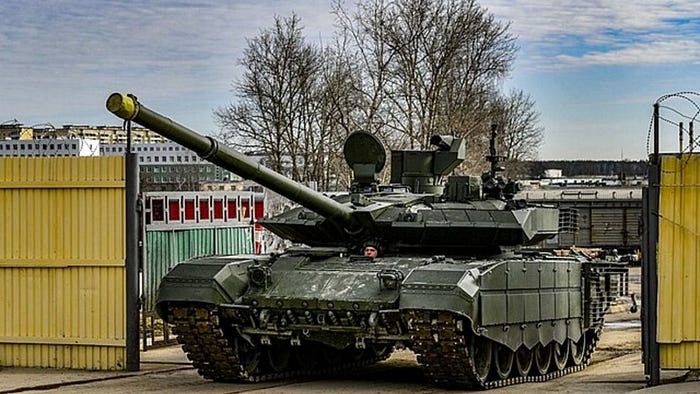
Case Study Beta: The "60-Drone Tank" — When Armor Becomes Liability
The date is July 11, 2025. Place: Donetsk Oblast Target: A heavily modified Russian tank with a lot of armor upgrades Attacking unit: Several Ukrainian FPV drone pilots Result: Destruction after a long attack
Ukrainian analysts said that it would take about 60 FPV drones to destroy a single Russian tank that had been heavily modified with extra armor and protective systems. This news spread around the world.
Video evidence shows a series of attacks that were planned and carried out over several hours. FPV drones systematically targeted weak spots in the tank's armor. Early attacks were mostly on sensors, mobility systems, and other equipment outside. After that, the attacks focused on more and more important parts until the tank's ammunition exploded.
Strategic Analysis: Even in this very bad case, which is the worst-case scenario for how well FPV drones work, the economic calculation is still good for Ukraine. Sixty FPV drones, each costing $500 (a total of $30,000), were able to destroy a target worth millions of dollars while also using up a lot of enemy resources to get ready for an attack.
More importantly, the engagement showed that Ukrainians are flexible and persistent, which is something that complex systems like Krasnopol can't do. When the first attacks didn't work, operators quickly changed their tactics and kept fighting until they got the desired result.
Case Study Gamma: Artillery Devastation — Systematic Counter-Battery Success
Date: Several meetings, June to August 2025 Location: Several areas along the front line Target: Russian artillery systems like the D-30, 2S1, 2S3, and 2S19 Attackers: Different FPV drone pilots Result: The Russian artillery's ability to work is getting worse over time.
FPV drones have been very effective against Russian artillery positions, with success rates of more than 80% against guns that are not moving. Video evidence shows that Ukrainian operators are using advanced strategies:
Hunt and Kill Operations: FPV drones search for likely artillery positions on their own, and operators only take direct control when they find a target.
Coordinated Swarm Attacks: Several drones attack at the same time from different directions to break through defenses.
Precision Targeting: Operators aim for specific areas where ammunition is stored to cause secondary explosions that make the damage worse.
Follow-up Strikes: After the first drones hit, more drones target recovery and repair efforts, stopping damaged systems from going back into service.
The Ukrainian Ministry of Defense says that FPV drones have destroyed more than 10,000 Russian artillery systems since January 2024. This is more than Russia can make in a year to replace those systems.
Statistical Dominance: The Numbers Game
The full data on how well FPV drones work shows that they perform better than traditional precision weapons in the following ways:
Success Rate Analysis:
- 85–92% of the time, experienced operators (more than 50 combat missions) are successful.
- Standard operators (10 to 50 combat missions) succeed 70 to 80% of the time.
- New operators (less than 10 combat missions): 55–70% success rate
- Overall, the average success rate for all operators and conditions was 75%.
Target Engagement Time:
- Average engagement duration: 8.3 minutes from launch to impact
- Fastest recorded engagement: 2 minutes 14 seconds
- Complex engagements (multiple attempts): 15–45 minutes average
Range and Accuracy:
- Standard FPV drones can fly between 5 and 15 kilometers and are accurate to within 1 to 2 meters.
- Extended-range versions have a range of 25 to 50 kilometers and an accuracy of 2 to 5 meters.
- Fiber-optic types have a range of 20 to 40 kilometers and an accuracy of less than 1 meter.
Operational Availability:
- Weather problems: less than 10% of missions were canceled because of the weather
- Degradation of electronic warfare: 15 to 25 percent less effective (only for RF variants)
- Day/night capability: 90% effectiveness kept in all types of light
The Multiplier Effect: Beyond Individual Targets
FPV drones can do more than just destroy single targets; they can also create strategic multiplier effects that traditional weapons can't.
Psychological Impact
Ukrainian intelligence has intercepted Russian military communications that show FPV drone attacks have a big psychological impact on people:
- Russian troops are more stressed and tired.
- Movement patterns that have gotten worse because of drone avoidance behaviors
- Combat operations are less effective because soldiers are always aware of threats.
- Lowered morale and unit cohesion in areas where drones are used a lot
Operational Constraint Effects
FPV drones have made "kill zones" that stretch 10 to 25 kilometers behind Russian front lines, where moving around is very dangerous:
- Disruption of logistics: Supply convoys need a lot of countermeasures and different routes.
- Degradation of command and control: Command posts must follow strict rules for hiding their activities.
- Preventing force concentration: Russian troops can't gather in large numbers to attack
- Artillery displacement: Russian artillery must fire from hidden places and move quickly.
Economic Attrition
The overall economic impact of FPV drone strikes has strategic-level effects:
- Losses of equipment: Confirmed destruction of $2.3 billion worth of Russian military gear
- Costs of running: Estimated $500 million more for defensive and countermeasures
- Stress on production: Replacement demands that are too high for Russia's military-industrial complex
- Taking resources away: A lot of resources were taken away from offensive operations and put into defensive ones.
Innovation Velocity: Adaptation Under Fire
FPV drones, on the other hand, show amazing speed in adapting and getting better, unlike static systems like Krasnopol:
Technical Evolution:
- 2022: Basic civilian quadcopters with grenades attached
- 2023: Military versions made just for this purpose with better warheads
- 2024: AI-powered terminal guidance and resistance to electronic warfare
- 2025: systems with autonomous swarm capabilities and longer ranges
Tactical Evolution:
- Individual strikes: One drone goes after one target
- Coordinated attacks: several drones attacking at the same time
- Swarm tactics: 10 or more drones work together automatically on each mission
- Strategic deep strikes: missions with a range of more than 100 kilometers against targets in the rear area
Production Evolution:
- 2022: <100 per month (converted civilian units)
- 2023: More than 50,000 a month (early military production)
- 150,000 or more per month in 2024 (scaled domestic production)
- 2025: More than 200,000 per month (mature industrial base)
Expert Assessment: Military Professional Analysis
Top military experts have acknowledged the huge changes that FPV drone warfare has brought about:
Center for Strategic and International Studies (CSIS)
Ukrainian troops have successfully attacked Russian military equipment on the eastern front, destroying a T-90M tank worth $4.5 million and damaging another. The cost-effectiveness is amazing; a sea drone that costs about $300,000 can now destroy helicopters and fighter jets that cost tens of millions.
Institute for the Study of War (ISW):Ukrainian drones are responsible for about 70% of confirmed Russian losses. In the air, first-person view (FPV) Ukrainian drones hit Russian tanks, artillery, and trench networks along the front lines.
Royal United Services Institute (RUSI): says that "attack drones are now responsible for 80 percent of all battlefield deaths in the Ukraine war." Western officials have said that "drones cause over 70 percent of deaths on both sides."
The Industrial Warfare Revolution
The success of FPV drones shows more than just new tactics; it shows the rise of "industrial warfare," where production capacity becomes the most important strategic factor:
Volume-Based Strategy: Ukraine can make and use 200,000 FPV drones every month, which puts constant pressure on other systems that no other system can match. Even if only 75% of the time, this means 150,000 successful engagements every month, which is a level of battlefield effect that can't be reached with normal methods.
Economic Sustainability: Ukraine's monthly FPV production costs $400 per drone, which is a $80 million investment that has the same strategic effects as billions of dollars' worth of traditional precision munitions.
Tactical Flexibility: FPV drone designs can be changed and adapted quickly, which lets tactics change at the speed of battlefield needs instead of the speed of traditional military procurement cycles.
Strategic Scalability: FPV drone production can keep growing because it doesn't depend on complicated manufacturing requirements. Instead, it can use commercial supply chains and distributed manufacturing networks.
The evidence is clear: FPV drones have not only improved Ukraine's military capabilities, but they have also fundamentally changed the way precision warfare works, achieving strategic effects through economic efficiency, tactical flexibility, and industrial scalability that traditional systems can't match.
Part IV: The Verdict — The New Mathematics of War
8. Economic Overmatch — When David's Stone Becomes a Machine Gun
The battlefield evidence from Ukraine shows more than just a change in tactics; it shows the rise of a whole new way of thinking about military economics. What we are seeing is not just one weapon system beating another; it is the victory of a very different way of fighting that puts economic efficiency, industrial scalability, and tactical adaptability ahead of the sophistication of each system. Military economists call this "economic overmatch," which means being able to impose huge costs on an enemy while keeping the costs of the deploying force manageable.

The Mathematics of Asymmetric Economics
The basic equation that governs modern warfare has changed from "quality × quantity = effect" to "cost-effectiveness × scale = strategic impact." This mathematical change favors systems that can get the most out of each dollar spent on the battlefield over time periods that are important for operations.
Traditional Military Mathematics (Krasnopol Model):
- High unit cost times a small number of units equals a limited strategic effect.
- $120 million investment = $40,000 × 3,000 annual production
- Strategic effect: 900 to 1,500 successful engagements each year (taking into account failure rates)
- Cost per strategic effect: $80,000 to $133,000
New Military Mathematics (FPV Drone Model):
- Low cost per unit times high quantity equals huge strategic effect.
- $400 times 5,000,000 units made each year equals $2 billion in investment.
- Strategic effect: 3,750,000 to 4,250,000 successful engagements every year
- Cost per strategic effect: $470 to $530
Economic Overmatch Ratio:Ukrainian FPV drones have a strategic effect that costs 1/200th as much as Russian precision munitions and can carry 2,500 to 4,700 times as much each year.
This mathematical relationship leads to what economists call a "sustainable cost-imposition strategy." Ukraine can keep up its current level of engagement indefinitely, but Russia can't match the amount of effects without going bankrupt.
The Industrial Base Transformation
Traditional military procurement assumes that there isn't enough of something. Advanced systems need specialized manufacturing, few suppliers, and a lot of quality control. The FPV drone revolution shows that there is a lot of abundance in the world. Simple, effective systems use global commercial supply chains and distributed manufacturing networks.
Supply Chain Analysis:
The Krasnopol Dependency Model:
- Components from a single source: Limited suppliers offer specialized guidance systems
- Making things in-house: Production linked to certain facilities and a skilled workforce
- Bottlenecks in quality control: A lot of testing requirements slow down production speed
- Weakness in strategy: A small group of important suppliers controls the whole capability
FPV Drone Abundance Model:
- Parts from more than one source: Commercial electronics with hundreds of possible suppliers
- Distributed manufacturing: There are thousands of possible production sites that don't need much money to get started
- Quality through repetition: Fast feedback loops that let you keep getting better
- Resilience in strategy: Ability spread throughout the whole commercial electronics industry
Because of this structural difference, it is possible to disrupt Krasnopol production by targeting certain facilities and suppliers. However, it is not possible to disrupt FPV drone production by breaking down the global commercial electronics manufacturing system.
Strategic Implications: The Democratization of Precision Warfare
The FPV drone trend is like the internet revolution for the military. It makes previously exclusive capabilities available to everyone by using commercial technologies and distributed innovation networks.
Barrier to Entry Reduction:
- Traditional precision warfare needs resources from nation-states and a specialized defense industrial base
- FPV precision warfare: open to small countries, non-governmental organizations, and even sub-state actors
- What you need to train: Months of specialized education vs. days or weeks of hands-on training
- Operational independence: Complex coordination needs versus the freedom of each operator
Innovation Velocity Comparison:
- Traditional systems take 10 to 20 years to develop because of slow government buying processes
- FPV systems change every 1 to 6 months based on feedback from the battlefield and new ideas from businesses
- Ways to upgrade: Continuous component improvement versus complex modification programs
- Tactical adaptation: Change based on doctrine vs. evolution based on operators
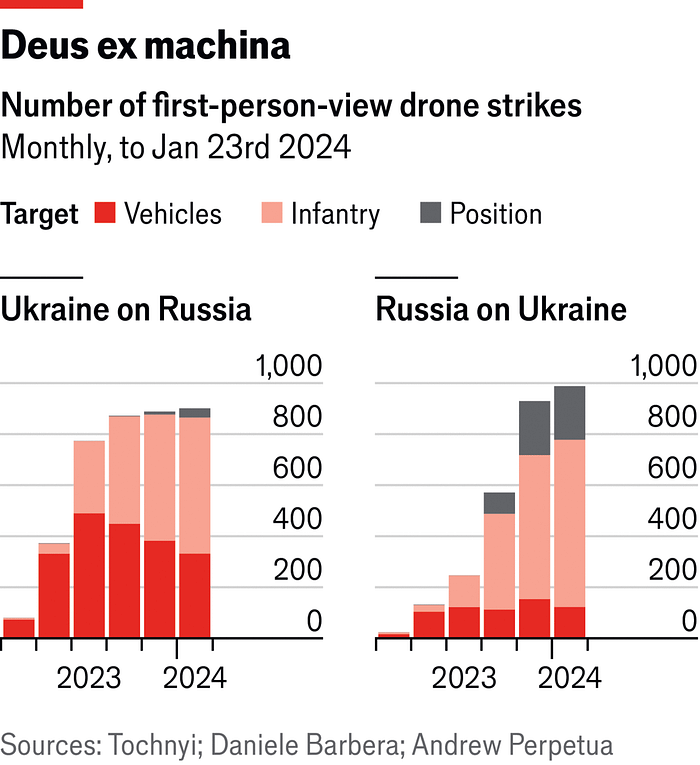
The Casualty Revolution: Precision at Scale
One of the most striking pieces of evidence for the FPV revolution is casualty statistics that show a fundamental change in how deadly modern warfare is:
Historical Warfare Casualty Patterns:
- Artillery caused about 70% of the deaths in World War I.
- World War II: A mix of artillery, small arms, and aviation caused casualties all over the place.
- Korea and Vietnam: Artillery was still the main cause of death (about 60–70% of deaths).
- In Iraq and Afghanistan, IEDs and small arms were the most common weapons used against insurgents.
Ukraine War Casualty RevolutionL: Multiple independent sources, such as The New York Times, the Institute for the Study of War, and Ukrainian military statistics, say that
- Drones are now responsible for 70–80% of all battlefield deaths on both sides.
- Artillery that is used all the time: Cut down to 15–25% of the causes of death
- Small arms and direct fire: less than 10% of all deaths
- Aviation/missiles: less than 5% of all deaths
This is the biggest change in how people die since artillery was first used. More importantly, most of the deaths caused by drones are caused by FPV and other small, cheap systems, not by expensive military UAVs.
Economic Warfare: The New Battlefield
The conflict in Ukraine shows that modern warfare is more like economic competition than traditional military campaigns. The side with the most advanced individual systems does not win; the side that can keep up a faster operational tempo while making the enemy pay an unsustainable price does.
Russia's Economic Dilemma:
- Current production of precision munitions: about 10,000 units per year (all types)
- The estimated cost to replace verified losses is between $15 and $20 billion.
- The current defense budget sets aside about $3–5 billion each year for precision munitions.
- Sustainability gap: spending 3 to 6 times more than what is available
Ukraine's Economic Advantage:
- Current production of FPV drones is 2.4 million units per year, but this number is expected to rise to 5 million.
- Total cost of the program: about $2 billion a year
- Battlefield effects caused 1.8 to 2.2 million successful engagements each year.
- Sustainability calculation: The resources available to Ukraine and its allies are more than enough.
Strategic Economic Impact: Ukraine's FPV drone strategy puts Russia in a tough economic situation: it has to either match Ukraine's volume (which is impossible because of limited resources) or let its military capabilities slowly decline (which is not a long-term solution).
The Proliferation Problem: When David Gets Mass Production
The democratization of precision warfare capabilities poses significant inquiries regarding prospective conflict scenarios. If you can get precision strike capability for $500 that is as good as $40,000 worth of traditional systems, the effects go far beyond the conflict in Ukraine:
Strategic Implications for Major Powers:
- Force Protection: Mass precision attacks can hit traditional bases and logistics nodes.
- Operational Security: Putting a lot of valuable things in one place becomes too risky
- Economic Planning: Defense budgets that are set up to work well with expensive systems may not be enough to deal with cheap, many threats.
- Alliance Structures: Small allies can add a lot of power by buying a lot of drones.
Regional Stability Effects:
- Deterrence Calculations: Asymmetric precision capabilities have thrown off the traditional military balance.
- Conflict Escalation: A lower threshold for precision strikes could lead to more conflicts.
- Weapons Race Dynamics: Competition changes from quality to quantity, which could help countries with a lot of resources instead of countries with advanced technology.
The Adaptation Imperative: Learning from Ukraine
Military groups all over the world have a tough choice to make: they can either adapt to the new economic realities of war or keep spending money on methods that aren't economically viable, which could make them obsolete.
Successful Adaptation Principles:
- Embrace Commercial Integration: Use global supply chains instead of making alternatives just for the military.
- Put first More volume than sophistication: Systems that can be made and used on a large scale
- Speed up the cycles of innovation: Cut down on the time it takes to develop things so they can be used on the battlefield.
- Distribute Manufacturing: Make production networks that can handle disruptions.
- Pay attention to long-term economic health: Instead of looking at each system's capabilities, look at the cost per battlefield effect.
Failed Adaptation Indicators:
- Worship of Complexity: More focus on complicated systems that don't really make things better
- Stovepipe Thinking: Military procurement is separate from commercial innovation.
- Quality Fixation: Seeking flawless individual systems instead of effective approaches to systems of systems
- Risk Aversion: Development processes that are slow and bureaucratic and don't keep up with what the battlefield needs
- Economic Denial: Putting capability maximization ahead of cost-effectiveness calculations
The Future Mathematics of War
The war in Ukraine gives us a glimpse of the future of warfare math, where the side that can impose costs on its enemies while keeping its own operations cost-effective has the strategic advantage.
Emerging Military Economic Principles:
1: Industrial Base Determines Strategic Capacity is based on its industrial base. Military effectiveness increasingly relies on the capacity to swiftly scale the production of efficient systems rather than gradually fabricate intricate systems.
2: Innovation Velocity Trumps Individual Sophistication Forces that can change and improve systems faster than their enemies can come up with ways to stop them have a big advantage.
3: Economic Sustainability Enables Strategic PatienceThe side that can keep up higher operational tempos while still being economically viable can make their enemies pay for things they can't afford.
4: Distributed Systems Resist Centralized Attacks Military architectures predicated on numerous, uncomplicated systems demonstrate greater resilience than those reliant on limited, intricate systems.
5: Commercial Integration Provides Strategic Depth Military systems that use commercial supply chains and innovation networks are more scalable and adaptable than systems made just for the military.
Conclusion: Economic Overmatch — The Death of Exquisite Systems
As this thorough investigation comes to an end, the evidence overwhelmingly points to a revolutionary conclusion: Ukraine's $500 FPV drones have not only outperformed Russia's $40,000 Krasnopol shells, they have also completely invalidated the military-industrial paradigm that led to the creation of such expensive, complicated systems in the first place.
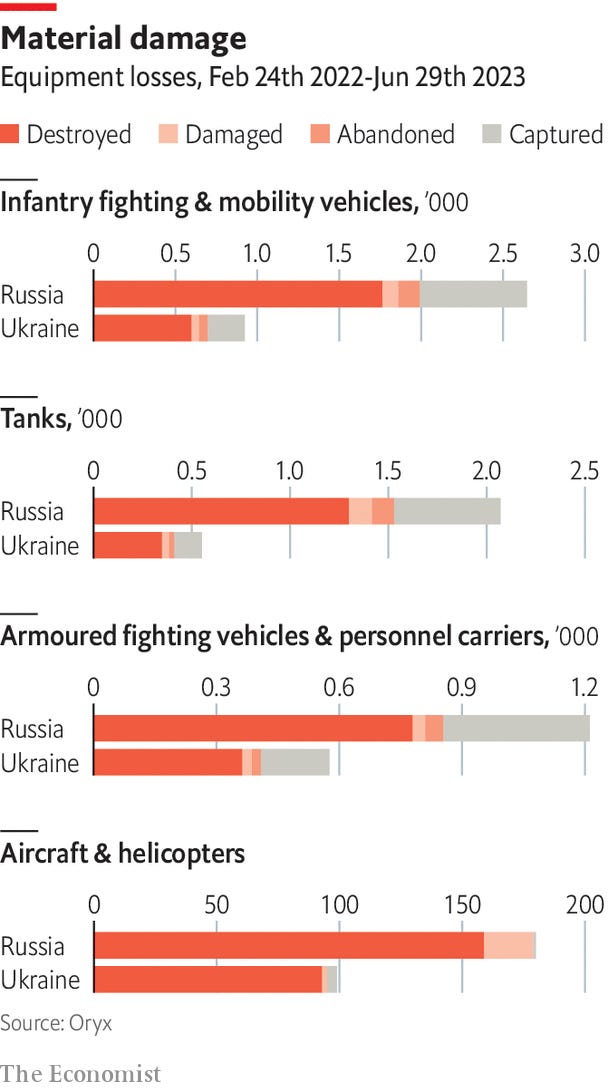
The Death Spiral of Complex Systems
The Krasnopol is the end result of a military procurement philosophy that put system sophistication ahead of battlefield effectiveness. This method led to what we call the "complexity death spiral":
- Being sophisticated requires specialization → Few suppliers and not enough manufacturing capacity
- Costs go up when you specialize → Smaller amounts of things bought
- Less presence on the battlefield due to fewer quantities → Strategic impact on the edge
- Marginal impact requires more complexity → Go back to step 1
This death spiral shows why Western defense companies are making fewer, more expensive systems that may not be useful on the battlefield. The F-35 fighter program, which costs $1.7 trillion in total, the Zumwalt-class destroyers, which cost $4.4 billion each, and the Future Combat Systems program, which was canceled and cost $200 billion, all show this pattern.
The Virtuous Cycle of Simple Systems
Ukrainian FPV drones show the opposite trend: a "simplicity virtuous cycle":
- Simplicity makes it possible to make a lot of things at once. Multiple suppliers and manufacturing that is spread out
- Mass production lowers the cost of each unit → More items bought
- More units lead to battlefield saturation → Strategic impact that is clear
- Strategic impact confirms approach → Continued putting money into systems that can grow
This virtuous cycle shows how Ukraine was able to do things on the battlefield that even Russia's most advanced systems couldn't do, even though its defense budget was only 1/10th the size of Russia's.
The New Military-Industrial Revolution
What is happening in Ukraine is a military-industrial revolution, like the invention of gunpowder, the machine gun, or nuclear weapons. The ramifications extend significantly beyond this particular conflict:
For Military Procurement:
- The End of the Exquisite System: High-cost, low-volume methods are no longer financially viable.
- The Rise of Industrial Warfare: Winning depends on how much you can make, not how advanced your system is.
- Commercial Integration Imperative: Military systems must take advantage of commercial supply chains and networks for innovation.
- Requirements for Speed of Adaptation: Development cycles need to keep up with how the battlefield changes, not how the government works.
For Strategic Planning:
- Force Structure Revolution: A lot of simple systems take the place of a few complex ones.
- Where it is located: High-value assets that are concentrated become a liability instead of a strength.
- War in the Economy First: The ability of factories to make things and the ability of resources to last become the most important strategic factors.
- Alliance Transformation: Partners add to the alliance's strength through industrial capacity instead of just military platforms.
For International Security:
- Democratization of Precision: Smaller countries and non-state actors can now access advanced military capabilities
- Deterrence Disruption: Asymmetric precision capabilities upset the traditional balance of power in the military
- Proliferation Worries: Systems for mass production present distinct control challenges compared to intricate systems
- Stability in the Region Consequences: Lessening the barriers to effective military capability may lead to more conflicts
The Lessons for Military Leadership
Military leaders can learn a lot from the conflict in Ukraine about how to deal with this change:
Embrace Economic Reality: The effectiveness of the military should be based on the cost of each battlefield effect, not the capabilities of each system. A mediocre system that can be made and used on a large scale is often more useful for strategy than a perfect system that is only available in small amounts.
Prioritize Adaptation Speed: The side that can change and improve systems faster than the other side can make countermeasures has a big advantage. This means moving away from development methods that focus on getting everything right the first time and toward philosophies that focus on making things better over time.
Use Commercial Innovation: The speed and cost-effectiveness of innovation in commercial industries is better than that of military-specific development. More and more, successful military systems rely on creatively adapting commercial technologies instead of just developing military ones.
Plan for Industrial Warfare: Future wars will look more and more like competition between businesses, where the ability to make things and keep the economy going will decide who wins. Military planning needs to take into account how strong and flexible the industrial base is.
Accept Distributed Risk: Resilient military architectures spread capabilities across many simple systems instead of putting them all in a few complex platforms. This means that you have to accept higher failure rates for each system in order to make the whole system more resilient.
The Global Implications
The military-economic revolution that took place in Ukraine will change how countries interact with each other and how they think about security around the world:
Great Power Competition: The US and China have to make important decisions about how to run their military-industrial systems. Countries that can switch to systems that are scalable and economically viable will have a big edge over those that are stuck with costly, complicated methods.
Alliance Structures: NATO and other alliance systems need to look at how much their partners are contributing and how they are sharing the load. The ability to make things on a large scale and the capacity of an industry may become more important than traditional military platform contributions.
Regional Balances: Smaller countries can now use precise military tools that were only available to big powers before. This making of advanced abilities available to everyone will upset the balance of power in the region's militaries.
Challenges in Arms Control: Traditional arms control frameworks that were made for expensive, complex systems don't work for regulating simple, mass-produced systems. There will need to be new ways to stop the spread of cheap but effective systems.
The Economic Overmatch Verdict
The first question that started this investigation was, "Which system is winning the duel between Russia's $40,000 Krasnopol shell and Ukraine's $500 FPV drone?" There's no doubt about the answer, but the effects go far beyond this one comparison.
Ukraine's FPV drones have reached what military theorists call "economic overmatch," which means they can impose huge costs on an enemy while keeping their own costs low. The math is clear:
- 9,000:1 cost-imposition ratio for taking out high-value targets
- 200:1 cost-effectiveness edge in getting results on the battlefield
- 2,500:1 production volume advantage that makes large-scale operations possible
- Indefinite sustainability versus economically unsustainable Russian strategies
But the FPV drone as a single system doesn't win; the philosophy it stands for does. It stands for simple, adaptable, and scalable systems that put battlefield effectiveness ahead of engineering complexity.
The Future of Warfare
The war in Ukraine is a preview of future wars, where the side that knows the new math of military economics will have the upper hand. Traditional strategies that focus on the complexity of individual systems will not work against enemies who use industrial-scale production to make effective systems.
This change can't be undone. People can't stop or control the knowledge of how to make effective precision weapons from parts that are sold to the public. The ability to make these kinds of systems in large numbers exists all over the world and is growing all the time.
Military organizations around the world have a clear choice: they can either adapt to the new economic realities of war or risk becoming obsolete by continuing to invest in methods that aren't financially viable. The lessons from Ukraine are clear: David's stone is now a machine gun, and Goliath's armor is now his weakness.
The time of beautiful military systems is coming to an end. The era of economic superiority has commenced.