
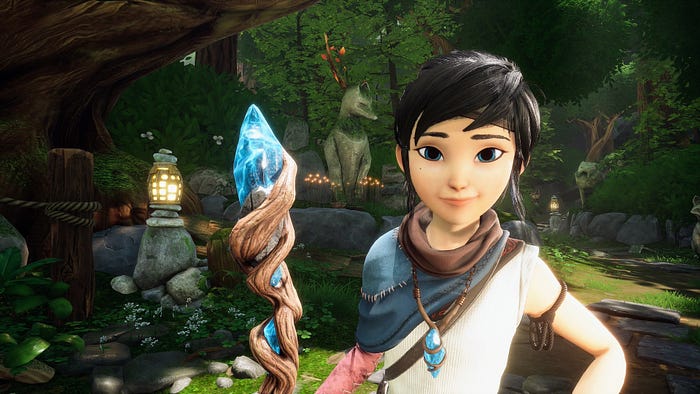
Growing up in the eighties and nineties, it seemed like video game graphics were always chasing after films. "This looks just like a playable animated movie" was a weird pop culture and tech journalism benchmark for gaming visuals for years and years, even if the hardware was never really able to live up to that ask.
Don Bluth and Rick Dyer might have accidentally kickstarted this trend with their laserdisc-based arcade titles Dragon's Lair and Space Ace, which used video clips of original high quality cel animation for their visuals. On a first play, these games looked like miracles, but their limited interactivity quickly became apparent. Still, they set a really high bar for game consoles and PCs to chase after, whether for good or for ill.
At some point, that chase kind of stopped. Game and film visuals have moved closer together naturally with the march of rendering tech. Some current animated movies and visual effects even use Unreal Engine 5, the same software innards powering a bunch of video games. Of course, real-time rendering still has its own intense performance demands that movies don't have to bother with, but the gap between games and movies has never been more narrow…and it's not really a part of the critical discourse anymore.
Back in 2021, a small indie platformer shot for the moon, and hit this old weird graphics benchmark more impressively than I ever could have imagined. That game is Kena: Bridge of Spirits. It was made by a small studio called Ember Lab, which appropriately enough features a team with a background in animation. They also worked with an additional outside animation studio called Sparx for visual support. Beyond just having a "modern animated film" aesthetic, every single moment of the game is infused with the visual language of cinema, and it looks awesome.
The cutscenes use lush and lavish camera direction and extensive soft depth of field for the backgrounds, alongside increased lighting fidelity. Character animations have a squishiness to them that adds a playful layer of movement to every action, something that most modern games drop in favor of pursuing a more photo-real look. Kena's animations feature a smoothness and personality that only Nintendo's games usually manage. The composition of each level is thoughtfully framed and constructed to make them fit nicely onto a screen, allowing for dozens of moments where you round a corner and catch sight of a perfect-looking film-style shot.
The sound design is up to the task of carrying the visuals too, something that so often gets comically ignored in games made by small teams. I'm thinking of you, Biomutant. The musical score in Kena is simply gorgeous, with instrumental depth and perfect sound mixing, alongside some wonderful vocals contributed by the game's lead voice actress Dewa Ayu Dewi Larassanti. The game is a workout for either speakers or headphones, with rich resounding bass notes and tons of great little bits of audio feedback that enhance everything on screen. The sound mix and voice acting are among the best I've ever heard in an indie game.
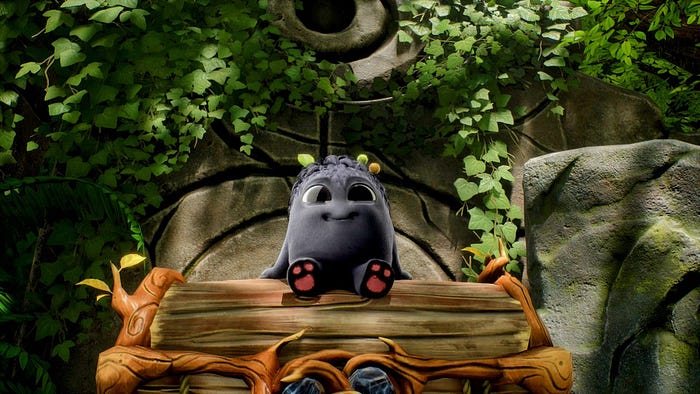
I love the way that the game's magic system is infused into every gameplay moment and mechanic. As Kena is an action-adventure platforming game, most of the time you'll be running, jumping, and fighting enemies. In the game's opening moments a special magical "pulse" is introduced that lights up certain elements of the word and operates various interactive objects. This pulse also inadvertently acts as a demo of the game's wonderful audiovisual package every time you use it, and it's even involved in combat as a shield/parry system. Very soon into the game, you meet the "rot," super cute little guys that were originally conceptualized as enemies. You can befriend them and order them to do tasks, and they also augment the powers you get as you make your way through the game. The need to order around little helper dudes reminded me of the weird old Overlord games, though I imagine the design touchstone here for most people will be Pikmin.
The many different gameplay elements are well-balanced across the game's entire 12-ish hour runtime, so it never gets bogged down. You do need to like action combat to have a good time here, as there are more combat encounters than the game's marketing implies.
Kena was initially signed as a PlayStation console exclusive even though it was self-published by the developer…and it did eventually release across all other major platforms. A Switch 2 version just came out this week, and I was hoping it would fix my one major technical issue with the game. They made a half-step in the right direction but didn't quite get there.
This game would look wonderful with a full proper HDR presentation, thanks to its luscious world and constant use of eye-catching bright particle effects for its magical spells. On PlayStation, the game pretends to run in HDR, but it's kind of just outputting the game's SDR content inside an HDR wrapper with no meaningful use of the enhanced color range or brightness. On Switch 2 the game's store page promises HDR support, but it's still a bit bland and lacking in-game. Some of the highlights do come across a little brighter than on the PlayStation 5, which is nice…but it still seems like they're using tone mapping to just push this game into the HDR realm rather than supporting the format natively.
On PC, you can use a post processing solution like Windows Auto HDR or Nvidia RTX HDR to add better HDR support into the game through the magic of algorithms. This is still the best option for playing if you're into the HDR display format like I am.
Other than the rather lacking HDR support Kena is a wonderful game on any platform. The Switch 2 version has no major performance or visual issues, though it is capped at 30FPS. I'm hopeful that it'll do well and introduce a whole new set of people to this cool little game.
Later this year, Ember Lab plans to ship a new sequel for PS5 and Windows, and I hope it'll come to the Switch 2 as well. It's jumping up to Unreal Engine 5 so it'll be interesting to see how the performance holds up, but maybe the HDR will be better?
I always got excited when I saw a game magazine proclaim that something looked "just like a cartoon," but outside of a few cool old rotoscoped games and FMV ports, most things never actually hit that ambition. Kena will absolutely blow you away if you ever spent part of your childhood wishing that games looked more like movies, but even if you didn't it's still a solid and charming experience. It's super cool that its core team had something like fifteen people working on it. Even with extensive outside contract help, I bet it still cost a fraction of the money that big games normally require, while still looking awesome.
The upcoming sequel is one of my most anticipated games left to come out this year. I bet it'll look even more like a film.