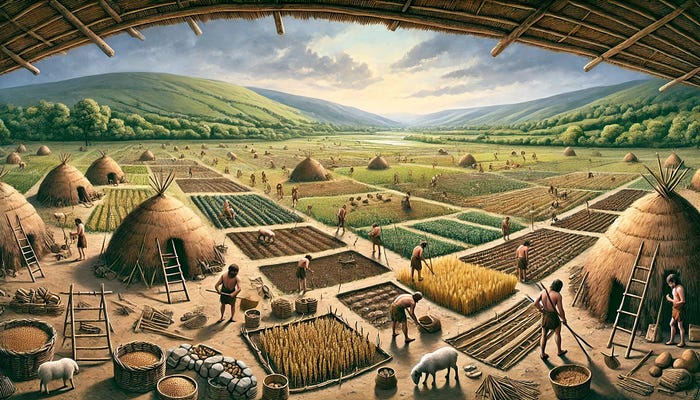


Twelve thousand years ago, our ancestors discovered agriculture. Before that, we were hunter-gatherers.
As hunter-gatherers, we moved from one place to another in search of food. Men hunted and women foraged the camp surroundings for berries, roots, and seeds.
After a few hours of work, we had enough food to return to camp to eat, talk, dance, and enjoy life. When there weren't enough berries to pick or wild animals to hunt, the band moved to another location.
However, by 10,000 BC, the population grew, and the nomadic lifestyle no longer provided enough food. Thus, our ancestors turned to agriculture. They began to grow wheat, barley, millet, rice, corn, and potatoes.
Agriculture had a profound impact on our society. Let's take a closer look at the 10 changes it brought.
1. Epidemics

Since people stopped moving from camp to camp and instead settled in villages or towns, diseases could spread more easily.
People lived alongside animals, which allowed zoonotic diseases such as measles, smallpox, and influenza to spread from animals to humans. With many people living in the same place and no sewage systems, c contaminated water and air, aiding the spread of diseases.
Additionally, humans began eating less diverse diets, often relying heavily on a single crop like wheat. In contrast, hunter-gatherers ate a wide variety of seasonal foods. This weakened the immune system, making people more susceptible to disease.
2. Gender Inequality

In hunter-gatherer societies, men and women held fairly equal roles. However, in agricultural societies, men became dominant. They owned land and organized labor, gradually forcing women into the role of homemakers and caregivers.
3. Social Inequality
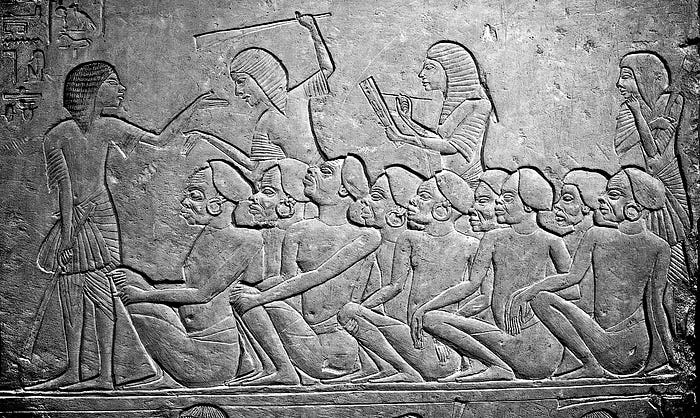
In hunter-gatherer societies, people owned very little since they were always on the move. In agricultural societies, some individuals owned more land and livestock, while others had to work for them to survive. Society became divided, with a small ruling class and the majority working as peasants or slaves.
Rulers and priests became necessary to organize agricultural activities such as plowing, sowing, and harvesting, as well as storing and distributing food.
The military class was created to defend the land and the crops or to attack the neighbors to get more land and crops.
4. Rise of Religion
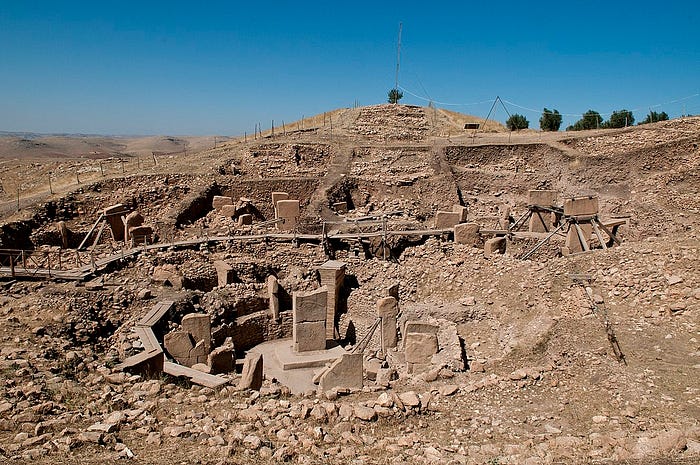
Karl Marx said that religion is the opium of the masses. Religion became necessary to control the population and give people a sense of order. It compelled people to do things they didn't want to, like storing food in granaries for future famines. Even if no famine occurred for years, religious commands ensured food was saved.
Farmers also depended heavily on the weather, especially rain. Praying to gods who they believed controlled the weather gave them a sense of control over their environment.
5. Military and Fortresses
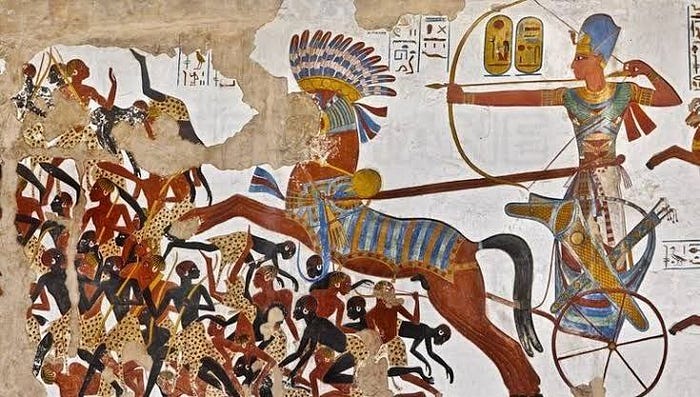
Grain had to be stored in granaries, but it was always possible that someone would come and steal it. To protect their food, our ancestors built walls and watchtowers. Soldiers were needed to defend the land and food from being taken by others. They were also needed to attack neighboring tribes to take their land and resources.
6. Less Free Time

Hunter-gatherers worked only a few hours a day and had enough to survive. Agriculture, however, required long hours of labor and was much more physically demanding. Free time became scarce and our ancestors became consumed by the need to work hard to survive.
In many ways, agriculture reduced the quality of life compared to hunter-gathering.
7. Destruction of the Environment

While hunter-gatherers maintained a balance with nature, only hunting and gathering what they needed, farmers had to alter the environment to produce more food.
They burned forests to create farmland, diverted rivers for irrigation, drained swamps, and built dams. Intensive farming depleted soil, irrigation caused droughts, and deforestation contributed to climate change.
Irrigation also caused salinization of soil since all irrigation water contains a bit of salt which is then accumulated in the soil and groundwater.
8. Innovation

Agriculture required constant improvements in technology to increase food production. New tools such as the wheel and the plow were invented. This focus on invention led to the modern high-tech society we have today.
Writing and mathematics were developed to keep track of food supplies.
9. Population Growth
Agriculture allowed for larger populations due to increased food availability, leading to rapid population growth, which in turn triggered the rise of civilizations.
10. Trade
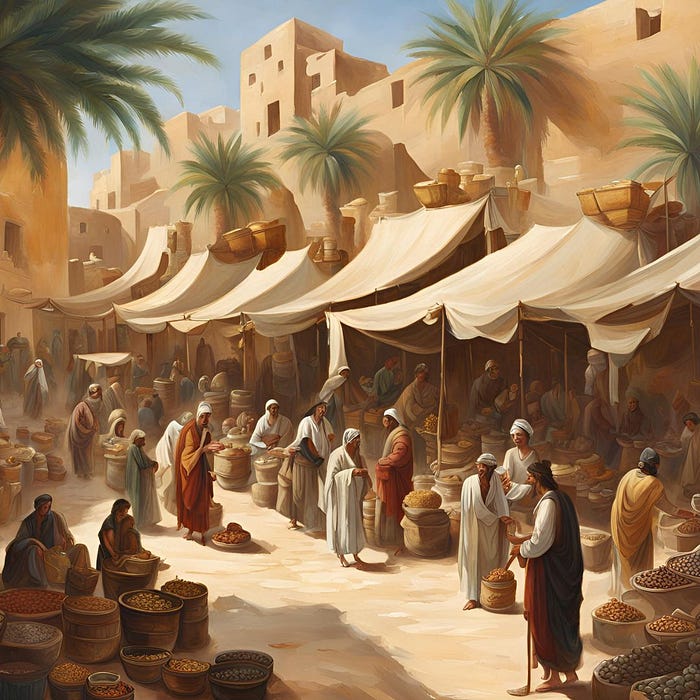
With a surplus of food, trade developed, leading to the invention of money and trade routes. Farmers exchanged surplus food for items like animal skins.
Conclusion
We say we domesticated animals and plants, but perhaps they domesticated us. The negative impacts of the agricultural revolution — environmental destruction, overpopulation, social inequality, gender inequality, and reduced free time — are still felt today.
Was the agricultural revolution a great mistake?
On the other hand, we now have more technology, which has already improved our lives in many ways. But can technology save humanity from the negative consequences of the agricultural revolution?