
Barry was good at his job. Creative, reliable, well-liked. But somewhere along the way, he decided it wasn't enough.
Another colleague had built a successful side business making custom designs — CNC work, laser etching, that kind of thing. It looked effortless. It looked profitable.
Barry bought the tools. Set up a workshop in his garage. Started making things. Nothing sold.
Over the course of a year, the excitement faded into frustration. He'd work all week, then work all weekend. He stopped exercising, put on weight, and his wife complained he was never present at home. His work suffered. His relationships frayed. Eventually, he quit and took a job somewhere else — leaving as a very unhappy man.
I tried to help, but he wasn't ready to hear it. He was watching someone else's success, trying to replicate it, and furious it wasn't happening for him.
Three months later, I caught up with him. He'd given up the side hustle. He was satisfied with his new job. Happier at home. The garage was full of tools he wasn't using.
He'd found peace in a job that let him be creative, paid enough, and gave him his weekends back. If he'd never chased the side hustle, he likely would have been just as happy — or more so — without the year of stress.
Why I Write (and the Boundaries I Keep)
I've read it a hundred times: if you're not building something for yourself, you're just working for "the man." You need a side hustle to get ahead.
These posts are my side hustle. I write them in my spare time. I hope they improve my thinking. Maybe they'll generate some income. Maybe they'll give me options beyond my day job.
I enjoy it. But it also takes time away from calmer pursuits. I've had colleagues approach me about starting side businesses together — defined times, defined expectations, delivery deadlines. I don't need that pressure.
I write two posts a week. Sometimes more when I'm excited. I spend a few hours on weekends, maybe an hour or two during the week.
But family comes first. Always. If my kids want to play, I close the laptop. If I want to sit with a coffee and read a book, that happens. If writing feels like a chore, I stop.
What I like about this is I'm not beholden to anyone else. I'm not creating something for a paying customer with a delivery timeframe. I'm just tapping away at a keyboard, enjoying myself.
If I don't want to do it right now, I won't. That's the freedom Barry didn't have.
Three Types of Ambition
Watching Barry burn out taught me something: not all ambition looks the same.
Ambition for Mastery
I want to get better at writing. Not for applause or a promotion, but for the satisfaction of doing something well. These posts are practice. That's enough.
Ambition for Autonomy
It would be great if this generated some income. If it gave me more control over my time. But I'm not willing to sacrifice my weekends or my presence at home to make that happen faster.
Ambition for Enough
If this blog takes off, great. If it doesn't, I'll slow it down or stop entirely. I'm not chasing someone else's definition of success. I'm building something that fits my life, not one that consumes it.
Barry chased someone else's ambition. He wanted what his colleague had — the business, the success, the proof he was "building something." But he never asked if that's what he actually wanted.
The Question Worth Asking
If you have a side hustle — or you're thinking about starting one — why are you doing it? Is it because you genuinely want to? Or because you feel like you should?
And here's the harder question: What would you give up to keep doing it? Your evenings? Your weekends? Time with your kids? Your mental health?
If the answer is "too much," you're not building a side hustle. You're building a second job that doesn't pay you yet. A side hustle for wealth is a valid choice. But so is the choice to build a life you don't need to escape from.
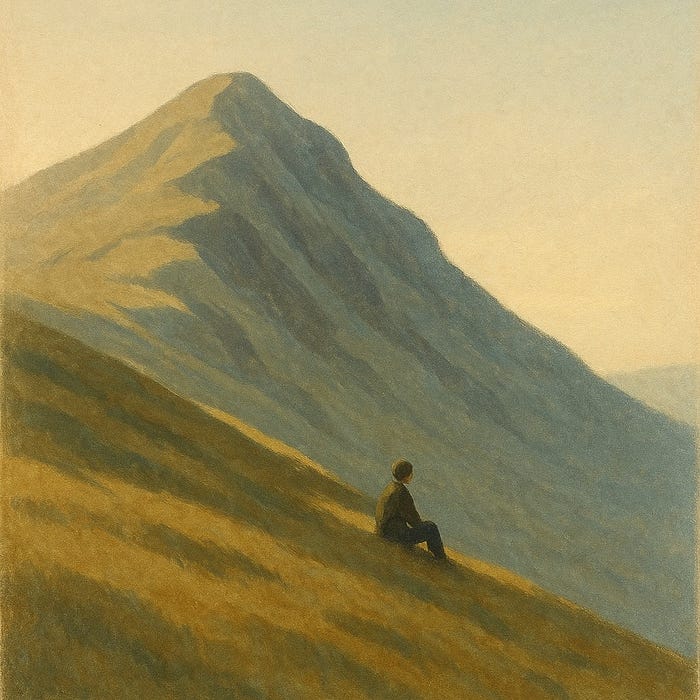
The world will try to sell you a version of success that costs everything. You don't have to buy it. True ambition isn't about reaching the top of someone else's mountain. It's the courage to know when you've already reached the view you wanted.