

In 1994 Brazil played Italy in the FIFA World Cup Final. Soccer fans remember the iconic game was still 0–0 at the end of both regulation and extra time leading to a exciting penalty kick sequence where Brazil won 3–2.
Even more interesting is what occurred in the endocrine systems of the fans.
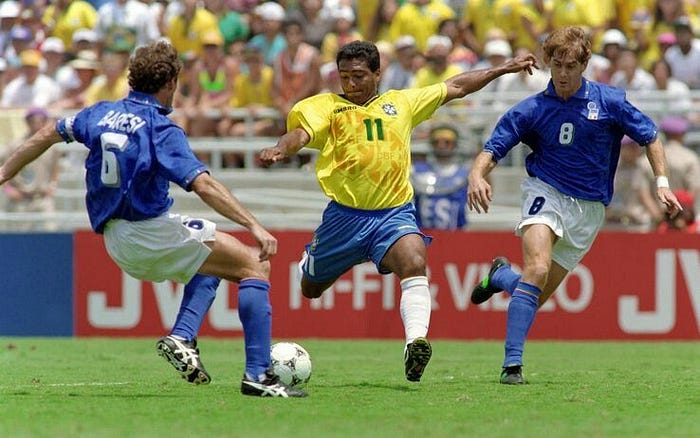
Before and after the game a team of researchers tested the salivary testosterone levels of a sample of Brazilian and Italian fans. Minutes after the game, the Brazilian fans dopamine and testosterone levels had spiked up an average of 50%, with increases as high as 100%. On the other side of the field, the losing fans had a drop in testosterone on an average of 50%.¹
And this was just from watching the game.
This phenomenon is known as The Winner Effect: When we perceive that we won a competition, physical changes occur in our endocrine and nervous systems that encourage more winning. The opposite occurs when we lose ("The Loser Effect").
While winning isn't everything, most personal goals are essentially and attempt to win a perceived game. There are parameters for success and we strive to meet them within a part of our lifetime.
By applying the Winner Effect we can use our biology to increase our success. With a few small changes, we can use this phenomenon to greatly improve our mood, confidence, and drive to succeed.
How the Winner Effect Plays Out in the Body
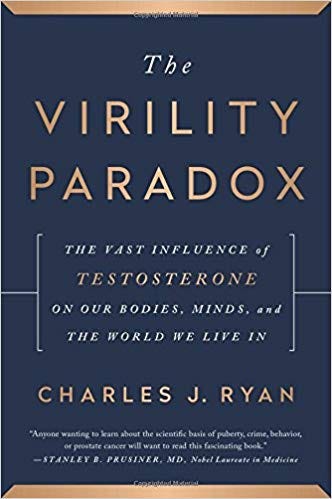
The Virility Paradox by Dr. Charles Ryan cites various studies including the one above that display the relationship between testosterone, mood, and behavior. As the title suggests,there are both positives and negatives associated with the hormone testosterone.
Testosterone correlates with driven behavior
One positive effect of the testosterone is it's correlation with motivation and confidence. According to The Virility Paradox:
In both men and women, testosterone increases feelings of assertiveness and confidence.
In extreme this can be seen as a negative, in that higher testosterone also correlates with aggression.
Testosterone spikes when we win
Most of us have an anecdotal association between "manly" traits and the drive to win. A hyper-aggressive person may be called testy, which is derived from the word testosterone. However, as The Virility Paradox notes, the relationship between the male sex hormone and winning is much more direct that we may think:
[T]estosterone spikes when we win…in competitive settings of all types, from sports to business to dating, hunting, and even chess.
It also spurs the release of dopamine, a powerful feel good chemical. Not only does this winning burst of testosterone make a feel dominant and prime for further competition, it ensures that this competition the be even more rewarding and the future.
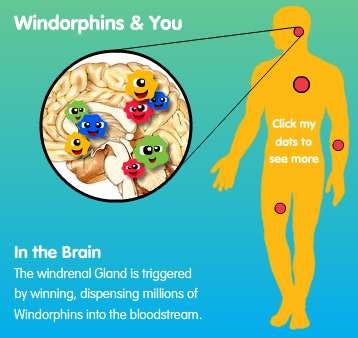
As noted in the World Cup example, testosterone and dopamine increase following wins. EBay played up the feel-good nature of winning in their "windorphins" ad campaign.
But it the effects of winning don't end in the moment. They actually have far-reaching consequences that affect future behavior.
The more you win, the more winning affects you
When we meet a particularly competitive person, most would assume that they probably grew up that way due to a competition-driven childhood. Such a experiences actually change the structures of the brain:
The higher levels of testosterone following a win, stimulate the production of more androgen receptors in the brain. In essence, making more cylinders for this fuel to drive… Success breeds success at the molecular level²
Androgen receptors are the "receiving" ports for testosterone. A crude analogy would be androgen receptors are like "ears" to the "sound" of testosterone. The more receptors, the greater effect testosterone has on the person.
This means that when you win, your body becomes more sensitive to winning, so the next time you win you feel even better, making you even more sensitive to winning, and so on.
It's a positive feedback loop similar to the Matthew Effect as noted in books like Malcolm Gladwell's Outliers.³
This makes sense on a rational level. If you win a lot, you might as well care about winning so that you feel even better about it. If you lose a lot, it's better to not care about it, so the losses don't hurt as much.
We can observe this in any group of kids competing over something meaningless. The winners gloat, while the losers will say something like, "oh it doesn't really matter."
Here is where we can see how a conscious use of the Winner Effect can be used for one's advantage.
How The Winner Effect Plays Out in the Mind + How We Can Use It For Success
The Winner Effect allows us to drawn some tips on how it can be used for positive gain.
1 — Set Meaningful But Doable Parameters of Success
Winning is completely subjective. We choose what games to care about and therefore be affected by.

For instance, those not interested in sports might think it's silly that die-hard sports fans can get so emotional during the wins and losses of "their" team. It's just a game, after all. And fans aren't even the ones playing. However the semi-conscious choice to really care about the Yankees means fans get a hormonal boost every year they've won the World Series.⁴
Every life goal we have is set up a game. And for most goals, we get to decide the parameters of the game, and what exactly constitutes a "win."
The Winner Effect suggests that perceiving victory encourages future victory. So why not "rig the game" to ensure you get that androgen dump?
Much has been written about how most New Year's Resolution fail due to unrealistic expectations. When those personal commitments are dropped, something similar to The Loser Effect goes into play. We rationalize away the importance of the goal to avoid the negative experience of the loss, "oh I already failed at my 10hrs/week at the gym commitment… you know, it really doesn't matter."
Some may criticize rigging the game as setting the bar too low. Of course, the parameters for winning can't be so easy that we feel no sense of accomplishment. The prominence of participation trophies in the 1990's is often blamed as the reason for Millennials being entitled and lacking work ethic. As an older Millennial who remembers the introduction of the participation trophies, I'll be first to say getting a reward for nothing kills motivation and spirit. The win has to be challenging enough to have some sort of meaning.
However, there is more to gain in winning a reasonable short term challenge than setting the standard of success so high that the wins are rarely experienced.
Our goal here is to create a habit of winning by starting with what we are able to win at. This also means focusing on what we can control.
2 — Turn Outcome Goals into Process Goals
Author of Master The Day Alexander Heyne notes how focusing on outcome goals causes many to become discouraged, particularly when it comes to fitness and financial pursuits.
As a health trainer he found that it was near impossible to predict exactly when someone would lose weight. So the goal of "lose 10 pounds by Memorial Day" often was setting one up for failure.
Instead, he found that focusing on the process goal of say, following daily diet and exercise routine, led to the desired outcome sometimes faster than even predicted.
Outcome goals are the result we want. The problem with them is that usually results are at least partly beyond our control. Also they tend to be further out in the future, so the "win"s take awhile to tally.
Process goals are the actions we take in order to achieve the outcome. Since they are fully within our control, it's easier to stack wins this way. We can break down any process into daily or weekly tasks that allow The Winner Effect to be employed frequently.

Habit-tracker apps like Coach.me work on the same dopamine-releasing mechanisms that have us addicted to social media. But unlike Facebook notifications, checking off habits contributes to desired outcomes.
But it's fair to note that while arbitrary winning seems to have a positive hormonal effect, there are many wins that simply have nothing to do with the quality of your life. Feeling good about your new flossing habit might reinforce your desire to win, but it won't directly impact your greater life goals. (Unless your main purpose in life is battle gingivitis.)
We benefit the most by stacking wins in a specific area.
3 —Stack Wins In The Direction of a Highest Value Pursuit
The One Thing notes a principle that complements The Winner Effect known as The Domino Effect.
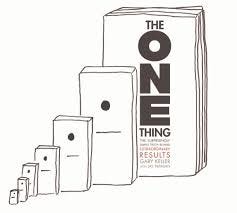
The Domino Effect refers to how momentum increases from one domino to the next such that each domino tips with 1.5x the force of the last. With each domino, significantly larger dominos can be knocked down with the same initial force.
This analogy is applied to goal-accomplishment/"winning" in that consistent small efforts in the same direction will yield bigger and bigger results.
This is most observable in quantifiable pursuits like business and fitness. A brand will have better conversions on the same marketing campaigns after they've become well-known. An athlete will see faster strength gains after years of conditioning.
But it's also observable in less tangible pursuits like those involving creativity. Anyone who has taken on a writing practice will note a larger number of words per hour, and higher quality over time, while the act of writing becomes easier and easier with consistency.
While mastery is a little more complicated than Malcolm Gladwell's take on the 10,000 Hour Rule, it still takes time. And as wins are stacked in a certain direction, the results of those wins get bigger and bigger.
Winning isn't everything, but it matters. Every goal and pursuit in life is an attempt to "win" at some subjectively-determined game.
The Winner Effect notes how the perception of winning directly affects our endocrine and nervous systems. By understanding how the Winner Effect works and structuring our goals properly, we can use this biological phenomenon for personal gain.
[1] http://www.ncbi.nlm.nih.gov/pubmed/9811365
[2] The Virility Paradox (Ryan) — bolding is mine.
Dr. Ryan came on the MU{mastermind} in August 2018 to speak to our members on Testosterone's effects on behavior. To catch the recording visit masculineunderground.com
[3] Coined from the Bible verse Matthew 25:19 "For to every one who has will more be given, and he will have abundance; but from him who has not, even what he has will be taken away."
[4] The New York Yankees have won the most championships (27) of any North American team, suggesting that they have the happiest fans. The Glasgow Rangers FC has the most championships worldwide (54).