
The Palimpsestic Splendour of Indian Culture: An Exegesis
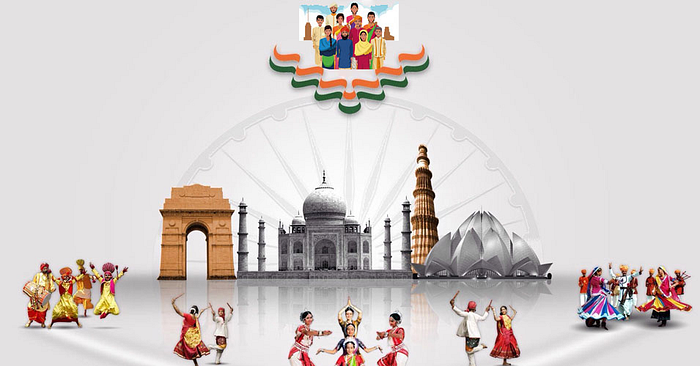
To attempt a delineation of Indian culture is to embark upon a quixotic enterprise—an odyssey through a kaleidoscopic civilizational continuum that defies reduction, resists simplification, and revels in its own polyphonic multiplicity. India, that subcontinental cornucopia of contradictions, is not merely a nation-state but a civilizational palimpsest, inscribed with the indelible ink of millennia, overwritten and reinterpreted by successive epochs, yet never effaced.
Antiquity and the Architecture of Continuity
The cultural tapestry of India is woven with threads that stretch back to the hoary antiquity of the Indus Valley Civilization, whose urban sophistication and proto-scriptural enigmas continue to tantalize archaeologists and philologists alike. From the Vedic hymns—those metrical effusions of metaphysical rumination—to the Upanishadic dialectics that interrogate the nature of self and cosmos, Indian culture has always been animated by a dialectic between the temporal and the transcendental.
This is a civilization that has not merely endured but evolved, absorbing the vicissitudes of history with a syncretic grace that borders on the miraculous. The Mauryan embrace of Buddhism, the Gupta efflorescence of Sanskritic literature, the Chola maritime cultural diplomacy—all bespeak a civilizational ethos that is both expansive and introspective.
Pluralism as Praxis
If there is a singular leitmotif that undergirds Indian culture, it is pluralism—not merely as a passive tolerance but as an active celebration of difference. India is a land where the sacred and the profane cohabit with convivial ease, where the cow is venerated and the kebab is devoured, where the temple bell and the mosque's azaan form a contrapuntal symphony of faith.
This pluralism is not an accidental byproduct of geography but a cultivated disposition, honed over centuries of intercultural osmosis. The Bhakti and Sufi movements, with their emphasis on personal devotion and mystical union, transcended sectarian boundaries and democratized spiritual experience. Kabir's irreverent couplets and Mirabai's ecstatic verses are not merely literary artefacts but cultural lodestars that illuminate the Indian soul's capaciousness.
Linguistic Labyrinths and Literary Luminescence
India's linguistic landscape is a veritable Tower of Babel, albeit one that has not collapsed under its own weight but flourished in polyglot harmony. From the classical cadences of Tamil Sangam poetry to the ornate Persianate prose of Mughal chronicles, from the earthy idioms of Bhojpuri folk songs to the urbane sophistication of Bengali novels, Indian literature is a testament to the fecundity of expression.
Sanskrit, that liturgical lingua franca of ancient India, remains a reservoir of philosophical profundity and poetic elegance. But it is in the vernaculars—Hindi, Urdu, Malayalam, Marathi, Assamese, and beyond—that the quotidian rhythms of Indian life find their most authentic articulation. The postcolonial efflorescence of English-language Indian writing, spearheaded by the likes of Rushdie, Roy, and yes, Tharoor himself, has added yet another layer to this palimpsestic literary edifice.
Aesthetic Eclecticism: From Ajanta to Bollywood
Indian aesthetics, governed by the rasa theory of emotive evocation, encompass a spectrum so vast that it renders any taxonomy provisional at best. The frescoes of Ajanta, with their sinuous lines and spiritual gravitas, coexist with the erotic exuberance of Khajuraho's sculptures. The Mughal miniature, with its meticulous detailing and Persianate elegance, finds a counterpoint in the exuberant folk art of Madhubani and Warli.
In the contemporary cultural firmament, Bollywood reigns as both spectacle and signifier—a cinematic juggernaut that distills the aspirations, anxieties, and absurdities of modern India into song-and-dance extravaganzas. While often derided for its melodramatic excesses, Bollywood is, in truth, a cultural crucible where myth, modernity, and masala intermingle with unapologetic flamboyance.
Sonic Syncretism: The Music of Multitudes
Indian music, both classical and folk, is a sonic embodiment of the nation's cultural pluralism. The Carnatic and Hindustani traditions, with their intricate ragas and talas, are not merely musical systems but metaphysical disciplines. The sitar's plaintive twang, the tabla's percussive virtuosity, the veena's mellifluous resonance—all evoke a cosmos where sound is sacred.
Yet, beyond the concert halls and sabhas, the folk traditions of India pulsate with raw vitality. The Baul singers of Bengal, the Lavani performers of Maharashtra, the Bihu dancers of Assam—all articulate a vernacular spirituality that is both earthy and ecstatic. Even the cacophonous exuberance of wedding bands and political rallies is, in its own way, a cultural expression—unrefined, unfiltered, yet unmistakably Indian.
Sartorial Semiotics and Culinary Cosmopolitanism
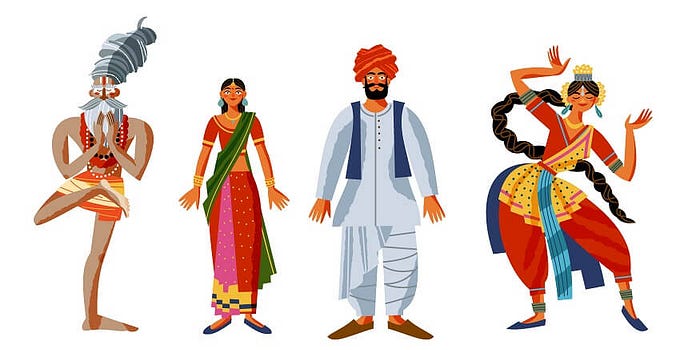
Indian attire is not merely a matter of fabric and fashion but a semiotic system that encodes identity, status, and occasion. The sari, with its infinite drapes and regional variations, is a metaphor for Indian femininity—elegant, adaptable, and enduring. The kurta-pyjama, the sherwani, the lungi, the salwar-kameez—all bespeak a sartorial diversity that mirrors the nation's cultural heterogeneity.
And then there is Indian cuisine—a gastronomic symphony that orchestrates spices, textures, and techniques into culinary masterpieces. From the Mughlai opulence of biryani to the ascetic simplicity of khichdi, from the coastal tang of fish curry to the Himalayan robustness of momos, Indian food is a sensorial celebration. It is no accident that turmeric and ghee have now entered the global wellness lexicon; India's culinary wisdom is ancient, holistic, and deliciously subversive.
Rituals, Festivals, and the Theatre of Faith
Indian culture is punctuated by a calendar of festivals that transform the mundane into the magical. Diwali's incandescent exuberance, Holi's chromatic chaos, Eid's gustatory generosity, Christmas's carol-laden serenity—each festival is a performative enactment of faith, community, and joy.
Rituals in India are not confined to the sacred precincts of temples or mosques but spill into the streets, the homes, the marketplaces. The act of touching elders' feet, the lighting of diyas, the tying of rakhi, the breaking of coconuts—these quotidian gestures are imbued with symbolic resonance. They constitute a cultural grammar that is both intimate and expansive.
Philosophy, Pedagogy, and the Pursuit of Wisdom
Indian culture has always valorized the life of the mind. From the dialectical disputations of the Nyaya school to the non-dualistic mysticism of Advaita Vedanta, from the Buddhist doctrine of anatta to the Jain ethic of ahimsa, Indian philosophy is a vast ocean of intellectual inquiry.
Education, too, has been sacralized in Indian culture. The gurukul system, the Nalanda and Takshashila universities, the oral transmission of knowledge—all bespeak a pedagogical ethos that privileges wisdom over mere information. Even today, the reverence accorded to teachers, the ubiquity of coaching centres, and the parental obsession with academic excellence are cultural continuities that reflect this intellectual inheritance.
Colonial Interlude and Postcolonial Reclamation
The colonial encounter, while disruptive, did not extinguish Indian culture; rather, it catalyzed a process of introspection and reinvention. The Bengal Renaissance, the nationalist cultural revival, the Gandhian valorization of indigenous traditions—all were responses to colonial epistemic violence.
Post-independence India has grappled with the challenge of cultural modernization without capitulating to homogenization. The constitutional enshrinement of cultural rights, the proliferation of cultural institutions, the resurgence of regional cinema and literature—all reflect a postcolonial reclamation of cultural agency.
The Culture of Contradictions
To speak of Indian culture is to embrace contradiction. It is a culture that venerates asceticism yet celebrates opulence, that preaches non-violence yet revels in martial valor, that upholds tradition yet innovates with abandon. It is a culture that is at once ancient and postmodern, spiritual and materialistic, hierarchical and democratic.
This paradoxicality is not a flaw but a feature—a testament to the culture's capaciousness. Indian culture does not seek to resolve contradictions but to accommodate them, to live with them, to find beauty in their tension.
Cultural Continuity in the Age of Disruption
In the twenty-first century, Indian culture finds itself in a paradoxical posture: rooted in antiquity yet surfing the waves of digital modernity. The smartphone-wielding millennial who chants mantras on Instagram Live, the AI engineer who fasts on Navratri, the stand-up comic who riffs on caste while invoking Sanskrit shlokas—these are not anomalies but avatars of a culture that refuses to be fossilized.
This is not cultural schizophrenia; it is cultural elasticity. India's genius lies in its ability to metabolize change without suffering cultural indigestion. The rituals may be livestreamed, the festivals hashtagged, the scriptures digitized—but the underlying ethos remains intact. The sacred is not sacrificed at the altar of the secular; it is simply recontextualized.
Yoga, Ayurveda, and the Globalization of the Indigenous
Few cultural exports have achieved the global ubiquity of yoga and Ayurveda. Once confined to ashrams and Sanskrit treatises, these indigenous systems of wellness have now become global phenomena—commodified, yes, but also celebrated.
Yoga studios in Manhattan chant "Om" with fervor, while turmeric lattes grace the menus of hipster cafés in Berlin. While purists may lament the dilution, there is also a quiet triumph in this diffusion. Indian culture, long dismissed as mystical mumbo jumbo by colonial interlocutors, now commands respect in the global wellness lexicon.
Yet, the challenge remains: how to preserve the philosophical depth of Patanjali's sutras in a world obsessed with six-pack abs and Instagram aesthetics. The answer, perhaps, lies in cultural stewardship—ensuring that the soul of the practice is not lost in its spectacle.
Pop Culture and the Politics of Representation
Indian pop culture, particularly cinema and television, has long been a mirror to society—albeit one that often distorts, dramatizes, and decorates. The evolution from mythological serials to gritty OTT dramas reflects a cultural maturation, a willingness to confront uncomfortable truths.
Shows like Delhi Crime, Made in Heaven, and Paatal Lok do not merely entertain; they interrogate. They probe caste, gender, corruption, and identity with a candor that was once taboo. This is cultural critique masquerading as entertainment—a Tharoorian delight, if ever there was one.
At the same time, the resurgence of mythological retellings—Ramayana 2.0, Mahabharata reboots, and cinematic hagiographies—suggests a yearning for cultural anchorage. The Indian psyche, it seems, oscillates between the need to question and the need to belong.
Youth, Identity, and the Reclamation of Heritage
India's youth—often caricatured as Westernized, apolitical, or consumerist—are in fact engaged in a quiet revolution of cultural reclamation. From indie musicians reviving folk traditions to fashion designers reinterpreting handloom, from Instagram poets quoting Tagore to YouTubers decoding Manusmriti, there is a palpable hunger for rootedness.
This is not nostalgia; it is negotiation. The young Indian does not want to return to the past but to reinterpret it. They seek a culture that is not imposed but chosen, not inherited but inhabited. In this, they echo the spirit of the Bhakti poets—irreverent, passionate, and profoundly personal.
Museums, Archives, and the Politics of Memory
Cultural preservation in India is often a battleground—where history is not merely recorded but contested. Museums, archives, and monuments are not neutral spaces; they are arenas of ideological jousting.
The debate over rewriting textbooks, renaming cities, or reclaiming artefacts from colonial institutions is not merely academic. It is a struggle over cultural ownership, over who gets to narrate the Indian story. In this, culture becomes a form of resistance—a way to assert identity, dignity, and agency.
Yet, the danger lies in ossification. Culture must be curated, not calcified. The past must be remembered, not romanticized. The archive must be a living organism, not a mausoleum.
The Artist as Cultural Cartographer
In this landscape, the Indian artist—be it poet, painter, playwright, or provocateur—assumes the role of cultural cartographer. They map the fault lines, the silences, the ruptures. They do not merely reflect society; they refract it.
Consider the works of Anish Kapoor, Arundhati Roy, MF Husain, or Amrita Sher-Gil. These are not just aesthetic expressions; they are cultural interventions. They challenge the viewer to confront complexity, to embrace ambiguity, to resist reduction.
In a society often seduced by binaries—tradition vs modernity, East vs West, sacred vs profane—the artist insists on nuance. And in doing so, they keep the culture alive, vibrant, and subversively sane.
Diaspora and the Cultural Diaspora
The Indian diaspora—numbering over 30 million souls scattered across continents—is not merely a demographic but a cultural vanguard. From the curry houses of Birmingham to the yoga retreats of California, from the Tamil temples of Kuala Lumpur to the Bollywood nights in Johannesburg, the diaspora has become both custodian and innovator of Indian culture.
Yet, diaspora identity is not a static inheritance; it is a dynamic negotiation. The second-generation Indian-American who wears a lehenga to prom, the Indo-Caribbean poet who invokes Kali in creole verse, the British Punjabi rapper who samples bhangra beats—these are cultural alchemists, blending memory and modernity into new idioms of belonging.
In this, Indian culture becomes transnational—not diluted but diffused, not lost but reimagined. The diaspora does not merely preserve culture; it performs it, politicizes it, and sometimes even problematizes it. And in doing so, it ensures that Indian culture remains globally resonant and locally rooted.
Geopolitics and the Soft Power of Culture
In the realm of geopolitics, culture is no longer a quaint accessory—it is strategic capital. India's cultural diplomacy, once confined to classical dance troupes and handicraft exhibitions, now encompasses yoga summits, Bollywood festivals, and digital heritage archives.
The International Day of Yoga, adopted by the United Nations, is not merely a celebration of wellness—it is a declaration of cultural influence. The popularity of Indian cuisine, cinema, and spirituality across the globe constitutes a soft power arsenal that complements hard power ambitions.
Yet, cultural diplomacy must tread carefully. It must avoid the temptation of cultural triumphalism and embrace the humility of dialogue. For Indian culture, in its truest form, is not about domination but dissemination—not about preaching but sharing.
The Ethical Imperative of Culture
At its core, Indian culture is not merely aesthetic or intellectual—it is ethical. It is a culture that enjoins dharma over dogma, seva over self-interest, ahimsa over aggression. It is a culture that sees the divine in the mundane, the eternal in the ephemeral, the universal in the particular.
This ethical dimension is not abstract philosophy; it is lived practice. It is the grandmother who feeds stray cows, the shopkeeper who closes early for aarti, the activist who invokes Gandhian ideals in climate protests. It is the moral imagination that animates Indian life, often quietly, often imperfectly, but always profoundly.
The Culture That Contains Multitudes
If such a culture can ever be truly concluded—is to acknowledge that Indian culture is not a museum piece but a living organism. It is not a monologue but a polyphony, not a relic but a revolution. It is a culture that contains multitudes, that contradicts itself, that renews itself.
It is the culture of Kalidasa, Tulsidas, Kabir, and Ghalib, , of Tagore, Gandhi, Nehru, Ambedkar, and Atal, of Mohammad Rafi, Lata Mangeshkar, Kishore Kumar, and AR Rahman, of Satyajit Ray, Guru Dutt, Shyam Benegal, Vishal Bharadwaj, and Anurag Kashyap. It is the culture of the street and the scripture, of the bazaar and the bhajan, of the meme and the mantra.
And above all, it is a culture that endures—not because it resists change, but because it embraces it. It is a culture that survives not in spite of its contradictions, but because of them.
So let the world marvel, let the critics quibble, let the cynics scoff. Indian culture, in all its chaotic, charismatic, contradictory glory, marches on—resplendent, resilient, and utterly irreducible.
Epilogue: The Culture That Refuses to Be Concluded
To conclude Indian culture is to attempt to bottle the monsoon, to footnote the Himalayas, to annotate the Ganges. It is to presume finality in a phenomenon that is, by its very nature, infinite—an ever-unfolding epic whose chapters are written not in ink alone, but in ritual, rhythm, and rebellion.
Indian culture is not a museum of antiquities—it is a living, breathing organism that pirouettes between paradoxes. It is the tabla beat in a techno remix, the Sanskrit shloka in a courtroom argument, the rangoli pattern on a startup's office floor. It is the grandmother's lullaby and the activist's slogan, the artisan's chisel and the coder's keystroke.
It is a culture that does not merely endure—it metamorphoses. It absorbs invasions and ideologies, digests dogmas and dialects, and emerges each time with a new grammar of grace. It is not afraid of contradiction; it thrives on it. It does not seek purity; it revels in hybridity.
And so, Indian culture continues—unconcluded, unconquered, and uncontainable. It is a culture that walks barefoot on the edge of eternity, humming a tune that no algorithm can predict, no empire can suppress, and no glossary can define.
Let the world watch, let the skeptics scoff, let the cynics calculate. Indian culture will not be explained—it will be experienced. And in that experience, one does not find answers. One finds India. Thank you!😊
With Regards,
Team 'The Swarajya'.