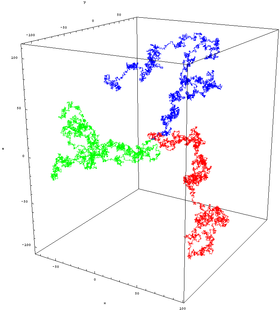

In the intricate world of financial markets, where algorithmic trading and quantitative analysis reign supreme, there's a fascinating parallel to the concept of seeding random numbers in the realm of machine learning and deep learning. For many data scientists, the function tf.random.set_seed(42) is a familiar tool for ensuring reproducibility in neural network models developed using TensorFlow. This seed serves as a starting point for generating a sequence of pseudo-random numbers or tensors. But what if we could identify these economic "seeds" that induce pseudocode-like patterns in the financial markets, patterns that could potentially be predicted? Do these patterns remain the secret domain of quantitative traders and investors, or can they be demystified and harnessed?
The Challenge of Identifying Economic Seeds
Identifying economic seeds in the financial markets and attempting to predict their outcomes is a complex endeavor. These "seeds" are not simple numerical values but rather intricate combinations of factors, events, and behaviors that shape market movements. Here are some thoughts on the challenges and considerations:
Complexity of Market Behavior: Financial markets are influenced by a multitude of factors, including economic indicators, geopolitical events, investor sentiment, and market psychology. Identifying a single economic "seed" in this complexity is akin to searching for a needle in a haystack.
Randomness vs. Non-Randomness: While financial markets appear to be driven by random movements, they are also influenced by non-random events. Economic data releases, central bank decisions, and corporate earnings reports are examples of such events. Distinguishing between random fluctuations and the impact of these events is a formidable task.
Infinite Variables: Economic seeds, if they exist, could take an almost infinite number of forms. They might include unexpected political developments, natural disasters, or shifts in investor sentiment. Trying to classify these as either random or non-random becomes an immense challenge.
Data Aggregation and Analysis: One approach could involve aggregating historical market data and attempting to extract patterns that go beyond mere randomness. Machine learning techniques, such as deep learning models and pattern recognition algorithms, may prove useful in this endeavor.
Human Element: While quantitative traders and investors employ sophisticated algorithms, human psychology and decision-making also play a significant role in market dynamics. Identifying economic seeds might require considering the interplay between algorithmic trading strategies and human behavior.