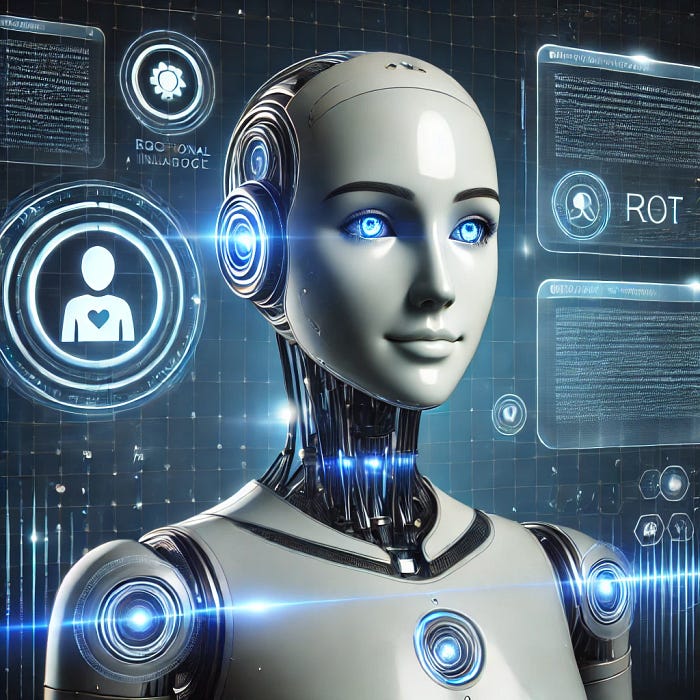

With the rise of conversational AI, particularly chatbots, one of the most common questions is: Can chatbots truly replicate human responses, especially with emotional depth? While chatbots have made significant advancements in understanding and generating human-like text, delivering responses that convey empathy, compassion, and emotional nuance remains a complex challenge. However, thanks to sophisticated models and the right tools, chatbots are becoming increasingly adept at mimicking human emotions in their replies.
How Chatbots Mimic Human Responses
- Advanced Language Models Modern chatbots rely on Large Language Models (LLMs), such as GPT-4 and BERT, to generate human-like responses. These models are trained on vast amounts of data, enabling them to understand the subtleties of language, context, and tone. While they don't "feel" emotions like humans do, they are skilled at generating emotionally appropriate responses by analyzing patterns in the data they've been trained on.
- Sentiment Analysis One way chatbots simulate emotional understanding is through sentiment analysis. This involves detecting the emotional tone in a user's input, whether it's positive, negative, or neutral. Based on the sentiment detected, the chatbot can tailor its response to match the user's emotional state, creating the illusion of empathy.
- Contextual Awareness Human conversation is often complex, with emotions being conveyed subtly through context. Advanced chatbots use Natural Language Processing (NLP) techniques to understand the context of a conversation. This allows them to follow emotional cues over the course of an interaction, ensuring that their responses remain coherent and emotionally aligned with the user's state of mind.
- Tone and Politeness Besides detecting sentiment, chatbots can adjust the tone of their responses. By tweaking their choice of words, sentence structure, and even punctuation, chatbots can offer more supportive, calm, or enthusiastic replies depending on the situation. This ability to vary tone brings them closer to how humans adapt their communication based on emotions.
Can Chatbots Truly Feel or Understand Emotion?
It's important to clarify that while chatbots can simulate emotional responses, they don't experience emotions. They follow programmed algorithms and patterns to determine how they should respond in certain situations. This limits their capacity for true emotional intelligence, as they lack the consciousness and subjective experience that drive human emotions.
For example, a chatbot can express sympathy with a message like, "I'm really sorry to hear that, is there anything I can do to help?" — but this is a pre-programmed response based on recognizing a pattern of sadness in the user's input. It's not a genuine feeling of sympathy.
Tools and Libraries for Building Emotionally Aware Chatbots in Python
To develop chatbots that can recognize and respond with emotional nuance, several Python libraries and tools are essential:
- Transformers (Hugging Face) Hugging Face's Transformers library provides access to powerful language models like GPT, BERT, and T5. These models are essential for generating human-like text and can be fine-tuned to respond in emotionally sensitive ways.
pip install transformers2. TextBlob TextBlob is a simple NLP library that can be used for sentiment analysis. It helps classify text as positive, negative, or neutral, allowing a chatbot to adjust its tone based on the sentiment of the user's message.
pip install textblobExample usage:
from textblob import TextBlob user_input = "I'm feeling sad today"
sentiment = TextBlob(user_input).sentiment
print(sentiment.polarity)  # Range from -1 (negative) to 1 (positive)
3. VADER Sentiment Analysis VADER (Valence Aware Dictionary for Sentiment Reasoning) is another sentiment analysis tool specifically designed for social media and informal text. It's excellent for analyzing emotions in brief, conversational messages.
pip install vaderSentimentExample usage:
from vaderSentiment.vaderSentiment
import SentimentIntensityAnalyzer
analyzer = SentimentIntensityAnalyzer()
sentiment = analyzer.polarity_scores("I am happy with your service!")
print(sentiment)
4. spaCy spaCy is an advanced NLP library that can handle tasks like tokenization, named entity recognition, and sentiment analysis. It can be integrated with models like BERT or fine-tuned to better understand the emotional tone of a conversation.
pip install spacy5. T5 (Text-to-Text Transfer Transformer) T5 is a versatile model that treats every NLP task as a text-to-text problem, making it ideal for generating chatbot responses. By training the model on emotionally rich dialogues, it can create responses that appear more human-like and emotionally attuned.
6. Rasa Rasa is a popular open-source framework for building chatbots. It allows for creating context-aware chatbots with a conversational design that includes sentiment detection and emotional understanding.
pip install rasaThe Future of Emotionally Intelligent Chatbots
While chatbots today are far more advanced than they were just a few years ago, they still have limitations in genuinely understanding emotions. However, as models evolve, we can expect chatbots to become more skilled at interpreting and responding to complex emotional cues, offering a closer simulation of human emotional intelligence.
In the near future, we might see chatbots that are capable of handling sensitive conversations, offering mental health support, or guiding users through difficult situations with an even greater emotional touch. This doesn't mean chatbots will replace human empathy, but they can serve as useful tools, offering comfort or assistance in moments where a human might not be available.
Conclusion
Chatbots have made remarkable progress in mimicking human-like responses, even with a touch of emotion. While they can't truly feel or understand emotions, advanced models and sentiment analysis tools allow them to simulate empathy and provide emotionally appropriate responses. With the right combination of libraries and tools, developers can build chatbots that not only understand the content of a conversation but also respond in a way that feels emotionally aware.
In the world of conversational AI, we are only beginning to explore the potential of chatbots that "feel" more human. The coming years will undoubtedly bring new innovations that bridge the gap between cold automation and the warmth of human interaction.