Often when coming up with an idea for something we create, that being a product or artistic endeavor or anything else, we often want to reach for the clouds. We find ourselves in a constant loop of "what if I add this" or "it would be really cool if it did this" and often what was a simple idea turns into an insurmountable task, especially if it is just you or a small team creating said thing. This is often what is referred to as scope creep, or when you fail to place constraints on an idea or project so the feature list keeps growing and growing. This is often something I faced initially when I started developing video games, and outside the solution of adding constraints I learned from my mentor a very important concept that I carry now into my current creative, academic, and career endeavors: minimal viable product (or MVP for short). The core essence of MVP is to strip down your product or idea into just enough features to function or act in the way intended. The benefit to this approach too is you can adapt according to user feedback, and I have found often this allows me to create something more concise, effective, and successful.
Let's break down the process into steps throughout the process:
Before You Begin
- In a sentence clearly define what you are hoping to create.
- Identify what main component makes your product or idea unique (in a similar vein define what core functionalities it has).
- Narrow down and define who your target audience is.
- Set realistic expectations for yourself.
During the Creative Process
- Focus on designing around what is intuitive and user-friendly.
- If possible get feedback throughout the process, we often get tunnel vision and assume that something is straightforward.
- Embrace change throughout the process, your idea will change throughout your journey (especially with user feedback).
- Don't be afraid to scrap elements or simplify your product, the key is to streamline things. This will help you maintain that focus on your core idea.
A lot of these elements can also easily apply after the process if your idea is something you plan to release commercially as a live service, or if revisions are needed.
As an example, here is a brief MVP I developed based on my first individual indie game:
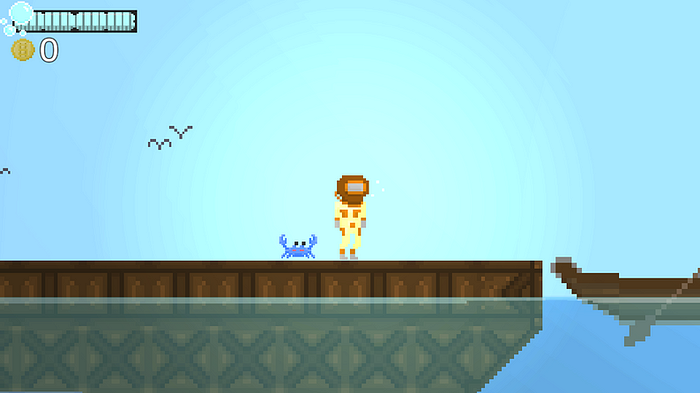
Platformer MVP
- Low-gravity 2D platformer
- Limited air gage/health depletes over time
- Health/air pick-ups
- Start and pause menu
- Fail/loss screen
- Win state
Notice above that I am keeping things as simple as possible, not focusing on a certain number of levels, music, or a boss fight. A lot of these elements you can make with time and it is perfectly fine to have stretch goals. The key is to acknowledge the risk that if you overcomplicate your features, you won't reach your deadline and have an incomplete product. Another major component is acknowledging what is essential to your product, which in this case some examples are the start and pause menus (and the win and loss states). When also laying out your MVP keep in mind what you have to use in your toolkit. At the time of this game, my main skill was pixel art, so I decided to make a 2D video game in Unity. It is important to have your ideas achievable and in a place you enjoy because that is how you reach the finish line with a successful and complete idea, and from there you can take what you learned and apply it to your next (not so) big idea.