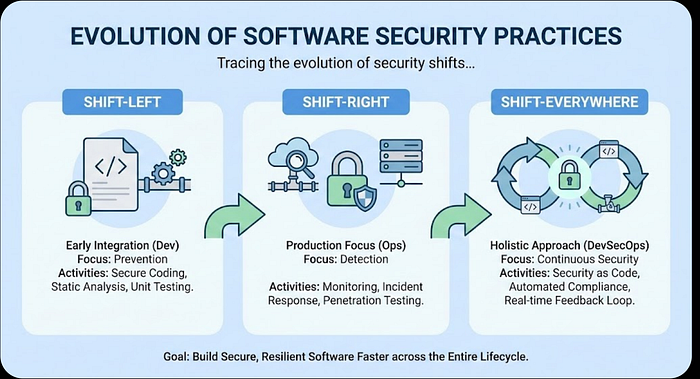
I've seen countless posts about shift-left, shift-right, and now shift-everywhere. But one thing keeps coming back to me: none of these shift's matter if the culture isn't there.
In the software world, we spend a lot of time discussing the evolution of security practices. We debate the merits of moving security earlier in the pipeline or integrating it throughout the lifecycle. However, based on recent research and industry observation, it is becoming clear that security culture, not just tools or specific methodologies, is the actual deciding factor in whether these approaches succeed or fail.
Why Shifts Alone Don't Work
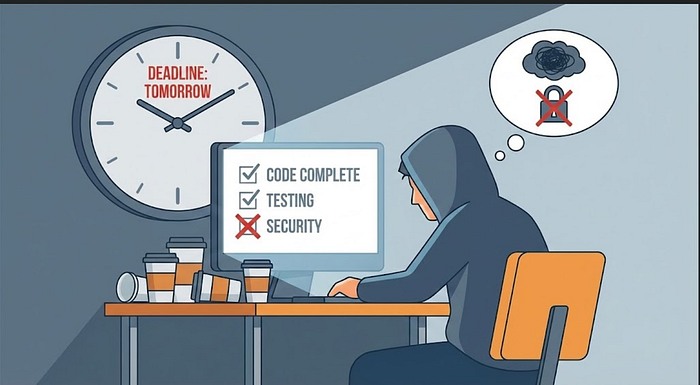
I've noticed that when pressure mounts, teams fall back on habits. If security isn't part of those habits, it gets sidelined. In crunch time, deadlines and client demands almost always override security protocols unless there is a deeper commitment at play.
This is backed by recent academic rigor. A 2025 paper from Oxford Academic highlights that developers' knowledge and motivation are critical factors. They found that even with the best tools available, it is the cultural buy-in that ultimately determines success.
Furthermore, a 2022 multivocal literature review, synthesized perspectives from industry, government, and academia. Their conclusion was stark: methodologies alone do not prevent breaches unless security practices are culturally embedded throughout the Software Development Life Cycle (SDLC).
The Role of Security Champions

So, how do we fix the culture? I've seen how one person advocating for security can shift the tone of a whole team. It is important that we emphasize that this is not about policing but modeling.
The concept of "Security Champions" is gaining traction for this exact reason. Springer (2023) published a review of evidence showing that embedding security champions within agile teams helps foster a shared culture of responsibility. Without this kind of cultural reinforcement, the adoption of secure practices will remain inconsistent.
Why Culture Matters
Businesses today face increasing complexity with microservices, AI-driven features, and distributed systems. Tools evolve, but the human element doesn't. If the mindset isn't there, the tools become optional, and optional usually means ignored.
As software complexity grows, vulnerabilities inevitably increase. Consequently, the only sustainable defence is a security-centric mindset across all roles not just among security specialists. (Remember that saying "Security is everyone's job" now we call it a "shared-responsibility" — more palatable.)
DevSecOps and the AI Era
We are entering an era where AI-driven guardrails promise enforcement, but they also bring a risk of complacency. AI can help, but it can't replace culture. If people distrust or bypass the guardrails, we're back to square one.
Rapid development cycles make the cultural adoption of DevSecOps essential. Findings suggest that without this cultural foundation, the pressures of deadlines and client demands will override security priorities every time.
No matter how we frame it, shift-left, shift-right, or shift-everywhere, security practices collapse under deadline pressure unless they are backed by a strong, shared culture.
We need to stop treating security as a methodology shift and start treating it as a cultural shift. Otherwise, history will repeat itself.
Security isn't a shift, people, it's a mindset.