

Remember the first time you prompted an AI image generator? That jolt of "Whoa, I just made… that?" was followed quickly by scrolling through dozens, hundreds, or maybe even thousands of variations. Cool, right? And slightly terrifying.
Suddenly, logos, interfaces, illustrations, and code snippets — they appear like magic. The sheer abundance is staggering. It feels like the technical barriers to creation are dissolving in real time. This inevitably leads to a quiet, nagging question whispering in the back of a designer's mind:
If AI can make anything… what's my job now?
Not a member, read for free — https://tinyurl.com/muchka82
It's a valid question. But maybe it's the wrong one. Perhaps the real shift isn't about making anymore. Perhaps it's about choosing.
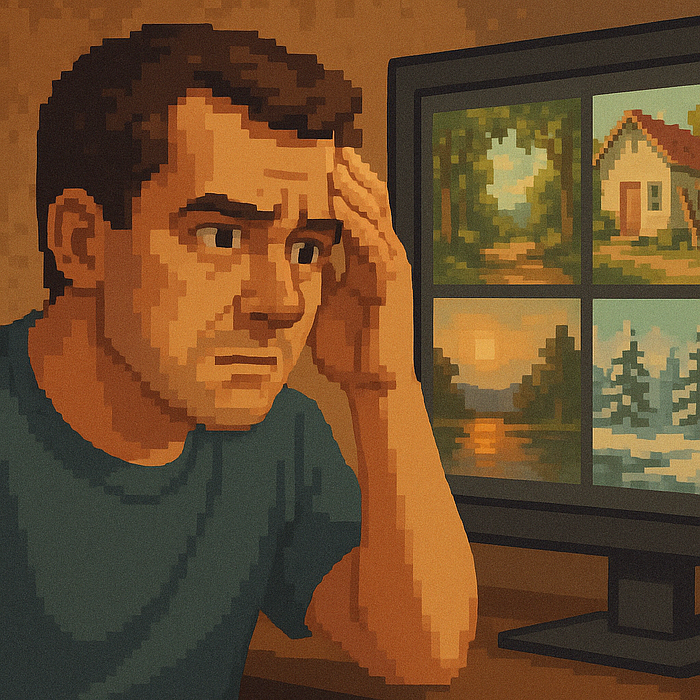
When Making Gets Easy, Choosing Gets Hard (and Valuable)
For decades, design value was heavily tied to technical skill. Mastering Photoshop, wrangling CSS, understanding complex prototyping tools — these were hard-won abilities that commanded respect (and decent day rates). Execution was the bottleneck.
AI flips the script. Tools like Midjourney, Galileo AI, and countless others are rapidly commoditizing execution. Need a hundred layout options? Done in seconds. Want variations on a theme? Here are fifty. The bottleneck isn't how to make something anymore; it's what should be made, and why.
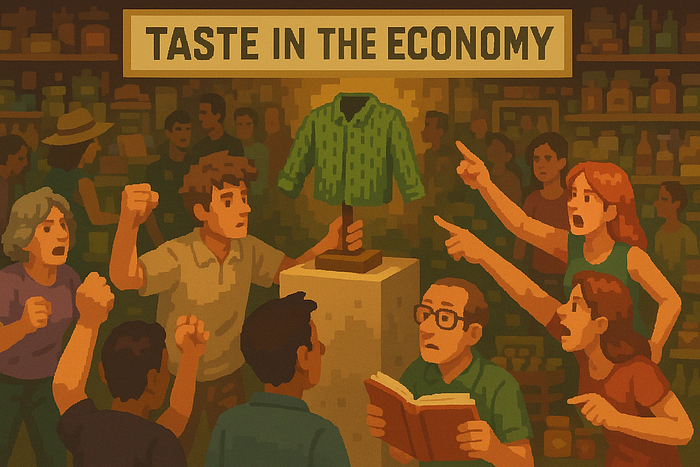
Welcome to the Taste Economy.
In a world drowning in AI-generated content, the scarcest resource isn't the ability to produce; it's the ability to discern. It's having the judgment, the context, and the curatorial eye to filter the noise, elevate the meaningful, and shape experiences that resonate beyond mere function. Your taste — that unique blend of aesthetic sensibility, cultural awareness, and strategic insight — is becoming your primary differentiator.
So, What Is This "Taste" Thing Anyway?
It's easy to dismiss "taste" as subjective fluff. "Oh, she just has good taste." But in this new context, it's far more rigorous. It's not just about liking pretty things; it's about applied judgment.
Think back to previous technological shifts. When cameras arrived, painters didn't become obsolete; they pivoted to Impressionism, focusing on human perception over perfect reproduction. When desktop publishing hit, designers shifted from typesetting to visual storytelling. AI is accelerating a similar pattern.
Good taste in this economy means:
- Seeing the Narrative: It's understanding why Airbnb's focus on "belonging" requires a certain visual language, even when AI offers technically "better" alternatives. It's anchoring choices in a core story.
- Feeling the Context: It's knowing why a generic, globally-optimized AI design might fall flat compared to a hyper-localized experience, like those Korean coffee shops creating specific moods AI can't grasp. It's reading the room, digitally and culturally.
- Calculating the Emotion: It's recognizing, as NN/g found, that AI interfaces often lack the microcopy nuances and tonal subtleties that build user trust. It's designing for feeling, not just function.
- Filtering Through Ethics: It's consciously questioning the outputs, knowing AI models can inherit biases, and making choices that are inclusive and considerate. 1 As Atomic Peace suggests, it's challenging historical notions of what's "good".
I remember wrestling with an AI-suggested color palette. Technically harmonious? Sure. Did it feel right for the brand's slightly rebellious, human-centric voice? Absolutely not. Choosing differently wasn't just preference; it was strategy. That's taste in action.
Your New AI Colleague (Who Needs a Lot of Direction)
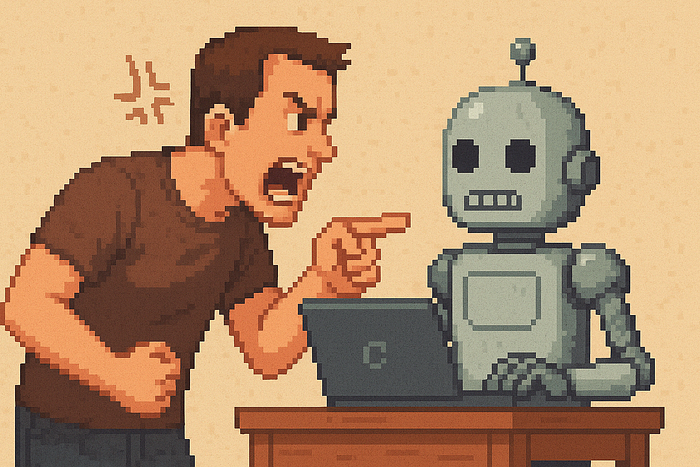
Instead of viewing AI as a replacement, think of it as a hyper-productive, slightly clueless intern. It can generate endless drafts, explore permutations you'd never have time for, and handle the grunt work. But it needs your direction, your filter, your taste.
Imagine a workflow:
- AI Drafts: Let the AI generate 100 UI variations, brainstorm 50 blog post ideas, or code ten different button styles. Volume is its strength.
- You Curate & Refine: This is where you apply taste. You sift, select, and combine. You ask: Does this align with the brand? Does it serve the user's emotional need? Is it contextually relevant? Does it have that spark? Maybe you reject 99 variations, like Stripe's team nixing AI font pairings lacking "mathematical beauty." Your judgment is the value-add.
- You Add the Soul: You inject the human element — the witty microcopy, the unexpected interaction, the ethical consideration.
AI provides the options; you provide the opinion. AI provides the quantity; you provide the quality.
Okay, So How Do I Get More… Taste?
Taste isn't mystical; it's a muscle. It strengthens with intentional practice. Forget just "doing the work" and start thinking about the work.
Here are a few places to start:
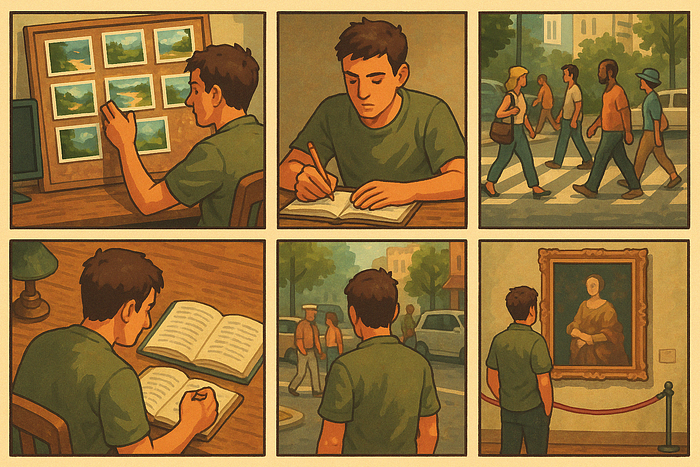
- Curate Actively, Not Passively: Don't just scroll. When you save something to your swipe file (or Are.na board, or wherever), write down why. What specific element works? What feeling does it evoke? What principle does it demonstrate? Deconstruct, don't just collect.
- Document Your 'Why': Get religious about articulating the rationale behind your design decisions. In Figma comments, in Notion docs, even in commit messages. Why this grid? Why this transition? Why this option over the AI's suggestion? This forces clarity and builds your "taste narrative." It's what teams are starting to value, like documenting why AI options were rejected.
- Feed Your Brain Beyond Design Trends: Read fiction. Visit museums. Study history. Understand different cultural contexts. Dive into psychology. Taste thrives on broad inputs and understanding the messy, wonderful complexity of being human — something an algorithm can't replicate (yet).
- Start your Taste log: Every time something catches your eye — a product, a layout, a moment — save it. Then write why it worked. One sentence. That's it. Use app like MyMind to create a database of your taste.
The Last Truly Human Art Form?
The rise of AI in design isn't the end of creativity; it's a refocusing. It pushes us away from being mere technicians and towards becoming curators, strategists, and guardians of human experience.
The hard part is no longer just making it work; it's making it matter.
As AI handles more of the how, our greatest value lies in the why and the what. In a world flooded with synthetic creations, the ability to choose with intention, to imbue work with meaning, and to connect with users on an emotional and cultural level isn't just a nice-to-have. It's everything.
So, the next time you feel a pang of anxiety about AI, remember: it can generate infinite options, but it can't care. It can't understand context like you can. It doesn't have your unique perspective, your empathy, your taste.
That's still your job. And it might be the most important, most human, and most valuable job you'll ever have.