

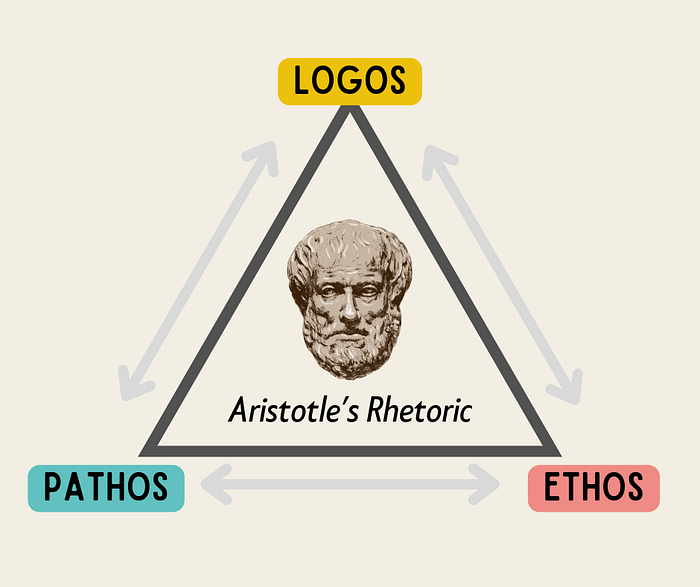
In ancient Greece there lived a philosopher and polymath named Aristotle.
Aristotle wrote on a broad range of subjects — from natural sciences to philosophy to linguistics — and wrote a number of treatises that were never intended to be published.
One such treatise was called Rhetoric, which was a collection of his students notes in response to his lectures. In Rhetoric, Aristotle developed his theory on the Art of Persuasion, which faced tremendous criticism from the philosophers of the time and was termed nothing less than "immoral, dangerous, and unworthy of serious study".
Thankfully, his ideas stood the test of time, and in the last 2000 years the Rhetoric heavily influenced the development of rhetorical theory from ancient through modern times.
"The most important single work on persuasion ever written." — most rhetoricians on Aristotle's Rhetoric
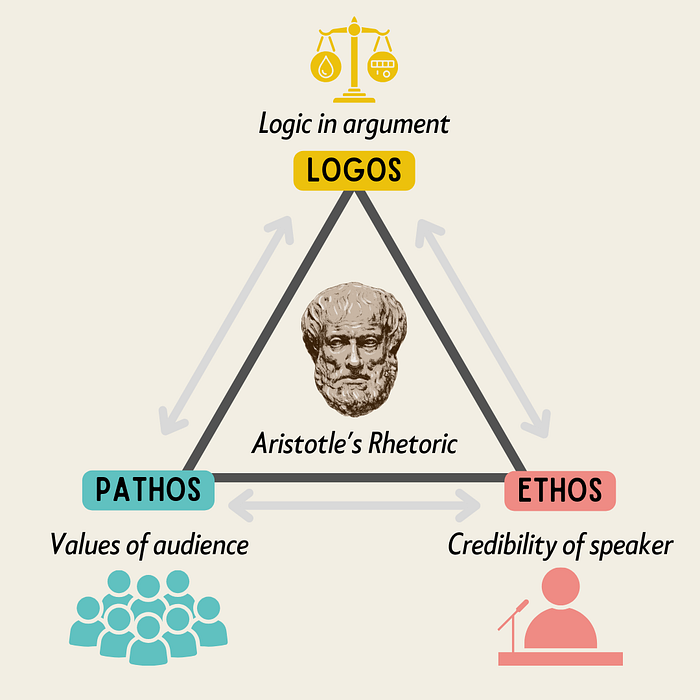
In this article, I will discuss Aristotle's Rhetorical Triangle, which comprises of three basic kinds of appeals that a speaker can use to persuade their audience (Ethos, Pathos and Logos). We will discuss the importance of these elements in the context of modern-day communication, and how you can leverage this timeless principle to level-up your persuasion skills as a leader.
Ethos
"To be persuasive we must be believable; to be believable we must be credible; to be credible we must be truthful." — Edward R. Murrow
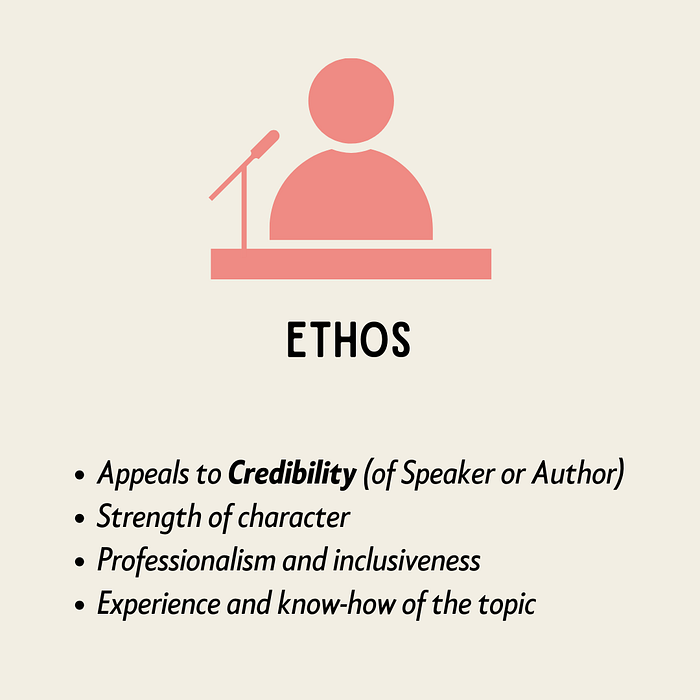
The first element of the Rhetorical Triangle is Ethos, which appeals to the credibility of the speaker or writer.
Modern day studies have revealed that the credibility and experience of the speaker plays a critical role in the outcome of a persuasive argument.
Have you wondered why it is harder for an un unknown or upcoming startup to get funding compared to an established firm? It all goes back to the credibility.
As a leader, when you are presenting to influence your stakeholders, you need to consider a number of factors:
- What skills or experience make you qualified to speak on this topic?
- How strongly do you genuinely feel about this topic? (note that smart audience can tell when you are faking your enthusiasm)
- Why should the audience trust you?
- What makes you credible and reliable?
Pathos
"When dealing with people, remember you are not dealing with creatures of logic, but creatures of emotion." — Dale Carnegie
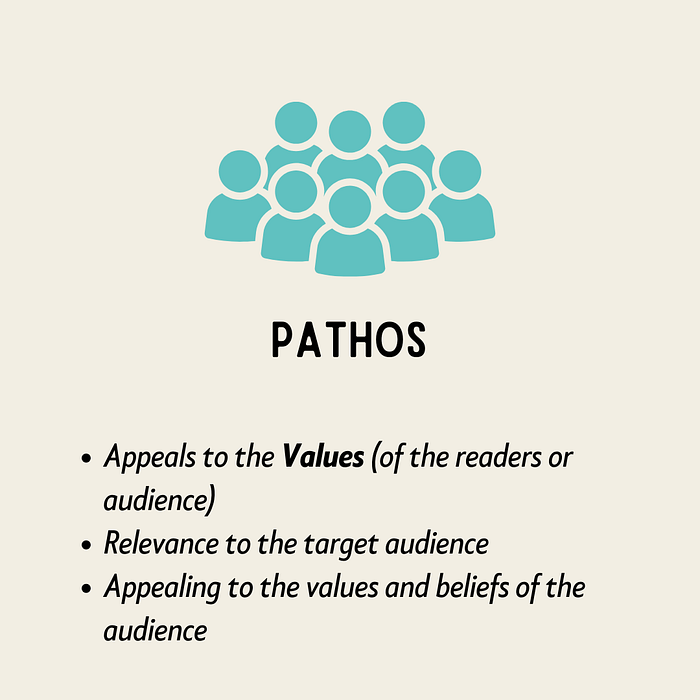
The second element of the Rhetorical Triangle is Pathos, which appeals to the values of the audience.
Humans are emotional beings, and to effectively persuade you need to tap into your audience's emotional senses.
You need to understand your audience, and know what they want and care about. There is no point delivering a tactical and deep-dive presentation to an executive, or a strategic presentation to a junior employee.
When you deliver an argument to your stakeholders, you should consider these factors:
- Do you know who your target audience is? What are their values, and what do they care about?
- Are you using words, language and images that are relevant to your target audience?
- Are you using examples, stories and data that the audience will be able to relate to?
Logos
"Logic is invincible, because in order to combat logic it is necessary to use logic." — Pierre Boutroux
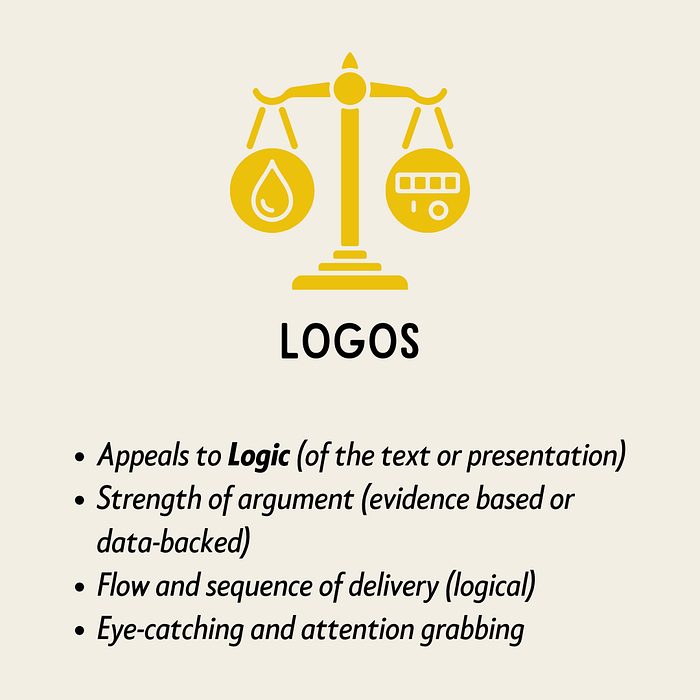
The third and final element of the Rhetorical Triangle is Logos, which appeals to the logic of the argument.
No matter how strong your credentials, or how relevant your presentation may be, you cannot ignore the strength of the argument itself.
Logos focuses on the content (or text) of the presentation — what is being said, what is being shown, and the flow and sequence of the delivery.
When delivering your argument or presentation, you should consider the following factors:
- Is your argument clear, concise and to-the-point?
- Do you have strong data / evidence to back up your argument or point?
- Have you arranged your argument in a logical, easy-to-follow order?
- Will you audience "get" the point you are trying to bring across?
Bringing it Together: Aristotle's Rhetorical Triangle
"The success of your presentation will be judged not by what you say, but what your audience hears." — Unknown
In this article we discussed the Art of Persuasion as proposed by Aristotle in the 3rd Century BC via his treatise Rhetoric, and popularly known today as Aristotle's Rhetorical Triangle.
There are three elements of the triangle, namely:
- Ethos appeals to the credibility of the writer or speaker. As a speaker, you need to demonstrate your credibility and command on the topic through your skills and experience.
- Pathos appeals to the values of the audience. As a speaker, you need to know your audience, and understand their values and emotions so you can tailor your story and argument accordingly.
- Logos appeals to the logic of the argument. As a speaker, you need to have the data and evidence to back up your argument, and make sure you deliver your message with a logical flow that makes an impact.
So, next time you write an email or deliver a presentation, ask yourself if you are tapping into the three elements effectively.
- Are you demonstrating your credibility so that your audience can trust you with the subject being presented?
- Are you speaking in a language that the audience can emotionally connect with?
- Are you backing up your argument with evidence and logic?
Needless to say, the three elements are not mutually exclusive. In fact, they are interrelated and influence each other. For example, if you share a data-backed argument, that will not just appeal to the logic of the argument (Logos), but also strengthen your credibility as a speaker (Ethos).
Like my writing?
- I would appreciate some claps👏 and a follow (Gaurav Jain) as a form of encouragement. Thank you!
- Subscribe to my newsletter to get exclusive access to leadership tips, tools and advice that will help you grow in your leadership journey.
- Check out my recently published book The Ultimate Leadership Toolkit in which I summarize Aristotle's Rhetoric along with 50+ essential leadership frameworks.
- Feedback is a gift! I would love to hear your thoughts and suggestions in the comments below 🙏
- Check out my profile for other ways to connect with me.
Related reading: