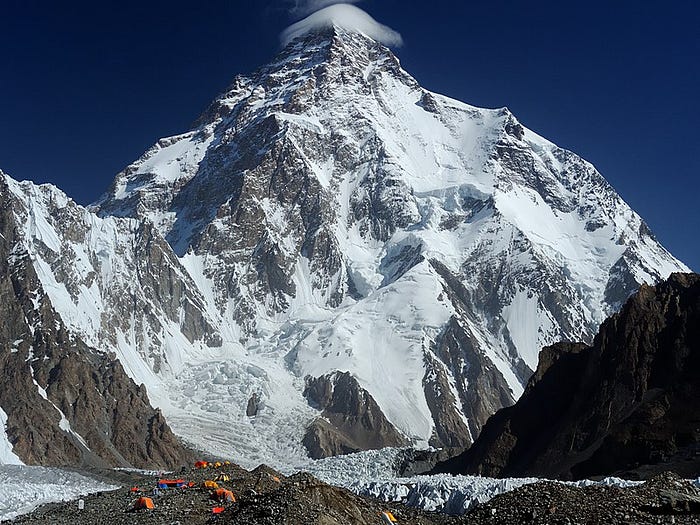
K2: The Savage Beauty of the World's Second-Highest Peak
K2 is known as the "Savage Mountain." It is the world's second-highest peak at 8,611 meters or 28,251 feet above sea level. Situated on the border between Pakistan and China in the Karakoram Range, K2 is not only extreme due to its height but also challenging and perilous conditions for climbing.
Geographic and Geological Features
K2 lies in the Karakoram Range, divided by parts of Pakistan, India, and China. Climatic conditions for this location are extreme with winds of gusts, low temperatures, and frequent storms. K2 is much steeper and technical as compared to Mount Everest because sharp ridges, treacherous rockfalls, and glaciers have to be crossed.
This mountain is flanked by other important peaks including Broad Peak, Gasherbrum I, and Gasherbrum II that make the region even more notorious as one of the toughest places to climb.
Climbing History
Italian climbers Achille Compagnoni and Lino Lacedelli were the first ones to successfully ascend K2 on July 31, 1954. Despite its numerous attempts, however, the highest attempt was actually way back in the late 19th and early 20th centuries due to the brutal weather, steep faces, and high-altitude conditions that normally cause setbacks for the climbers.
K2 has seen both successful and tragic expeditions. The most famous tragedy was in 1986 when climbers from different countries lost their lives trying to get to the summit. K2 is much more dangerous than Everest due to the harsh conditions and the technical difficulty of climbing.
Technical Challenges
Factors that make K2 a difficult climb include:
1. Steep Slopes: K2 is steeper than Everest and provides more sharp ridges and faces, a bit advanced in terms of mountaineering techniques.
2. Weather: For K2 being part of the Karakoram Range climber gets exposed to wild extreme weather such as snowstorms, freezing temperatures as well as winds, a condition that might make K2 an even more challenging climb.
3. Avalanches and Rockfalls: The unstable steepness of the land aside from the unstable snow causes frequent rock fall and avalanches that do not help in mitigating danger while climbing.
4. Altitude: K2 does not make an exception from problems related to mountaineering at high altitude that includes low oxygen levels; it builds up fatally to a point where even breathing or thinking is problematic as well as the muscle power.
The "Savage" Reputation
K2 is, therefore, considered the "Savage Mountain" owing to having had one of the highest killing ratios that have ever occurred in mountain climbing. Despite all technological and infrastructural modernizations, Everest still has a comparatively better success ratio than that of K2, while only about 400 successful climbers have scaled it. More than 80 climber deaths have been reported climbing it.
The mountain's difficult conditions, steep climbs, and unpredictable weather make it a not-so-easy destination. Its top is indeed the true challenge for mountain climbers, both in the physical and technical aspects.
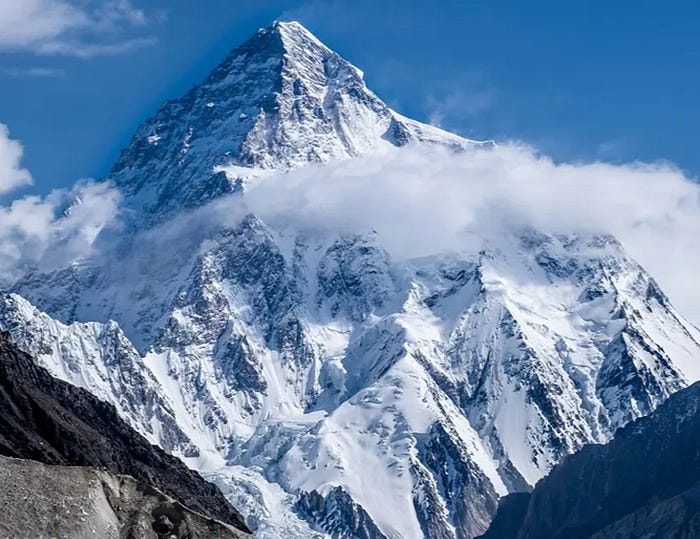
The Modern Climbing and Conservation
With improved climatic forecasting, advancement of climbing technology, and improvement of mountaineering gears through the years, it can be noted that a lot of climbers managed to reach the top, but K2 is far from being a common ground for frequent commercial expeditions that are found in abundance at Mount Everest.
Climbers continue climbing K2, opening up new routes and innovative ways to summit. This increased interest in high-altitude climbing increases the concern that expeditions may pose over the environment, especially concerning sensitive ecosystems like the Karakoram Range.
Role of K2 in Mountaineering Culture
K2 is a place that sits in the annals of mountaineering history, with technical difficulties and tales of those who conquered and succumbed to its deadly call. The remote and inhospitable environment of the mountain is inspiration for human perseverance, risk-taking, and a quest for adventure.
K2 does not rank as the tallest of the world's summits but, in the inclusion of these elements of physical difficulties and danger and ruggedness to beauty, ranks perhaps more dearly than any other mountaineering summit.
Conclusion
There can be no denial of the lure about K2. It testifies to the dangers and rewards of high-altitude climbing. For climbers attempting to climb it, K2 is the final examination on the skills, determination, and survival. Yet it still stands as a peak in which people fear and respect, awe-struck, by every ascent into its kingdom of ice, reminding mankind of the fragile balance between human ambition and the powers of nature.