

Several months ago, there was a right-wing kerfuffle generated when it emerged that my alma mater, the U.S. Military Academy at West Point, had removed the words "Duty, Honor, Country" from its official mission statement. This was depicted by some as evidence of the damaging impact of "wokeness," or (somehow) the continuing campaign of those committed to "diversity, equity, and inclusion" (DEI), or something else concocted by the ever-threatening "deep state."
As with most things advanced by the right-wing supporters of Donald Trump, such assertions were baseless, frivolous, and — simply stated — silly, for numerous reasons.
First, "Duty, Honor, Country" is the Academy's motto, arguably the most famous and frequently cited college motto in the country — perhaps because it is not a Latin phrase. Were it not so notable, no one would have noticed its removal from the mission statement. But the removal was truly much ado about nothing.
When I was a cadet, over fifty years ago, "Duty, Honor, Country" did not appear in the Academy's mission statement. How do I know? Because we were required to memorize the mission statement. As for why the motto was inserted into the mission statement in 1998, I remain quite unsure. And I am equally unsure why it was recently removed. But a motto is too short to be considered a comprehensive mission statement, and a mission statement is not the place for a three-word motto.
Second, as I told the current Superintendent of the Academy, Lieutenant General Steven W. Gilland, when young graduates, such as my contemporaries and me a half-century ago, exit West Point after graduation no one drives out the main gate thinking about the Academy's mission statement. That is a formal directive for the Superintendent, the Commandant (who oversees the cadets' military instruction), and the Dean (who oversees their academic education). The motto is for the cadets and the Academy graduates, and becomes enshrined in their very being.
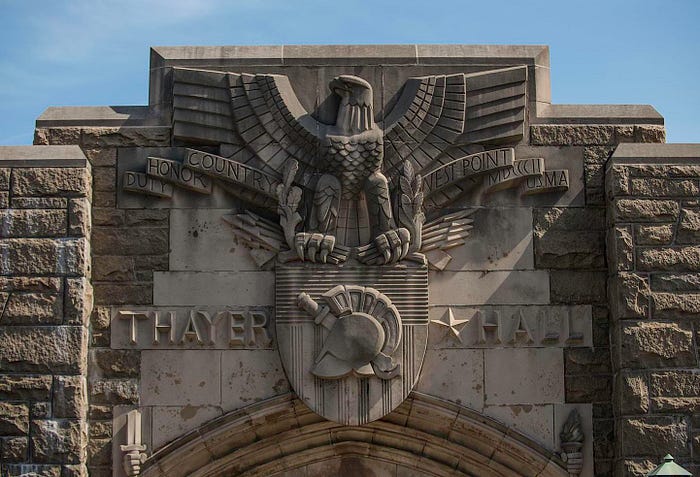
Lastly, as Brigadier General (Retired) James T. "Ty" Seidule, the former Head of the West Point History Department has put it, "You can't throw a shot put on West Point without hitting something that says 'duty, honor, country'." The Academy motto is literally carved in stone in numerous buildings around the Academy grounds, it's on the headgear the cadets wear daily, and it's prominent in the Academy's official crest.
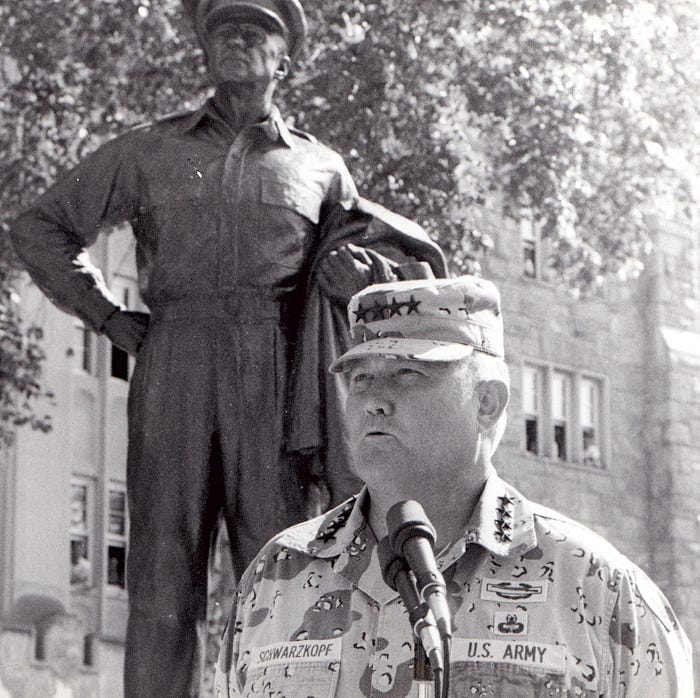
But this motto does have an almost spiritual purpose, and perhaps the best description of its enduring power was delivered in May 1991 by General H. Norman Schwarzkopf, class of 1956, during his visit to the Academy shortly after his return from Saudi Arabia following his command of Operation Desert Storm. Speaking to the Corps of Cadets gathered in the Academy's cavernous Eisenhower Hall, Schwarzkopf said:
"If you leave here with the word 'duty' implanted in your mind; if you leave here with the word 'honor' carved into your soul; if you leave here with the love of 'country' stamped on your heart; then you will be a 21st century leader worthy of the great privilege and honor that you will have… of leading the magnificent young men and women who are the sons and daughters of America, and who were the thunder and lightning of Desert Storm."
Schwarzkopf's words brought to mind those of General of the Army Douglas MacArthur that he delivered twenty-nine years before to an earlier Corps of Cadets, when he had intoned in his famous baritone voice, "Duty, Honor, Country — those three hallowed words reverently dictate what you ought to be, what you can be, what you will be." Every class that has graduated since MacArthur's speech has heard, many time over, the recording of his comments.
As Lieutenant General Gilland stated with much less emotion the night he and I had our brief discussion about the motto's removal from the Academy mission statement, "At West Point 'Duty, Honor, Country' isn't going anywhere." And it hasn't. And as Ty Seidule accurately noted, being carved in stone, it can't.
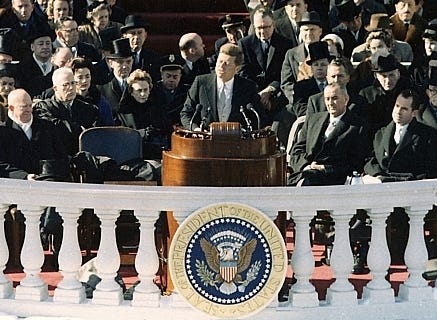
So, why do I bring this relatively small, mostly localized item to the fore? Because it has large implications. Very soon the country will engage in what President John F. Kennedy described as a "celebration of freedom." By that he meant the privilege and the honor we have, under our constitutional system, to every four years go to the polls and elect our national leadership. Never in our nation's electoral history has the choice been so stark, one between candidate Kamala Harris, who understands "Duty, Honor, Country," and candidate Donald Trump, to whom the words and concept are totally foreign.
Trump has demonstrated on numerous occasions that he has no sense of "duty." That absence was on vivid display early in his life when he went "doctor shopping" to find a physician willing to diagnosis him as disqualified for draft induction and military duty. And he found one who diagnosed the debilitating problem of "bone spurs."
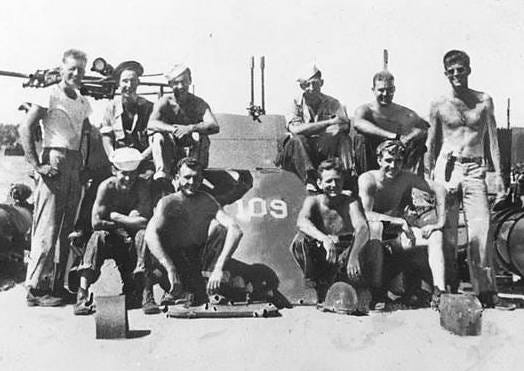
There was precedent, of course, as President Kennedy did his own "doctor shopping" when a young man while World War II was in full flame. But Kennedy's effort was to find a doctor to clear him for military service rather than fabricating a physical deficiency excusing him.
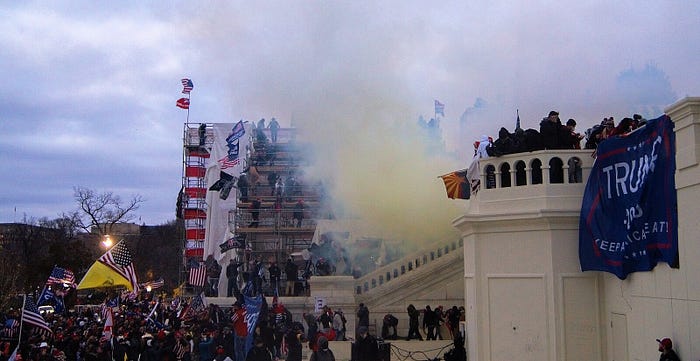
But there could be no greater example of shunned duty than Trump's actions — and inactions — on January 6, 2021, when the mob he had summoned to Washington stormed the U.S. Capitol attempting to stop the electoral vote count making Joseph R. Biden the next president and Donald Trump an ex-president.
Trump absolutely has no sense of "honor." His business illegalities are enormous, and his personal behaviors outrageous. His lies are constant extending from his actual height and weight to his tax returns to the size of his inaugural crowd to… you name it. If he's said it, then it's almost certainly untrue. Since 2017, The Washington Post has scored him with over 30,000 lies. That number is more likely conservative than over-stated.
No other presidential candidate in American history has been impeached twice for official misconduct, nor has any other candidate been found guilty on numerous counts of felonious behavior, nor found liable for sexual assault. In neither professional nor personal behavior has Trump displayed behavior that fits the definition of "honor."
And as for "country," Trump sees no issue in which the interests of the country are paramount to his own. The very idea that there exists something with an importance greater than himself is beyond his emotional composition. As demonstrated with his shameful avoidance of military service, Trump is John Kennedy turned on his head. Trump's call will always be, "Let's see what my country can do for me." Or perhaps as most recently expressed, "What my country will let me get away with."
The West Point motto provides a moral compass. Near the end of his famous speech, MacArthur said of the famous motto, "Its requirements are for the things that are right, and its restraints are from the things that are wrong." Donald Trump recognizes neither requirements nor restraints. He does not feel that laws, regulations, rules, nor the common behavioral norms apply to him. He is incapable of distinguishing the "the harder right from the easier wrong," a compelling corollary to "Duty, Honor, Country" found in the cadet prayer. This well illustrates why Trump could have never survived a day as a West Point cadet, why he should never have been president, and why he must never be again.