

Ever dreamt of a React app that chuckles at bugs and scoffs at spaghetti code? Let's embark on a journey to create a React app so robust it could survive an apocalypse of bad coding practices.
In those novice days, my code resembled a wild creature — functional, yet utterly chaotic. The project structure, if you could call it that, was a disorganized mess. It sufficed for my humble beginnings, but as the project grew, so did the complexity, and chaos ensued.
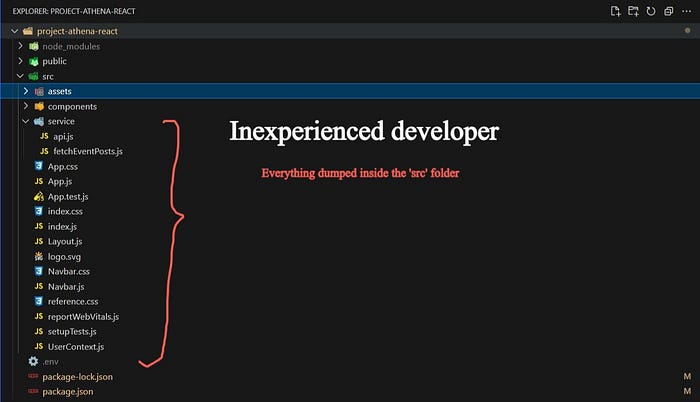
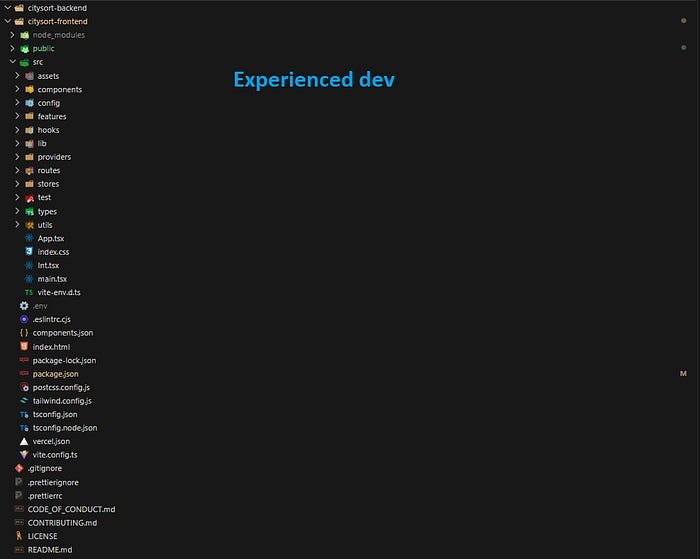
With each expansion of the project, finding a specific piece of code became a quest akin to searching for a needle in a haystack, only to realize that the needle was a variable aptly named 'needle' buried somewhere deep in the code.
Take the time to learn how to structuring your React project before your codebase transforms into an unsolvable mystery novel.
How a project should look like:
src
|
+-- assets
|
+-- components
|
+-- config
|
+-- features
|
+-- hooks
|
+-- lib
|
+-- providers
|
+-- routes
|
+-- stores
|
+-- test
|
+-- types
|
+-- utils componenets: Shared components that grace the entire kingdom
config : The vault of global configurations, env variables, and secrets
features : Feature based modules
hooks : Mystical hooks, shared across the entire realm
libs : re-exporting different libraries preconfigured for the application
providers : Keepers of the application's life force, the providers
routes : routes configuration
stores : global state stores
test : The arena of trials, where utilities and mock servers prove their mettle
types : base types used across the application
utils : shared utility functions
— — — — — — — — — — — — — — — — — — — — — — — — —
Now, let's descend into the heart of a feature.
src/features/my-new-feature
|
+-- api         # Declarations and API hooks, a symphony of requests for this feature
|
+-- assets      # Treasures specific to the awesome feature
|
+-- components  # Components, artisans sculpting the visual identity of the feature
|
+-- hooks       # Hooks, magical spells woven into the fabric of this feature
|
+-- routes      # Paths leading to the feature's pages, a roadmap of wonder
|
+-- stores      # Keepers of state, guarding the feature's sacred truths
|
+-- types       # TypeScript types, a lexicon for the feature's domain
|
+-- utils       # The craftsmen, building utility functions exclusive to this feature
|
+-- index.ts    # The grand entrance, the public API of this feature, revealing its essence
The index file
Everything from a feature should be exported from the index.ts file which behaves as the public API of the feature.
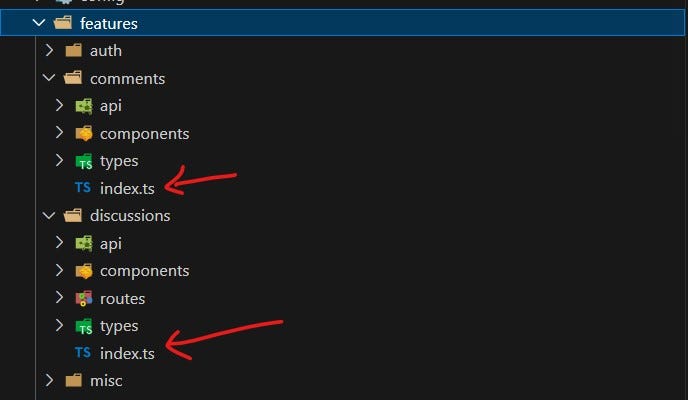
You should import stuff from other features only by using:
import {AwesomeComponent} from "@/features/awesome-feature"
and not
import {AwesomeComponent} from "@/features/awesome-feature/components/AwesomeComponent
Set up absolute imports!
Absolute imports can make your import statements cleaner and more readable. They also help in avoiding long relative import paths.
//  jsconfig.json/tsconfig.json
"compilerOptions": {
    "baseUrl": ".",
    "paths": {
      "@/*": ["./src/*"]
    }
  }
Remember, every developer, seasoned or fledgling, has danced the maddening tango with spaghetti code. But with structure comes clarity, and with clarity comes the power to wield React with finesse.
So, as you forge your own path in the realms of frontend development, let this blueprint be your guiding light, your treasure map to organized brilliance. May your React projects chuckle at bugs, scoff at chaos, and stand firm in the face of coding calamities.