
Throughout history, and even last Thursday, there have always been people who have attained mastery — a deep, enduring competence in a skill, craft, or field.
Some of these people have not only attained incredible wisdom and know-how, they have also made it their life's work to guide others on their own journeys — providing all kinds of teachings, inspiration, and support.
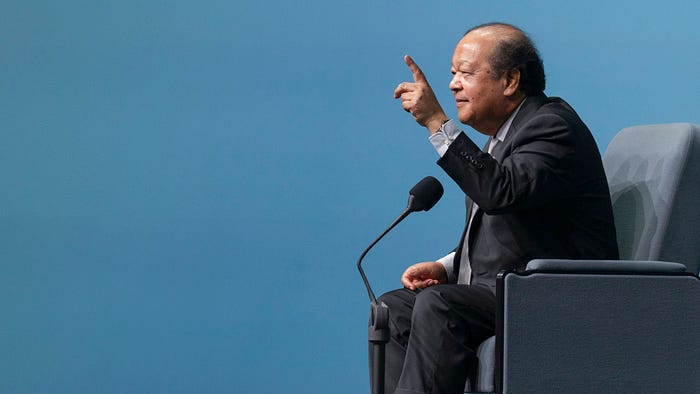
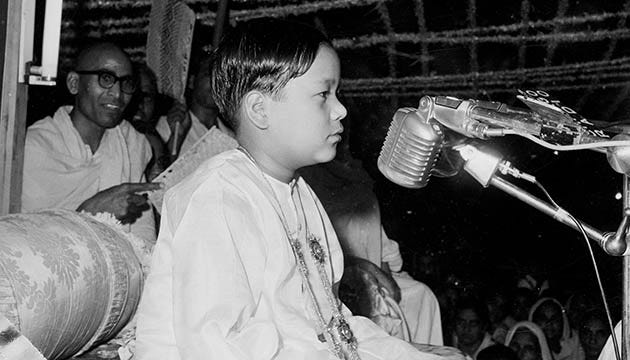
When I was 23, I heard about someone who fit this description — Prem Rawat — a young boy from India who was only 13 at the time. There was something about him that I found stunningly compelling. What he was communicating in such an easy-going way cut through the Gordian knot of my own concepts and complexity.
The Experience of One's True Nature
Soon after tuning into what he had to say, I took him up on his offer and received what he referred to as "Knowledge," the direct experience of my own true nature — that which was completely radiant, real and alive within me.
But not only did Prem help me connect with this experience, he also taught me how to stay in touch with it as I went about my daily life.
"There's only one kind of peace — not true peace or false peace — but the peace that comes from within you — that emanates from within you." — Prem Rawat
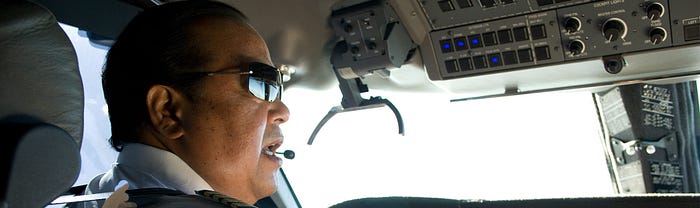
Everyone who has come into contact with him seems to have their own way of describing him. To his wife, for example, he is a husband. To his children, he is a father. To his employees he is a boss. To air traffic controllers, he is a pilot. To his students, he just is.
The Plot Thickens
Of all the names people have used to refer to Prem Rawat over the years, the one that's been the most difficult to understand is "Master" — a word commonly used in Eastern countries, but much less so in the West.
In the East, the word "Master" is used as a term of respect for someone who has demonstrated a high degree proficiency in a given field — someone who has attained mastery. In the West, however, the word "Master" usually pushes people's buttons.
When some people hear the word "Master," they think only of its negative connotations. And yet, in the West, there are also many positive connotations of the word depending on the context in which it is used.
For example, when a person has achieved a high degree of mastery in their field they are commonly referred to as a "master." Indeed, there are master carpenters, master electricians, master plumbers, master mechanics, master conductors, and master martial artists.
Apprenticeship
People who aspire to develop mastery often seek out a master to apprentice with, wanting to learn everything humanly possible from that very accomplished person.
Each master, of course, has their own personality, teaching style, and ways of relating to their students. Some are tough. Some are easy going. Some are neither. And some are both. And yet, for the aspiring apprentice, their relationship to the master in their chosen field is considered to be a great boon — the fast track to in-depth learning, insight, and know-how.
Every culture has their own favorite word for "master." In Italy, for example, the word is "maestro," an honorific term of respect usually associated with an eminent composer, conductor, or teacher of music.
Maestros
Arturo Toscani was considered to be a maestro, as was Leonard Bernstein, Sir Simon Rattle and many others. And while the word "maestro" was first used to describe conductors of the highest order, it has been used to describe artists, as well. Leonardo da Vinci was a maestro, as was Rembrandt, Michelangelo, Titian, Modigliani, Monet, and Picasso.
Which brings us to the question of the moment: If a master is someone who has achieved mastery, what then is mastery?
"Only one who devotes himself to a cause with his whole strength and soul can be a true master. For this reason mastery demands all of a person." — Albert Einstein
Most dictionaries include two definitions of the word. The first is "comprehensive knowledge or skill in a subject or accomplishment." The second has a negative connotation: "control or superiority over something or someone."
Few people want to be controlled by someone else — not the government, their parents, politicians, employer, or spouse. Most of us deeply value our independence and right to choose for ourselves. Indeed, this is part and parcel of what it means to be a mature human being — someone who has sovereignty over their own life.
Now here's where it gets really interesting.
Paying attention to the conductor
If you are a violinist in an orchestra that a maestro is conducting, it is a given that you, no matter how proficient you might be on your instrument, will pay attention to the maestro's guidance. Regardless of their personality or mood of the moment, you understand that the person with the baton in their hand has a great gift for eliciting the best possible music from you and the rest of the orchestra.
You understand that the maestro's direction is designed to honor the genius of the original composer whose music you are playing in order to deliver a soul-stirring performance.
If the conductor gives you the signal to play softer or more slowly, you will respond accordingly — not because they are "asserting power over you," but because you know they have a perspective and proficiency to produce an extraordinary result.
The art of sparking mastery in others
Ultimately, a real master is a someone who is dedicated to sparking mastery in others. That's the end game. Their efforts are all about increasing the odds of everyone they come in contact with fulfilling their highest potential.
"I want you to have the same experience I'm having." — Prem Rawat
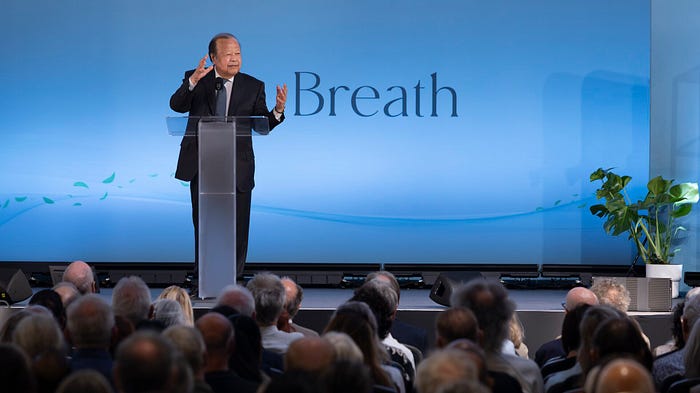
This is a master's grand opus — to do everything in their power to help people become free of whatever is limiting the full expression of their human potential.
How Prem Rawat refers to himself
"I am just a human being," he has said on more than a few occasions. "I am a mirror," he has also said — "a way for people to see who they truly are."
And yes, he too has apprenticed with someone. He too had a teacher — someone recognized to have attained an extraordinary level of mastery, a person considered by many to be a Master — and that was his own father, Shri Hans Ji Maharaj.
In the end, no one can tell you who Prem Rawat is. You will need to figure that out for yourself. The ball, as always, is in your court.
"Don't simply believe my words; test them against your experience, not your theories." — Prem Rawat
Learn more about Prem Rawat and Self-Knowledge
Seven Ways to Describe Prem Rawat
Prem Rawat Official YouTube Channel
Peace Education and Knowledge (PEAK) — Prem's free online course
Thanks for reading! Feel free to sign up to receive email alerts whenever I publish on Medium.
CONTACT: mitch@ideachampions.com