

When it comes to our bodies we women are definitely our worst critics. Nothing is ever right, breasts are too small, waist is too big, legs aren't lean enough, and our back-ends are just all wrong. Satisfied isn't in our vocabulary. Every part of us should be perfect — we want to be the ideal woman.
Ideal? What does that mean, anyway? The Oxford Dictionary defines ideal as "Satisfying one's conception of what is perfect" See, it's all about what YOU perceive to be perfect. So all you have to do is realize what you are right now is the ideal. Even if you don't feel you fit in with today's fashion, historically you fit in somewhere. Just take a look at a few different periods in history, and you'll realize how wonderfully made you really are.

Are You Perfectly Plump?
Just check out the Venus of Willendorf. This famous figure found in 1908 at Wilendorf, Austria is over 20,000 years old. Archeologists believe the four-inch statue to be a symbol of fertility, seeing how emphasis was placed on the body parts most necessary to reproduction. Procreation was essential to prehistoric man, so a full womanly figure was considered the creme de la creme of female beauty at the time. Notice the thigh gap was obviously not in style at this point. Oh and the name, Venus? Of course, that's another name for a goddess, so if this is you, congratulations on your goddess status.
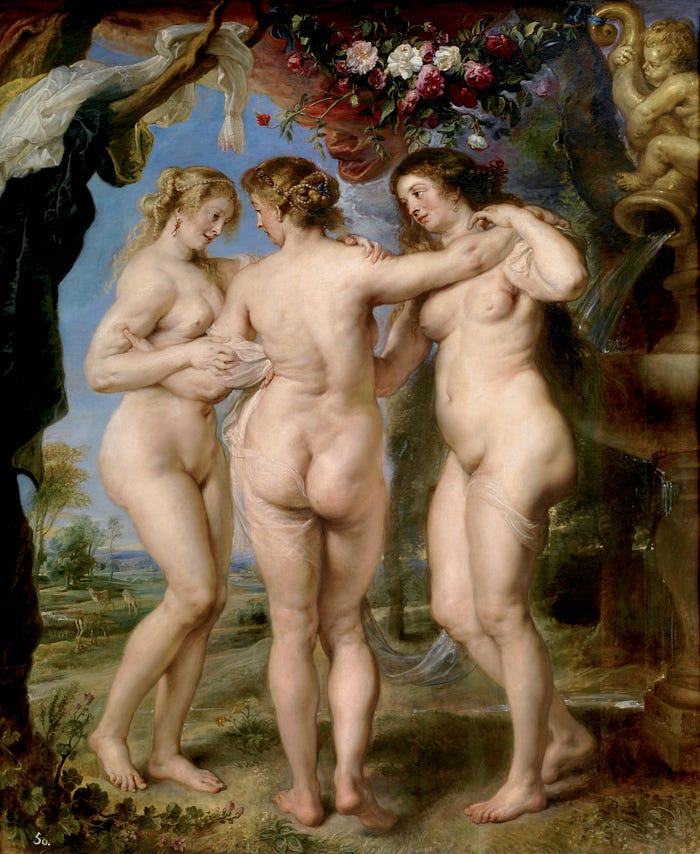
A plump, round body wasn't just popular in prehistoric days. If your body type is a little more rounded and curvy, you might want to consider yourself as Rubenesque. No, this doesn't mean you've eaten one too many Reuben sandwiches in your lifetime, it refers to the famous 17th-century Flemish painter, Peter Paul Rubens. In fact, Rubens is almost more popular for the type of woman he depicted then for his artwork itself. It was already the fashion of the day for women to be voluptuous, Rubens, therefore, took what was already popular and glorified it in his artwork.

Carry Most of the Weight on Your Bust and Hips?
You, my dear, are the ideal Gibson girl. Charles Dana Gibson was a popular pen and ink artist during the late 19th and early 20th centuries. Based on his wife and her sister Nancy, Gibson's images encompassed what Victorians thought to be the ultimate in feminine beauty. (Incidentally, Nancy was the first woman to serve in the British House of Commons.)
The perfect Gibson girl was tall and although slender, she was well endowed in the bust, hips and behind. Those super slim waists were totally fake, and couldn't be achieved without the use of soul-sucking tight corsets. You, however, don't need to go that far. Just remember the Gibson girl was fashionable, calm, independent, and full of spirit. You've so got this.
Not that curvy?
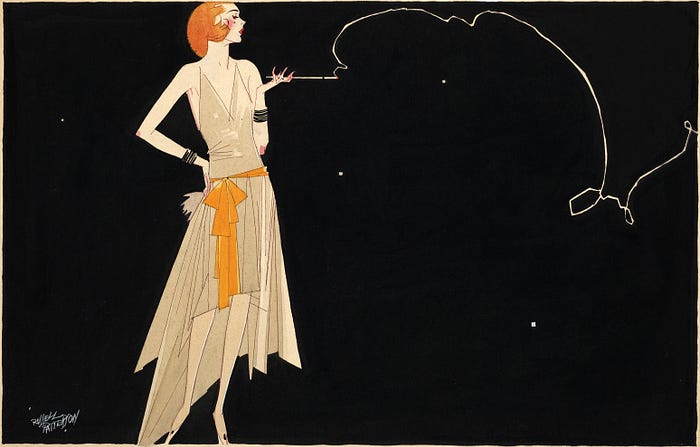
Boyish, youthful, straight figure with not a lot at the top? All hail the flapper girl! It was the roaring twenties and the idea of the oh so delicate female was out. Curves at this time were a no-no, so much so that women would often bind their boobs in order to make them appear flatter. Got a long neck? In the flapper era considered you very elegant. Dresses were cut with low waistlines and were loose fitting in order to help create that coveted long narrow appearance.

Forget the Large Bust and Hip Thing, You're Beautiful Without it.
If your yelling hooray for small tata's you'll be pleased to know they were popular in the 16th century as well as the 1960's. During the reign of Queen Elizabeth I beauty once again took on a more androgynous form. The Queen herself wasn't the most endowed woman on the planet but it didn't stop her from being a trendsetter in the field of fashion. Quick-wit and high intelligence were marks of this queen. Obviously, bust size has nothing to do with the size of your brain.
Fast forward to 1960 and say hello to another move away from the matronly figure. This time it revolved around the decade's top fashion model Twiggy. Born Lesley Hornby, she was given her new moniker because, well, she was as straight and skinny as a stick. She became a model at the age of 17 and within 6 months women of all ages were trying to imitate her look. There was one slight problem with all these skinny fashions, incidents of anorexia rose sharply. If you're naturally more of a Twiggy than a Venus of Willendorf, than by all means embrace it. Just don't make yourself sick trying to be something you're not.

So Rejoice!
Your body fits the gold standard! So what if it's not exactly on point for today, the ideal will never be static. What's in today will be out tomorrow, why let something so fluid dictate your happiness? Your perception of perfect is what matters, so go ahead, be confident in your body, be your own ideal.
Who knows, you might just be the one to change the direction of tomorrows fashion.
Sources:
https://www.pariscultureguide.com/peter-paul-rubens.html
http://www.thenagain.info/WebChron/World/Willendorf.html
https://1920swoman.wordpress.com/2011/04/28/the-gibson-girl/
https://www.idealiststyle.com/blog/beauty-ideal-over-the-decades-part-11-the-20s
http://www.bbc.co.uk/history/british/tudors/elizabeth_i_01.shtml
https://www.retrowaste.com/1960s/fashion-in-the-1960s/twiggy/
https://www.artsy.net/article/artsy-editorial-how-art-has-shaped-female-beauty-ideals-history