

Basic Features which are common to all viruses
Ø Non living because they are not cells
Ø Small infectious particles consisting of genetic material and proteins
Ø Obligate intracellular parasites ( i.e. can cause infection only when inside a host cell)
Ø Mobile genetic elements ( transmission is possible, either through contact i.e. physical or sexual; or blood transfusion)
Ø These may be called either DNA/RNA viruses depending upon the genetic material they consist of.
Ø Viruses are inert (don't cause infection) outside the host cell
Ø Dependence on host cell (viruses depend on host cells for replicating themselves using the metabolic and biosynthetic machinery of host cells).
Ø Virus delivers its DNA or RNA genome into the host cell to be expressed by the host cell.
3 main components of a virus
- Capsid (It is a protective shell made of protein)
- Genetic material DNA/ RNA (enclosed in capsid)
- Envelope (is a membrane around the capsid, present in some viruses only).
Although envelopes are common, especially among animal viruses, they are not found in every virus (i.e., are not a universal virus feature).
What is a viral infection?
As soon as someone is caught by a viral infection (such as the flu or the chicken pox), a nasty collection of symptoms are developed.
What happens actually when we are infected?
When we are caught by a viral infection viruses use our cells to replicate themselves.
In its life cycle a virus enters the cell, provides instructions in the form of its genetic material (DNA/RNA) and uses hosts machinery to make multiple copies of itself.
Five steps are involved in the life cycle of a virus.
1. Attachment to host cell. Viruses recognize and bind to a host cell surface with the help of receptor proteins which are present on the cell surface.
2. Entry inside the host cell. Either, virus enters the cell through the process of endocytosis (in this case cell membrane folds inward allowing virus to get engulfed) OR its genetic material is released inside cell by direct fusion with cell membrane of host cell.
3. Genome replication and gene expression.
It leads to formation of viral proteins as per directions of genetic material of virus.
4. Assembly. These viral proteins and replicated genome particle assemble together to make new viral particles.
5. Release of newly assembled viral particles. These assembled particles are now released out of the host cell and even out of the body to infect other cells or organisms.
Evolution of viruses
It is the most important aspect in the study of viral infections.
Evolution of viruses makes the study of viral infections a tricky and complicated process.
· Viruses undergo evolution through genetic recombination, and most of them evolve rapidly.
· RNA viruses have high mutation rates that allow especially fast evolution. An example is the evolution of drug resistance in HIV.
- SARS family of Virus is an example.
· That is why a different strain of flu virus comes around every year
· Causative agent of AIDS, HIV also becomes drug-resistant due to evolution.
How to relate above cited story to Covid-19???
Corona virus is named as Severe Acute Respiratory Syndrome (SARS) COV-2 virus.
It is a successor to SARS-COV which caused a severe acute respiratory syndrome (SARS) outbreak in 2003.
It has been thought to be an evolution of virus of SARS family.
It has been reported that all corona viruses bind to human cells with the help of proteins ( termed as Spike Protein)
Spike proteins of SARS-COV and SARS COV-2 are much similar in molecular structure.
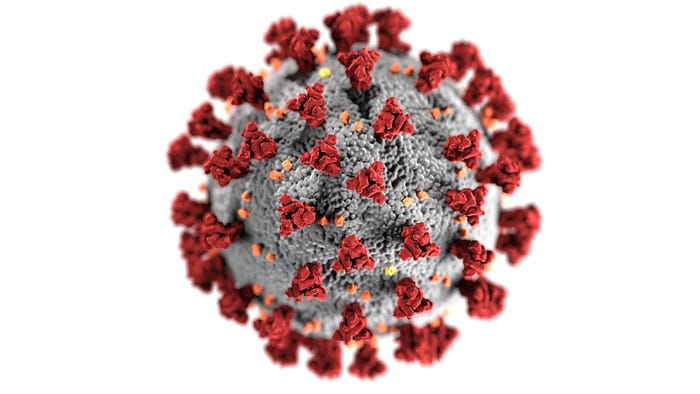
Both of the viruses SARS-COV and SARS-COV2 have been reported to bind to same receptor (ACE2) on human body cells.
A small mutation in spike proteins of SARS-COV2 ( which is different from the molecular structure of spike protein of SARS-COV) allows it to have more compact binding to human cell receptor (ACE2).
That is why, SARS-COV2 is much more strongly attached to human cells and more good at infecting the cells, and spreading faster than its precursor corona virus SARS-COV.
What so ever has been found until now, the virus has been proposed to be a bat virus that also binds to an ACE2 receptor; with pangolins as an intermediate host, because one of the pangolin corona virus could also bind to human receptor.
It is an RNA virus, and RNA viruses are known to evolve more quickly as compared to DNA viruses.
This virus has been reported to infect children, less likely, because there is some evidence that host cells in the epithelial tissue of children lack or have little number of receptor for the attachment of this virus to host cell. So the chances of entry of this virus into cell and hence to infect the children are reduced,