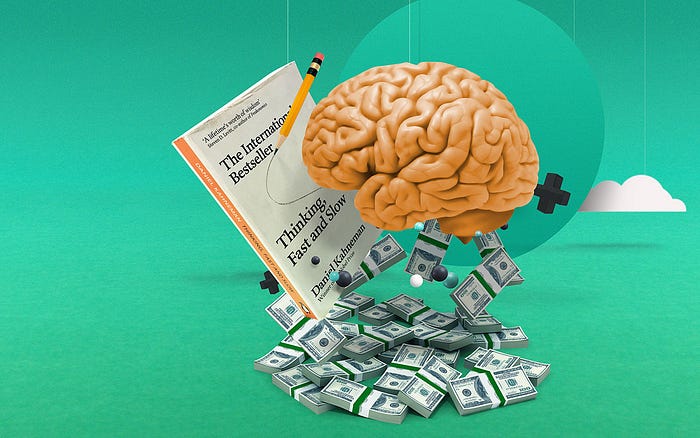


In my previous article, I went over some of the flaws with "Thinking Fast and Slow" an extremely popular behavioral economics and science book by Nobel Prize winner Daniel Kahneman. While I did talk about some of the parts that have been proven false with recent empirical data, many of his findings still remain true, and have profound effects on the field of behavioral finance. In this article, I wanted to begin dissecting the book in its entirety, pointing out the key points I think are the most useful for those looking for "self-improvement", and then transition into the implications for an investor in finance. The main highlights of this article include the tip for building your savings account, with a fun case study to help explain how this "lazy" side of you can actually help you make better long-term financial decisions. On the other hand, I also dive into how lazy herding behavior and confirmation bias can make this money you spent so long saving, lead to disastrous investment making decisions.
The 2 Systems
The 2 systems is Kahneman's way of describing human cognition. It is worth noting that he repeats multiple times that they are not empirically backed systems, nor do truly exist. They are simply concepts, or as he calls them "systems" to help describe human behavior and thought processes in an easier manner.
- System 1 is what he calls Fast Thinking, which refers to the title of the book. This describes automatic processes or those with little effort. This largely stems from the creation of neural pathways that help make things easier to do. This can result in being able to do mental math quickly, react quickly to easy stimuli, or instinct that doesn't require a 2nd thought.
- System 2 is what he calls Slow Thinking, another reference to the title. This describes more mentally straining activities that require much more effort.
The main issue is when System 1 takes over System 2 behaviors. This can result in impulsive actions and a lack of System 2 thought. While this does save lots of effort for the brain and has helped us from an evolutionary standpoint, there are many times when this idea of System 1 can affect our rational behavior. Interestingly enough, there are also times when System 2 can impede on basic and necessary functions of System 1. The strategy is to know when to use each system in decision-making.
Case Study
The Invisible Gorilla is a hilarious experiment done by Harvard students. Without explaining too much redundant information, it essentially shows that when System 2 is so focused on a task, it can result in people becoming "blind", such as not seeing the Gorilla that passed through in the video. Seeing and observation are done instantly and subconsciously, such as seeing a salient gorilla walk across the screen. However, the concentration of system 2 results in many people being so engrossed in counting, that they don't even see important and unusual things. In the words of Kahneman, we can be blind to the obvious, and blind to our blindness
Implications in Investing and Saving
First, let's look at personal finances. The most common example of this is making use of System 2 to prevent you from making bad decisions in saving choices. If you have an automatic application that for example, takes a chunk of money to put into your savings account, you will be more likely to invest and save. Rather, if you were to have to manually put that into your account each day, the "laziness" of system 2 would eventually result in you simply splurging the money, or choosing not to save it at all.
Looking at trading itself, the most common example is herd mentality. Instead of the inconvenience of doing due diligence, fundamental analysis, and proper risk-taking strategies, many investors fall into the trap of impulse investing, in the form of buying "hot: stocks, or selling due to fear. This emotionally based decision-making can be dangerous, but is also very convenient for us. This is why I preach the idea of mechanical stop losses to prevent this emotion. I covered this idea in trend trading, where I described my main trading strategy. In the future, I may shift toward more technical and investing-based articles, but for now, I enjoy learning more about both investor and consumer behavior.
A Wrap Back into a Flaw. The Good, the Bad, and the Ugly?
If you haven't read my first article, it's good to preface that Daniel Khanemans Chapter 4, is largely unreproducible. This priming effect explains that people hearing words related to old people can result in them walking slower. This priming effect, as mentioned before, is not completely untrue. Seeing a lot of unrelated yellow things can make you say the word "banana!" when asked about the first fruit that comes to mind. Where it falls short is its replication on some sample sizes, as well as its overexaggerated power and abilities. No doubt, this priming effect does have its effects, both good and bad, but it is good to see when exactly it is coming into play
Implications in Investing
The main example comes from herding behavior and confirmation bias. Similar to the implication listed before, impulsive decision-making can have its roots in seeds of doubt, or bias. Take, for example, your friend telling you something positive about a stock. If you were to see another newsletter or article for example, promoting a BUY recommendation for this stock as well, the added confirmation bias will serve to cement a positive image of the company. This priming effect of seeing 2 things that vouch for each other can be deadly, especially when a differing opinion comes into play. This is why when inventors are doing their due diligence, it is best to take on the perspective of the opposite side. Even if a stock is outperforming the market, do your best to find the worst parts of the company, as well as its risk. Only then, should you be able to confidently invest in a stock.
Conclusion + What's Coming Next?:
In the next article, I will dive into the anchoring effect and framing effect. While I did go over this previously in prospect theory, I will be coming at it with a fresh creative approach as well as with newly updated examples.
Disclaimer: I am not a financial analyst or adviser of any sort, and my articles are strictly for educational purposes. Stock trading is inherently risky and by reading this, you assume complete and full responsibility for the outcomes of all trading decisions, including but not limited to loss of capital. I hope to share my strategies and experience, and no individual should blindly follow without their own due diligence. Remember, if you fail to plan, plan to fail.
A Message from InsiderFinance

Thanks for being a part of our community! Before you go:
- 👏 Clap for the story and follow the author 👉
- 📰 View more content in the InsiderFinance Wire
- 📚 Take our FREE Masterclass
- 📈 Discover Powerful Trading Tools