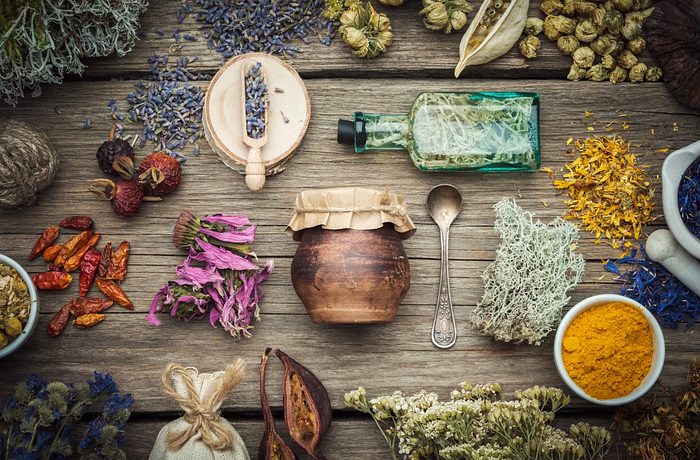


I've finished my first official year of delving head first into studies of Herbal Medicine. The curriculum not only covers the medicinal and therapeutic use of plants, but also nutrition, human anatomy and the study of natural ecosystems.
In this time, I've had some reflections that have stuck with me:
1. We are always connected to nature.
When we're headed on a hike, we say we're going "into nature." In reality, we can never separate ourselves from the natural world.
Over time, we have objectified nature to the point that only humans are considered sentient living beings. We call a plant "it." If you have doubts about the intelligence of nature, watch this video.
Our own well being and survival depends on the relationship we have with the natural world around us- from what we eat, the water we drink, the air we breathe and the ecology of where we live.
When we connect intentionally with the natural world, our well being improves and this is no coincidence.
As little as 15 minutes in the woods has been shown to reduce levels of cortisol, the stress hormone.
Increase nature exposure to 45 minutes a day, and most individuals experience improvements in cognitive performance.
The Gaia Theory, developed by chemist James Lovelock and microbiologist Lynn Margulis, is an illustration of our inextricable connection to the natural world.
It states that biota communicates with organic and inorganic material to ensure evolution. Earth has an innate feedback system for a self-regulating balance to occur.
In the book Energetic Herbalism, the author, Kat Maeir, explains the significance of this:
"Earth self-regulates by automatically adjusting the temperature, salinity of the ocean and atmospheric content in response to changes in the ecosystem. The living system of Earth is identical to the workings of our bodies. We are constantly regulating temperature, fluids, and the tone of organs and tissues."
The more we live in accordance with what nature has to teach us, the healthier we are.
2. We are a whole system, not just many parts.
In the hours I've spent studying human anatomy, it has become clear that I've gone 30 years with very little idea of what the heck is happening in this meat suit of mine.
The scientific and medical world know so much about the functions of the body and yet we don't empower individuals to understand their inner workings. Understanding one's body isn't seen as "our job" so we outsource this to a doctor with long waiting lists and a required 20 min turnover time.
As a by-product of outsourcing our health, modern medicine has gotten more and more specialized. Doctors will often narrowly focus on one problem, not privy to the bigger picture.
Our bodies have become a collection of separate parts, viewed with tunnel vision.
But, as we know from the Gaia theory, we are an interconnected ecosystem and need to be treated accordingly.
Take the plant in your living room. When you notice the leaves are brown, you don't investigate deeper and deeper into that leaf, you get to the root. Our bodies are no different.
Did you know that a dairy allergy can cause depression? Or that your work stress could be the root of high cholesterol?
Shifting our view of health to a whole person approach- physical, mental and spiritual — could completely transform our well being.
3. The goal is to be vital, not just "not sick"
Herbalism is based partially on the therapeutic strategy of Vitalism, which states that we can improve health by shifting patterns in the body. Overarching all of this is the focus on improving overall health and happiness of the individual through the pursuit of a life's calling.
Vitality is our basic right, and yet we are never taught how to really take care of ourselves and see the patterns between the happiness in our life and the health in our bodies.
Healthcare shouldn't just be firefighting or putting band-aids on accute discomfort. It should be a foundation for creating a picture of health that allows individuals to go out into the world with the energy to accomplish what they most want in this lifetime.
4. You get to chose how good you want to feel
At the end of the day, life is about achieving the unique balance that makes you feel good, not what society or a doctor has decided is "good" or "bad."
If you are fully aware that cheese is the cause of your stomach aches, and that's a price you are willing to pay for the charcuterie board you've been craving, that's your human right (hello,me).
But in order to make these kind of health decisions from a place of empowerment, it requires being educated. Once you know your unique system, you can make the informed decision on where you'd like to focus and how you want to feel.