


General Information
- Alias: APT30 is also known as APT32 and OceanLotus.
- Affiliation: Linked to Vietnamese state-sponsored actors, specifically the General Department of Military Intelligence (GDMI).
- Origin: Based in Vietnam.
- First Identified: Active since at least 2012.
- Primary Goal: Conduct cyber espionage to gather intelligence and support Vietnamese national security and economic interests.
Targets and Operations
- Industries Targeted: Government, manufacturing, maritime, and human rights organizations.
- Geographical Focus: Primarily targets organizations in Southeast Asia, including China, the Philippines, and Laos.
- High-Profile Targets: Notable targets include foreign governments, international organizations, and maritime entities.
- Types of Data Stolen: Political communications, industrial secrets, and strategic documents.
Techniques and Tools
- Initial Compromise: Uses spear-phishing emails, watering hole attacks, and malicious attachments to gain initial access.
- Persistence: Implements custom malware, backdoors, and Remote Access Trojans (RATs) to maintain long-term access.
- Lateral Movement: Utilizes credential theft, Pass-the-Hash techniques, and exploitation of network vulnerabilities.
- Data Exfiltration: Employs encrypted channels, FTP, and legitimate network services for exfiltration.
Malware and Exploits
- Malware Families: Includes Windshield, Komprogo, and Cobalt Strike.
- Zero-Day Exploits: Known for leveraging zero-day vulnerabilities, such as CVE-2019–0708 (BlueKeep) and CVE-2020–0688 (Microsoft Exchange).
- Custom Tools: Utilizes tools like Cobalt Strike, Core Impact, and a variety of custom-developed backdoors.
Attribution and Evidence
- FireEye Report: FireEye has extensively documented APT30's activities, linking them to Vietnamese state-sponsored actors.
- IP Addresses: Activity traced to IP ranges 103.192.0.0–103.192.255.255, commonly associated with Vietnamese state-sponsored actors.
- Domain Registrations: Frequently uses domains with specific patterns like "secure-access[.]com".
- Command and Control Servers: Typically hosted in Vietnam and neighboring regions.
Incidents and Campaigns
- Operation Cobalt Kitty: A large-scale campaign targeting manufacturing and maritime sectors to gather intelligence.
- Human Rights Organizations Attacks: Compromised networks of human rights organizations to steal sensitive information.
- Government Espionage: Targeted foreign government agencies to gather intelligence.
Impact and Damage
- Economic Impact: Significant losses in intellectual property, trade secrets, and confidential information.
- Strategic Advantage: Stolen data supports Vietnam's national security, economic growth, and strategic goals.
- Reputation Damage: Heightened tensions between Vietnam and targeted nations, influencing diplomatic relations and economic policies.
Detection and Mitigation
- Detection Techniques: Network traffic analysis, threat intelligence feeds, and anomaly detection.
- Mitigation Strategies: Regular updates, user education on phishing, advanced endpoint protection.
Organizational Structure
- Hierarchical Structure: Operates under a state-sponsored command structure typical of GDMI units.
- Team Composition: Comprises skilled hackers, malware developers, and intelligence analysts.
Legal and Diplomatic Responses
- International Indictments: Multiple indictments of Vietnamese nationals linked to APT30 by various countries.
- Diplomatic Protests: Formal protests lodged by various countries regarding APT30's activities.
Cybersecurity Measures
- Advanced Persistent Threat Detection: Tools like FireEye and CrowdStrike offer detection capabilities.
- Behavioral Analysis: Monitoring user behavior and network traffic for anomalies.
Key Events and Milestones
- First Major Detection: Activities first widely recognized in the early 2010s.
- Major Report Release: FireEye and CrowdStrike reports provided extensive details on APT30.
Tools and Tactics
- Spear Phishing: Customized emails to specific targets within organizations.
- Watering Hole Attacks: Compromising legitimate websites to serve malware.
- Custom Malware: Development of proprietary malware for specific operations.
Recent Activities
- Continued Operations: Remains active, evolving tactics and techniques.
- Target Shifts: Increasing focus on government agencies, manufacturing, and maritime sectors.
Defensive Measures
- Endpoint Protection: Advanced tools to detect and mitigate malware.
- Network Segmentation: Segregating critical assets to limit lateral movement.
- Regular Updates: Ensuring systems and software are patched against known vulnerabilities.
Collaboration and Intelligence Sharing
- Industry Collaboration: Sharing threat intelligence among industry peers.
- Government Support: Resources and support from governments to combat APT30.
Training and Awareness
- User Training: Educating employees on phishing and social engineering.
- Incident Response Planning: Developing and rehearsing response plans.
Research and Development
- Continuous Monitoring: Investing in monitoring solutions to detect anomalies.
- Threat Intelligence: Leveraging services to stay informed on APT30 tactics.
Key Indicators of Compromise (IOCs)
- Known IPs: Monitoring traffic for known IPs linked to APT30.
- Malware Signatures: Blocking signatures of known APT30 malware.
Future Trends
- Evolving Techniques: Anticipating changes in APT30's techniques to avoid detection.
- Global Reach: Increasing focus on global targets with strategic importance.
Reporting and Accountability
- Incident Reporting: Promptly reporting incidents to relevant authorities.
- Transparency: Maintaining transparency about cybersecurity incidents.
Key Partnerships
- Private Sector Collaboration: Working with firms to enhance defenses.
- International Cooperation: Addressing global threats through cooperation.
Personal and Organizational Security
- Personal Vigilance: Encouraging vigilance and reporting suspicious activities.
- Comprehensive Security Programs: Implementing programs addressing all cybersecurity aspects.
Visual Representation
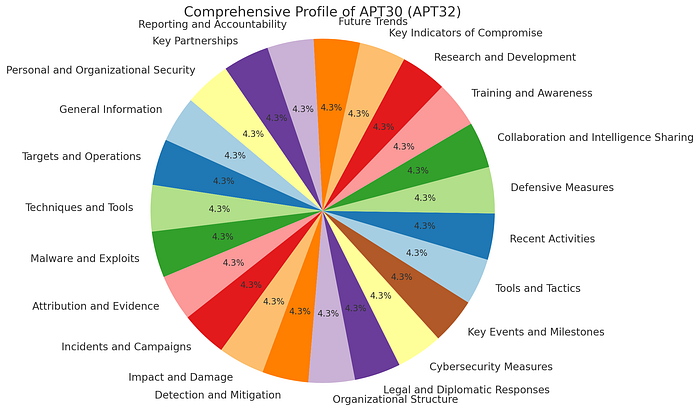
- This pie chart provides an overview of the different sections in the profile of APT30.
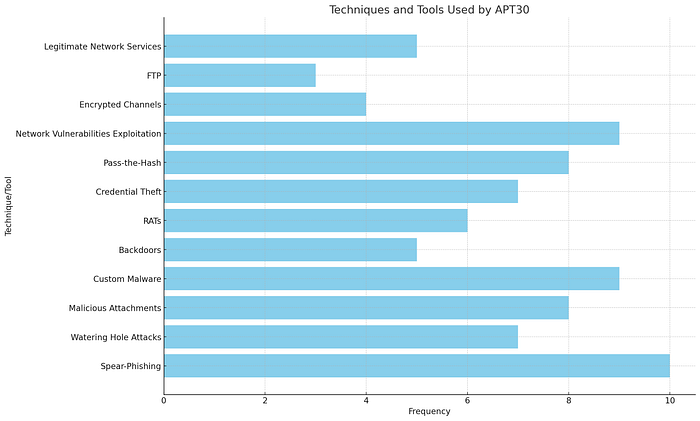
- This horizontal bar chart displays the frequency of various techniques and tools employed by APT30.

- This pie chart shows the distribution of different malware families used by APT30.
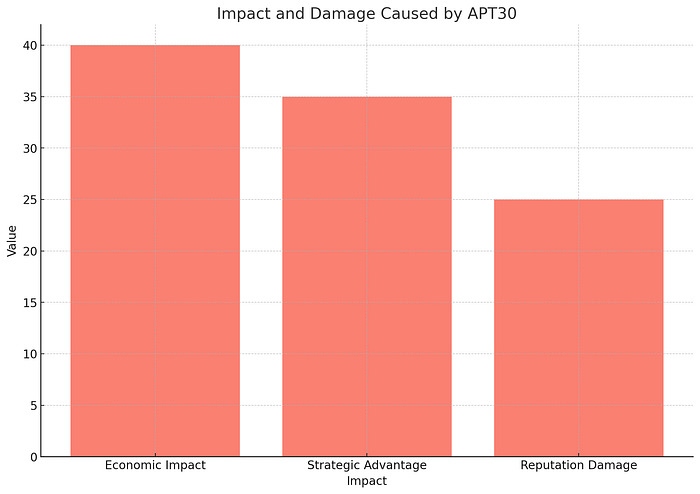
- This bar chart highlights the different types of impact and damage caused by APT30, focusing on economic impact, strategic advantage, and reputation damage.
Hashtags
#CyberSecurity #APT #ThreatIntelligence #CyberEspionage #NetworkSecurity
Sources
- FireEye Report on APT30: FireEye
- CrowdStrike on APT30: CrowdStrike
- Wikipedia: Advanced Persistent Threat: Wikipedia
- CISA: Nation-State Cyber Actors: CISA
- Symantec on APT30: Symantec
These data points provide a comprehensive view of APT30's operations, highlighting the importance of robust cybersecurity measures and international cooperation in combating cyber threats.